Reviewed · TOURS
Back to the 80s Unique Vintage Tomos Moped Tour Split
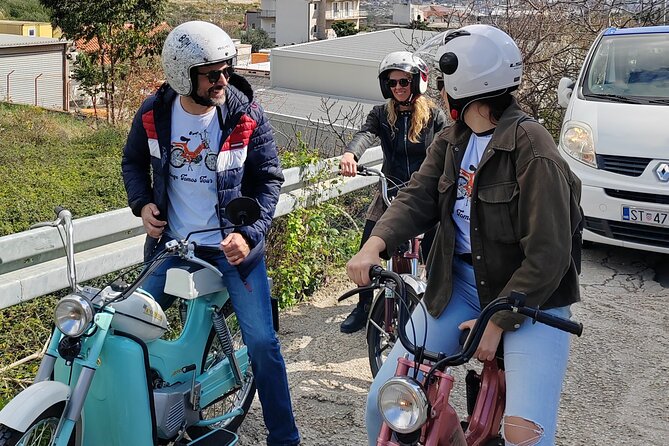
A Tomos ride turns Split into a movie. You cruise on an authentic 1980s-style moped, guided by locals who know where the city relaxes and where it hums, and the route packs major sights into a short time. I love the small group size (8 max), which keeps the ride calm enough to actually enjoy the stops. I also love the way Baldo connects street corners to real memories of everyday Tomos life in Dalmatia. One thing to consider is that this experience depends on good weather, so you will want to be flexible with your day.
What makes this tour feel special is the mix of motion and storytelling. You start with driving basics near the Poljud Stadium area, then roll through classic Split scenery like Marjan Hill and the Riva. Along the way, you get quick time at viewpoints and parks, not just a “see it from the sidewalk” style tour. The best part is that the route feels designed for enjoying the city from a moped seat, not rushing between monuments.
If you want a super slow, deep museum-style pace, this is not that. It is a compact 2 to 3 hour tour, so you will be moving fairly often, even though stops are long enough to look around and take photos.
In This Review
- Key things to know before you ride a Tomos in Split
- Price and what you actually get for it
- Meet Baldo and get your moped confidence at Poljud
- Marjan Hill: the green escape with sea air
- Meštrović Gallery: art with a sense of place
- Kasjuni viewpoint: sea views without the crowds of a full day trip
- Zvončac park: locals picnic, you get breathing room
- Riva context: the promenade as a timeline
- Diocletian Palace substructures: why Split became UNESCO
- Republic Square and Prokurative: matching Split to Venice energy
- Bačvice beach: the classic Split sandy scene
- Kantunal coffee stop: a local break you will remember
- ST3 neighborhood architecture and modern Split
- Mladeži Stadium area and Ultra Europe
- Vidilica viewpoint in Marjan: the final “wow, slow down” moment
- The driving, the vibe, and why this route works
- Who should book this Tomos tour?
- Should you book Back to the 80s Unique Vintage Tomos Moped Tour Split?
- FAQ
- Is this tour in Split, Croatia
- How long is the Tomos moped tour
- What is the group size limit
- Where do we meet, and where does it end
- Do I need paper tickets
- Is there a chance the ride can be extended
- What sights does the tour include
- Are admissions included for the stops
- What weather conditions are required
- Can most travelers participate
Key things to know before you ride a Tomos in Split
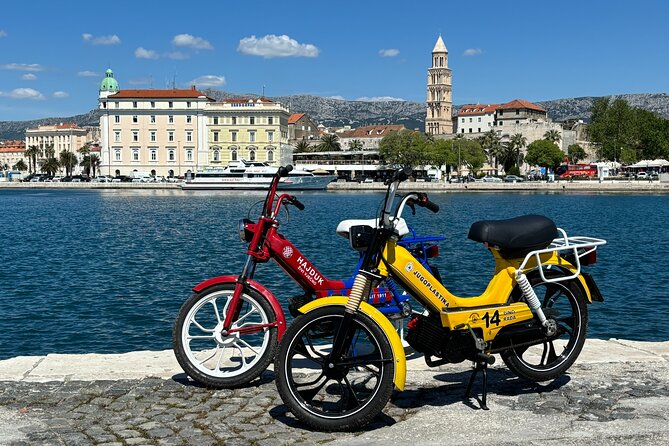
- A real 1980s Tomos vibe: local context matters here, including why mopeds were nicknamed Koze (goats) in Split.
- 8 people max: you get easier conversation with Baldo and more personal attention during the driving basics.
- First-class sight coverage in a short time: Poljud, Marjan Hill, Meštrović Gallery, Diocletian Palace substructures, the Riva area, Bačvice, and more.
- Stops are timed for views and photo breaks: Marjan tunnel area, Vidilica viewpoint, Kasjuni lookout, and Zvončac park.
- A local coffee moment: a break at Caffe Bar KANTUNAL with coffee and craft guuc juice.
- Ride can be extended: you can add up to 20 minutes if you are still enjoying the streets.
Price and what you actually get for it
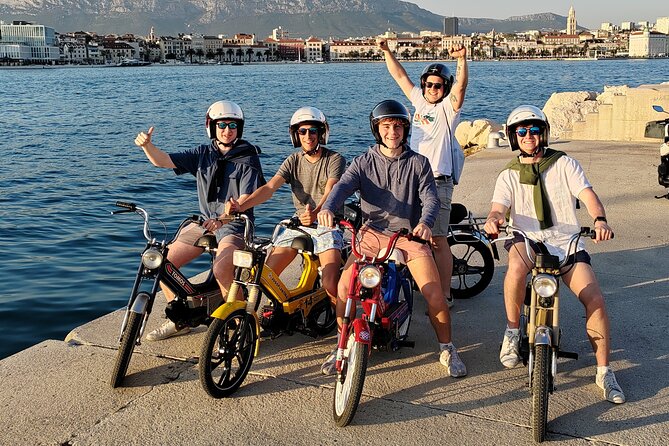
At $328.17 per person for roughly 2 to 3 hours, this is not a cheap sightseeing add-on. But it is also not just a bus tour with a map. You are paying for a small-group, guided moped experience, plus a route that hits a lot of Split’s top areas in a single session.
Here is how I think about value. If you want to do Diocletian Palace, Marjan Hill lookouts, and the Riva, you will otherwise spend time piecing together transport, ticket queues, and transfers. This tour bundles the “greatest hits” with local interpretation, and the mopeds let you feel the city as you move through it. For many people, that feeling is the whole point, and it is hard to recreate with only walking.
The other practical note: the tour is weather-dependent. When the day is clear, you will have a much better ride experience. If rain or bad conditions show up, the tour can be swapped to a different date or refunded, so you should book with an open schedule when possible.
Meet Baldo and get your moped confidence at Poljud
You meet at Ulica Ante Starčevića, 21000, Split, and the tour loops back there at the end. The ride is designed around a quick ramp-up so you are not stressed on your first minutes.
Stop 1 is Prodaja Fritula at Poljud Stadium. This is where you cover the driving basics of the moped, right by Hajduk Split’s home. Even if you have never ridden a scooter before, this setup makes sense. Starting at a stadium-adjacent spot gives you space to get the feel of the machine before you enter busier streets and scenic stretches.
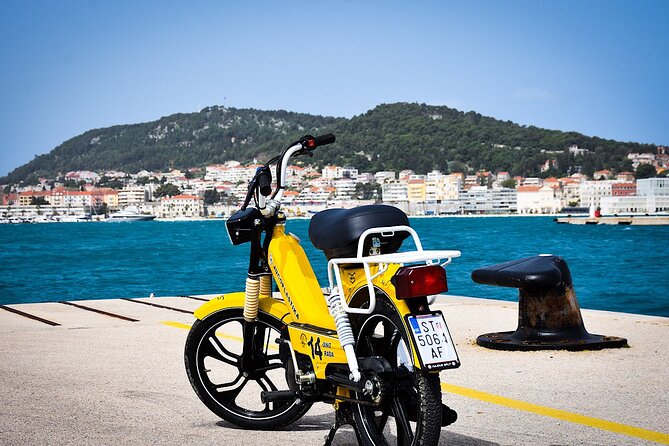
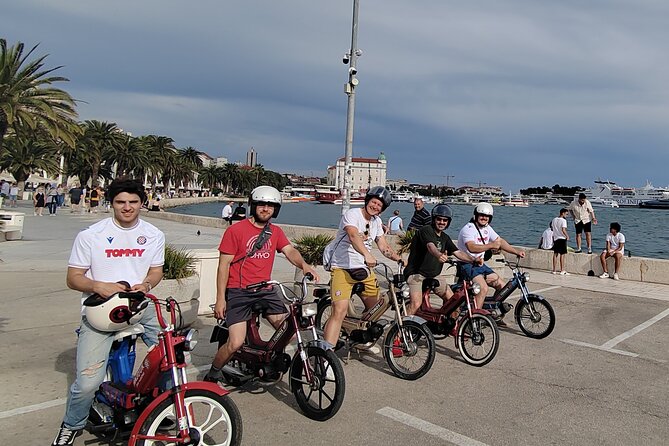
Poljud itself adds a useful layer to the day. It is a well-known landmark, and it anchors the tour’s “Split in the 80s” theme. Tomos mopeds show up everywhere in Dalmatia’s memory, used by young and old, and especially by postmen, who could be recognized by the yellow vehicles and the signature Tomos sound locals called Koze, or goats.
Practical tip: wear shoes you can walk in comfortably. Even a “moped tour” includes a handful of short viewing walks at parks and viewpoints.
Split is the launch point for half the Dalmatian coast: islands, waterfalls, and a couple of countries besides.
Marjan Hill: the green escape with sea air
Next up, you head to Marjan Park and the Marjan Hill area. This is one of Split’s best-known green breaks, surrounded by beaches, and it is exactly the kind of place you notice more from two wheels than from a tour bus stop.
The tour time here is about 20 minutes, so it is not a “hike all day” stop. Instead, it is long enough to pause, breathe, and listen as the guide explains the calmer side of Split. If you have ever felt like big sightseeing days turn into a blur, this middle-of-the-route pause is smart. Marjan’s views help reset you before the older historic core takes over.
Also, Marjan is where the itinerary keeps reminding you that Split is both city and coast. You are not just learning facts. You are feeling the change in the air and the slope of the city.
Meštrović Gallery: art with a sense of place
Stop 3 is Galerija Meštrović. This is the Ivan Meštrović Gallery, dedicated to the work of the 20th-century sculptor Ivan Meštrović.
The stop is about 15 minutes. That duration is short enough that you will not treat it like a full museum visit, but it is a good fit for a tour like this. You get the context, the location, and the quick “why it matters” framing, which can make a longer museum visit later feel richer.
If you like architecture and public art, Meštrović’s presence in Split is worth snagging while you are already in the area. The moped route keeps you from losing time, and you still leave the stop with a better sense of what Split chooses to celebrate.
One consideration: if you want to read every label and linger, the scheduled time may feel tight. This is a highlights-and-context stop, not a slow gallery day.
Kasjuni viewpoint: sea views without the crowds of a full day trip
Stop 4 is Kasjuni Beach viewpoint, about 15 minutes. Kasjuni sits on the Adriatic side of Split, and this stop is all about the view. You get a short, photo-friendly break where the coastline does the talking.
Because it is a viewpoint stop, you will likely spend less time “exploring” and more time taking in the curve of the bay and the way the city meets the sea. That is often what people want from Marjan area tours, and it matches the Tomos format well: you move, you stop, you look, you move again.
If the day is bright, this is a good moment to capture images. If it is windy or drizzly, the view might still be worth it, but your photo plans may be affected.
Zvončac park: locals picnic, you get breathing room

Stop 5 is Children’s Playground Zvončac, around 20 minutes. Despite the name, Zvončac is about a relaxed local vibe and a famous picnic spot in Split.
This is a nice change of pace after viewpoints and museums. Parks let your brain catch up, and a picnic-style atmosphere tends to make a city feel lived-in rather than staged. You are still in the tour rhythm, but the experience here reads more like “see where people hang out” than “hit the next landmark.”
Two days in Split? Here's how to fill the second.
- From Split: Krka Waterfalls, Food & Wine Tasting Tour★ 4.9 · 6,598 reviews
- Split/Trogir: Blue Cave, Mamma Mia, Hvar and 5 Island Tour★ 4.6 · 6,320 reviews
- Blue Lagoon & 3 Islands Cruise with Lunch from Split★ 4.5 · 5,756 reviews
- Blue Cave and Hvar Tour – 5 Islands Tour from Split and Trogir★ 5.0 · 4,815 reviews
Riva context: the promenade as a timeline
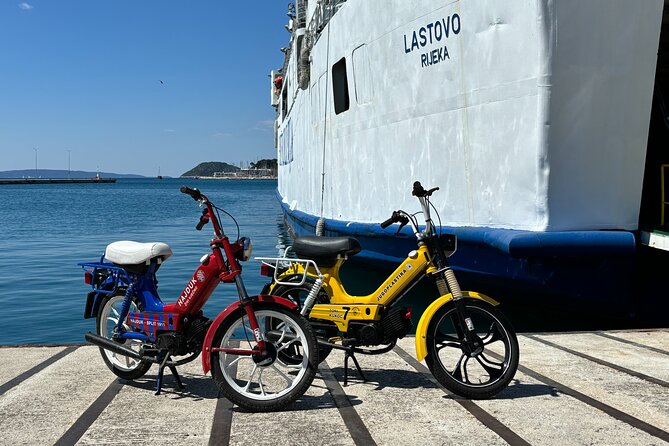
The tour includes a Riva explanation, tying today’s waterfront look to a much earlier period. You learn that the Riva’s appearance shaped itself about two centuries ago, during the time the French ruled these parts through Marshal Marmont in the Napoleon era.
This kind of detail matters more than you might expect. When you later walk the Riva on your own, you will likely notice the architectural flow differently. It also helps you understand why Split’s waterfront feels both historic and everyday at the same time.
Small but useful mindset shift: treat the waterfront as a living monument, not just a scenic walkway. The guide helps you do that.
Diocletian Palace substructures: why Split became UNESCO
Stop 6 is Diocletian Palace Substructures, about 20 minutes. These substructures are described as among the best preserved complexes of their kind in the world, and they are tied to why the historic core of Split earned UNESCO status in 1979.
This is one of those stops where quick time can still be valuable. Even if you do not fully map every passageway, you understand the scale and importance of what you are looking at. The substructures set the stage for the next stop, because they explain how the palace complex shaped the city above.
Then the itinerary includes additional time related to Diocletian Palace, so you get a second chance to connect the story to what you can actually see.
Republic Square and Prokurative: matching Split to Venice energy
Stop 7 is Republic Square, also known as Prokurative. The tour notes that it resembles St. Mark’s Square in Venice, and it is located west of the Riva. The naming ties to arches found on neo-Renaissance buildings.
It is a short stop, about 5 minutes, so think of it as orientation. You get a fast explanation of why the square feels a certain way, and that makes the space easier to read when you come back later for a slower walk.
If you like “why did they build it like this” stories, these kinds of micro-stops are actually gold. They train your eye.
Bačvice beach: the classic Split sandy scene
Stop 8 is Bačvice Beach, around 15 minutes. Bačvice is widely treated as Split’s most famous sandy beach, and the timing fits the day well. After palace architecture and plazas, you get to switch back to casual, coastal energy.
This is not the time for a long beach day. Instead, it is a quick look at the city’s most recognizable sea spot, which can help you decide if you want to come back later for swimming or a longer evening stroll.
If you are visiting in peak summer, this stop can be especially useful. You get a first impression quickly, and then you can choose whether to return when you have more time.
Kantunal coffee stop: a local break you will remember
Stop 9 is Caffe Bar KANTUNAL, about 20 minutes. This is described as a small bar where only locals tend to go, and the tour treats you to coffee and craft guuc juice.
This is the kind of pause that makes a short tour feel like more than a route. You get seated time, a taste of something local, and a chance to talk with the guide without rushing.
Even if you do not usually care about food stops on tours, this one works because it is short and specific. It also helps you cool down if the ride has been warm.
ST3 neighborhood architecture and modern Split
The itinerary includes Krstarica (ST3) to see the architecture of the neighborhood called ST 3, created during the expansion of modern Split.
This is a smart pivot. After the ancient core and coastal promenades, the tour acknowledges that Split did not stop evolving in Roman times. You get a visual sense of how the city grew in more recent decades, which can help you avoid the common trap of thinking Split is only its “old town” label.
Mladeži Stadium area and Ultra Europe
Stop 10 is Ultra Europe near Stadion Park Mladeži, about 5 minutes. The stadium area is home to RNK Split and is also described as the second largest football stadium in Split.
Ultra Europe is mentioned, so you get a link between sports infrastructure and modern music culture. That contrast helps the city feel current, not just historical.
This short stop is more about context than a deep dive. You get the key idea and move on, keeping the total tour length tight.
Vidilica viewpoint in Marjan: the final “wow, slow down” moment
Stop 11 is Teraca Vidilica, about 5 minutes. This part of Marjan Park is described as the most beautiful, offering breath-taking views of Split.
Even with only a few minutes, a viewpoint can land hard at the end of a tour. By this point, you have seen the coast, the gardens, the old palace core, and the city streets. A final high point gives your brain a full picture.
If the wind is strong, you might want to hold onto your phone or camera carefully. Viewpoints are worth it, but sudden gusts can happen.
The driving, the vibe, and why this route works
This tour works because the pacing matches how people actually enjoy a city. You do not overload one area and ignore the rest. Instead, you move through Split in a way that mixes:
- Motion on Tomos mopeds, so streets feel shorter
- Brief pauses at viewpoints and parks
- High-impact history at Diocletian Palace substructures
- Everyday stops like Bačvice and a local bar
And you get the 80s theme without it becoming a gimmick. The story about Tomos mopeds being everywhere in the eighties, including postmen recognized by the yellow mopeds and the Tomos engine sound called Koze, gives the day meaning. It turns the machines from props into part of local identity.
The one review shared with a perfect score also puts Baldo in the spotlight. You get a guide who is friendly and cheerful, genuinely caring, and passionate about both his mopeds and Split. That kind of energy matters when you are learning to ride, too. It is easier to relax when the person leading you seems happy to be there.
Who should book this Tomos tour?
I think this tour is a great match if you want:
- A compact route that still includes major Split icons
- To see both classic old core sights and coastal viewpoints
- A guided experience with a local personality, led by Baldo
- The fun factor of traveling on a vintage-style Tomos moped, not just walking
You might skip it if:
- You want a long, slow, museum-heavy day
- You are uncomfortable riding and stopping on a schedule
- Weather is likely to be rough, since the experience requires good weather
Should you book Back to the 80s Unique Vintage Tomos Moped Tour Split?
If you are choosing between “another walking tour” and “something you will talk about later,” I would lean toward booking this one. The moped format makes Split feel different, and the route is built around what you actually want to see, Poljud, Marjan, Meštrović, Diocletian Palace substructures, the Riva area, Bačvice, plus viewpoints and a local coffee break.
Do it if you like practical adventure, quick explanations, and getting a whole picture of Split in a single go. Do not do it if you want maximum time per stop.
One more smart decision point: plan it earlier in your Split stay. Seeing the city laid out from the Tomos route helps you choose what to revisit on foot later, especially the palace core areas and Marjan viewpoints.
FAQ
Is this tour in Split, Croatia
Yes. It takes place in Split, Croatia.
How long is the Tomos moped tour
The duration is listed as about 2 to 3 hours.
What is the group size limit
This tour has a maximum of 8 travelers.
Where do we meet, and where does it end
You start at Ulica Ante Starčevića, 21000, Split, Croatia and the activity ends back at the same meeting point.
Do I need paper tickets
No. You receive a mobile ticket.
Is there a chance the ride can be extended
Yes. The ride can be extended by a maximum of 20 minutes.
What sights does the tour include
The itinerary includes stops such as Poljud Stadium, Marjan Hill, Ivan Meštrović Gallery, Diocletian Palace substructures, the Riva area, Republic Square, Bačvice Beach, and viewpoints in Marjan, plus other neighborhood and stadium-related areas.
Are admissions included for the stops
The itinerary notes admission ticket free for each stop listed.
What weather conditions are required
The experience requires good weather. If it is canceled due to poor weather, you will be offered a different date or a full refund.
Can most travelers participate
The tour says that most travelers can participate, but it is dependent on weather and the experience details of riding a moped.
Recently added around Split
- Private VIP Brac and Hvar Day Trip from Split
★ 5.0 · 1 review - Private Transfer From or To the Split Airport
★ 5.0 · 1 review - Private Transfer from Split to Zagreb, Hotel-to-hotel, English-speaking driver
★ 5.0 · 1 review - Brač Half Day Beach Party Transfer to Olife Beach Club
★ 5.0 · 1 review - Airport transfers
★ 5.0 · 1 review - Private ”Game of Thrones” Walking Tour in Split (entrance tickets included)
★ 5.0 · 1 review
Tours, compared.


Blue cave, Mamma Mia and Hvar, 5 islands speedboat tour
Read our review →
Blue Cave, Mamma Mia, Hvar and 5 Island Tour
Read our review →
Blue Cave and Hvar Tour – 5 Islands Tour from Split and Trogir
Read our review →

Krka Waterfalls Tour, Boat Cruise & Swimming
Read our review →