
Reviewed · TROGIR TRIPS
Best of Split & Trogir: Private VIP Tour with Local Guide
History here is packed into hours. This private VIP tour strings together the must-see bones of Split and the UNESCO old town of Trogir, with a local guide who keeps the day logical instead of chaotic. I like the crowd-smart pacing you get with a small, private group, and I especially like how the stops are short but meaningful, so you see more without feeling rushed through the story.
There is one catch to consider: several major sights are marked as admission ticket not included (like the Diocletian Palace substructures cellars, plus Trogir’s St. Lawrence Cathedral, Kamerlengo Fortress, and Čipiko Palace). If you’re budgeting tightly, you’ll want to plan for those extra tickets.
You’re looking at about 6 hours, offered in English, with pickup available and a mobile ticket for the day. It’s a practical way to experience both cities, especially if you want the highlights plus context, not just photos.
In This Review
- Key things I’d prioritize on this Split and Trogir VIP day
- How this 6-hour VIP plan works in the real world
- Entering Diocletian’s Palace at the Peristyle crossroads
- Saint Domnius Cathedral: a 7th-century anchor that still works
- Gregory of Nin’s statue and the toe-worn tradition
- The Temple of Jupiter: Roman religion tucked inside Split
- Diocletian’s Palace substructures, cellars, and why they matter
- Crossing into Trogir’s UNESCO core
- John Paul II Square and Trogir’s civic architecture
- St. Lawrence Cathedral: Romanesque-Gothic through multiple centuries
- Kamerlengo Fortress (Kula Karmelengo): Venetian defense and big views
- Town Loggia and Čipiko Palace: the wealth and the civic system
- Price and value: what you’re paying for, and what you might still pay extra
- Who this tour suits best
- Should you book the Best of Split & Trogir VIP private tour?
- FAQ
- How long is the Best of Split & Trogir private tour?
- Is pickup offered?
- Is the tour private?
- What language is the tour offered in?
- Are admission tickets included for every stop?
- What is the cancellation policy?
Key things I’d prioritize on this Split and Trogir VIP day
- Private group flow: You don’t have to fight the mass-tour shuffle, which matters at Diocletian’s Palace.
- Peristyle first, meaning first: The day starts at Diocletian’s Palace crossroads, so you understand the layout before you wander.
- Old streets, quick interpretations: Each stop is timed well enough to keep momentum while still explaining what you’re looking at.
- Trogir’s civic heart: The route doesn’t only hit churches, it also covers public spaces like the Town Loggia and central square.
- Guide styles that fit your pace: You may meet guides such as Kristina (story-rich, easy to follow) or Andrea (strong crowd navigation, often efficient routing).
- Expect a mix of free and ticketed sites: Some admissions are free, others are not included, so bring a little flexibility.
How this 6-hour VIP plan works in the real world
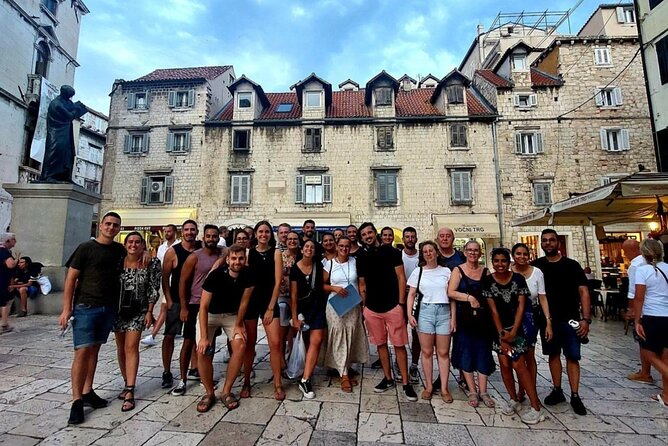
This is a private tour, meaning only your group is in the mix. That sounds small on paper, but in Split and Trogir it changes everything. Diocletian’s Palace is where people crowd in layers, especially around the big photo points. With a private setup, you can usually reach viewpoints and walkways with less time stuck behind other tour groups.
The timing is also built for sanity. It’s about six hours, and the itinerary breaks the day into short visit blocks, often around 15 minutes each. That works well if you want the key sights, plus the why behind them. You’ll still get time to look closely, but you won’t end up watching one stop eat the whole day.
English is the offered language, and pickup is available. If you’re staying near public transportation, it helps too, since the tour is also described as near public transport. Add a mobile ticket, and you’re not wasting your energy with paper vouchers.
Finally, the “VIP” part mostly means comfort and control, not luxury theatrics. The value comes from having one guide to connect the dots from Roman Split to Venetian-era Trogir without you guessing.
Entering Diocletian’s Palace at the Peristyle crossroads
Most first-timers bounce into Diocletian’s Palace and only later realize it’s not one random ruin. It’s an imperial complex built with a plan. This tour starts you at the Peristyle, the rectangular open court where the two main roads of the palace cross.
Think of the Peristyle as the spatial cheat code. Once you see it, you start to recognize the palace logic around you: where movement channels are, where the central energy sits, and why certain buildings feel anchored. It’s also a great “reset stop” because it’s open and visual, so you’re not trying to absorb details while constantly turning corners.
Good news: this stop is listed with a free admission ticket. That matters because it reduces the number of paid entries you’ll need to layer in later.
A whole old town on an islet
Saint Domnius Cathedral: a 7th-century anchor that still works
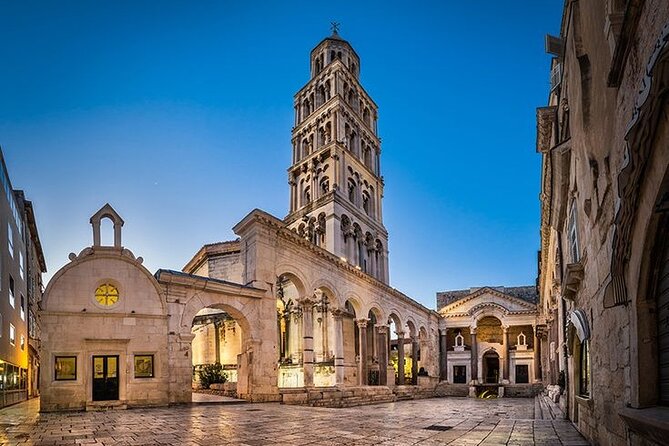
Next comes the Cathedral of Saint Domnius, consecrated at the turn of the 7th century AD. It’s often described as the oldest Catholic cathedral in the world that remains in use in its original structure, without near-complete renovation later on. That’s an unusually specific kind of “still alive” heritage.
What I like about this stop is that it helps you understand what “history” means in practice. This is not a museum shell. It’s a cathedral that has continued life through centuries, with the bell tower dating from the 12th century. You’re seeing layers of time that didn’t get erased.
The tour timing is short, but the point is to give you the landmark first, then connect it to everything else you’re seeing in Split.
Gregory of Nin’s statue and the toe-worn tradition
Then you hit Grgur Ninski Statue, the famous 8.5-metre (28 ft) figure by Ivan Meštrović. Yes, it’s a popular photo target, but it’s also a small cultural habit that tells you how visitors and locals interact with heritage.
The toe rubbing tradition is the whole story here. The toe has been worn smooth and shiny from generations of people rubbing it for good luck. It’s one of those details that feels silly until you see how it changes the mood around the monument. Instead of being just a backdrop, it becomes a living ritual.
This stop is also listed as free entry. So it’s a low-cost, high-meaning photo stop.
The Temple of Jupiter: Roman religion tucked inside Split
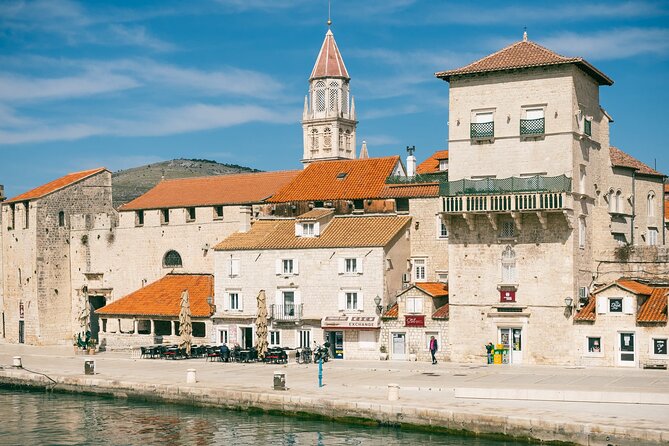
Near the Peristyle, you’ll see the Temple of Jupiter (Jupiterov hram). It’s described as a Roman temple dedicated to Jupiter, built between 295 and 305 during the construction of the palace.
The value of this stop is in the contrast. In one tight area you move from a cathedral that reflects early medieval Christian continuity to a Roman temple foundation that reflects imperial religious power. Split’s real story is how different eras reused the same space.
The tour keeps it to about 15 minutes. That works, because the temple area is not huge. You’ll get what you need for orientation and context without waiting around.
Diocletian’s Palace substructures, cellars, and why they matter
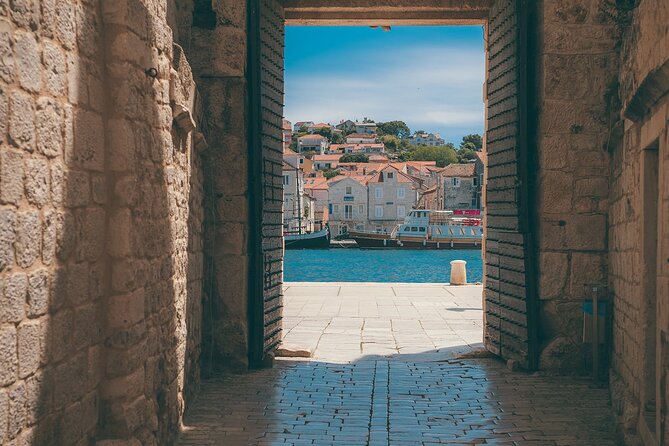
The day then moves into the Diocletian Palace Substructures, often called the cellar/basement halls. These are located at the southern end of Diocletian’s Palace, now part of the southernmost area of Split Stari grad.
This stop is valuable because it changes the type of history you’re looking at. Above ground you get the monumental face of power. Down here you get the underside of the same system, where private apartments of Diocletian were supported by a much larger substructure network.
This is one of the stops where admission ticket is not included, so factor that into your day. Budgeting tip: when some sites are free and some are not, it’s easy to miscalculate. If you want the best value, treat the included free stops as time-savers and the ticketed ones as your planned paid entries.
Plenty more to do around Split
- SPLIT-PRIVATE Walking Tour of Diocletian’s Palace & Old Town★ 5.0 · 467 reviews
- Private Krka Waterfalls tour with 30min Boat Cruse★ 4.0 · 458 reviews
- Split by Private Electric Rickshaw – Palace & Hidden Gems★ 5.0 · 412 reviews
- Private Blue cave, Mamma Mia and Hvar, 5 islands tour from Split★ 5.0 · 387 reviews
Crossing into Trogir’s UNESCO core
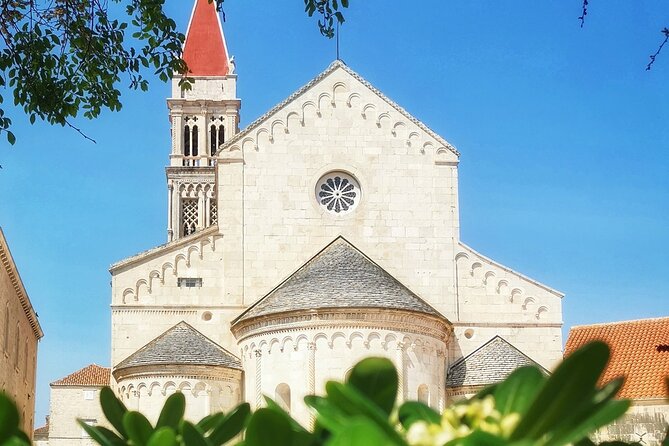
After Split, you shift into Trogir, a charming port town in central Dalmatia known for its Venetian-style old town and a UNESCO designation.
The tour focuses on the old center, which is exactly where you should spend your time if you like architecture that stays walkable. The central blocks are easier to enjoy when you’re not also trying to understand a major city’s layout.
Also, here’s a small planning note based on guide styles: you may find routing that starts Trogir first, which can help you beat crowds. On this route, guides like Andrea have been noted for strong crowd handling and efficient flow.
John Paul II Square and Trogir’s civic architecture
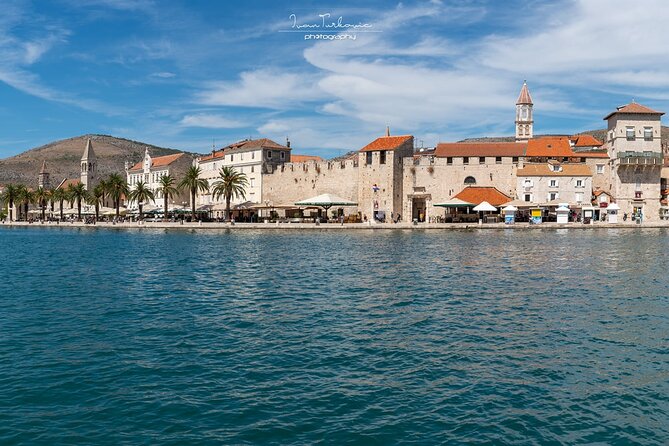
In Trogir, the itinerary begins at the Central Square, also called John Paul II Square, the main square of the old town.
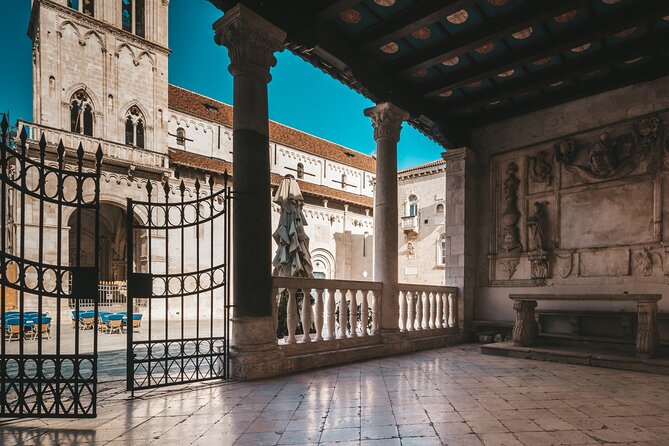
This square is a hub because it frames the surrounding landmarks, including the Loggia and Clock Tower. The Loggia matters beyond looks. It used to be a public courtroom, and the structure’s details reinforce that civic purpose. The description highlights six pillars with capitals and two reliefs carved into the wall.
There’s one seasonal detail to keep in mind: in summer, you might not clearly see the pillars because there’s a coffee bar just nearby. That doesn’t reduce the value of the stop, but it does shape what you’ll be able to read visually. If you’re visiting mid-summer, aim to look for the relief elements and overall structure rather than expecting the pillars to be fully unobstructed.
The relief called The Relief of Justice, by Nicholas Florentino, is another reason this square is worth stopping for. It’s one of those small “story surfaces” that connects the look of buildings to the legal life of the town.
This stop is marked with free admission.
St. Lawrence Cathedral: Romanesque-Gothic through multiple centuries
Next is Saint Lawrence’s Cathedral (Katedrala Sv. Lovre). It’s described as a Roman Catholic triple-naved basilica built in Romanesque-Gothic style, with construction lasting several centuries.
That long build time is why the cathedral is useful on a guided tour. You’re not just looking at one style. You’re seeing how styles succeeded one another in Dalmatia. The cathedral is also described as the most imposing monument in Trogir, so it’s a strong visual anchor before you continue toward the waterfront views and fortifications.
This one is listed as admission ticket not included, so plan for it if you want to go inside and not just view from outside.
Kamerlengo Fortress (Kula Karmelengo): Venetian defense and big views
Then you head to Kula Karmelengo, also called the Kamerlengo Fortress. It’s a 15th-century coastal fortress built during Venetian rule to protect Trogir from naval attacks.
What makes this stop worth your time is the combination of function and reward. You’re learning why the fortress existed, and then you get views over the old town, marina, and nearby islands. That view is often what turns a short stop into a “remember it later” moment.
This stop also lists admission ticket not included, but even if you manage with exterior viewing, it’s usually the type of place where the panorama does most of the work for you.
Town Loggia and Čipiko Palace: the wealth and the civic system
The route also includes the Town Loggia and Palace Čipiko.
The Town Loggia is the public meeting place of medieval Trogir, described as the spot where important decisions were announced and legal matters discussed. It’s the civic brain of the old town in stone form. If you like history that explains how ordinary life worked, this part matters.
This stop is listed with free admission.
Then comes Čipiko Palace, described as the largest residential palace in Trogir and a fine example of Gothic-Renaissance architecture. It belonged to the influential Čipiko family and reflects the wealth and power of the noble past.
Čipiko Palace is listed as admission ticket not included, so it’s another place where your day’s budget depends on what you choose to enter. Still, the outside architecture alone gives you a feel for how status was built and displayed.
Price and value: what you’re paying for, and what you might still pay extra
At $228.78 per person for a private VIP experience, it’s not a “cheap and cheerful” tour. But private guides in historic cores cost money, and you’re buying time control, translation of details, and less wasted effort.
Here’s where the value shows up:
- Several key Split stops are listed with free admission tickets, including the Peristyle, Grgur Ninski statue, and parts of the Trogir civic route.
- The itinerary is structured around fast, guided understanding rather than random wandering.
- Pickup is offered, which can save you time and coordination headaches.
- Your guide handles the flow in a place where crowds can slow you down, and guides like Kristina have been noted for being easy to follow and adding personal stories that make the sights feel less textbook.
Where you’ll likely spend more:
- Diocletian Palace substructures cellars require admission (not included).
- St. Lawrence Cathedral, Kamerlengo Fortress, and Čipiko Palace are also marked as admission not included.
So my practical advice is this: if you like to enter major interiors, this tour can still feel fair because the guide time is the main value. If you prefer only exterior viewing for ticket sites, you may find it easier to keep spending under control. Either way, it’s smart to read the ticket notes before you show up.
Who this tour suits best
This works well if you:
- Want a one-day overview of Split and Trogir without spending half your time figuring things out.
- Care about the meaning behind landmarks, not just the postcard angle.
- Prefer a private day so your pace stays yours.
- Are traveling in a group that likes guidance to cut through crowds.
It may not be the best match if you:
- Want a lot of long, unstructured free time for wandering on your own.
- Don’t want to think about additional admission tickets at multiple stops.
Should you book the Best of Split & Trogir VIP private tour?
I’d book it if you want a guided day that turns the big sights in Split and Trogir into a clear story you can remember. The route makes sense, you get a mix of Roman and later layers, and the private format helps you spend less time stuck and more time seeing.
If you’re someone who loves architecture details, religious heritage that still operates, and a quick hit of civic history, this itinerary delivers. Just go in knowing that a few interiors and attractions are not included, so you’ll want to budget for those entries if you plan to go inside.
FAQ
How long is the Best of Split & Trogir private tour?
The tour runs for about 6 hours.
Is pickup offered?
Yes, pickup is offered.
Is the tour private?
Yes. It’s a private tour, and only your group participates.
What language is the tour offered in?
The tour is offered in English.
Are admission tickets included for every stop?
Not all stops. Some stops list admission ticket free, while others list admission ticket not included, such as the Diocletian Palace Substructures, Saint Lawrence’s Cathedral, Kula Karmelengo, and Palace Cipiko.
What is the cancellation policy?
Free cancellation is available up to 24 hours in advance for a full refund.
Recently added around Split
- Private VIP Brac and Hvar Day Trip from Split
★ 5.0 · 1 review - Private Transfer From or To the Split Airport
★ 5.0 · 1 review - Brač Half Day Beach Party Transfer to Olife Beach Club
★ 5.0 · 1 review - Private Transfer from Split to Zagreb, Hotel-to-hotel, English-speaking driver
★ 5.0 · 1 review - Airport transfers
★ 5.0 · 1 review - Private ”Game of Thrones” Walking Tour in Split (entrance tickets included)
★ 5.0 · 1 review
Trogir Trips, compared.
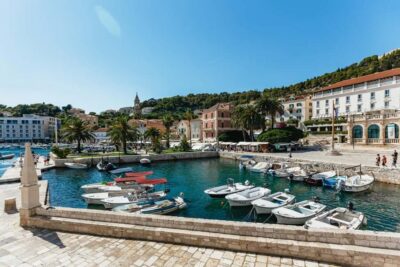
Blue Cave, Mamma Mia, Hvar and 5 Island Tour
Read our review →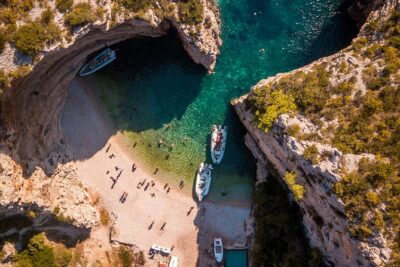
Blue Cave and Hvar Tour – 5 Islands Tour from Split and Trogir
Read our review →
Krka Waterfalls Day Tour with Boat Ride from Split and Trogir
Read our review →
Krka Waterfalls tour with Trogir Walking tour and Krka panoramic boat cruise
Read our review →
Krka National Park Tour with tour Guide & Wine tasting from Split & Trogir
Read our review →
Hvar, Brač & Pakleni islands cruise with lunch & drinks from Split & Trogir
Read our review →
Mostar and Herzegovina Tour with Kravica Waterfall from Split & Trogir
Read our review →Browse the lists this tour appears in