Reviewed · PRIVATE
Communist Tour of Split – Private & Exclusive Tour
Split’s communist era changes how you see the city. What makes this tour work is that it is built around real places in Split and a guide who can tie the stories to what you are actually standing next to, with a private tour feel and a Master’s in history guiding the narrative. I love how the walk connects big political shifts to everyday life, like housing, health, schooling, and consumer culture. I also like the interactive style, where your questions matter as much as the facts.
One thing to consider is that the tour is specifically about communist Yugoslavia, not just famous landmarks. If you came for purely scenic sightseeing, this may feel more like a history lecture in motion. And because it is an outdoor walk in parts, you do want good weather.
You start and finish back at the same spot near the bus stop, at Trg Franje Tuđmana, and you get a mobile ticket. The whole experience runs about 3 hours 30 minutes, and it is designed so your group travels together in an air-conditioned vehicle between stops.
In This Review
- Key highlights worth getting excited about
- Why a communist-themed walk in Split makes sense
- Price and what you get for it, beyond the number
- Meeting point and timing, so you do not burn time
- Trg Franje Tuđmana: wartime damage and the birth of the state
- Poljud Stadium and the China Wall, Yugoslav architecture with a story
- Koteks: Split’s early shopping dream and the reality behind it
- Split 3 and life designed by policy, not just architects
- Split Predgrađe, Kopilica station, and the armored train
- The Yugo photo moment and how to get the most from the guide
- Guide Boris: what makes the experience feel personal
- Hidden costs you can avoid, and small practical tips
- Is it worth $150.99 for a private tour?
- Who should book Communist Tour of Split
- Should you book this tour or skip it?
- FAQ
- What is the duration of the Communist Tour of Split?
- Is this tour private or shared with other groups?
- Where do we meet for the tour?
- What is included in the price?
- Are admission tickets needed for the stops?
- What should I know about when the tour runs?
- Can I get a refund if plans change?
Key highlights worth getting excited about
- A licensed historian guide with a Master’s degree in history, so the talk stays grounded and focused
- Poljud Stadium plus the China Wall story, with architecture context you can see immediately
- Koteks, an early Yugoslav shopping idea, and what went wrong as tastes and supply changed
- Split 3 neighborhood planning, including Tito-era policies explained through the buildings
- Kopilica railway station and an armored train, used to explain the violent end of Yugoslavia
- Yugo photo moment, so the history gets a playful, memorable marker
Why a communist-themed walk in Split makes sense
Split is full of layers, and this tour helps you read one of the most important ones. Instead of treating the communist years like a blur, you see how the period shaped industry, politics, education, health, and everyday city life.
The real win for you is that the tour is not only about slogans. It connects policies to physical space. You walk through stadium architecture, planned housing, and even the symbols of a dramatic political breakdown, and the guide keeps tying it back to human life.
Price and what you get for it, beyond the number
At $150.99 per person for about 3 hours 30 minutes, this is not a budget group tour. But it is priced like a private experience because you are traveling with your own group and using private transportation.
That matters if you value pace and conversation. A private format means you can ask follow-up questions, linger for photos, and move at a speed that fits your interests, rather than being rushed for the next group.
The tour also includes a small but smart value add: a soft local drink (a soda/pop-style treat that was popular in communist Yugoslavia and still common today). It is a tiny detail, but it makes the topic feel less abstract.
Plenty more to do around Split
Meeting point and timing, so you do not burn time
You meet at the bus stop area at Autobusno stajalište Sv. Frane Trg Franje Tuđmana 1 in Split, at Trg Franje Tuđmana. The experience ends back at the same meeting point, which keeps things simple at the end of a multi-stop walk.
It runs on Saturdays and Sundays, during the listed open hours window (7:30 AM to 5:00 PM). If you are planning around weather, aim for a day with clear skies, since the experience requires good weather.
Also, this uses a mobile ticket, so you should plan on having your phone ready for check-in.
Trg Franje Tuđmana: wartime damage and the birth of the state
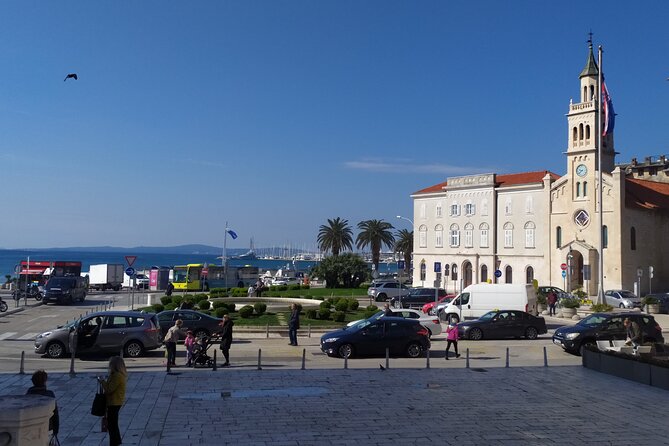
You start your tour on Trg Franje Tuđmana, where you get the framework for everything that comes next. Before you even move to the communist-era buildings, the guide sets the stage with what happened during World War II in Split and across Yugoslavia, and how those events fed into the creation of the new communist state.
You also see pictures showing the damage made in Split during the war. That visual context helps you understand why post-war rebuilding and political change were so intense, and why so many city decisions came with a sense of urgency.
This first section is about 25 minutes, and it is time well spent if you want the rest of the tour to feel connected, not like random stops.
Poljud Stadium and the China Wall, Yugoslav architecture with a story
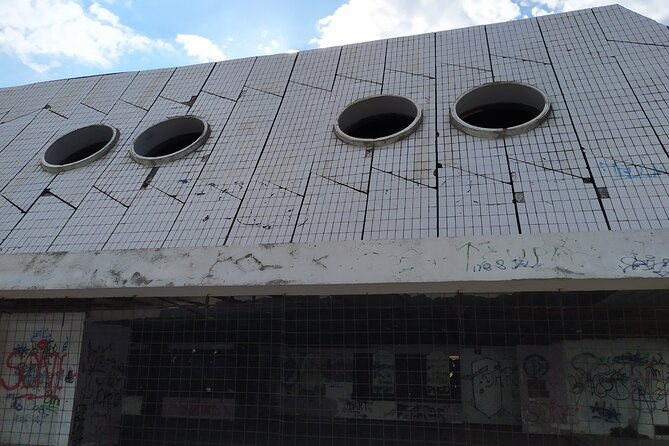
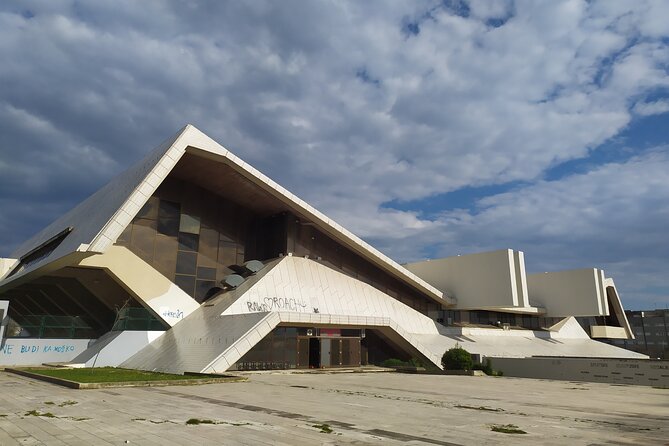
One of the most compelling parts for you is how the tour treats architecture as evidence. At the Poljud Stadium area, you get a short panoramic look and the story of why it was a big deal at the time.
Poljud Stadium was built to host major sport events in Yugoslavia, including the Mediterranean Games. The guide also explains why it mattered beyond Croatia, including the fact that it was featured as an important example of Yugoslav architecture in an exhibition held at MoMA in New York.
Then you shift focus to another standout sight nearby: the China Wall. You learn what it represents in Yugoslav socialist architecture, and why it is often remembered as something unusual, even for a city that already has strong visual character.
You only spend about 10 minutes here, so you may want to arrive ready to look closely. If you enjoy noticing materials, layout, and how power and planning show up in buildings, this stop hits well.
Koteks: Split’s early shopping dream and the reality behind it
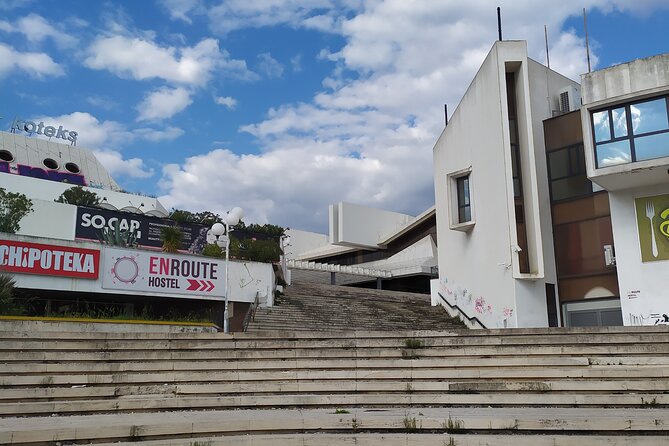
After the stadium-and-streets architecture moment, you walk around Koteks, described as the first shopping mall in Yugoslavia. The tour uses this place to explain the “modern” idea of shopping that existed in the communist system, and why it did not last forever.
You learn about consumer life in Yugoslavia as a kind of constant balancing act between the influence of the West and the limits of the East. The guide also covers how people often had to get creative to find goods, which is a detail that makes the entire topic feel practical, not theoretical.
This part lasts around 30 minutes, and it is the right length. It gives you enough time to understand how supply and desire collide, without dragging on.
Two days in Split? Here's how to fill the second.
- Split: Krka Waterfalls Trip with Boat Cruise and Swimming★ 4.8 · 10,519 reviews
- From Split: Krka Waterfalls, Food & Wine Tasting Tour★ 5.0 · 9,326 reviews
- Blue cave, Mamma Mia and Hvar, 5 islands speedboat tour★ 5.0 · 7,150 reviews
- From Split: Krka Waterfalls, Food & Wine Tasting Tour★ 4.9 · 6,598 reviews
Split 3 and life designed by policy, not just architects
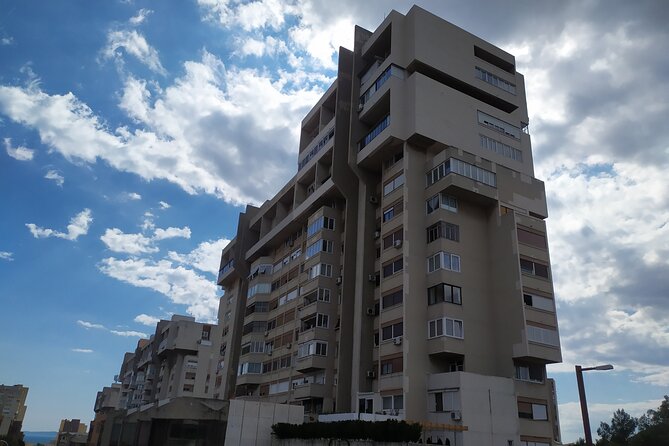
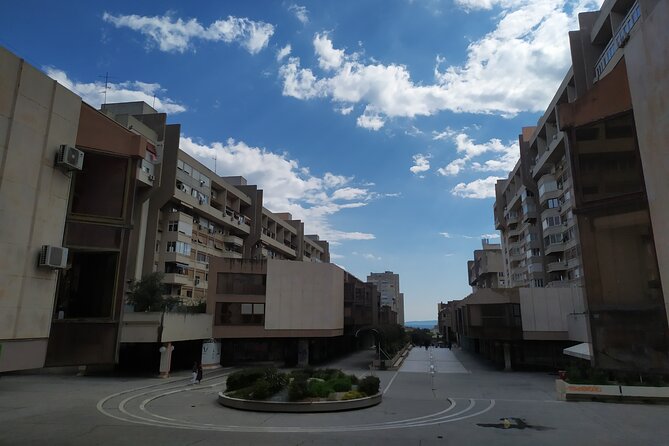
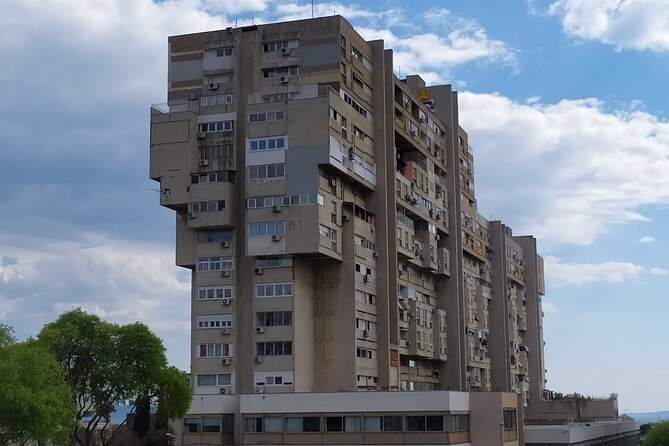
The longest stop is around Split 3, a modern communist Yugoslavia neighborhood. This is where the tour gets especially meaningful if you care about how politics shapes daily routines.
You walk through the project while the guide explains the original goal: providing quality living, working, and resting spaces for residents. You also hear why it became known internationally as an example of planned modern neighborhoods, and you get to see how different architects left their signatures on the buildings.
You may hear about building names and designs, including one called Cruiser. The point is not just the nickname. It is how the neighborhood layout and housing planning reflected ideas about social order, education, health, and economy.
The guide specifically emphasizes Tito-era dictatorship as part of understanding how the system worked. That theme can be uncomfortable if you dislike political framing, but it also gives you a clearer picture of the stakes behind the design choices.
This section takes about 1 hour 10 minutes, and it is the portion where you are most likely to start asking your own questions. If you enjoy back-and-forth conversation, this is where it naturally happens.
Split Predgrađe, Kopilica station, and the armored train
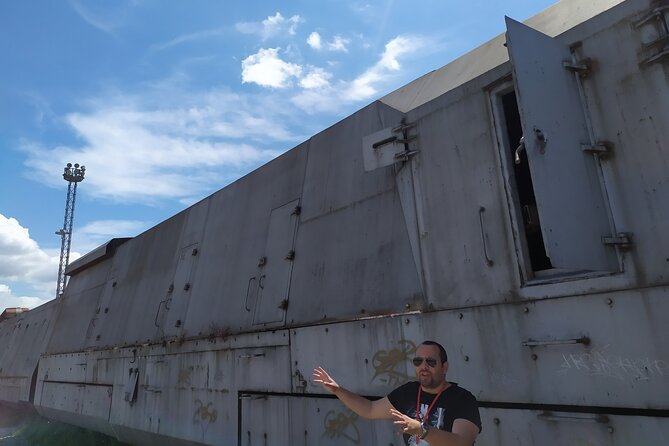
The final stop focuses on the end of Yugoslavia and what made it unravel into violence in the 1990s. It takes you to Kopilica railway station (referred to as part of Split Predgrađe), where you see an armored train displayed on the tracks.
The guide uses this symbol to explain how the story shifted from political friction to a bloody ending, and how those events changed relationships across nations and religions in the region.
This is about 30 minutes, and it lands with a different emotional tone than the housing and architecture stops. You are not just learning dates. You are seeing the physical remnant of a conflict that left deep consequences.
The Yugo photo moment and how to get the most from the guide
One of the standout elements is the chance to take a photo at the wheel of a Yugoslav symbol, the legendary Yugo. It is a light, memorable way to connect to pop culture and everyday life, not only formal politics.
Also, the tour is built for participation. The guide encourages everyone to ask questions and share opinions. That does not mean it turns into chaos, it just means you can steer what you care about.
If you are wondering how people actually experienced communist life, ask. If you want to understand the architecture and how planning worked, ask. The best moment to do it is when you are standing next to the place being explained, not after you move on.
Guide Boris: what makes the experience feel personal
If you get Boris, you are in good shape. One of the best pieces of feedback attached to this tour is praise for the guide and the way the history is delivered.
The comments also highlight that Boris was happy to host, and that the tour was a strong fit for people who specifically wanted to understand communist Split and Croatia. That alignment matters, because a tour like this only works if the guide can match the tone of your curiosity.
In plain terms, you want a guide who can answer follow-ups and keep the story moving. The guide here is presented as a local professional with advanced history training, and that combination typically shows up as clear explanations and a confident pace.
Hidden costs you can avoid, and small practical tips
This is a private experience with vehicle transport, but you still spend time walking and standing. A few practical moves can help you enjoy it more:
- Wear comfortable shoes. You will be outside at several stops.
- Bring a phone camera with enough storage for the Yugo photo moment.
- Plan for fast transitions between architecture and story points, since some stops are short (especially the stadium area).
Also, the topic is political and historical, so if you prefer lighter stories, this might feel intense. If you do enjoy history, you will probably like how the tour ties big events to the shape of everyday life.
Is it worth $150.99 for a private tour?
Here is the honest value question. At this price, you benefit most if:
- you are traveling as a couple or small group and want a private pace
- you enjoy history that connects to visible places, not just museum facts
- you want conversation, not a scripted monologue
- you care about communist-era architecture and planned neighborhoods
If you are traveling solo and cost is your main driver, you might compare it to cheaper group alternatives. But private transportation plus a specialized historian-style guide is often what makes this type of tour feel worth it.
Who should book Communist Tour of Split
This tour fits best if you:
- want a different angle on Split beyond the old-town highlights
- like architecture with explanations about politics and social life
- are curious about Yugoslavia as a whole, not only Croatia
- enjoy a guide who welcomes questions
It is also a strong choice if you are the type who reads plaques and still wants more context. The tour seems designed for that mindset.
Should you book this tour or skip it?
I think you should book it if communist Yugoslavia is the kind of topic you like to understand through real streets, not just through books. The mix of Poljud Stadium, Koteks, Split 3, and the armored train at Kopilica gives you a rare “from daily life to political collapse” arc in just 3 hours 30 minutes.
Skip it if your priority is classic sightseeing with minimal politics. This is not trying to be that kind of tour. And if you are traveling when weather is uncertain, wait for a clearer day since the experience requires good weather.
If you want an engaging, guided way to connect the city’s buildings to the ideas that shaped them, this private format is a solid bet.
FAQ
What is the duration of the Communist Tour of Split?
The tour lasts about 3 hours 30 minutes.
Is this tour private or shared with other groups?
It is private and exclusive, meaning only your group participates.
Where do we meet for the tour?
You meet at the bus station area on Trg Franje Tuđmana, at Autobusno stajalište Sv. Frane, Trg Franje Tuđmana 1, Split.
What is included in the price?
Included are an air-conditioned vehicle, private transportation, a soft local drink (soda/pop), and a local professional licensed guide with a Master’s degree in history.
Are admission tickets needed for the stops?
The tour data shows admission tickets are free for the listed stops.
What should I know about when the tour runs?
It operates on Saturdays and Sundays during the listed open hours window (7:30 AM to 5:00 PM).
Can I get a refund if plans change?
Yes. You can cancel for a full refund up to 24 hours in advance. If canceled less than 24 hours before the start time, the amount paid is not refunded. If the tour is canceled due to poor weather, you are offered a different date or a full refund.
Recently added around Split
- Private VIP Brac and Hvar Day Trip from Split
★ 5.0 · 1 review - Private Transfer From or To the Split Airport
★ 5.0 · 1 review - Brač Half Day Beach Party Transfer to Olife Beach Club
★ 5.0 · 1 review - Private Transfer from Split to Zagreb, Hotel-to-hotel, English-speaking driver
★ 5.0 · 1 review - Airport transfers
★ 5.0 · 1 review - Private ”Game of Thrones” Walking Tour in Split (entrance tickets included)
★ 5.0 · 1 review
Private, compared.
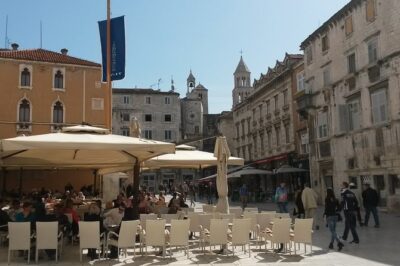
PRIVATE Walking Tour of Diocletian’s Palace & Old Town
Read our review →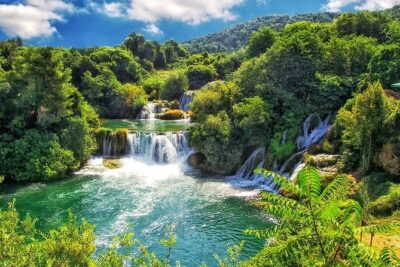
Private Krka Waterfalls tour with 30min Boat Cruse
Read our review →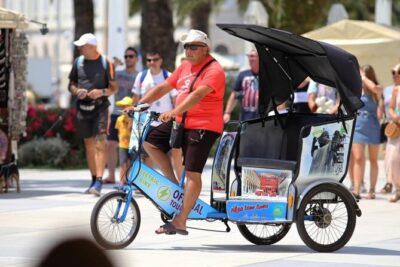
Split by Private Electric Rickshaw – Palace & Hidden Gems
Read our review →
Private Blue cave, Mamma Mia and Hvar, 5 islands tour from Split
Read our review →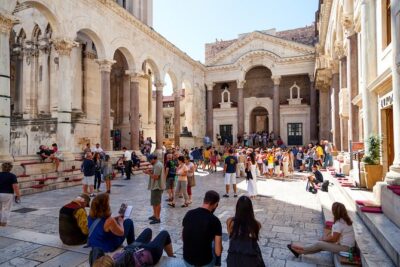

Private Full-Day Krka Waterfalls Tour with Wine Tasting
Read our review →
Private Boat Tour by local expert – Create Your Itinerary
Read our review →