Reviewed · GUIDED
Controversies behind Split and Croatia-Anthropologist guide
A palace and a graveyard can tell very different stories. This 2-hour, small-group tour turns Split’s center into a live lesson on politics, identity, and contested history. I like the anthropological angle because it links buildings to real human behavior, not just dates. I also like the guide’s energy and his clear use of maps and visuals while you walk.
The biggest reason this works is that you’re not just moving from landmark to landmark. You’re learning why Diocletian’s Palace, Ottoman-era frontiers, and even modern names on squares still shape how people in Split talk about themselves. One watch-out: it is mostly standing and walking between short stops, so comfortable shoes matter.
If you want Split the easy way, this may feel like homework. If you want Split the memorable way, it is worth the $35.
In This Review
- Key highlights you can expect
- A Split City-Center Tour With an Anthropological Point of View
- Price, duration, and what your $35 buys in real life
- Meeting points and the walk between key Split spaces
- Palazzo di Diocleziano: Why Split’s palace sparks controversy
- The Riva promenade and old Venetian squares that shape identity
- Narodni trg and the eerie fact of what lies under your feet
- Šperun ulica: the neighborhood tourists love, the story most miss
- Trg Franje Tuđmana and the politics of names
- Matejuška finish: views of Split plus a modern wrap-up
- Who should book this Split anthropological walk, and who might skip it
- A few travel tips to get the most from the tour
- Should you book this tour? My honest take
- FAQ
- How long is the Split anthropological tour?
- What is the price per person?
- Is the tour offered in English?
- How many people are in the group?
- Where do we meet and where does the tour end?
- Do I get a mobile ticket?
- Are admission tickets included?
- Is the tour weather dependent?
- Can service animals join the tour?
- Is free cancellation available?
Key highlights you can expect
- Diocletian’s Palace, framed as an argument through different historical periods, including what locals fought about.
- Identity lessons built into public spaces, from the Riva promenade to named squares that still divide opinions.
- Short, focused stops that keep the pace up while still giving enough time to connect the dots.
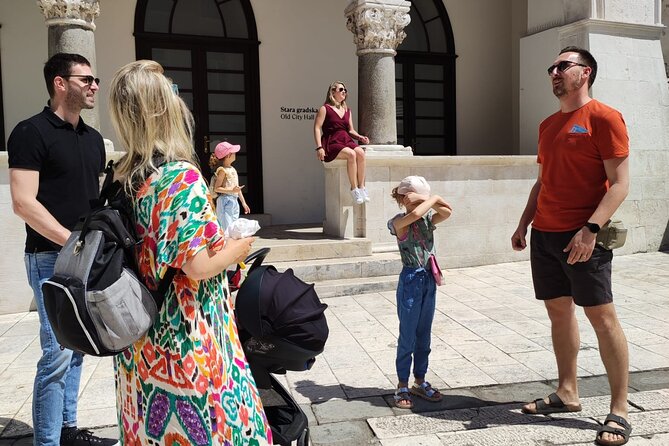
- Small group size (max 12) for more back-and-forth, not a one-way lecture.
- A guide who teaches, using iPad maps and answering questions, with humor and warmth.
- City-center viewpoints and a finish at Matejuška, where you get a classic Split panorama plus modern context.
A Split City-Center Tour With an Anthropological Point of View
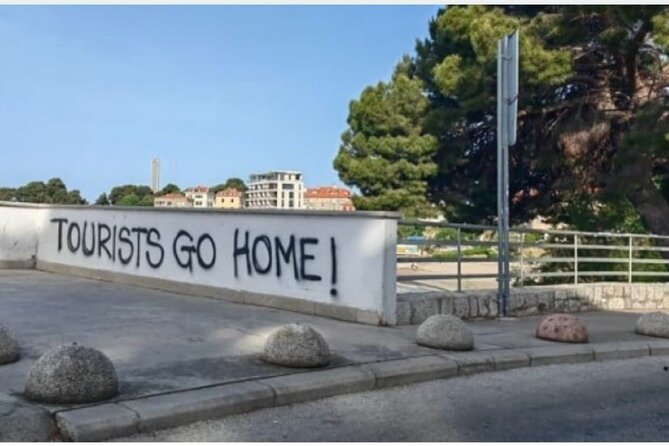
Split has plenty of standard sightseeing routes. This is different because it treats the city like a human system. People argue. People remember. People reinterpret the past to survive the present. You feel that theme from the first stop, where Diocletian’s Palace is not treated like a neat museum object.
What I liked most is the way the tour connects meaning to everyday streets. You stand in real locations and the story changes based on who is telling it, what period it is, and what politics are in the air. That is why the controversies matter, even if you do not know much Croatian history going in.
Another big plus is the guide. In the reviews, the host is repeatedly described as Marin: warm, open, prepared, and enthusiastic, with a teacher-style approach. You can also expect lots of answering. If you ask a question, you are not stuck with a quick shrug and a redirect.
The only practical downside is the format. Even though each stop is short, the total time is still about 2 hours, and you will likely spend stretches standing to listen. If standing is an issue for you, plan for breaks and wear shoes you trust.
Price, duration, and what your $35 buys in real life
At $35 per person for about 2 hours, the price is positioned as a serious guided experience, not a quick photo walk. The tour is offered in English and uses a mobile ticket, so you can keep things simple once you arrive.
A small group maximum of 12 travelers is a big deal here. It affects the whole feel of the tour. With fewer people, you can ask follow-ups, and the guide can adjust the pace. In my view, that is where the value comes from for a tour that is discussing contested history and modern identity, not just sightseeing.
You also get some admission support built in:
- Stop 1 includes an admission ticket
- The tour ends at Matejuška with an admission ticket included
Other stops in the center are listed as free, like the promenade and multiple squares.
As for logistics, the meeting point is Ul. kralja Tomislava 12, and the end point is Trumbićeva obala 2. The route is in the city center and near public transportation, which makes it easier to plug into the rest of your day.
One more planning note: the experience depends on good weather. If the day turns bad, you should expect the operator to offer another date or a full refund. That is especially relevant in Split, where coastal weather can shift.
Plenty more to do around Split
Meeting points and the walk between key Split spaces
This is built as a city-center route with multiple short stops. You start at Ul. kralja Tomislava 12, then move through squares, streets, and the waterfront promenade.
Because the stops are spread across the historic core, the walking is the point. You are meant to connect what you see with what you hear. If you prefer private taxis or museum-only routes, this format might not feel comfortable.
Still, the pacing is designed to stay manageable. The first stop is the longest at 35 minutes, then most others are 10 to 15 minutes. That structure helps you keep focus, especially when you are talking about complicated topics like who owned what, who lived where, and how later generations interpret it.
Palazzo di Diocleziano: Why Split’s palace sparks controversy
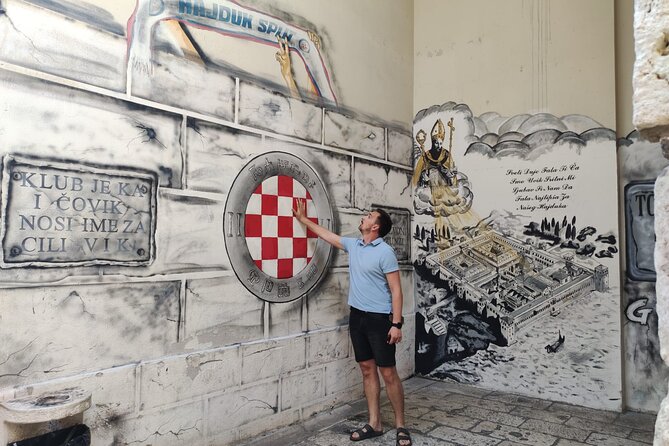
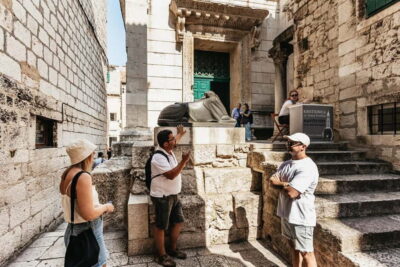
Stop 1 is the heart of the tour: Palazzo di Diocleziano, the Diocletian palace. The tour frames the palace as an ongoing argument, contested by locals across different historical periods.
What I found useful about this approach is that it stops the usual tourist temptation to treat major ruins like frozen facts. Instead, the palace becomes a stage where power changes hands and where residents re-use spaces for new needs. That is why the palace still matters socially, not just architecturally.
This is also where you get the tour’s main method. The guide tells the story from the perspective of issues that stayed controversial, not from a polished winners-and-losers timeline. That gives you a better sense of why people in Split may disagree about what the palace represents.
Practical tip: since this is the one stop with an included admission ticket and the longest time, arrive ready to pay attention. This is your foundation stop. After that, everything else will feel like supporting chapters.
The Riva promenade and old Venetian squares that shape identity
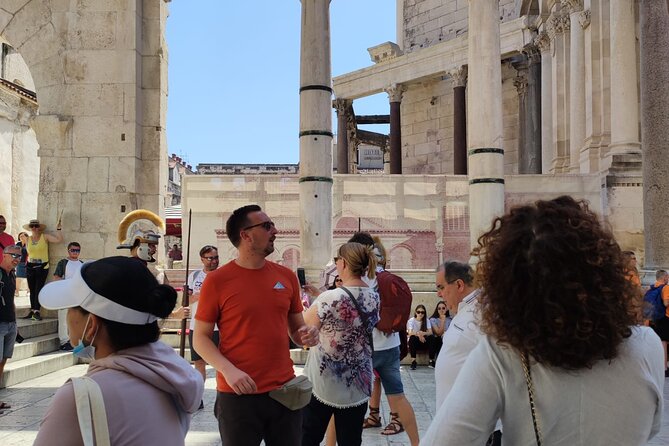
After the palace, you shift to life in public space. Stop 2 is Obala Hrvatskog narodnog preporoda, the Riva promenade. It is described as where public life happens in Mediterranean towns and also as a location tied to important historical events.
This is a good transition because it moves from monuments to routines. You get to see how the same waterfront can be both a leisure stage today and a historical stage in memory. If you are the kind of traveler who only notices buildings, this stop gently forces you to notice movement, gatherings, and the social rhythm of the city.
Stop 3 is Trg Braće Radić, an old Venetian square. Here the tour brings in the period when Split faced the Ottoman threat, described as a frontier fight. The guide also connects how that era is perceived today and why it still shapes politics and local identity.
That is the core of the tour’s value: it treats history as a living conversation. You are not just hearing about conflict centuries ago. You are hearing about how conflict becomes identity.
If you like context that explains modern attitudes, these two stops are the bridge that makes later topics click.
Narodni trg and the eerie fact of what lies under your feet
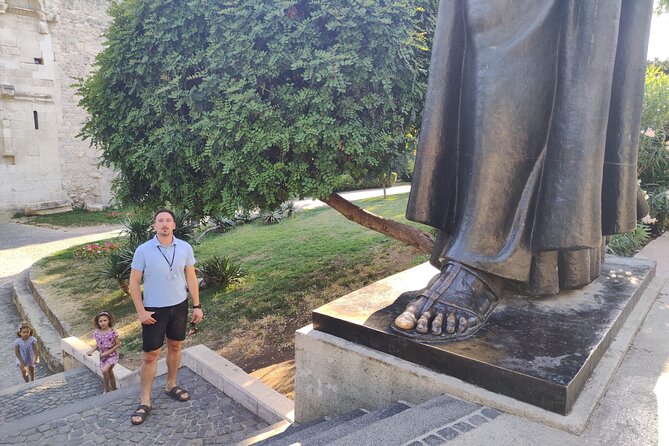
Stop 4 is Narodni trg. This is where the tour gets quietly intense. The square is tied to an earlier ancient graveyard, meaning human remains are underfoot.
That detail changes how you experience everyday space. It is no longer a nice square to admire or a convenient meeting point. It becomes a reminder that cities pile up, and later generations build over earlier lives.
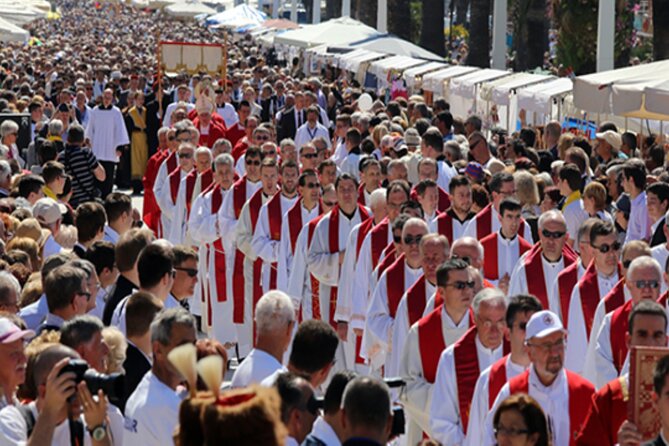
The tour also mentions that major later events happened here too, including infamous ones. This is not presented like sensational horror trivia. It is used as a reason to talk about how memory gets preserved, ignored, or repackaged.
If you are sensitive to heavy topics, this stop may hit harder than the others. For me, it is one of the most effective parts because it is grounded in a real physical location you can stand in, right now.
Two days in Split? Here's how to fill the second.
- Split: Krka Waterfalls Trip with Boat Cruise and Swimming★ 4.8 · 10,519 reviews
- From Split: Krka Waterfalls, Food & Wine Tasting Tour★ 5.0 · 9,326 reviews
- Blue cave, Mamma Mia and Hvar, 5 islands speedboat tour★ 5.0 · 7,150 reviews
- From Split: Krka Waterfalls, Food & Wine Tasting Tour★ 4.9 · 6,598 reviews
Šperun ulica: the neighborhood tourists love, the story most miss
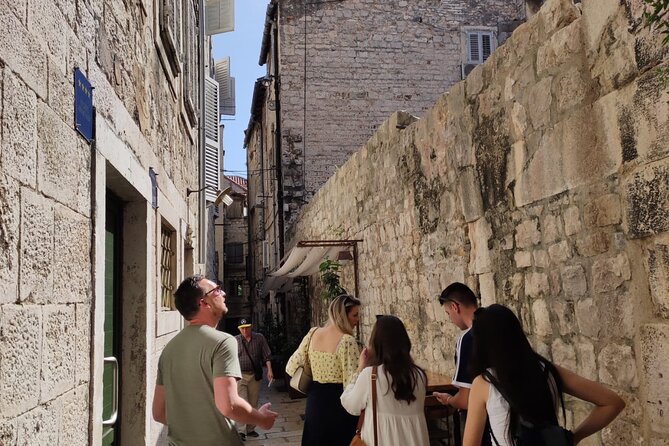
Stop 5 takes you to Šperun ulica. This neighborhood is described as one of Split’s most famous areas, especially for tourists staying nearby. The tour’s point is that many visitors miss the story behind it.
This is a smart move, because it flips the usual script. Instead of treating tourist-heavy streets as background scenery, the guide treats them as historical and social spaces with meaning.
Even if you do not know the neighborhood well, you will come away with a better sense of how areas get their reputations and why locals might see them differently than visitors do. That is the anthropological lens again: place plus people plus interpretation.
Trg Franje Tuđmana and the politics of names
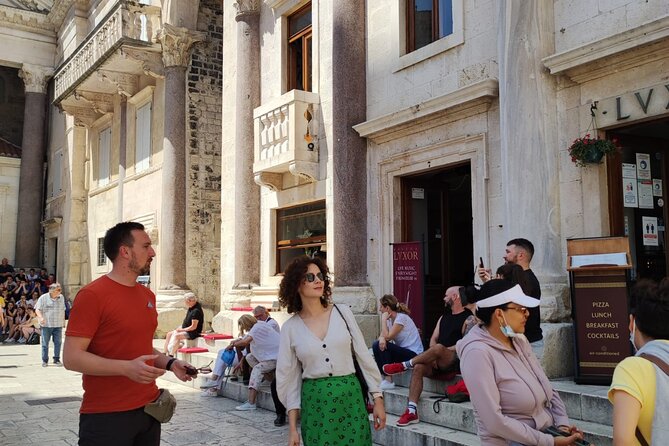
Stop 6 is Trg Franje Tuđmana, a square named after the first Croatian president. By mentioning him, the tour shifts to turbulent late 20th century times, and why that period is described as one of the hardest history lessons in Croatian schools.
Then the guide brings it to the present, including the idea that many issues from that era still divide Croatian society.
This stop matters because it shows how a city’s street signs can carry political weight. A name is never only a label. It is an argument about who should be remembered, and how.
If you enjoy learning how modern politics expresses itself through everyday geography, this stop will feel especially relevant. If you prefer tours that keep things strictly in the past, you might want to pace yourself here.
Matejuška finish: views of Split plus a modern wrap-up
The tour ends at Matejuška. This location gives one of the most famous views of Split, and it is chosen as the final spot where the guide delivers the closing words and offers insight into modern Split.
You get the reward view that many people associate with Split, but it is paired with interpretation, not just a photo moment. The finish ties back to the tour’s main themes: how the past keeps showing up in identity, and how Split people navigate that every day.
This end stop also includes an admission ticket, so it is not an empty check-the-box finale. It is part of the structure and time planning of the 2-hour experience.
Who should book this Split anthropological walk, and who might skip it
This tour is best for you if:
- You want more than a landmark checklist.
- You like questions and discussion, not just silent listening.
- You are curious about how history becomes politics and how that shows up in public spaces.
- You enjoy learning about human behavior, not only architecture.
I also think it is a great choice if you have already seen Diocletian’s Palace from the outside and want a story that explains why it is more complicated than it looks. The palace stop gives you the foundation you can build on for the rest of the day.
You might skip it if:
- You do not enjoy walking and standing for about 2 hours.
- You want strictly neutral history with no controversy or modern identity links.
A practical note: bring water and plan for standing. In the reviews, the guide is described as trying to find shade, which suggests sun can be part of the equation. Comfortable shoes are the real MVP here.
A few travel tips to get the most from the tour
If you want to maximize your time, do these:
- Arrive a few minutes early at Ul. kralja Tomislava 12 so you start relaxed.
- Wear shoes you can stand in, because the stops are short but you may spend time listening.
- Bring a couple of questions about Croatia’s modern identity, not just ancient history. The guide is open to questions, and Marin is known for having answers.
- If you are traveling with a group, remember that the max size is 12, so ask early if you want something explained again.
The guide uses iPad maps and visuals during the tour, so it helps to stay attentive during the transitions. You will often get a clearer mental map of how all the stops connect.
Should you book this tour? My honest take
Yes, I would book it if you want Split to make sense as a place where history is still argued. The combination of controversies, real city spaces, and a guide like Marin who uses maps, visuals, humor, and Q and A is a strong mix.
It also feels like good value for money. You get about 2 hours of guided interpretation, a small group size up to 12, English support, and included admission at both the palace stop and the Matejuška finish.
If your travel style is strictly postcard sightseeing, you may find it too interpretive. But if you like walking tours that explain why people disagree, and why that disagreement still shapes daily life, this one is easy to recommend.
FAQ
How long is the Split anthropological tour?
The tour is approximately 2 hours.
What is the price per person?
The price is $35.00 per person.
Is the tour offered in English?
Yes, the tour is offered in English.
How many people are in the group?
The tour has a maximum of 12 travelers.
Where do we meet and where does the tour end?
You meet at Ul. kralja Tomislava 12, 21000, Split, Croatia, and the tour ends at Trumbićeva obala 2, 21000, Split, Croatia.
Do I get a mobile ticket?
Yes, the tour provides a mobile ticket.
Are admission tickets included?
Admission ticket is included at Stop 1 (Palazzo di Diocleziano) and Stop 7 (Matejuška). Other listed stops are free.
Is the tour weather dependent?
Yes, it requires good weather. If it is canceled due to poor weather, you will be offered a different date or a full refund.
Can service animals join the tour?
Yes, service animals are allowed.
Is free cancellation available?
Yes. Free cancellation is available if you cancel up to 24 hours in advance for a full refund.
Recently added around Split
- Private VIP Brac and Hvar Day Trip from Split
★ 5.0 · 1 review - Private Transfer From or To the Split Airport
★ 5.0 · 1 review - Brač Half Day Beach Party Transfer to Olife Beach Club
★ 5.0 · 1 review - Private Transfer from Split to Zagreb, Hotel-to-hotel, English-speaking driver
★ 5.0 · 1 review - Airport transfers
★ 5.0 · 1 review - Private ”Game of Thrones” Walking Tour in Split (entrance tickets included)
★ 5.0 · 1 review
Guided, compared.

Plitvice Lakes Guided Tour with Entry Tickets
Read our review →
Plitvice Lakes National Park Guided Day Tour from Split
Read our review →
Krka National Park Tour with tour Guide & Wine tasting from Split & Trogir
Read our review →
Self-Guided Plitvice Lakes Day Tour with Boat Ride
Read our review →