Reviewed · PRIVATE
Experience Split With Local Professional Historian – Private
Split makes more sense with a historian. This private Split tour threads together the big names you see every day, like the Golden Gate and Gregory of Nin, with the story of how Diocletian’s Palace shaped the city. I like that you get a Master’s-level history guide and a tight 2-hour route that stays focused, not scattered. One thing to consider, though, is that you’ll be outside a lot, so you’ll want decent weather for comfortable walking.
What really sells it for me is the way the palace gets explained. You don’t just hear names, you also get 3D reconstruction images in a display book, which makes the scale and layout much easier to understand as you stand in front of the real stone.
Your biggest practical watch-out is that no admission tickets are included. The walk is built around stops that are described as free to view, but if you decide to go inside anything on your own before or after, you may need separate tickets.
In This Review
- Key highlights you’ll feel right away
- Why Golden Gate is the best place to start in Split
- Gregory of Nin: the statue stop that actually teaches you context
- Diocletian’s Palace: how this 2-hour walk keeps you oriented
- Peristyle and the palace’s social map
- Temple of Jupiter and St. Domnius: Roman religion to Christian reality
- Vestibulum of Diocletian’s Palace: the private feeling of power
- Riva Harbor and Fruit Square: where Split becomes a living city
- Pjaca Square ending: your route lands you in the right place
- What you get for the price, and why it can be good value
- Timing, meeting point, and how long to plan
- Who this private historian tour is best for
- Booking verdict: should you book this Split tour?
- FAQ
- How long is the private Split tour?
- What language is the tour offered in?
- Where do we meet, and where does the tour end?
- Is this tour private?
- Is a mobile ticket provided?
- Are admission tickets included for the stops?
- What’s included besides the guide?
- Do I need good weather for this experience?
Key highlights you’ll feel right away
- A history guide with a Master’s degree who can answer your questions and keep the pace human
- Golden Gate to Pjaca Square in one logical walk, so you finish in the middle of the action
- 3D reconstructions that help you map Diocletian’s Palace while you’re there
- Roman to Christian transitions explained where you can actually see the clues
- A flexible start time that works better than rigid group tours
Why Golden Gate is the best place to start in Split
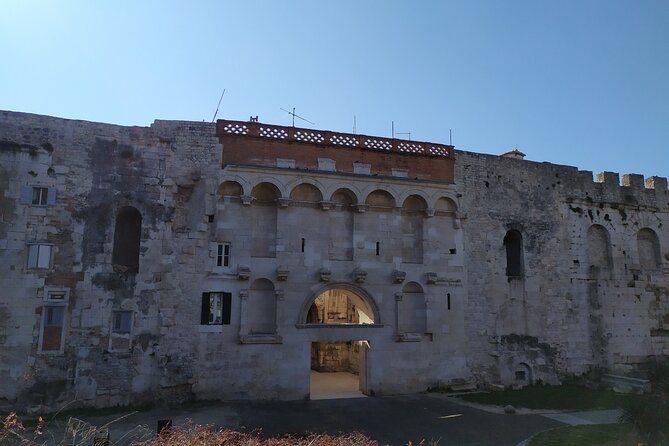
The tour begins at the Golden Gate, the northern gate of Diocletian’s Palace. It is not made of gold, but it is one of the most famous entry points in Split’s old town. You’ll meet right by Dioklecijanova 7, and your guide sets the tone fast, with what the gate meant and why this spot is such a clean reference point for everything else you’ll see.
I like starting here because it helps you stop wandering randomly. In minutes, you’ll understand the logic of the old city: a Roman palace complex became a civic core, and later on, that Roman footprint influenced the medieval town that grew around it. When you can connect the dots that quickly, Split goes from pretty streets to a place with an actual layout in your head.
A small consideration: this is a classic “old stone” start, so take a moment to check your footing and wear shoes you trust. You’ll be doing multiple short walks over uneven surfaces as the tour moves from landmark to landmark.
Gregory of Nin: the statue stop that actually teaches you context
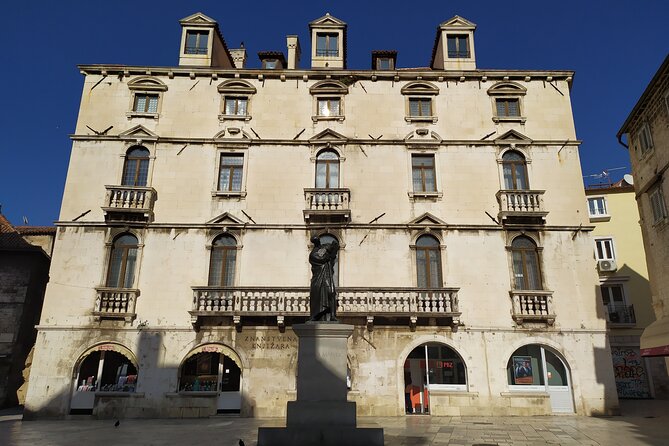
Next up is the Grgur Ninski statue, dedicated to Gregory of Nin. This is the kind of sight many people snap a photo of, then move on. On this tour, it turns into a short lesson in the person and why this monument matters in Split.
You’ll hear a story with specific facts about Gregory of Nin and about the sculptor of the monument. That detail matters because it stops the statue from feeling like generic city decor. Instead, it becomes a bridge between the Roman era your guide has already set up, and the later religious and cultural layer that shaped the city’s identity.
The practical benefit is that the tour keeps building. You go from an architectural entry point (Golden Gate), to a named historical figure (Gregory of Nin), and then directly into the palace itself. It’s a smooth escalation in meaning.
Plenty more to do around Split
Diocletian’s Palace: how this 2-hour walk keeps you oriented
Now you’re at the Palazzo di Diocleziano, the central city monument that essentially defines Split. The guide frames Diocletian as one of the successful emperors of the Roman Empire, then points you toward why his palace is still such a powerful place to study. It is described as one of the best preserved examples of its kind, and your route is designed to let you see key parts of it without needing a full day and a pile of tickets.
This stop is where the 3D reconstructions really earn their keep. As you follow along the route from the Golden Gate into the palace area, the guide highlights major spaces and also explains what they were for. You also get a clear sense of how the palace transitioned into a medieval city, with its own habits and quirks, rather than staying frozen as a Roman relic.
What you can expect, in plain terms:
- You’ll explore standout areas of the palace complex.
- You’ll hear how each part worked for real people.
- You’ll get tips that help you recognize what you’re looking at later, even if you keep walking on your own.
A useful consideration: even though the tour is about two hours, Diocletian’s Palace can feel dense. If you’re sensitive to crowds, pick comfortable shoes and use the pauses offered by a private guide when you need a breather.
Peristyle and the palace’s social map
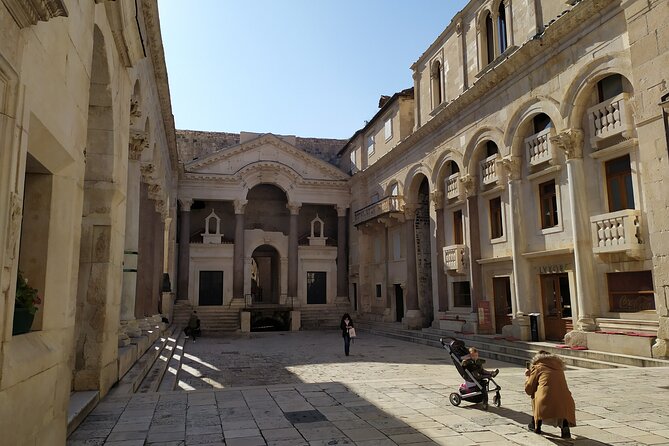
The Peristyle is one of the most important spaces you’ll stand in. It sits right in the center of Diocletian’s Palace, and the guide explains its function in everyday palace life. You’ll hear how it could connect people, and also divide them from the emperor. That sounds dramatic, but it’s actually helpful: it gives you a way to interpret the space based on power and access, not just architecture.
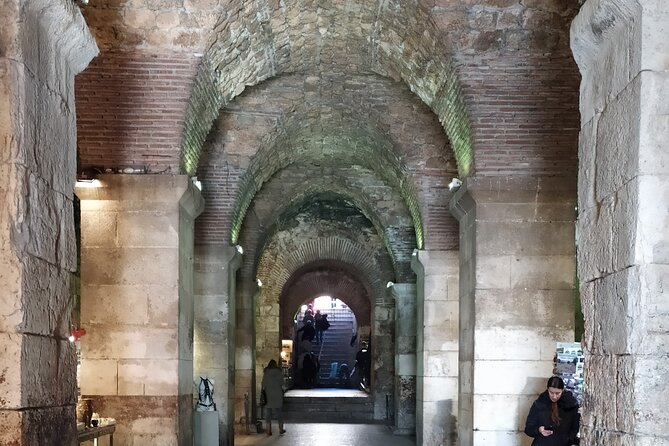
From there, you move toward the central part of the cellars area where the guide explains how it was used through history, and why it mattered for the growth of Split. This is one of those moments where the palace stops being “ancient walls” and becomes a functional machine that kept changing hands and uses over time.
You’ll also check the Triclinium area. This is where eating habits and dining organization come up, including how an emperor’s dining room was set up. You get the Roman version of social hierarchy, played out through a meal.
My tip for getting the most out of this part: listen for the practical comparisons the guide makes between how the palace worked and how later Christian city life shifted the use of buildings. It’s the kind of explanation that sticks when you walk away.
Temple of Jupiter and St. Domnius: Roman religion to Christian reality
The tour then shifts to religion, starting outside at the Temple of Jupiter. Roman temples to honor gods were a necessary feature of Roman residences, and this outside viewing helps you understand why those beliefs were built into the physical layout.
After Jupiter, you move to the Cathedral of Saint Domnius. This stop is also outside, but it comes with an explanation of significant parts and the story behind them. The guide also flags interesting interior elements you might want to look for if you visit later on your own.
This pairing works well because it’s not just two separate landmarks. It’s a timeline you can walk through. You see how the religious focus changes, while some of the architectural bones of the old palace and city remain in play.
One thing to keep in mind: if you planned to go inside every stop on this route, the tour length won’t cover that. The strength of this experience is teaching you what matters outside and setting you up for smart choices afterward.
Vestibulum of Diocletian’s Palace: the private feeling of power
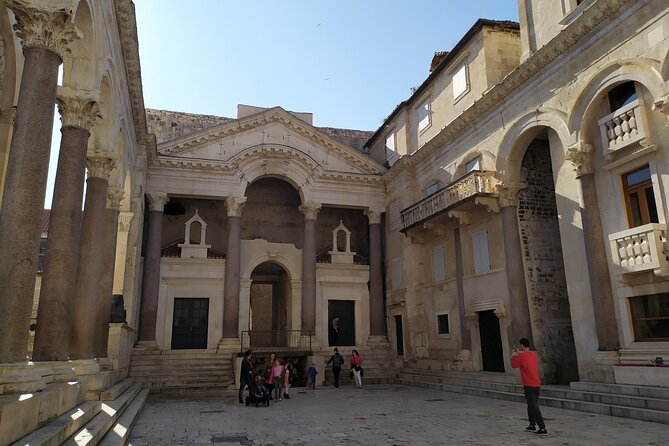
The Vestibulum is the pre-entrance to Diocletian’s private chambers. The tour doesn’t treat it like a random hallway stop. You’ll learn what it looked like and what its function was, which helps you understand the difference between public and private space in a palace that was also a political statement.
This is a good stop for anyone who likes that extra layer of human scale. Even in a huge Roman complex, someone still had daily routines, and this is part of the route that supported that private access.
If you tend to rush, slow down here. It’s short, but it gives context that makes the rest of the palace make more sense.
Two days in Split? Here's how to fill the second.
- Split: Krka Waterfalls Trip with Boat Cruise and Swimming★ 4.8 · 10,519 reviews
- From Split: Krka Waterfalls, Food & Wine Tasting Tour★ 5.0 · 9,326 reviews
- Blue cave, Mamma Mia and Hvar, 5 islands speedboat tour★ 5.0 · 7,150 reviews
- From Split: Krka Waterfalls, Food & Wine Tasting Tour★ 4.9 · 6,598 reviews
Riva Harbor and Fruit Square: where Split becomes a living city
After the palace core, you get a breath of fresh air with Riva Harbor. Riva is the main city promenade, and the guide explains how it was built over centuries, plus why locals consider it important as a central place in the city. This part is helpful because it reminds you that Diocletian’s Palace is only one layer. The modern city uses the old geography.
Next comes Fruit Square, Trg Brace Radic. It’s small and charming, but the guide gives you the reason behind its name and points out a significant monument standing in the middle, plus other surrounding important sights.
These two stops are also where you start to feel what makes Split livable. You’re not just touring ruins. You’re walking through a city that still organizes daily life around its squares and promenades.
Pjaca Square ending: your route lands you in the right place
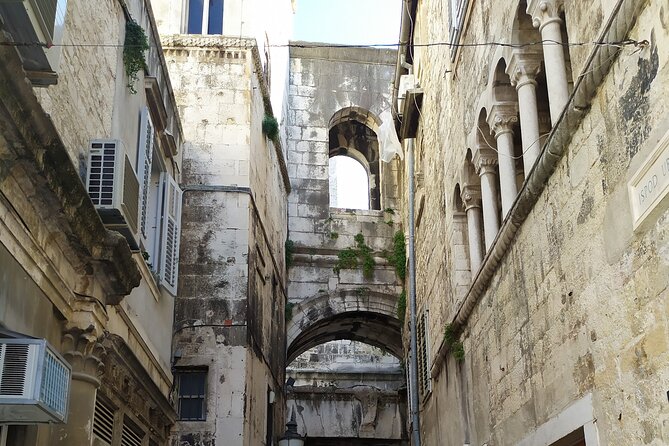
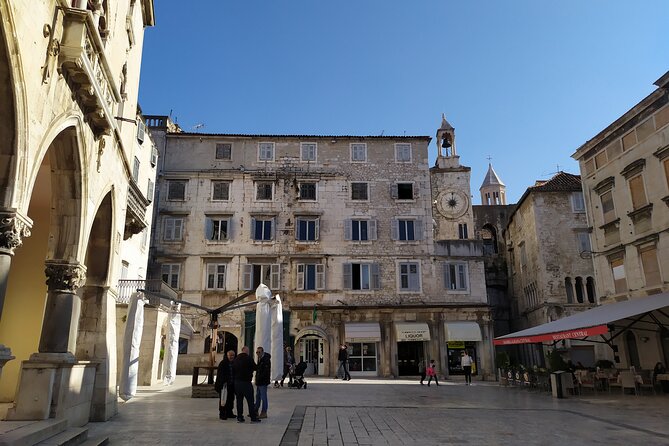
The tour ends on People’s Square, known as Pjaca Square. This is presented as the center of city happenings from medieval times to today, which is exactly why ending here makes sense. You’re dropped into a place where you can keep going without thinking too hard about your next move.
The guide shows interesting things and key secrets of the square, plus advice on what else to see in the city after the walk. Even if you only plan a quick stroll, this ending point helps you avoid the common problem of finishing a tour somewhere quiet and far from the fun.
A small bonus: because it ends in the city center, you can pair it with dinner plans easily, and the private format makes it easier to adjust if timing matters.
What you get for the price, and why it can be good value
The price is $156.21 per group, up to 15 people, for about two hours. That’s not a “per person only” style of pricing. It’s group-based, so if you’re traveling with friends or family, the value can improve fast.
What makes it feel worth it for me is the mix of:
- a private local guide with a Master’s degree in history
- English commentary
- 3D reconstruction visuals that help you understand the palace layout
- a route that uses the key landmarks efficiently instead of turning into a long wander
Is it the cheapest way to “see Diocletian’s Palace”? Probably not. But if you care about learning the why behind the what, this is one of those tours that can save you time later. You’ll leave with a mental map, and that often makes self-guided exploring more rewarding.
Also, it’s offered with flexible starting time. That matters in Split because evenings can be full and you might want to line it up with dinner.
Timing, meeting point, and how long to plan
The tour runs about 2 hours. It is offered in English, and you’ll get a mobile ticket. Starting time is flexible, and it is scheduled within a window shown as Monday to Friday, 5:00 PM to 7:00 PM. The listing also notes the need for good weather, so if conditions are poor, you may be offered another date or a full refund.
Meeting is at Golden Gate, Dioklecijanova 7, Split. It ends at Narodni trg 16, Split, generally at People’s Square.
If you’re planning your day, give yourself a little cushion around that end time. You’ll be right in the middle of things at Pjaca, so it’s a natural moment to head for food or keep exploring nearby streets.
Who this private historian tour is best for
I think this is a strong match if:
- you want a focused explanation of Split’s most important landmarks without spending a whole day
- you like history that connects architecture, religion, and everyday life
- you’re traveling with a small group and want private pacing
It also fits mixed walking styles, because the private guide can adapt as needed. One review highlighted that Boris made sure a partner could find a place to sit during parts of the tour, which is a reassuring sign that the experience isn’t rigid.
It might be less ideal if you want a long, ticket-heavy museum style tour, since the stops are built around viewing and explanation on route.
Booking verdict: should you book this Split tour?
Yes, I’d book it if you want to understand Diocletian’s Palace fast and leave with real clarity. The combination of a Master’s-level historian, 3D reconstructions, and a route that ends at Pjaca Square is a practical recipe for a rewarding evening in Split.
Skip it only if you’re primarily interested in casual photos with zero need for context, or if you planned to spend most of your time inside ticketed sites. This tour shines when you want the stories behind what you’re standing in front of.
If you book, do one simple thing: wear comfortable shoes and plan to keep walking after, because ending at People’s Square puts you in the right spot to turn knowledge into a great night out in Split.
FAQ
How long is the private Split tour?
The tour lasts about 2 hours.
What language is the tour offered in?
The tour is offered in English.
Where do we meet, and where does the tour end?
You meet at Golden Gate, Dioklecijanova 7, 21000 Split. The tour ends at Narodni trg 16, 21000 Split, generally at People’s Square (Pjaca Square).
Is this tour private?
Yes. It is a private tour, so only your group participates.
Is a mobile ticket provided?
Yes, the tour includes a mobile ticket.
Are admission tickets included for the stops?
No admission tickets are included. The tour description lists the stops with admission ticket free, but tickets are still not included as part of the package.
What’s included besides the guide?
You get 3D reconstruction images and pictures via a display book, plus commentary from a local guide with a Master’s degree in history.
Do I need good weather for this experience?
Yes. The experience requires good weather. If it’s canceled due to poor weather, you will be offered a different date or a full refund.
Recently added around Split
- Private VIP Brac and Hvar Day Trip from Split
★ 5.0 · 1 review - Private Transfer From or To the Split Airport
★ 5.0 · 1 review - Brač Half Day Beach Party Transfer to Olife Beach Club
★ 5.0 · 1 review - Private Transfer from Split to Zagreb, Hotel-to-hotel, English-speaking driver
★ 5.0 · 1 review - Airport transfers
★ 5.0 · 1 review - Private ”Game of Thrones” Walking Tour in Split (entrance tickets included)
★ 5.0 · 1 review
Private, compared.
PRIVATE Walking Tour of Diocletian’s Palace & Old Town
Read our review →
Private Krka Waterfalls tour with 30min Boat Cruse
Read our review →
Split by Private Electric Rickshaw – Palace & Hidden Gems
Read our review →
Private Blue cave, Mamma Mia and Hvar, 5 islands tour from Split
Read our review →

Private Full-Day Krka Waterfalls Tour with Wine Tasting
Read our review →
Private Boat Tour by local expert – Create Your Itinerary
Read our review →