
Reviewed · SPLIT
Experience Split With Local Professional Historian – Small Group
Diocletian’s Palace gets real when a local explains it. I loved the small group of 12 and how historian Boris used a picture-and-3D reconstruction display book to make the Roman layout click. One thing to keep in mind: this is mostly an exterior walk through major points, so if you want long, inside-only museum time, you will still need extra hours on your own.
This is a focused, about two-hour stroll that starts at the Golden Gate and ends on People’s Square (Pjaca). The pace is easy to follow, and the route connects the palace to the everyday city rhythm, including Riva Harbor and little squares like Trg Brace Radic.
In This Review
- Key highlights worth packing into your Split day
- Entering Diocletian’s Palace at the Golden Gate
- Gregory of Nin and the stone map of Split
- Palazzo di Diocleziano: the Roman framework and medieval afterlife
- Peristyle, cellars, and triclinium: seeing how life worked
- Jupiter’s Temple and St. Domnius: religion and power in plain sight
- Vestibulum to Riva Harbor: from private rooms to the promenade
- Fruit’s Square (Trg Brace Radic) to Pjaca: where the tour ends
- Meet historian Boris: 3D visuals, photo help, and interactive teaching
- Price and time: is $38.62 actually good value?
- Who should book this Split Diocletian’s Palace historian walk?
- A quick, practical way to plan your day around the tour
- Should you book this Split history tour with Boris?
- FAQ
- How long is the Split walking experience?
- Where do I meet, and where does the tour end?
- Is the tour offered in English?
- What is included in the price?
- Are admission tickets included?
- What group size should I expect?
- What if the weather is poor?
- Is free cancellation available?
Key highlights worth packing into your Split day
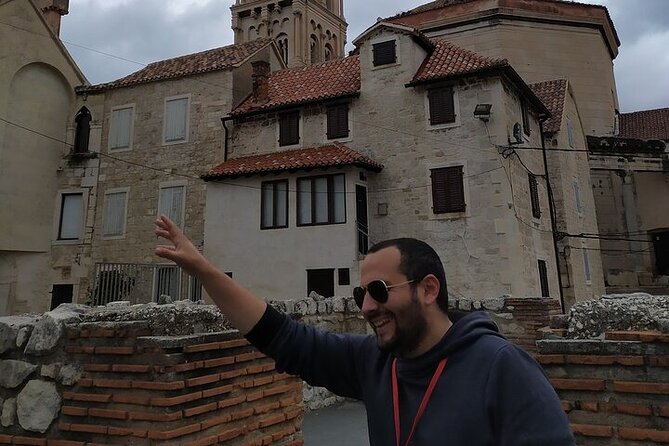
- Boris is a history teacher in a good way: he answers questions, uses stories, and keeps it lively.
- 3D visuals in a display book: helpful when stone buildings look the same until someone labels them.
- Golden Gate to Pjaca in one arc: Roman power, then medieval life, then modern street life.
- Real photo help while walking: he guides where to stand so your pictures make sense.
- Free, outdoor viewing points along the way: you focus on learning without chasing ticket windows.
- Small-group size for back-and-forth: easy to ask, easy to hear, less rushing.
Entering Diocletian’s Palace at the Golden Gate
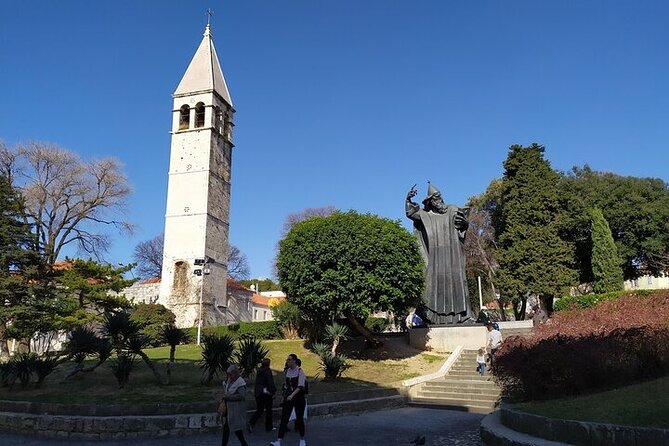
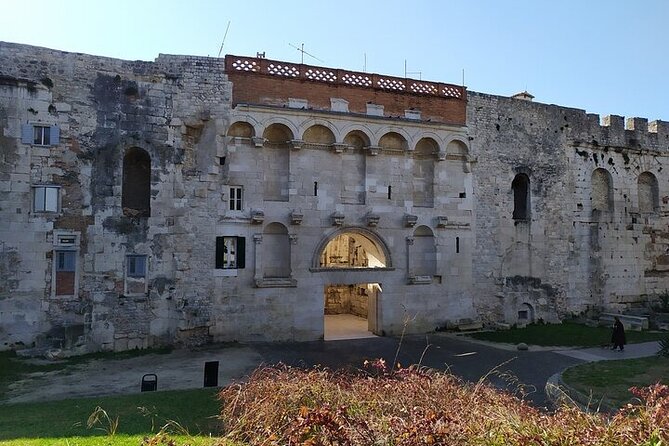
You meet at Golden Gate, Dioklecijanova 7, right in the old-city flow. The first thing I like about starting here is that it gives you a spine for the whole walk. Golden Gate is the northern gate of Diocletian’s Palace, and it sits across from one of Split’s most famous statues, Gregory of Nin, so you immediately get the big idea that this city is built like a story map.
Boris frames the palace not as one monument you see and forget, but as something that shaped daily life in Split for centuries. You also get a quick reality check that the gate is not really made of gold, it is stone, which sounds silly until you realize how many myths float around major sights like this.
This first segment is short, about 15 minutes, and that is exactly right. It gets you oriented without turning the tour into a lecture you survive.
Gregory of Nin and the stone map of Split
Right after the gate, you head to the Grgur Ninski statue. This is not just a photo stop. Boris ties Gregory of Nin to the larger historical picture of the city, including who he was and why he matters enough to be memorialized so prominently.
I like this stop because it connects the Roman walls to the later layers of Split. You are walking in a place where the past keeps changing roles, from empire politics to religious culture to city identity. The statue gives you a handle to grab onto while you keep moving through the palace zone.
Also, the timing is tight, about 10 minutes. You get meaning fast, then you move on before the group loses energy.
Split is the launch point for half the Dalmatian coast: islands, waterfalls, and a couple of countries besides.
Palazzo di Diocleziano: the Roman framework and medieval afterlife
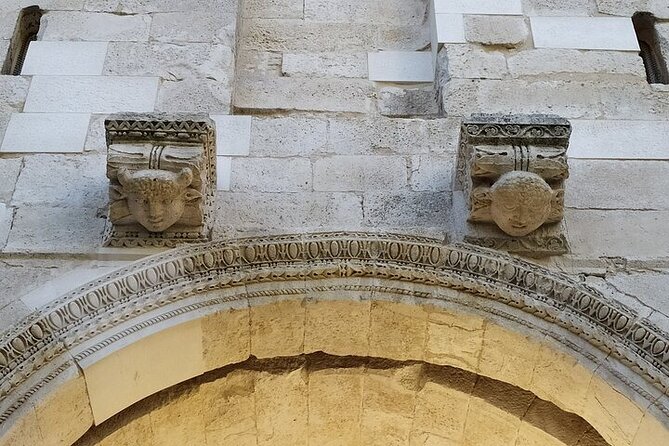
Now you shift into the main event, the Diocletian’s Palace in the center of old Split. Boris explains how Diocletian, a major Roman emperor, built this palace and why it is still among the best preserved examples of its kind.
What makes this portion worth your time is how you walk away understanding transitions, not just dates. You learn about the palace as a Roman stronghold, then how it changed as the area shifted into a medieval city with its own character. That transition is the difference between seeing impressive stone and actually understanding why this part of Split looks the way it does.
You also get a practical “view and listen” route that includes major points, such as:
- Peristyle (the central court)
- Jupiter’s Temple (viewed outside)
- Diocletian’s Cellars, in the central substructure area
- Triclinium
- Mausoleum, which is now the cathedral area (viewed outside)
Most of the viewing here is exterior, and that is a good fit for a two-hour format. You cover a lot without feeling stuck behind entry procedures.
Peristyle, cellars, and triclinium: seeing how life worked
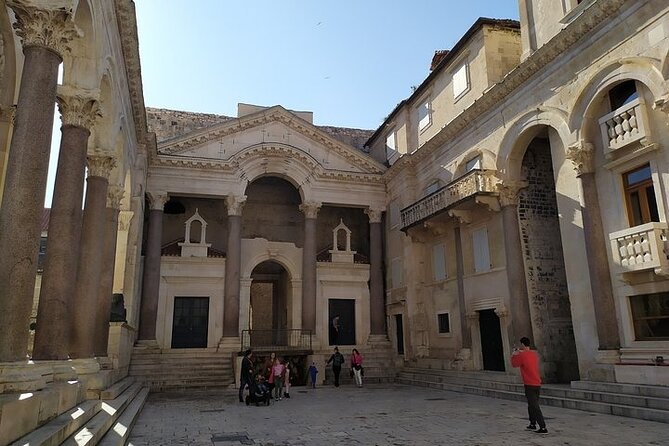
Standing in the Peristyle is where the palace starts to make sense. Boris explains the Peristyle’s function as the palace center, a place that connected people but also separated them from the emperor. That framing changes how you look around. Instead of “cool columns,” you start noticing movement, power, and who belonged where.
From Peristyle, you go into the central part of the cellars of Diocletian’s Palace. This part is especially useful if you have ever tried to self-guide a ruin and felt like you were walking through random corridors. Boris talks about how these spaces were used over time and why they are important to Split’s history and the city you see today.
Then you check Triclinium. This is where dining culture becomes part of the architecture lesson. Boris explains eating habits of the emperors and Romans in general, and how the dining room was organized. It is a small detail, but it makes the whole palace feel like something built for routines, not just ceremonies and uniforms.
This section is about 20 minutes, but it feels like more because the structure helps you retain what you are learning.
Jupiter’s Temple and St. Domnius: religion and power in plain sight
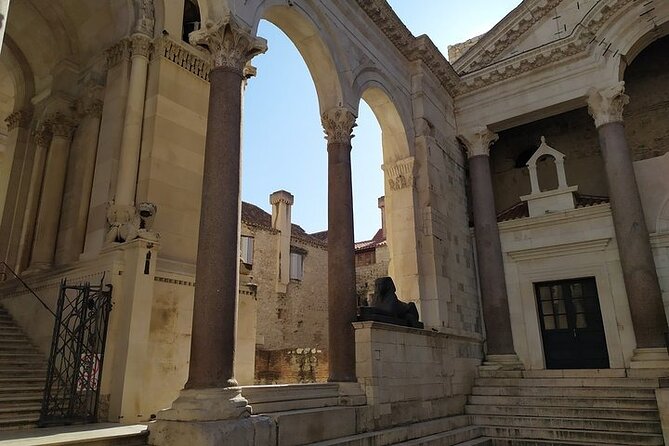
Next comes the Temple of Jupiter, viewed outside. In the Roman world, religion was not a side hobby, it was built into the idea of residence and authority. Boris connects that to what you can actually see around the palace grounds, so you understand why a temple belongs in a palace complex at all.
After Jupiter, you stand in front of the Cathedral of Saint Domnius, again an exterior visit. This stop is short, around 10 minutes, and the goal is not to give you a full interior tour. Boris points out significant parts you can spot outside and also warns you about what you should look for if you decide to visit the interior later.
I appreciate this approach because it prevents the common problem of over-promising. You leave knowing what to notice when you come back, not just ticking off a facade.
Vestibulum to Riva Harbor: from private rooms to the promenade
You then move to the Vestibulum of Diocletian’s Palace, the pre-entrance to the emperor’s private chambers. Boris explains what it looked like and what it was used for. This is one of the tour moments that helps your brain separate public space from private power.
Then you shift outside the palace complex in a way that makes Split feel like a living city again. Riva Harbor is the main promenade, and Boris explains how Riva was built over centuries and why it matters to locals. This stop is only about 5 minutes, so think of it as a reset button. After Roman stone, you get sea air and real street energy, even though you are still in the old town.
Two days in Split? Here's how to fill the second.
- From Split: Krka Waterfalls, Food & Wine Tasting Tour★ 4.9 · 6,598 reviews
- Split/Trogir: Blue Cave, Mamma Mia, Hvar and 5 Island Tour★ 4.6 · 6,320 reviews
- Blue Lagoon & 3 Islands Cruise with Lunch from Split★ 4.5 · 5,756 reviews
- Blue Cave and Hvar Tour – 5 Islands Tour from Split and Trogir★ 5.0 · 4,815 reviews
Fruit’s Square (Trg Brace Radic) to Pjaca: where the tour ends
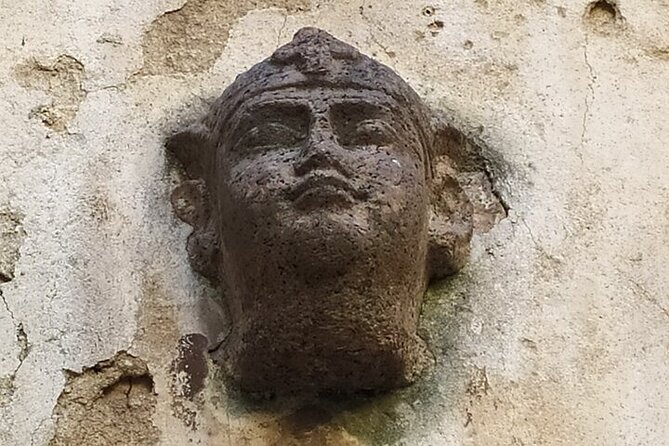
The tour includes Fruit’s Square, Trg Brace Radic. Boris gives you the story of the name and points out a significant monument in the middle of the square, plus other important surroundings nearby. Even if the square is small, this stop matters because it shows how the city’s identity lives in everyday places, not only in major monuments.
Finally, you end at People’s Square, Pjaca. Boris explains how it has functioned as the center of city activity from medieval times to today. Before you wrap up, he suggests other places you might want to see in Split that are not part of the walking route.
I like ending on Pjaca because it is a natural jump-off point. It is central, it is easy to orient yourself, and it is where your next meal decision will feel simpler because you are not wandering blind.
Meet historian Boris: 3D visuals, photo help, and interactive teaching
The star here is the guide. You get a local professional licensed guide with a master’s degree in history. Boris teaches like someone who wants you to understand, not someone reading facts off a page.
The tour includes a display book with pictures and 3D reconstruction images. This sounds like “tech for tech’s sake” until you hit places like Peristyle or the cellars, where your imagination does the work. The 3D reconstructions make it easier to visualize what you are standing in, and that reduces that frustrating moment of thinking, I see stone, but what exactly am I looking at?
You also get help with taking photos on the tour. That is more useful than it sounds because it saves time. Instead of walking around until your phone screen looks right, you get quick direction on where to stand and how to frame the palace elements so they look like what you are learning.
One more detail that comes through in how Boris teaches: he does interactive moments. In at least some groups, that has included trivia questions that even kids can answer, which tells me he pitches the material in a way that does not just float over younger minds.
He may also point out filming-related spots around the Diocletian’s Palace area, including connections to Game of Thrones, if that is part of what your group is interested in.
Price and time: is $38.62 actually good value?
At $38.62 per person for about two hours, this is priced as a guide-led, small-group history experience, not as a ticketed attraction. The value comes from three places.
First, group size. Maximum is 12 people. That matters in a tight old-city walking route, because you can actually hear your guide and ask questions. In bigger groups, you often lose the thread halfway through.
Second, the visuals. A 3D reconstruction display book costs nothing if you happen to know what you are looking at. It costs a lot in frustration if you do not. Here, it is built into the experience, so the money goes to interpretation, not just narration.
Third, most of the listed sights are admission free in the itinerary. The tour does not include admission tickets, but the stops themselves are marked as free, and the experience is mostly exterior viewing with a guided look at key indoor-adjacent areas like the cellars segment. So your payment is mostly for guided access to context, not for covering fees.
If you are deciding whether to go on a guided walk on day one or day three, this kind of route is perfect early. It gives you a map in your head. Then the rest of Split feels easier to explore on your own.
Who should book this Split Diocletian’s Palace historian walk?
This tour fits best if you want meaning more than checklist travel. If you like history that connects architecture to everyday life, you will probably enjoy how Boris links the Roman palace, later medieval city life, and the modern promenade.
It also works well for families and mixed groups, including people traveling with kids. The format is short stops, frequent context, and opportunities to ask questions, rather than one long uninterrupted talk.
You should also consider it if you want a photo-friendly orientation without having to do the heavy lifting of figuring out where to stand and what to notice first.
A quick, practical way to plan your day around the tour
Because this is a walking tour in the old town and palace area, plan for moving between several close stops over roughly two hours, sometimes closer to 2.5 hours depending on questions. If you are the type who asks follow-ups, you will likely find the time stretches in a good way.
The experience requires good weather. That is not a guess, it is part of the operating requirements, so check conditions and dress accordingly for outdoor walking.
Also, note the tour uses a mobile ticket. It is a small thing, but it makes arrival simpler if you keep your ticket handy on your phone.
Should you book this Split history tour with Boris?
If your goal is to understand Diocletian’s Palace and Split’s old-city layout in a short, friendly, small-group format, I think this is an easy yes. You get a licensed historian guide, a picture-and-3D reconstruction display book, and a route that moves from palace power to city life, all while keeping stops short and readable.
I would only hesitate if you specifically want long interior visits and do not want to do any follow-up on your own. This experience is built to explain what you see outside and connect it to what came before, then leave you well-prepared for the extras you choose next.
FAQ
How long is the Split walking experience?
It lasts about 2 hours.
Where do I meet, and where does the tour end?
You meet at Golden Gate, Dioklecijanova 7, 21000 Split. The tour ends on People’s Square (Pjaca) in 21000 Grad, Split.
Is the tour offered in English?
Yes, it is offered in English.
What is included in the price?
The tour includes a local professional licensed guide with a master’s degree in history, plus 3D reconstruction images and pictures via a display book.
Are admission tickets included?
No. The experience does not include admission tickets.
What group size should I expect?
The maximum group size is 12 travelers.
What if the weather is poor?
The experience requires good weather. If it is canceled due to poor weather, you will be offered a different date or a full refund.
Is free cancellation available?
Yes, you can cancel for a full refund up to 24 hours in advance of the start time.
Recently added around Split
- Private VIP Brac and Hvar Day Trip from Split
★ 5.0 · 1 review - Private Transfer From or To the Split Airport
★ 5.0 · 1 review - Brač Half Day Beach Party Transfer to Olife Beach Club
★ 5.0 · 1 review - Private Transfer from Split to Zagreb, Hotel-to-hotel, English-speaking driver
★ 5.0 · 1 review - Airport transfers
★ 5.0 · 1 review - Private ”Game of Thrones” Walking Tour in Split (entrance tickets included)
★ 5.0 · 1 review