
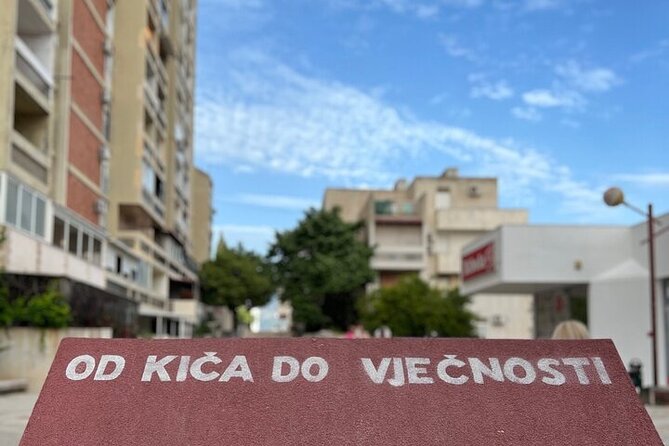
Reviewed · SPLIT
Secret Split: Socialist Architecture & brutalism – Urban Utopia
Post-war Split can feel like a secret chapter. This tour leads you into Split 3, the socialist experiment that helped shape how people think about housing and community in concrete. I love the way it connects the city’s architecture to real daily life, and I love that it points you to a brutalist mindset beyond raw concrete. The main drawback is simple: if you came to Split only for Roman sights, this tour shifts your focus into the 20th century.
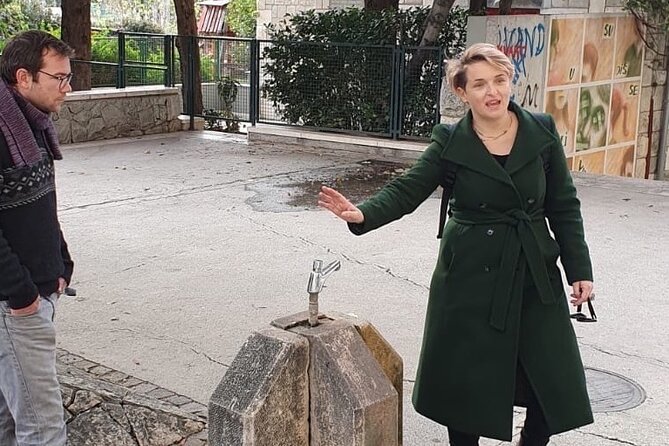
I also liked the human side of it. With guides from The Storyteller Croatia, including a licensed tourist guide and a certified heritage interpreter, you get a guided walkthrough that stays grounded in what the buildings were meant to do, not just how they look. In one standout case, our guide Mirjana was clearly passionate and made the planning ideas feel practical, not academic.
You’ll finish back where you started, and the whole experience runs about 1 to 3 hours, so it fits neatly into a day without swallowing it. The route is built for people who want to understand modern Split, not just collect photos of the obvious stops.
In This Review
- Key takeaways before you go
- Why Split 3 feels like an urban experiment, not a sightseeing detour
- Papandopulova ulica: where brutalist lines start making sense
- Split 3 across the county: rapid growth, big plans, and unfinished pieces
- Art activism in Split: when public space needs a critical voice
- Brutalism as care: what to look for on your walk
- The guide experience and why it changes the tour
- Price and value: is $113.90 worth it?
- Who should book this tour, and who might skip it
- Making room for Secret Split in your day
- Should you book Secret Split: Socialist Architecture and Brutalism?
- FAQ
- How long is the Secret Split tour?
- Where does the tour start and end?
- How much does it cost?
- What is included in the tour?
- Is the tour private?
- Is there a refund if I cancel?
Key takeaways before you go
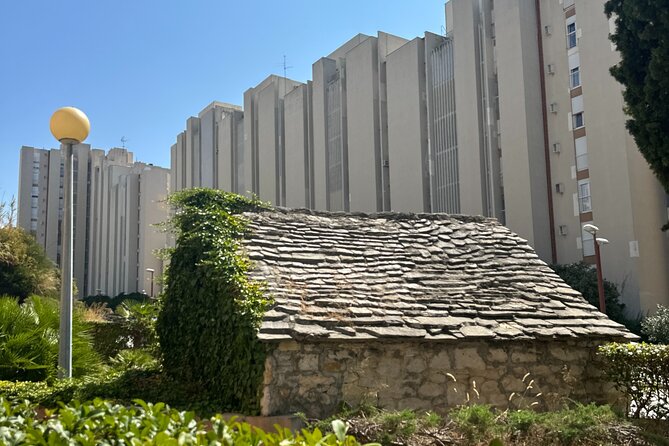
- Split 3 through the MoMA lens: the architecture is tied to a New York 2018 exhibition, which gives you a wider frame for what you are looking at.
- A city within a city: you’ll see how a pedestrian-oriented residential zone was designed for everyday routines, kids, and shared space.
- Not nostalgia, real walk: the emphasis is on function and living patterns, not romanticizing old ideals.
- Brutalism explained as care: the tour reframes the style as planning for people, not just a look made of concrete.
- Meet local artists and activists: this adds a present-day voice to the story of socialist planning.
- Private group experience: only your group participates, which makes it easier to ask questions.
Why Split 3 feels like an urban experiment, not a sightseeing detour
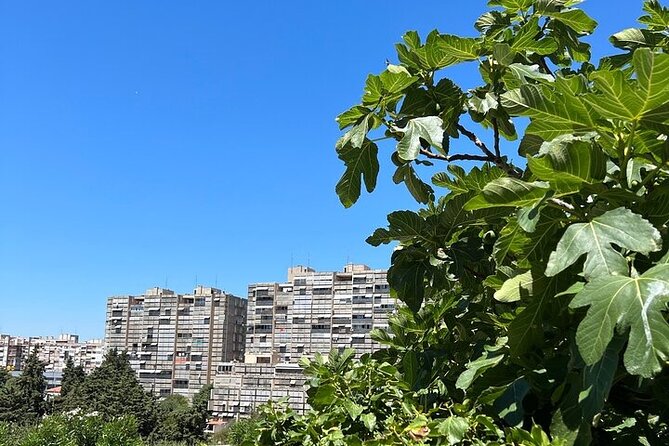
Most Split walking tours zoom in on the older layers, the Roman stops, the medieval pulse, the famous waterfront views. This one starts later, with a post-World War II vision that treated the city like a problem to solve. You’re stepping into Split 3, an expansion of Split that was built to test new ideas about space, society, and how daily life should work.
The big idea here is that these buildings were not just designed to impress. They were designed to house people fast, manage growth, and create shared routines. That planning mindset shows up in the layout and the public spaces, and it’s why the tour feels different: you aren’t just looking at concrete. You’re trying to understand why it was shaped that way.
And there’s a reason this story travels beyond Croatia. Split 3 has been recognized internationally, including through a MoMA exhibition connection (Toward a Concrete Utopia, New York, 2018). That matters because it signals the architecture was seen as part of a wider 20th century conversation about social housing and urban ideals.
Papandopulova ulica: where brutalist lines start making sense
Your first stop is Papandopulova ulica, and the emphasis is on what you can see and what you can interpret. At this point, you’ll connect the physical design to the bigger story of Split 3. Since this area is linked to that MoMA 2018 exhibition, you get a helpful reminder that your walk is part of a global architecture narrative, not just a local curiosity.
What to pay attention to in this kind of street is the geometry. Brutalist architecture often gets reduced to “tough looking concrete,” but the tour approach pushes you to look for the planning logic behind it. Think in terms of boundaries and flow: where people move, where spaces open up, and how the design supports routine.
A practical tip: slow down here. The buildings can look harsh at a glance, especially if you are used to old-world stone and narrow streets. But if you give yourself a few extra minutes and let the layout click, you start seeing how the design can guide daily life. That shift is usually what turns a “brutalism tour” into something you genuinely enjoy.
Time is also reasonable. This first section runs about 38 minutes, so you’re not stuck in one spot. It’s long enough to learn the concept, short enough to keep you moving.
Split is the launch point for half the Dalmatian coast: islands, waterfalls, and a couple of countries besides.
Split 3 across the county: rapid growth, big plans, and unfinished pieces
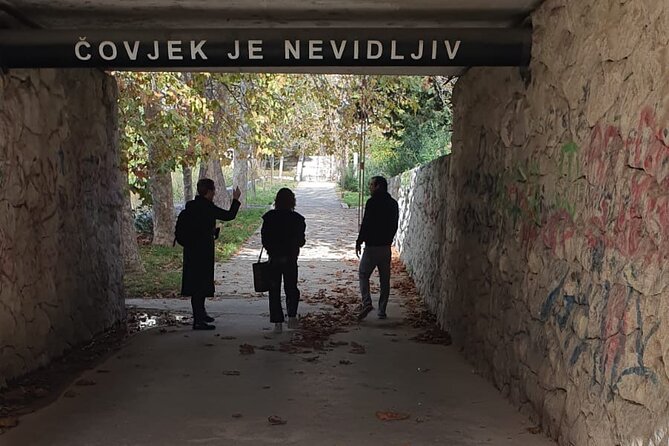
Stop two brings you into the broader context of Split-Dalmatia County and why Split 3 was built when it was. The core theme is rapid demographic growth and how urban planning responded. Even if the original concept wasn’t fully realized, the project still earned a place in the history of 20th century architecture and urbanism.
This part of the tour helps you avoid a common mistake: treating the buildings like a timeless style choice. Instead, you’re encouraged to see them as a response to pressure. When a city grows quickly, housing needs move from “someday” to “now,” and that pushes governments and designers toward large-scale solutions. Split 3 is framed as one of those solutions.
Why this matters for you as a visitor is that it changes how you read what’s in front of you. If you see the planning goals, you understand why certain spaces exist, why others may feel incomplete, and why some elements show the tension between ideal visions and reality.
This stop lasts about 25 minutes. It’s a good length for building context without burning your energy before the more human, present-day portion of the walk.
Art activism in Split: when public space needs a critical voice
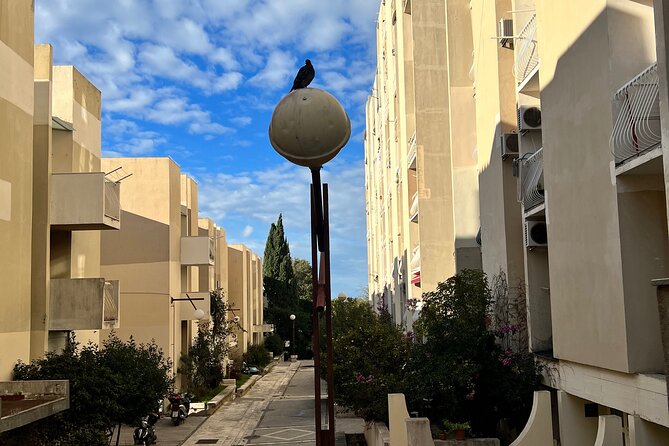
The third stop shifts from planning theory to living culture: art activism in Split and the need for explicit critical communication. The point isn’t to distract you from architecture. It’s to connect architecture to what happens around it, who speaks in the public realm, and how communities interpret their surroundings.
At the same time, this is where the tour’s included experiences start to feel especially relevant. You’re not only learning about past ideals. You’re also meeting local artists and activists, which adds a contemporary layer to the story of socialist urban planning.
So what should you do during this part? Listen for the difference between design intent and lived meaning. Two neighborhoods can have similar layouts, but the energy of the community and the presence of public critique can make them feel very different.
This segment is about 35 minutes. That gives enough time for you to absorb the message and ask questions, especially if you are the type who wants the “why” behind the city’s choices, not just the “what.”
Brutalism as care: what to look for on your walk
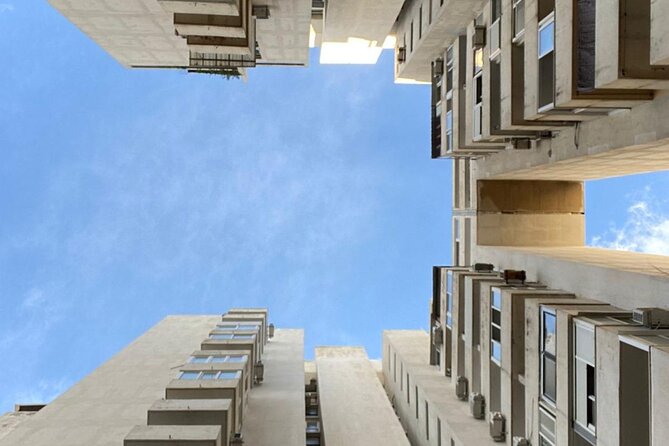
Brutalism can be a love-hate style. Some people hate it on sight, because it looks cold or heavy. The tour’s framing pushes you to judge it by how it works for people.
Here are the cues that help you see beyond the surface, and you’ll likely recognize them as your guide points out the open spaces and the overall pedestrian-friendly thinking:
- Pedestrian-first design: you’ll get a sense of a fully pedestrian zone, built for daily life rather than car-centered movement.
- Community layout: look for how shared space is organized, not hidden. The goal was community space, not isolated living.
- Space for children and daily routine: the tour highlights that the plan was about more than shelter. It was about creating a place where life can happen outside your front door.
- Clean geometry with rough texture: the mix can feel contradictory until you notice the reason. Concrete can be both structural and symbolic.
- Care behind the concrete: you’ll hear brutalism described not as “just concrete,” but as care built into the planning choices.
If you go into the tour thinking you will be judging the look, you might miss the real point. I’d go in with one simple goal: try to understand how these streets and spaces support real routines.
The guide experience and why it changes the tour
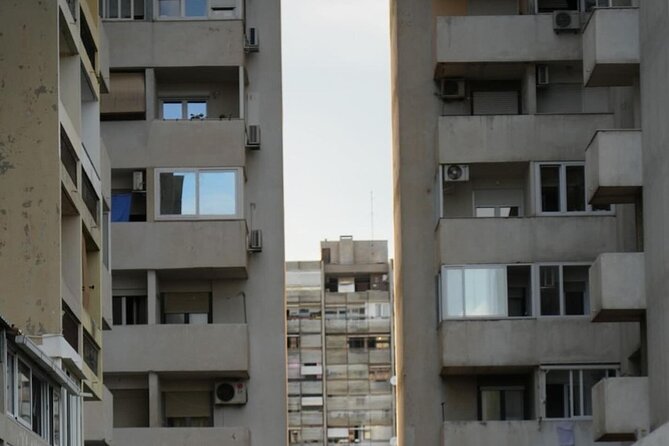
A walking tour lives or dies by the guide. With Secret Split, you’re getting a licensed tourist guide plus a certified heritage interpreter. That combination matters because you aren’t just getting narration. You’re getting interpretation, the kind that turns architecture into meaning.
One review detail that stood out for me is how much the guide, Mirjana, brought her city into the story. She was passionate and clearly knowledgeable about the neighborhood. That kind of energy can make a modern-architecture topic feel less like a lecture and more like a walk with a friend who knows what you should notice.
Also, the tour includes time to meet local artists and activists. That’s not a throwaway add-on. It’s how the experience stays connected to what’s happening now, not just what happened decades ago.
If you like asking questions, this is a smart format too. Since it’s a private tour for your group, the discussion tends to stay on your pace. You can linger on the details that interest you most, without feeling rushed by a large crowd.
Two days in Split? Here's how to fill the second.
- From Split: Krka Waterfalls, Food & Wine Tasting Tour★ 4.9 · 6,598 reviews
- Split/Trogir: Blue Cave, Mamma Mia, Hvar and 5 Island Tour★ 4.6 · 6,320 reviews
- Blue Lagoon & 3 Islands Cruise with Lunch from Split★ 4.5 · 5,756 reviews
- Blue Cave and Hvar Tour – 5 Islands Tour from Split and Trogir★ 5.0 · 4,815 reviews
Price and value: is $113.90 worth it?
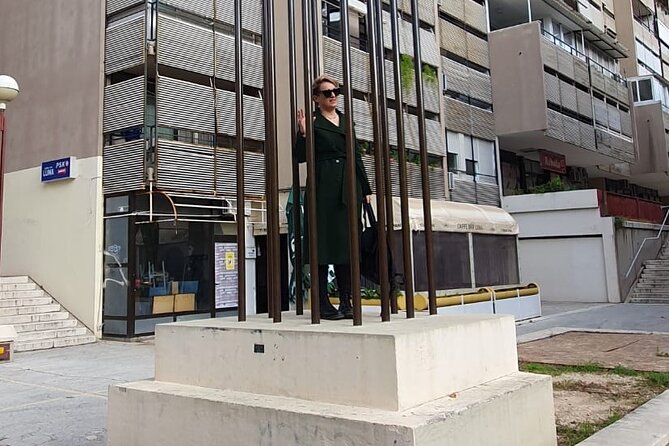
The price is $113.90 per person and the tour runs about 1 to 3 hours. That can sound steep if you compare it to generic walking tours, but it’s easier to judge when you look at what you’re actually getting.
You’re paying for:
- a guided walkthrough by a licensed tourist guide
- a certified heritage interpreter
- a visit to the residential area of Split
- time that includes meeting local artists/activists
- a route designed around Split 3, plus context about rapid growth and the socialist urban plan
In my view, the value is strongest if you are the kind of traveler who enjoys “thinking with your eyes.” If you usually like museum-style storytelling, architecture interpretation, or city planning conversations, this tour is likely to feel worth the cost.
If you only want postcard Split and you have zero interest in modern architecture, you’ll feel the gap. This is not a Roman-sites replacement. It’s a different Split entirely, and you have to be open to that shift.
A small practical note: the average booking timing is about 12 days in advance. So if you’re traveling in busier periods, it’s smart to lock it in earlier rather than treating it as an afterthought.
Who should book this tour, and who might skip it
This experience fits best if you like at least one of these:
- brutalist architecture and modern design ideas
- urban planning and how cities respond to growth
- a deeper look at how public space shapes everyday life
- art and activism that connects past ideals to present voices
You’ll also enjoy it if you are curious about why some housing projects end up in major international conversations. The MoMA exhibition connection gives you that extra angle, and it helps you see the walk as part of a larger story.
You might want to skip (or at least pair it carefully with other tours) if:
- you want only the older, most famous heritage sites
- you dislike architecture tours that ask you to interpret what you see
- you are looking for a purely scenic waterfront walk
The good news is that Split is full of contrast. If you want the Roman drama in one part of the day, this tour can be the smart counterweight in another part.
Making room for Secret Split in your day
Because the total duration is about 1 to 3 hours, I’d treat it like a focused block, not background sightseeing. Start early enough in the day that you can pay attention to details, especially if you are sensitive to heat or just prefer a calmer pace.
Use the meeting point as your anchor: Ul. Šime Ljubića 3. The tour ends back at the meeting point, so you can easily connect it to a meal or another neighborhood walk without planning a complicated transit.
If you’re combining it with other Split classics, here’s an easy strategy: do the Roman-heavy stuff on one day, and put this modern-planning focus on another. Your brain handles the contrasts better when you don’t force one-day whiplash from marble arches to concrete geometry.
Should you book Secret Split: Socialist Architecture and Brutalism?
Book it if you want Split in a different key. This tour is for people who enjoy modern ideas, architectural interpretation, and the way public spaces influence daily life. You’re not walking through nostalgia. You’re walking through a real neighborhood built from real planning choices, then meeting local voices that keep the conversation alive.
Skip it if your priorities are strictly the classic Roman and medieval hits. This is a 20th century focus, and you’ll get more satisfaction when that aligns with what you came to see.
If you’re on the fence, trust one gut check: do you find yourself curious about how cities work, not just how they look? If yes, Secret Split is the kind of tour that can change the way you see concrete forever, and it does it in a way that feels practical, not academic.
FAQ
How long is the Secret Split tour?
The duration is about 1 to 3 hours.
Where does the tour start and end?
It starts at Ul. Šime Ljubića 3, 21000, Split, Croatia, and ends back at the meeting point.
How much does it cost?
The price is $113.90 per person.
What is included in the tour?
It includes a tour with a licensed tourist guide and a certified heritage interpreter, visiting the residential area of Split, and meeting local artists/activists.
Is the tour private?
Yes. Only your group participates.
Is there a refund if I cancel?
Cancellation is free, and you can cancel up to 24 hours in advance for a full refund.
Recently added around Split
- Private VIP Brac and Hvar Day Trip from Split
★ 5.0 · 1 review - Private Transfer From or To the Split Airport
★ 5.0 · 1 review - Private Transfer from Split to Zagreb, Hotel-to-hotel, English-speaking driver
★ 5.0 · 1 review - Brač Half Day Beach Party Transfer to Olife Beach Club
★ 5.0 · 1 review - Airport transfers
★ 5.0 · 1 review - Private ”Game of Thrones” Walking Tour in Split (entrance tickets included)
★ 5.0 · 1 review