
Reviewed · DIOCLETIAN'S PALACE TOURS
Split Diocletian’s Palace & cellars Private Tour – Entrance incl.
One building, dozens of stories, all in two hours. This private tour focuses on Diocletian’s Palace and the cellars underneath it, with entrance included for the areas that really matter. It also ties the big monuments together, from the Riva meeting point to the Golden Gate, so you don’t just see stones, you understand why they were there.
What I like most is the mix of classic set pieces and the practical “read the place” stops. The cellars help you grasp the palace’s size fast, and the guide’s pacing keeps it interesting across ages, including one group Ivan handled from 3 to 67. I also like that the route includes the peristyle, dining rooms, and several gates, so you get palace life and city life in the same walk.
One possible drawback: not every sight has an included ticket. Saint Domnius Cathedral and the Temple of Jupiter are handled as viewpoints, with the tour notes that entrance tickets are not included for those parts, so plan on a little extra cost if you want to go in.
In This Review
- Key highlights you’ll care about
- A private guide through Diocletian’s Palace cellars, not just another walk
- How the route flows, from the Riva to the Golden Gate
- The cellars, where you quickly get palace scale in 30 minutes
- The peristyle: the ceremonial center and its famous columns
- Saint Domnius Cathedral: the mausoleum story, plus what’s not included
- The gates that turn ruins into a real city walk
- Silver Gate, reopened and linked to today’s market
- Iron Gate (west gate) and the double-gate defense idea
- Golden Gate and the road to Salona
- Triclinium and Vestibulum: the palace as a place where people lived
- Triclinium, dining room logic and Mediterranean plates
- Vestibulum, the entry space to private chambers
- Temple of Jupiter as a baptistery viewpoint
- Price and value: what $137.69 per person buys you
- Who this tour fits best (and who should reconsider)
- Should you book Split Diocletian’s Palace and cellars private tour?
- FAQ
- How long is the Split Diocletian’s Palace and cellars private tour?
- Is entrance included in the tour price?
- Where does the tour start and where does it end?
- Is this a private tour or shared group?
- Do I need a printed ticket?
- Are service animals allowed?
- What happens if the weather is bad?
Key highlights you’ll care about
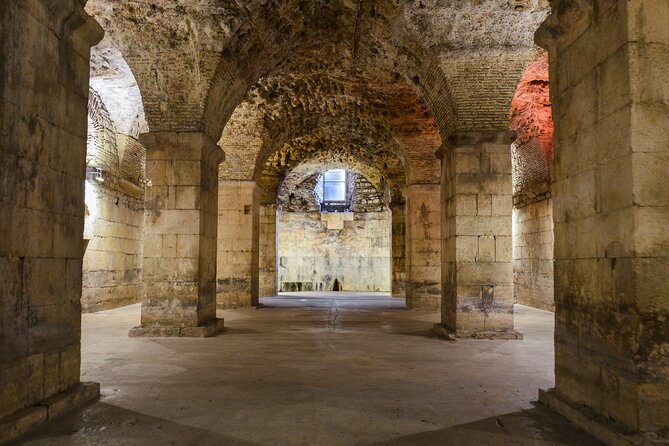
- Cellars with your entry ticket included, built over 1700 years ago and still very well preserved
- Peristyle focus, the ceremonial center where Diocletian presented himself and was tied to Jupiter
- Gates with city connections, including the market area near the reopened east gate
- Temple of Jupiter as a baptistery, with an easy exterior look
- Triclinium and Vestibulum stops, so palace life feels human, not just monumental
- Ivan’s all-ages style, proven in a group spanning ages 3 to 67
A private guide through Diocletian’s Palace cellars, not just another walk
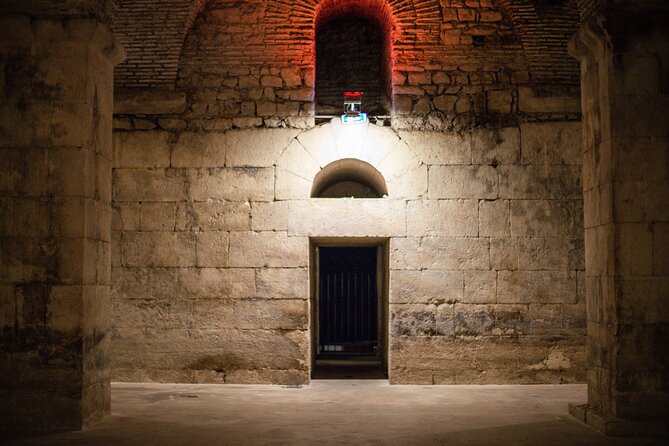
Diocletian’s Palace in Split is one of those places where it’s easy to get lost in the vibe. The streets look Roman, the walls look ancient, and then a bell tower or a church shows up and suddenly your brain has to re-sort the timeline.
That’s why I like this tour format: it’s private, it stays around the palace core, and it uses the architecture to explain the past. You start at the Riva, Split’s beach promenade, then you move into the palace area where Diocletian’s power plan becomes visible. The highlight is the cellars tour segment, which gives you a strong physical sense of the palace scale before you head into the “headline” zones like the peristyle and the cathedral area.
Because it’s built for visitors of all ages and includes plenty of storytelling, it also works if you’re traveling with kids, older relatives, or a mixed group where attention spans vary.
How the route flows, from the Riva to the Golden Gate
The timing is tight but not rushed. The whole experience runs about 2 hours, and it’s structured as a sequence of short, high-value stops. That matters because Diocletian’s Palace is a maze if you’re going solo, and you end up repeating yourself without meaning to.
You meet at the model of the historical core of Split, then you shift to the Riva area. This is a smart start: the Riva is where you can orient yourself. You get the city energy, then you walk into the palace walls where the vibe changes to something more controlled and ceremonial.
Near the end, your route finishes at the Golden Gate in the Old Town. That gives you a clean exit point. Instead of walking back the way you came, you’re set up to continue exploring at street level.
Plenty more to do around Split
The cellars, where you quickly get palace scale in 30 minutes
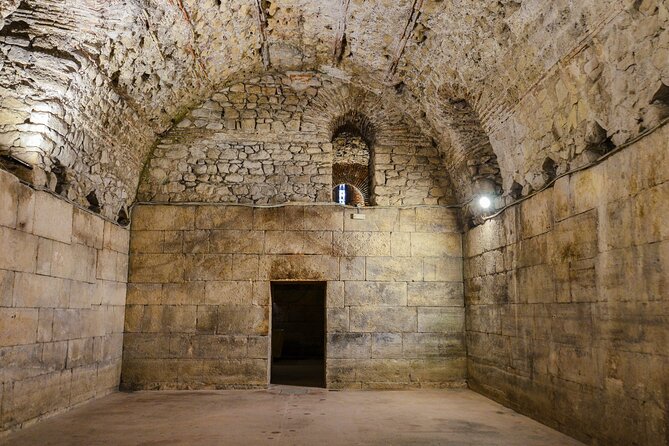
If you’re only going to care about one part, make it the cellars. This tour includes the cellars entrance ticket, and the time spent there is the longest segment besides the overall tour duration.
Here’s why that’s valuable: you can’t really understand the palace just by looking at surfaces. The cellars were built more than 1700 years ago, and they’re described as very well preserved. Standing in that space gives you a sense of depth and engineering that the outdoor monuments do not fully communicate.
You enter through the south gate, and once you’re down there, the cellars do their job. They show the dimensions of the palace in a way photos never do. It also sets a good rhythm for the rest of the tour, because after seeing the underground spaces, the rest of the palace feels more like a working system, not a museum set.
A practical tip: since your time down there is a chunk of the tour, wear comfortable shoes and be ready to focus. The guide’s explanations are most useful when you can stay in place and take in the walls and space.
The peristyle: the ceremonial center and its famous columns
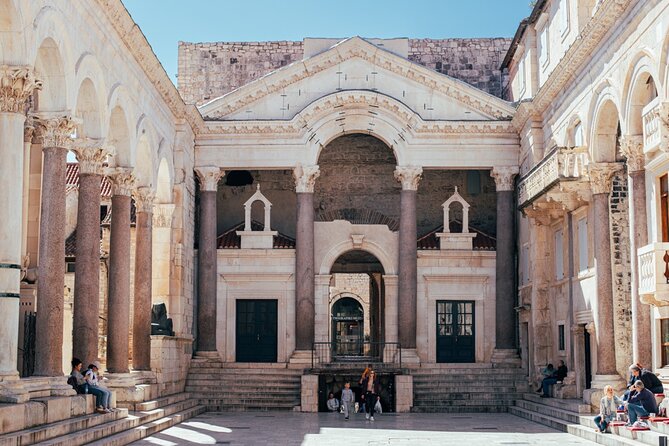
After the cellars, you come back up to one of the most meaningful open spaces in the palace complex: the Peristyle.
The peristyle was the sacred meeting place in Diocletian’s time. This is not just a pretty courtyard. It’s tied to how power was performed. Your guide frames it as the area where Diocletian presented himself to his subjects and connected his role to Roman religion, including worship as the son of Jupiter.
You’ll also see the visual cue that anchors this zone: the peristyle is surrounded by Egyptian columns. That’s one of those details that helps you understand how Roman-era leaders pulled prestige from across the empire. The architecture is doing politics, not just aesthetics.
This stop is brief, but it’s high impact because it tells you what that open space was for. If you skip it, the palace can start to feel like random impressive ruins.
Saint Domnius Cathedral: the mausoleum story, plus what’s not included
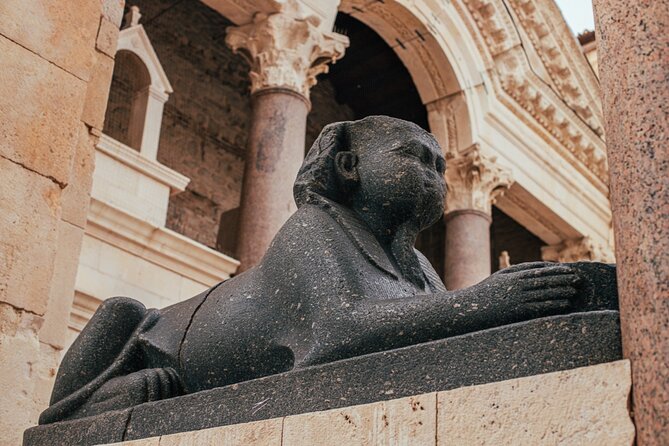
Next comes the Cathedral of Saint Domnius, which is connected to Diocletian’s own legacy.
In Roman times, this was Diocletian’s mausoleum. Later, during Christianization, the emperor’s coffin and mortal remains disappeared. The tour also points you to the imposing bell tower, described as a 14th-century structure.
One key consideration: the tour notes that the admission ticket for Saint Domnius Cathedral is not included. That means your time here is likely geared toward viewing and context, not necessarily going inside unless you’re willing to pay extra.
Even if you don’t enter, this is still a powerful stop because it marks the big cultural shift. You can stand in the middle of a site and feel the layers of belief stacked on top of each other.
If you do plan to go in, budget a little extra time and decide based on what you want most, cathedral interiors or simply the palace overview.
The gates that turn ruins into a real city walk
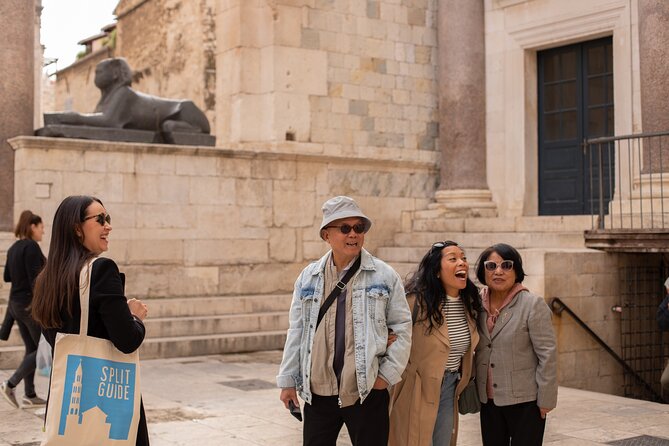
One of the best ways to make sense of Diocletian’s Palace is to treat it like a city-within-a-city. This tour does that by giving you multiple gate viewpoints and explaining how movement worked.
Two days in Split? Here's how to fill the second.
- Split: Krka Waterfalls Trip with Boat Cruise and Swimming★ 4.8 · 10,519 reviews
- From Split: Krka Waterfalls, Food & Wine Tasting Tour★ 5.0 · 9,326 reviews
- Blue cave, Mamma Mia and Hvar, 5 islands speedboat tour★ 5.0 · 7,150 reviews
- From Split: Krka Waterfalls, Food & Wine Tasting Tour★ 4.9 · 6,598 reviews
Silver Gate, reopened and linked to today’s market
You’ll encounter the Silver Gate, described as the east gate of the palace. It was walled up multiple times over the centuries and only reopened in the 1940s. Today, the gate leads to the market area, where local products are on sale.
That “then and now” contrast is exactly what makes gate stops worthwhile. It’s not just Roman architecture. It’s still a working urban transition point.
Iron Gate (west gate) and the double-gate defense idea
Another stop is the Iron Gate, the west gate of the palace. Here, the tour highlights the double gate concept, described as a propugnaculum. The space between the two gates was designed so the enemy could be trapped.
That detail turns a gate from “a doorway in stone” into an actual defense mechanism. You start looking at thickness, angles, and the idea of funneling movement. It’s a small change in perspective, but it makes the palace feel engineered.
Golden Gate and the road to Salona
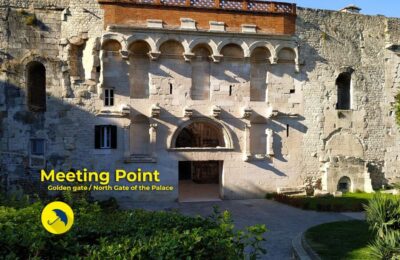
Near the end, you finish at the Golden Gate, the north gate and described as the most important gate in Roman times. From here, the road led to Salona, the Roman provincial capital.
This is a satisfying way to end. The tour doesn’t just stop at a pretty photo spot. It gives you a direction in your head, Salona as a concept, even if you do not go there today.
Triclinium and Vestibulum: the palace as a place where people lived
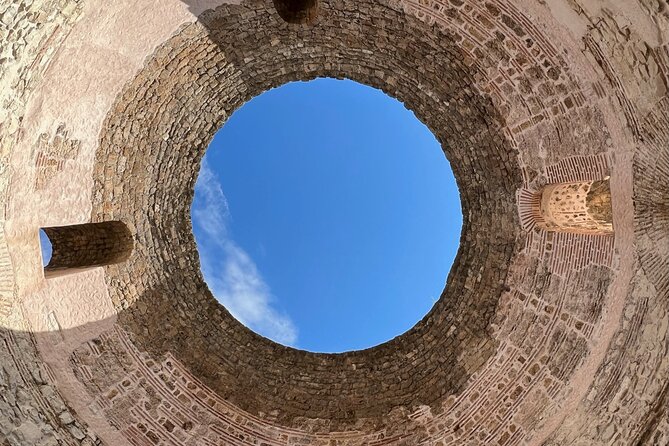
It’s easy for palace tours to focus only on grand ceremonial spaces. This tour includes two interior-adjacent stops that hint at daily life, and that balance is one of its strengths.
Triclinium, dining room logic and Mediterranean plates
The Triclinium is the dining room, and the tour uses the Latin meaning to bring it down to everyday human terms. Diocletian dined there with guests. The dishes were mainly Mediterranean, with local wine and fish mentioned, plus honey as a popular ingredient.
Even if you do not step into a full interior scene, the explanation helps you picture the rhythm of meals and social status. You’re seeing a palace, but you’re also seeing what people did inside it.
Vestibulum, the entry space to private chambers
Next is the Vestibulum. This was the entrance area to Diocletian’s private chambers. So you’re not just walking around public ceremonial spaces. You’re moving closer to where authority turned private.
That transition matters. It helps you understand how the palace split life into zones: public display, controlled access, then private power.
Temple of Jupiter as a baptistery viewpoint
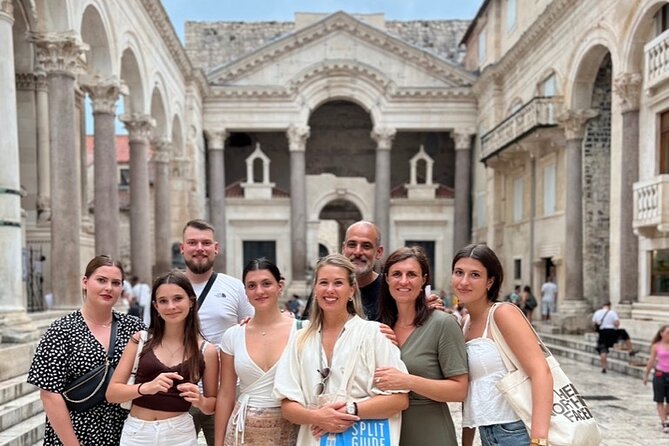
Another quick but meaningful stop is the Temple of Jupiter, now a baptistery. The tour notes that you view it from the outside, and there is no entrance fee for the exterior look.
This works well because it gives you the context without forcing you into another ticket decision. Also, the idea of a Roman temple re-purposed as a Christian baptistery is one of those on-site lessons that feels practical, not just symbolic. It shows how buildings survived by changing roles.
If you love architectural reuse, this stop scratches that itch. If you are more focused on Roman layout and city movement, it still fits as a timeline marker.
Price and value: what $137.69 per person buys you
At $137.69 per person for about two hours, you should look at what you get beyond the guide’s voice.
First, the tour includes entrance tickets for the main paid segment, the cellars. That’s not a small detail. If you’ve ever tried to plan palace visits on your own, you know that the time sink is often the ticketing and the figuring-out which doors and routes make sense.
Second, it’s private. That matters because a palace like this rewards focus. A guide can keep you on track, prevent aimless wandering, and explain the “why” behind each stop while you’re in the exact right spot.
Third, the itinerary length is realistic. Two hours is enough to cover major anchors without burning the day. You also finish near a logical exit point, the Golden Gate, so you can keep going on your own.
If you’re traveling solo and prefer independent time, you might still choose to visit on your own. But if you want fast clarity and a tight route that makes sense of Roman and Christian layers, this price is easier to justify.
Who this tour fits best (and who should reconsider)
This is a strong fit for families, mixed-age groups, and history-curious visitors who want structure without drowning in details.
One reason: the guide style has proven to work across a wide age range, including a group from 3 to 67 with Ivan keeping everyone engaged. That’s the kind of proof you should value when you’re traveling with kids or relatives who do better with stories than silent museum roaming.
It also fits well if:
- you want a palace overview with real architectural context
- you like seeing how gates connect to today’s city life
- you prefer a curated walking route instead of planning each stop yourself
You might reconsider if:
- you already know the palace inside out and want a deeper, longer session
- you want to spend a lot of time inside buildings that require extra tickets, since some admissions are not included
- your group wants maximum flexibility, because the route is guided and timeboxed
Should you book Split Diocletian’s Palace and cellars private tour?
If your goal is to understand Diocletian’s Palace fast, start here. The cellars are the standout value, and the rest of the route fills in the big narrative pieces: ceremonial center, repurposed sacred spaces, palace dining, and the gates that connect Roman walls to today’s streets.
Book it if you want:
- a private guide to keep the route logical
- entrance included for the most important “paid” area, the cellars
- a short, walkable experience that ends at a useful Old Town location
Pass or plan differently if your priority is long interior time in specific churches, since the tour notes that tickets for Saint Domnius Cathedral are not included, and the Temple of Jupiter is handled as an exterior viewpoint.
FAQ
How long is the Split Diocletian’s Palace and cellars private tour?
The tour lasts about 2 hours.
Is entrance included in the tour price?
Entrance tickets are included for the tour’s included parts. The cellars admission is listed as included. Some stops, like Saint Domnius Cathedral and the Temple of Jupiter, are listed as not included for admission.
Where does the tour start and where does it end?
It starts at the model of the historical core of the city of Split at Obala Hrvatskog narodnog preporoda 23 in Split. It ends at the Golden Gate in the Old Town, at Dioklecijanova 7 in Split.
Is this a private tour or shared group?
This is a private tour. Only your group will participate.
Do I need a printed ticket?
The tour uses a mobile ticket.
Are service animals allowed?
Yes, service animals are allowed.
What happens if the weather is bad?
This experience requires good weather. If it is canceled due to poor weather, you will be offered a different date or a full refund.
Recently added around Split
- Private VIP Brac and Hvar Day Trip from Split
★ 5.0 · 1 review - Private Transfer From or To the Split Airport
★ 5.0 · 1 review - Brač Half Day Beach Party Transfer to Olife Beach Club
★ 5.0 · 1 review - Private Transfer from Split to Zagreb, Hotel-to-hotel, English-speaking driver
★ 5.0 · 1 review - Airport transfers
★ 5.0 · 1 review - Private ”Game of Thrones” Walking Tour in Split (entrance tickets included)
★ 5.0 · 1 review
Diocletian's Palace Tours, compared.
Walking Tour of Split and Diocletian’s Palace
Read our review →
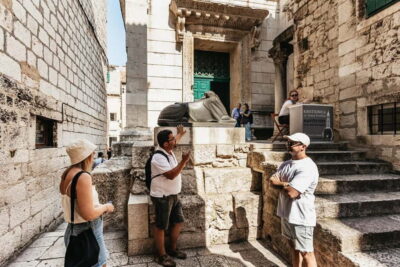
Diocletian Palace & Old Town Guided Walking Tour
Read our review →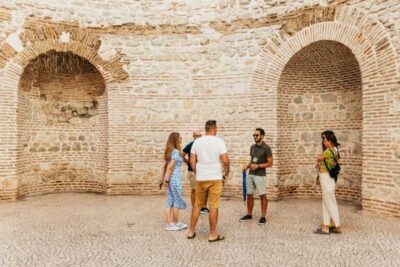

Game of Thrones Tour with Diocletian’s Palace Cellar
Read our review →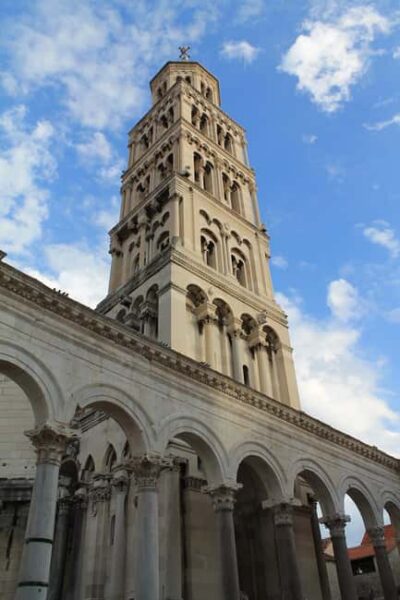
Diocletian’s Palace and Old Town SMALL GROUP Walking Tour
Read our review →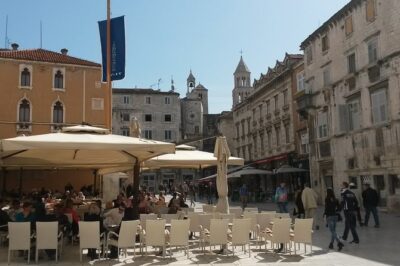
PRIVATE Walking Tour of Diocletian’s Palace & Old Town
Read our review →Browse the lists this tour appears in