
Reviewed · CITY TOURS
Split Quest Experience: Discover the City
A mystery stroll through Roman Split. This self-guided phone game turns a classic day walk into a story route through old streets, waterfront views, and major Diocletian-era stops. I like that it is phone-guided turn by turn, so you spend less time guessing and more time looking at details.
And I especially liked the mix of scenery and stone, starting at the greenery of Sustipanski Park before sliding into the grand architecture of Diocletian’s Palace. You do need to be comfortable with an app format, because there is no live guide, and one bad match with the app can ruin the mood.
If you want someone standing there explaining everything, this is not it. But if you enjoy wandering at your own pace with a light game structure, this is a smart, low-cost way to see Split’s standout sights and some quieter corners in between.
In This Review
- Key things that make Split Quest Experience, Discover the City worth your time
- How the phone game works, and why that format fits Split
- Price and timing: a budget-friendly “wayfinding adventure”
- Start at Sustipanski Park, then glide through Split’s waterfront edges
- Why I think this beginning is smart
- The route, stop by stop: from fishing charm to Roman monuments
- Stop 1: Sustipanski Park (Sjaš svijetliš svemiriš me)
- Stop 2: Obala kneza Branimira
- Stop 3: Matejuška
- Stop 4: Neretvanska ulica
- Stop 5: Ul. kralja Tomislava 2, the Weird Fountain (Prva voda)
- Stop 6: Gregory of Nin Statue
- Stop 7: Marulićeva ulica
- Stop 8: Marko Marulić Statue
- Stop 9: Ul. Iza Vestibula 3, Diocletian’s Palace exhibits
- Stop 10: Iron Gate (Silver Gate, Porta Orientalis, Eastern Gate)
- Stop 11: Papalić Palace (Velika Papalićeva palača)
- Stop 12: Dominisova ulica, the Head on the Wall (Glava na Zidu)
- Stop 13: Jupiter’s Temple (Hram Jupitera)
- Stop 14: Vestibul (Diocletian’s Palace entrance hall)
- End: Peristil ul. (follow app directions)
- The big “value” reasons this works better than a rushed landmark list
- You get both “main sights” and the in-between texture
- It is open air, so your pace stays yours
- What to watch out for: app dependence and no live guide
- Practical tips to make your Split Quest day go smoothly
- Who should book this Split mystery walk?
- Should you book Split Quest Experience, Discover the City?
Key things that make Split Quest Experience, Discover the City worth your time
- You follow exact directions on your phone, using the Questo app, not a printed map.
- You walk an efficient 90-minute to 2-hour loop that strings waterfront and palace areas together.
- It is open air and self-guided, so you can step off the route when you need a break.
- The story centers on Roman-era mysteries, ending at the Diocletian’s Palace zone around Peristil ul.
- Priced low enough to feel like a fun extra, not a big commitment to gamble on.
- Support is available 24/7, which matters when the plan is app-led.
How the phone game works, and why that format fits Split
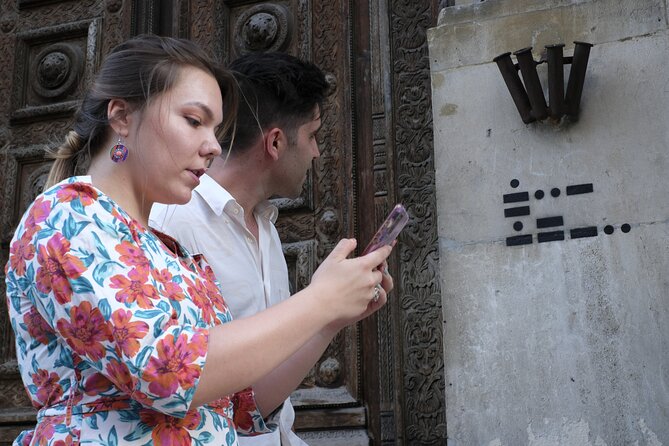
This experience is built around a city exploration game on your phone (the Questo app). After you book, you get an email with instructions to download and play. Then you show up, start at Sustipanski Park, and follow the on-screen directions to each stop.
What I like about this setup in Split is that the city can be a bit of a maze on foot. You can know the big landmarks, but still lose time bouncing between streets. Here, the game does the chore work for you. It also keeps you moving through the right parts of town in the right order, without the pressure of keeping up with a group.
It is also flexible. You can pause, take your time at waterfront or monuments, then continue when you are ready. That matters when you are doing Split in warm weather, or when you want to linger for a photo from a particular angle.
The tradeoff is simple: you are your own guide. The experience is self-guided, and there is no live tour guide. If you do not like using your phone as the main navigation tool, consider that a deal-breaker. One common complaint with app-led tours is basic tech frustration, so bring a charged phone and set yourself up properly before you start.
Price and timing: a budget-friendly “wayfinding adventure”
At $5.97 per person, this is priced like an activity you can try without second-guessing your whole day. It also tends to be booked about 8 days in advance on average, which suggests it is a popular add-on when people plan their Split days.
Duration is listed as about 1 hour 30 minutes to 2 hours. That is a useful window. It is long enough to see multiple meaningful stops, but short enough that it does not steal your entire afternoon or leave you exhausted before dinner.
It is also available daily between 8:00 AM and 6:00 PM for the broad date range shown. Practically, that means you can slot it into the earlier part of the day, then keep the evening free for Split’s nightlife, seafood, or a slower stroll through the palace lanes.
If you are traveling with others, there is also a note that you can share a phone. The recommendation is that each user purchases a ticket for an optimal experience. In practice, if you are a pair or a small group of close navigators, sharing can work. But if everyone wants their own game progress and directions, plan for one ticket per person.
Plenty more to do around Split
Start at Sustipanski Park, then glide through Split’s waterfront edges
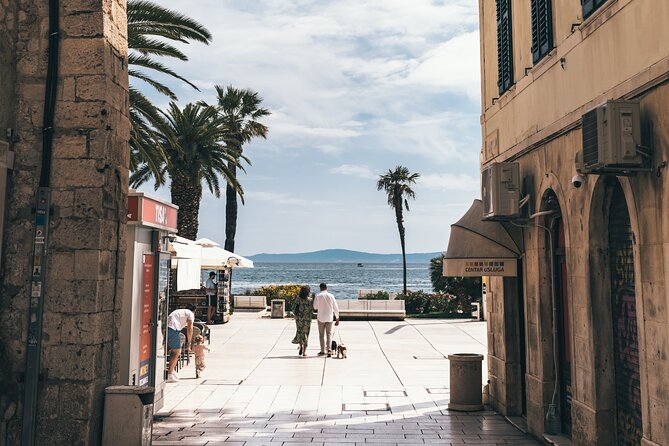
Your tour begins at Sustipanski put, 21000, Split, Croatia, at the first stop labeled as Sjaš svijetliš svemiriš me. The description here points to Sustipanski Park as a scenic starting area with lush greenery, walking paths, and benches where you can sit and enjoy sea views.
This first stop matters more than it seems. It sets the tone for the whole route. You start with open views and a calmer pace, which makes the later stone-heavy palace area feel less abrupt. It is also a nice way to ease into Split before you head into tighter streets.
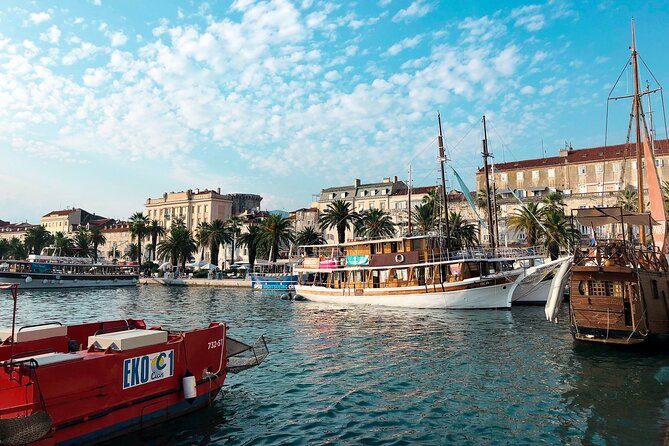
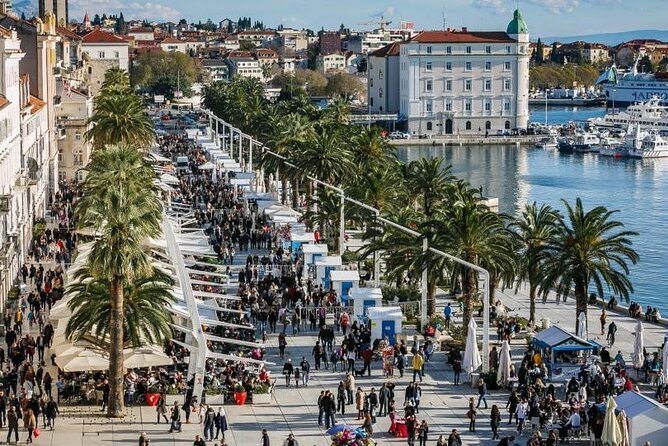
From there, the route heads toward the waterfront with Obala kneza Branimira. This is a waterfront promenade, and you can spend as much time as you want before following the next directions. In other words, the game does not force you to rush. It gives you a reason to slow down, look out, and then move on.
Why I think this beginning is smart
A lot of self-guided walks start with the most crowded landmark and leave you tired early. Here, you begin with a park and a promenade, then build toward the heavier historical stops. You end in the Diocletian’s Palace area, which is what most people really come to see anyway.
The route, stop by stop: from fishing charm to Roman monuments
Below is what you can expect as you follow the game order. The descriptions you see in the app are tied to each exact location, and you pause at each stop before you proceed.
Stop 1: Sustipanski Park (Sjaš svijetliš svemiriš me)
Look for green paths and benches with sea views. Even if you only take a short break here, it gives you an easy mental reset. It also helps you orient yourself for the later waterfront sections.
Time tip: keep it short if you want a fast run, or take an extra minute if the sea view is calling.
Two days in Split? Here's how to fill the second.
- Split: Krka Waterfalls Trip with Boat Cruise and Swimming★ 4.8 · 10,519 reviews
- From Split: Krka Waterfalls, Food & Wine Tasting Tour★ 5.0 · 9,326 reviews
- Blue cave, Mamma Mia and Hvar, 5 islands speedboat tour★ 5.0 · 7,150 reviews
- From Split: Krka Waterfalls, Food & Wine Tasting Tour★ 4.9 · 6,598 reviews
Stop 2: Obala kneza Branimira
This is the waterfront promenade. It is one of those places where the walk feels pleasant even if you are doing it as part of an activity. You get to enjoy the motion of the coast while the app handles the next turn.
A practical benefit: waterfront routes make it easier to keep your bearings.
Stop 3: Matejuška
Matejuška is described as a small fishing harbor and marina with traditional charm. It is on the western side of the Split Peninsula, near the historic center.
This stop is where the vibe can shift from open promenade to working waterfront. If you like photos that show real daily life, this is a good time to slow down.
Stop 4: Neretvanska ulica
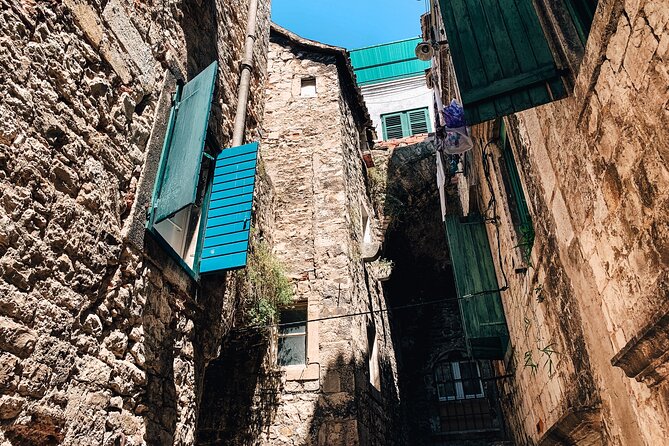
This is a street scene, with a mix of residential buildings, shops, restaurants, and other establishments. It is not trying to be a single “wow” monument. Instead, it helps you experience Split like it is lived in, not staged.
If you are someone who gets bored walking past the same kind of shop fronts, the game format helps because you know you are moving toward specific historical points next.
Stop 5: Ul. kralja Tomislava 2, the Weird Fountain (Prva voda)
You will be directed to the Weird Fountain, known locally as Prva voda. It is described as unique and quirky.
This is a nice palate cleanser between big history stops. Also, fountain stops are easy photo stops because you can gather around them without needing to search for a view angle.
Stop 6: Gregory of Nin Statue
This monument is prominent and tied to a specific creator. The statue was created by Croatian sculptor Ivan Meštrović and erected in 1929. It is one of Split’s best-known icons.
If you want a quick landmark check before the real heavy-hitter architecture, this is the moment.
Stop 7: Marulićeva ulica
This is a street named after Marko Marulić, a Renaissance poet and author from Split, often referred to as the father of Croatian literature. It is another street stop, but with real cultural weight behind the name.
This is also where the route keeps weaving between monuments and everyday blocks, which makes Split feel more like a city walk and less like a museum hop.
Stop 8: Marko Marulić Statue
Here you see the Marko Marulić statue. The description says it is part of the city’s cultural landscape.
I like this stop because it breaks up the Roman concentration with a different kind of significance. It reminds you that Split’s story is not only Roman.
Stop 9: Ul. Iza Vestibula 3, Diocletian’s Palace exhibits
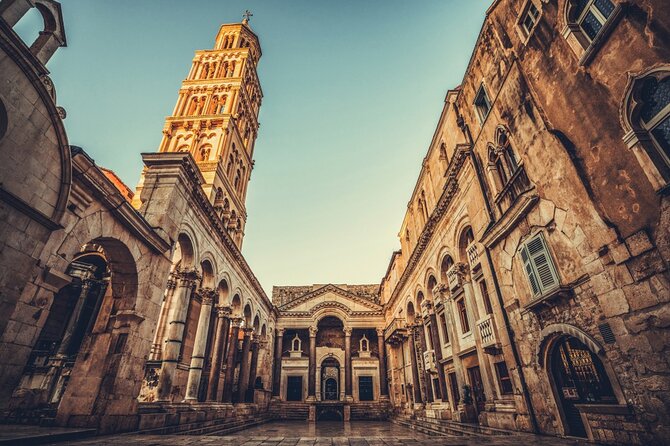
Now you step into Diocletian’s Palace territory. The description mentions Roman, Hellenistic, and Byzantine elements, plus preserved walls, gates, columns, and courtyards.
This is the big turning point. Even without a guide explaining it, the structures are doing the talking. If you like architecture, you will enjoy seeing how multiple layers of time can sit in the same place.
Stop 10: Iron Gate (Silver Gate, Porta Orientalis, Eastern Gate)
This gate is one of four main entrances to Diocletian’s Palace. You may see it listed under a few names, including Porta Orientalis or Eastern Gate.
Try to look at it as a boundary. When you enter palace spaces, the feel of the air and street noise often changes. A gate is a physical cue that you are moving into another kind of space.
Stop 11: Papalić Palace (Velika Papalićeva palača)
The Large Papalić Palace is described as an 18th-century Baroque example. You will find it through the app as part of the route.
This is a useful contrast point. Rome gets the headline, but Baroque architecture reminds you that Split kept evolving long after the Roman era.
Stop 12: Dominisova ulica, the Head on the Wall (Glava na Zidu)
This is a unique sculpture attached to a building wall. The description says it depicts a human head and is known for its artistic and intriguing presence.
This kind of stop is perfect for a self-guided game because it gives you a clear, specific object to look for. No long explanation required.
Stop 13: Jupiter’s Temple (Hram Jupitera)
Jupiter’s Temple is a historic Roman temple in Split, built in the 3rd century AD during Diocletian’s Palace construction.
This is one of the strongest “Roman facts on the ground” moments. If you want the story element to feel real, this is the spot where it stops being abstract.
Stop 14: Vestibul (Diocletian’s Palace entrance hall)
The vestibul is described as the entrance hall that served as a central, grand entrance to the palace and led to Diocletian’s residential quarters.
Even without a guide, a vestibule is easy to understand. It is the space that funnels you from public movement to private life. If you pay attention here, you can almost feel how the flow of people worked in a palace complex.
End: Peristil ul. (follow app directions)
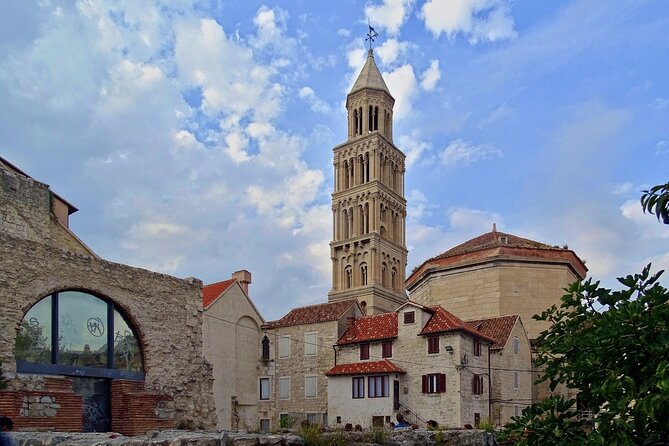
The final stop is listed at Peristil ul., and you reach it by following directions from the app. Peristil is part of the Diocletian’s Palace zone, so you finish in the heart of the palace experience.
The big “value” reasons this works better than a rushed landmark list
This experience is basically a structured walk through a high-density area. Split’s old center can feel like “big sights, then lost time.” Here, the game format helps you move between meaningful points without needing to plan every turn.
You get both “main sights” and the in-between texture
You hit major names and recognizable icons like Diocletian’s Palace and the Gregory of Nin statue. But the route also includes in-between streets like Neretvanska ulica, plus smaller distinct stops like Prva voda and the Head on the Wall.
That blend is what makes it worth your time. If you only chase the biggest monuments, Split can start to feel repetitive. This route gives you variety: waterfront mood, quirky street details, and Roman architecture.
It is open air, so your pace stays yours
Because it is self-guided and open air, you can step away from the route for a moment. That matters if you are dealing with heat, sudden rain, or just needing a coffee stop before you keep going.
What to watch out for: app dependence and no live guide
Let’s talk straight. This is not a traditional guided tour. There is no live tour guide. Everything you need to move from stop to stop comes through the Questo app.
So you need:
- a charged phone
- the app downloaded
- an account created using the same email you used to purchase
- enough patience to troubleshoot if your phone is slow or battery is low
One negative sentiment you may run into with app-led experiences is frustration with phone navigation. The fix is preparation. Test that the app is working right before you start, and keep your phone ready to use.
If you are the kind of person who hates relying on your screen while walking, you may find the app-driven format annoying. In that case, a guided walking tour with a person might feel more satisfying.
Practical tips to make your Split Quest day go smoothly
Here are the things that matter most for a smooth experience, based on what the experience requires.
- Bring a charged phone and plan to use it throughout the walk.
- Download the Questo app and create your account first, using the same purchase email.
- Start within the listed hours (8:00 AM to 6:00 PM on the days covered).
- Use the app for navigation to the end stop at Peristil ul., since it is direction-based.
- Expect a 90-minute to 2-hour pace and build in time for extra pauses at the waterfront and palace area.
If you want better photos, go a little slower at the waterfront promenade and harbor stop. Those sections give you natural framing for the city. Then shift to monument-focused looking once you’re in the Diocletian’s Palace zone.
Who should book this Split mystery walk?
I think this is a strong fit if you:
- like self-guided experiences with light structure
- enjoy using a phone for navigation and prefer not to hunt for directions
- want a cost-effective activity that still includes real landmark time
- want a mix of Roman-era sights and smaller oddball details
It may not be the best fit if you:
- want an in-person guide to answer questions on the spot
- dislike app-based navigation
- need frequent help to manage technology while moving through busy streets
Because it is private in the sense that only your group participates, it can also feel less chaotic than a big group tour. You still get movement and direction, just without the crowd noise.
Should you book Split Quest Experience, Discover the City?
If you want a low-cost way to connect Sustipanski Park, the waterfront edge, and Diocletian’s Palace into one coherent walk, this is a solid choice. The price is friendly, the time window is workable, and the route includes both famous stops and the smaller quirks that make Split feel like a real city.
The main question is how you feel about phone-led self-guided travel. If you are comfortable with that, you will likely enjoy the pacing and the story-guided order. If you hate apps or want a person talking you through the sites, skip it and pick a guided tour instead.
Recently added around Split
- Private VIP Brac and Hvar Day Trip from Split
★ 5.0 · 1 review - Private Transfer From or To the Split Airport
★ 5.0 · 1 review - Brač Half Day Beach Party Transfer to Olife Beach Club
★ 5.0 · 1 review - Private Transfer from Split to Zagreb, Hotel-to-hotel, English-speaking driver
★ 5.0 · 1 review - Airport transfers
★ 5.0 · 1 review - Private ”Game of Thrones” Walking Tour in Split (entrance tickets included)
★ 5.0 · 1 review
City Tours, compared.


Split Tour by Electric Tuk-Tuk: Top City Highlights
Read our review →
Browse the lists this tour appears in