
Reviewed · SELF-GUIDED TOURS
Split’s Old Town and Marjan Hill: A Self Guided Audio Tour
Old streets, big views, and no group pressure. This self guided VoiceMap audio tour lets you explore Split’s Old Town and Marjan Hill on your own schedule.
I like that it gives you GPS guided playback with offline audio and maps, so you do not need to keep guessing where to go next. I also like the pacing, you can finish in about an hour to an hour and a half, or linger when something catches your eye. The main catch is that it is a hilly walk, so bring sensible shoes and plan for climbs.
In This Review
- Quick hits before you go
- Self guided audio in Split, with GPS that keeps you moving
- Getting your bearings: where the tour starts and ends at Belvedere
- Passing Diocletian’s Palace: why the ruins stayed so well preserved
- Peristil Square and the three landmarks you hear about
- Pjaca Square under Venetian rule: the administrative center
- Marjan Hill finishing at Belvedere: how to plan for the climb
- Price and value: what $11.99 buys you in real terms
- How to use the VoiceMap app like a pro, including offline audio
- What to expect at each stage, and what might slow you down
- Who this self guided audio tour is best for (and who should skip it)
- Should you book this Split Old Town and Marjan Hill audio tour?
- FAQ
- Where does the tour start?
- Where does the tour end?
- How long does the audio tour take?
- What does it cost?
- Is it available offline?
- Do I need tickets or entrance fees included?
- Do I need my own smartphone and headphones?
- Is the tour suitable if I do not like hills?
- Can I use the tour more than once?
- Is there a refund if I cancel?
Quick hits before you go
- VoiceMap GPS playback with turn by turn directions, plus offline use for audio and maps
- Diocletian’s Palace stops that explain why these ruins survived so well
- Peristil Square viewpoint moments tied to major landmarks, including St Domnius and Jupiter’s Temple
- Pjaca Square context on the town’s Venetian era administrative center
- Marjan Hill ending at Belvedere with a classic Split lookout finish
- No museum tickets included, so you decide what to add on top
Self guided audio in Split, with GPS that keeps you moving
Split can be tricky on your first day. The streets twist, buildings crowd in, and you can lose time just trying to find the next key spot. This tour solves that with an audio app that is built around where you are, not where you think you should be.
Once you book, you get a ticket with instructions and a unique code. You install the VoiceMap app, enter your code, and it pulls up the route from the start point. When you are in the right location, the audio plays with automatic GPS playback. In practice, that means you can focus on the city, not your map.
I also like that you get unlimited use before your booking date and after it. That is handy if you plan two days in Split, or if you want to replay parts later at a slower pace. And if you want to get oriented at home first, there is a virtual tour option so you can preview the route idea.
The style is local guide voice, with producer Sanja Jukić behind the tour content. She is an experienced tour guide, and it shows in the way the explanations feel connected to what you are actually looking at, not like a textbook readout.
Getting your bearings: where the tour starts and ends at Belvedere
The walk begins at the Model of the historical core of the city of Split, at Obala Hrvatskog narodnog preporoda 23. This is a good choice because it quickly frames what you are about to explore, the Old Town layout and how the different landmark clusters relate.
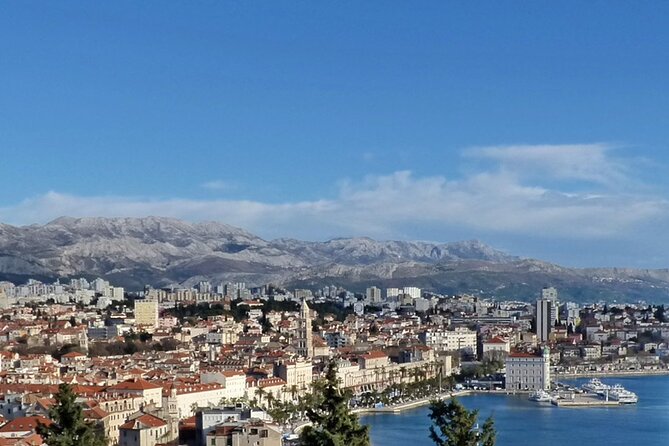
The route ends at Split viewpoint, called Belvedere, located at Šetalište Luke Botića 3. Ending at a viewpoint makes sense. You spend the first part learning and noticing details around the palace and squares, then you finish with the payoff, higher ground and a broad look over Split.
This tour is designed as a private experience in the sense that only your group participates. It is still self guided, so there is no live guide walking with you, but you do not have to worry about getting squeezed into a larger crowd on the audio route.
The day you go matters because the tour runs through a hilly area. If you are used to flat cities, take it slow at the start and save energy for the climb to the ending viewpoint.
Plenty more to do around Split
Passing Diocletian’s Palace: why the ruins stayed so well preserved
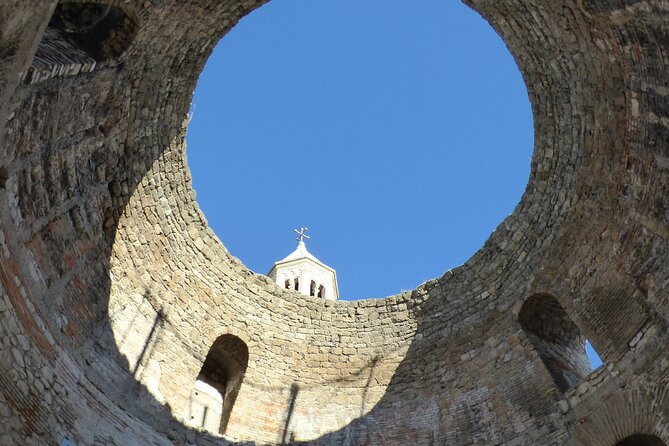
Diocletian’s Palace is the anchor of Old Town Split. You are not just looking at old stone here, you are watching a city built into the shell of an even older structure.
On this tour, you pass by Diocletian’s Palace and learn a very specific reason the complex has stayed so well preserved. The key idea you take away is that the palace did not freeze in time. Over centuries, people kept using and reshaping it, which helped the complex survive. It is a reminder that many historic places are not protected by museums first. They survive because real life kept happening around them.
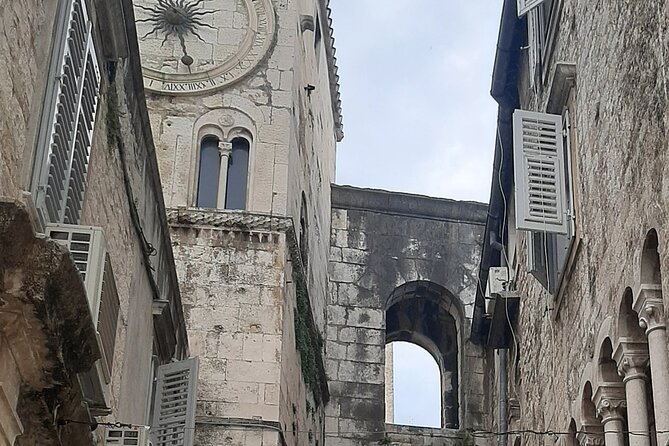
As you listen, pay attention to how the walls, passages, and street layout influence where you walk. Even when you are just moving through, you can feel the geometry of the palace shaping your route.
What I like about this stop is that it helps you read what you see. Instead of treating the palace like a distant monument, the audio nudges you to notice how it works as part of the living city today.
Peristil Square and the three landmarks you hear about
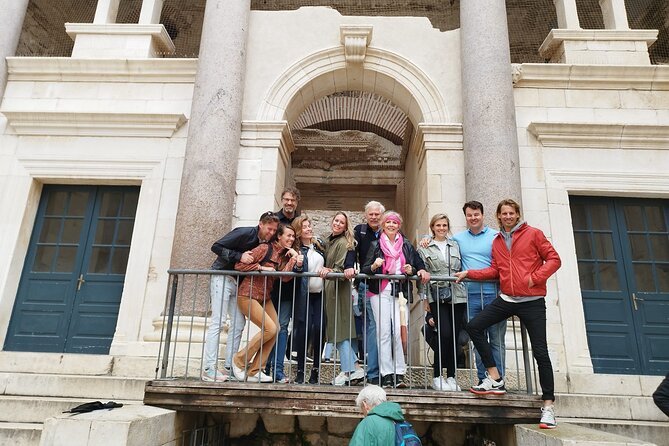
Peristil Square is one of those spaces where your photos almost fail to capture the effect. The square has a calm, open feel, but it is surrounded by monumental structures that make it feel like a stage.
This is where the audio focuses your attention. You sit and relax on Peristil Square and hear about the Mausoleum, St Domnius’s Cathedral, and Jupiter’s Temple, all linked to rituals that used to take place there.
Here is the practical value of that approach. You will be tempted to look at each landmark separately. The audio ties them together into one place, so you start understanding the space as a former ceremonial center rather than a collection of points on a map.
St Domnius’s Cathedral is a major religious site, and hearing it connected to the older story of the square changes how you view the architecture. You might notice how the space feels both public and sacred. Jupiter’s Temple adds another layer, because it points to the older belief system that once shaped the area.
And the Mausoleum mention matters too. Even if you are not an architecture specialist, it helps you realize the scale of power that once occupied this spot.
One small caution. Peristil Square is a place where you may want to pause. That is great if you have the time, but if you are trying to keep the full tour tight, do a quick listen first, then return for extra sitting if you feel like it.
Pjaca Square under Venetian rule: the administrative center
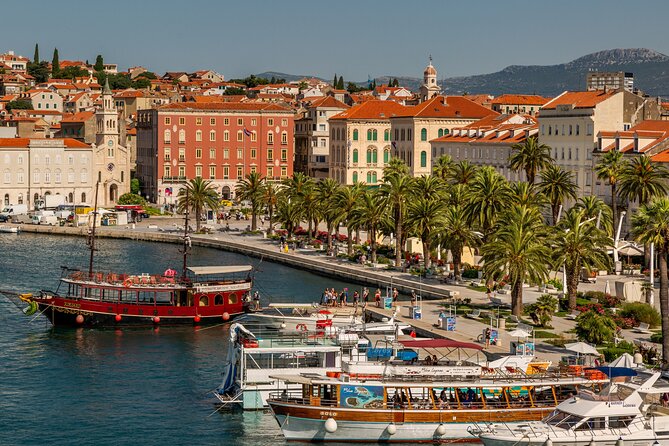
From Peristil, you move toward Pjaca Square, the administrative center of the town under Venetian rule. This is where the tour shifts from palace ceremonial space to civic power and governance.
It is not the most dramatic setting, but it is one of the most useful stops for understanding how Split functioned. Empires did not just build monuments. They ran towns, collected taxes, managed trade, and enforced rules. Pjaca Square is tied to that older administrative role.
As you walk past, listen for how the audio frames Venice as a ruler that changed the everyday layout and functions of the city. Even if you are only catching a slice of the story, you get a clearer sense of why the city’s squares matter. They are not random open spots. They were built for people to gather while officials got work done.
This is also a good moment to take a breath. If you have been walking through tight Old Town streets, the open square feel can reset your legs.
Marjan Hill finishing at Belvedere: how to plan for the climb

The tour title points to Marjan Hill, and the ending location confirms the idea: it finishes at Belvedere, a viewpoint on Šetalište Luke Botića.
This is where you get the payoff for doing the Old Town first. The climb gives you a different perspective, and the audio pacing keeps you moving from stories in the center toward the reward above the city.
Because it is a hilly walk, I suggest you plan for a steady pace instead of a sprint. If you get winded early, you will feel it later, and this walk is about enjoying the route, not surviving it.
If you have more time than the audio route suggests, build in a buffer at the end. Viewpoints are only as good as the light and weather. If the skies are clear, hang around. If clouds roll in, do not fight it, just listen to the final audio and enjoy the city views even if they are softer than you hoped.
Two days in Split? Here's how to fill the second.
- Split: Krka Waterfalls Trip with Boat Cruise and Swimming★ 4.8 · 10,519 reviews
- From Split: Krka Waterfalls, Food & Wine Tasting Tour★ 5.0 · 9,326 reviews
- Blue cave, Mamma Mia and Hvar, 5 islands speedboat tour★ 5.0 · 7,150 reviews
- From Split: Krka Waterfalls, Food & Wine Tasting Tour★ 4.9 · 6,598 reviews
Price and value: what $11.99 buys you in real terms

At $11.99 per person, this is priced like a budget-friendly experience, but you still get useful structure. You are not paying for someone to show up at a set time. You are paying for a guided route, audio explanations, and the app features that help you follow it confidently.
The value comes from a few specific things.
First, the route is short and flexible. About one hour to one hour and thirty minutes is enough time to hit major anchors in Old Town and end with the viewpoint. That makes it easier to fit into a tight itinerary where you still want to wander on your own.
Second, you get lifetime access. Even if you only use it once now, you can use it again later in another language session, or when you return to Split.
Third, offline access matters in Croatia. Service can be inconsistent in older urban areas and while moving between elevations. Having audio, maps, and geodata stored for offline use means you can keep going if your phone struggles with signal.
Is it a full substitute for a private expert guide? Not exactly. It is self guided, so you will not get spontaneous answers to your questions. But for learning the key context behind what you see, this is a cost-effective way to raise your understanding without raising your budget.
How to use the VoiceMap app like a pro, including offline audio

If you have used audio apps before, this one will feel familiar. Still, it helps to use it smartly so you get the most out of the route.
Before you start, confirm your code and make sure the app is installed and ready. Then, on the day of the walk, go to the starting point and let the app set your location. Once you are there, put in headphones and tap start.
Automatic GPS playback is the core feature. You do not need to babysit the phone the whole time. If you do find yourself stopping for photos or reading street signs, just know that audio progression is tied to location. You can slow down without breaking the tour, but do not walk too far ahead of your current audio segment.
Offline use is a big deal here. Downloading beforehand can save you frustration if reception is weak. When you have offline audio and maps, you can treat the walk like a true self guided route.
Also consider the virtual tour option. If you are the type who likes to know what you are looking at before you arrive, it can make the real walk more rewarding.
What to expect at each stage, and what might slow you down
This tour is built around a pass by style through the city, then short listening moments at major points.
You start with the context around Old Town Split. You then move through Diocletian’s Palace, where the audio explains preservation in a way that makes the ruins feel like a living system. Next you reach Peristil Square, where the audio gives you the three landmark connections and the sense of ritual that once belonged to this place.
After that, you head toward Pjaca Square. You get the Venetian era administrative framing, which helps you connect the open civic spaces to governance.
Finally, you finish at Belvedere on the rise of Marjan Hill. The ending audio portion works best when you let the viewpoint do its job, take it slow and give yourself a moment to look.
What could slow you down? The hilly nature is the obvious factor. Also, if you are the kind of person who stops for photos every twenty steps, plan for a longer walk than the typical hour to ninety minutes.
Who this self guided audio tour is best for (and who should skip it)
This works best for you if you like history told through real places, not through thick guidebook paragraphs. It is also great if you want control over pacing, because you can start and finish whenever you want. The tour is private for your group, and you avoid the stress of syncing up with others.
You will also like it if you want to build a day around walking rather than waiting around. The route is short enough that you can still do lunch and add extra stops after.
I would think twice if you struggle with uphill walking. The tour is hilly, and it is not described as an accessible, flat route. If you use a stroller or mobility aids, you might find it harder than you want, since the route involves elevations.
Also, you need your own smartphone and headphones. The tour does not include them, so check you have them charged, and bring a backup charging plan if you are walking all day.
Should you book this Split Old Town and Marjan Hill audio tour?
Book it if you want a smart, affordable way to understand the big anchors of Split while still keeping your freedom to wander. The combination of offline VoiceMap guidance, major Old Town stops like Diocletian’s Palace and Peristil Square, and a finish at Belvedere makes this a practical choice for first timers and return visitors alike.
Do not book it if you want a live guide who can answer questions on the spot, or if you prefer fully flat routes. In those cases, you may be happier with a standard guided walking tour that can adjust to your pace and interests.
If you want value for money plus a clear route, this one is an easy yes.
FAQ
Where does the tour start?
It starts at the Model of the historical core of the city of Split, Obala Hrvatskog narodnog preporoda 23, 21000 Split.
Where does the tour end?
The tour ends at the Split viewpoint called Belvedere, Šetalište Luke Botića 3, 21000 Split.
How long does the audio tour take?
Plan for about 1 hour to 1 hour 30 minutes.
What does it cost?
The price is $11.99 per person.
Is it available offline?
Yes. The VoiceMap app provides offline access for audio, maps, and geodata.
Do I need tickets or entrance fees included?
No. Tickets or entrance fees to museums or attractions en route are not included.
Do I need my own smartphone and headphones?
Yes. A smartphone and headphones are not included.
Is the tour suitable if I do not like hills?
It is noted as a hilly walk. Most travelers can participate, but you should be ready for some uphill walking.
Can I use the tour more than once?
You get lifetime access, and you also have unlimited use before your booking date and after it.
Is there a refund if I cancel?
No. This experience is non refundable and cannot be changed for any reason.
Recently added around Split
- Private VIP Brac and Hvar Day Trip from Split
★ 5.0 · 1 review - Private Transfer From or To the Split Airport
★ 5.0 · 1 review - Brač Half Day Beach Party Transfer to Olife Beach Club
★ 5.0 · 1 review - Private Transfer from Split to Zagreb, Hotel-to-hotel, English-speaking driver
★ 5.0 · 1 review - Airport transfers
★ 5.0 · 1 review - Private ”Game of Thrones” Walking Tour in Split (entrance tickets included)
★ 5.0 · 1 review
Self-Guided Tours, compared.

Self-Guided Plitvice Lakes Day Tour with Boat Ride
Read our review →
Self-Guided Plitvice Lakes Day Tour with Boat Ride
Read our review →


Solta Island: Self-Guided Bike Tour from Split
Read our review →
Sightseeing Split’s Roman Ruins: A Self-Guided Audio Tour
Read our review →
City Walk with Audio Guide in 7 Languages on your Phone
Read our review →Browse the lists this tour appears in