Reviewed · TOURS
Storytelling World War II in Split Tour
Split’s WWII stories live in plain sight. On this 2-hour walk, I love how WWII street stories connect directly to Split’s landmarks, and how archival photos make the past feel concrete. One thing to consider, though, is that the tour involves plenty of standing and pausing, not just strolling.
My favorite part is the way the guide, Ina Nikolic, uses real images from Split’s memory. You’ll see WWII-era photos drawn from the Museum of the City of Split archive, and they are not just displayed on a wall somewhere, they’re specifically used for this walk when the guide has permission.
You’ll also appreciate the small-group feel. With a maximum of 15 travelers, an English-speaking guide, and a meeting point that keeps you in the historic center, it’s easy to ask questions and stay oriented.
In This Review
- Key Things To Know Before You Go
- WWII Storytelling in Split’s Old Center
- Pacing and What the Walking Feels Like
- Price and Value: Is $60.01 Worth It?
- Meeting Point and How the Tour Flows
- Stop by Stop: What Each WWII Site Teaches You
- Stop 1: Split Riva, Where the Story Begins
- Stop 2: Green Market, and the Bombing That Shocked the City
- Stop 3: Eastern Gate, Diocletian’s Palace from the East
- Stop 4: The Peristyle, What Was Attacked
- Stop 5: Narodni Trg, Main Square and Main Events
- Stop 6: Marmontova Ulica, A Street That Witnessed Horror
- Stop 7: Prokurative, Prisons and Executions
- The Photo Moment: WWII Images That Change How You See Split
- English Guidance and Sensitive Topics: What to Expect
- Who This Tour Suits Best
- Should You Book This WWII Storytelling Tour?
- FAQ
- How long is the WWII storytelling tour in Split?
- Is the tour offered in English?
- How many travelers are in the group?
- Where do I meet the guide, and where does the tour end?
- Is pickup available?
- What’s included in the experience?
- Can I cancel for free?
Key Things To Know Before You Go
- WWII narrative tied to real streets: You connect the city you see now to what happened there during the war.
- Archival photos you actually get to view: WWII images are pulled from the Museum of the City of Split archive for this tour.
- Small group size: Limited to 15 travelers, so the pace stays manageable.
- English-led storytelling: The tour is offered in English, which helps you follow the details without guessing.
- Old center route, finishing near the promenade: You stay within the historic center and end around Trg Republike, close to the waterfront.
WWII Storytelling in Split’s Old Center
Split can feel like a postcard city until you slow down and look closer. This tour does exactly that, turning everyday corners into wartime evidence. It’s not about abstract dates, it’s about what happened in Split, and how that fear and damage shaped daily life.
I like that the tour is anchored in specific places, not sweeping claims. You’re guided from the seaside edge toward the heart of the city, then into areas connected to Diocletian’s Palace and the place where the story ends. It’s the kind of route that helps you understand why Split mattered during the conflict.
The guide, Ina Nikolic, comes across as a true storyteller. She ties what you’re seeing to what you need to picture, and she also connects the WWII timeline to later Croatian conflict in the 1990s, which helps the broader context click for many people. If you care about how communities carry memory across generations, you’ll likely find that approach very satisfying.
One more strong point is the photo component. Even if you know the basics, seeing WWII-era images next to the modern streets changes the whole experience. The tour stays grounded, because the images and locations do not let you drift into vague history.
Pacing and What the Walking Feels Like
This is a short, focused walk that lasts about 2 hours. It is not a long-distance hike, but it also isn’t just a casual promenade. Several moments are designed for listening and looking at details where history would otherwise blur together.
The biggest practical note is that you should expect some waiting on the spot. One review summary flagged a lot of standing as a contrast to walking, and that tracks with the tour style. If you’re the kind of traveler who hates pauses, bring patience. If you like stopping to absorb context, you’ll probably enjoy the pace.
The route stays in the historic center, so you’re not dealing with long transfers or complicated transit. You’ll still want comfortable shoes, especially because the city streets can vary in texture and slope. Bring a light layer if you’re going in the evening, since the seaside air near the Riva can feel cooler.
Split is the launch point for half the Dalmatian coast: islands, waterfalls, and a couple of countries besides.
Price and Value: Is $60.01 Worth It?
At about $60.01 per person for roughly 2 hours, you’re paying for more than a walk. You’re paying for a licensed guide, permission to use archival photos, and a structured narrative that connects the places you pass with what occurred there.
Here’s how I think about the value. In many cities, the tourist options that focus on WWII history can be either too broad or too museum-only. This one is street-level, guided by a person who can translate the past into what you can see today. You also get the archival images from the Museum of the City of Split, which makes it feel more special than random street facts.
Group size also affects value. With a maximum of 15 travelers, it’s easier for the guide to keep your attention and answer questions. That matters because WWII history includes sensitive topics, like bombing, prisons, and executions, and you want the guide’s framing to feel clear.
Also, this tour is offered in English and uses a mobile ticket. That reduces friction on the day and keeps your focus on the walk. With pickup offered, it can be an easy way to fit into your schedule without wasting time.
Meeting Point and How the Tour Flows
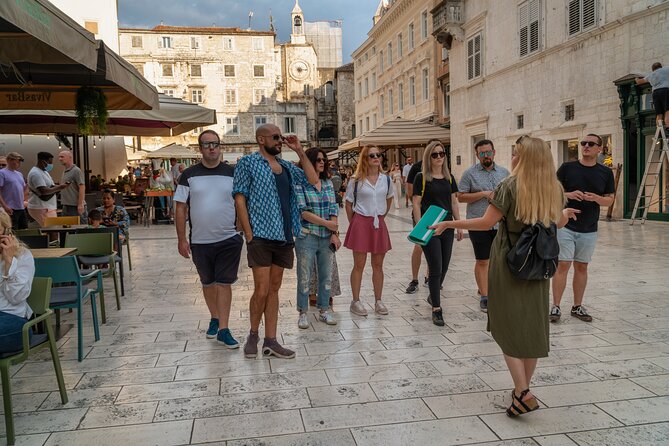
You meet at Obala Hrvatskog narodnog preporoda 27, 21000 Split. You’ll end at Trg Republike, specifically near Prokurative square, which is close to the waterfront promenade. That ending location is handy because you can keep walking or grab food afterward without trekking across town.
If you’re using pickup, it’s available from Trajektna luka Split, Obala kneza Domagoja. Pickup helps if you’re arriving by ferry or you simply don’t want to hunt for the starting spot.
This is also a small group experience, and that shows in the flow. You remain in the old historical center of Split throughout, which keeps things simple. You won’t need to manage complicated logistics between far-apart attractions, and you get continuity as the story moves forward.
If you like having a clear start and a clean finish, this tour works. It also tends to fit well for people who already spent time in Split earlier in the day and want a deeper layer.
Stop by Stop: What Each WWII Site Teaches You
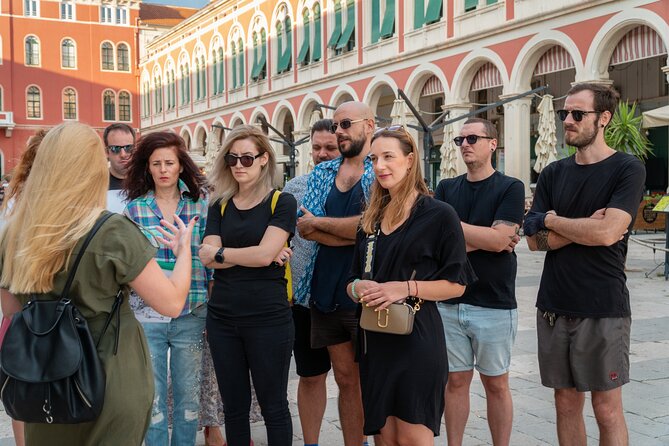
The tour moves through seven main locations, each with its own purpose. Some stops are quick, like a minute or two at a doorway or street. Others are longer, giving you time to absorb both the visual setting and the wartime context.
Below is the practical feel of each stop, and what you should watch for.
Stop 1: Split Riva, Where the Story Begins
You start at the Split Riva, where the guide explains when and why the war in Split began. This is a smart opening because it frames what you’ll later see.
At this point, you’re not just admiring the waterfront. You’re being taught how to look at the city as a strategic place, tied to movement, power, and danger. The stop is about 15 minutes, so it gives you enough grounding to follow the rest without feeling lost.
Two days in Split? Here's how to fill the second.
- From Split: Krka Waterfalls, Food & Wine Tasting Tour★ 4.9 · 6,598 reviews
- Split/Trogir: Blue Cave, Mamma Mia, Hvar and 5 Island Tour★ 4.6 · 6,320 reviews
- Blue Lagoon & 3 Islands Cruise with Lunch from Split★ 4.5 · 5,756 reviews
- Blue Cave and Hvar Tour – 5 Islands Tour from Split and Trogir★ 5.0 · 4,815 reviews
Stop 2: Green Market, and the Bombing That Shocked the City
Next you reach the Green Market area. This is where you hear about the most horrific bombing in Split, and you learn how that event changed the mood of the city.
This stop matters because markets are about daily life. When bombs fall there, it’s not just damage to buildings, it’s damage to routines and community trust. If you’ve ever traveled somewhere after a crisis, you’ll recognize how quickly fear changes what people expect from the day.
Expect about 15 minutes here. The focus is listening and connecting the intensity of the story to the fact that this is still a market space today.
Stop 3: Eastern Gate, Diocletian’s Palace from the East
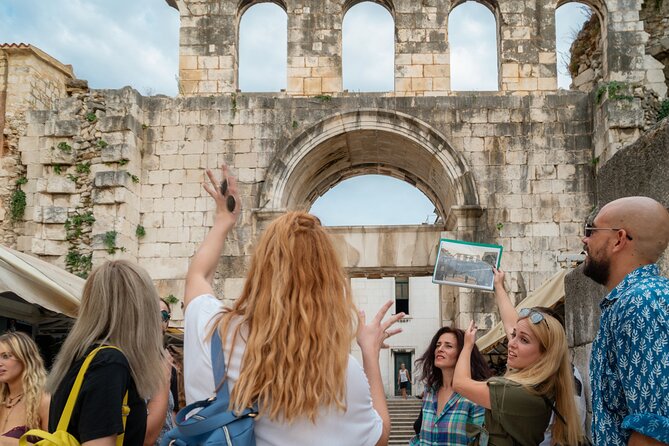
From there, you move to the Eastern (Silver) Gate, an entrance to Diocletian’s Palace from the east. The stop is short, about 5 minutes, but the payoff comes from how the guide uses it as a bridge between ancient architecture and wartime targeting.
Even if you already know Diocletian’s Palace as Roman structure, this viewpoint adds a new layer. You start thinking about how older walls and passageways can become points of vulnerability in a modern war.
Stop 4: The Peristyle, What Was Attacked
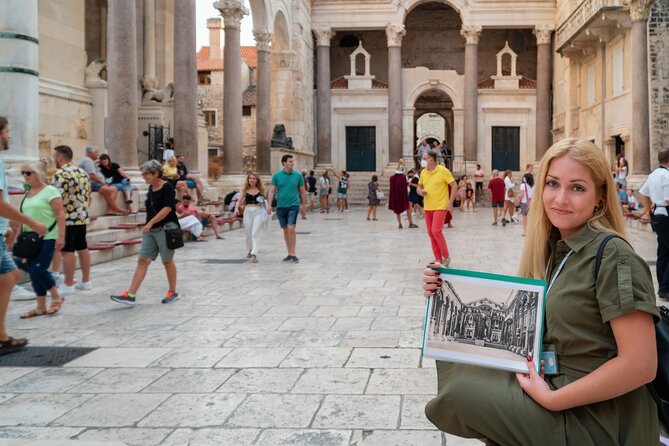
Then you reach the Peristyle of Diocletian’s Palace, and this is one of the key teaching moments. You’ll see the ancient palace of the Roman emperor Diocletian and learn which parts were attacked during the war.
This is where the tour really becomes a visual argument. You can’t fake the scale of the space, and the guide’s explanation gives the impression that the stones have their own memory. The stop lasts about 15 minutes.
One practical thought: this is an indoor-outdoor historical setting. Wear shoes you’re comfortable standing in, and keep your phone battery ready if you like documenting what you saw.
Stop 5: Narodni Trg, Main Square and Main Events
Narodni Trg is the main square of the city, and you’ll learn about terrible events that took place there during the war. The stop lasts about 15 minutes.
Squares are where collective life happens, and that’s why they become high-impact places during conflict. In a guided setting, the square stops being a place you pass through. It becomes a place that explains why the city’s center feels the way it does.
If you enjoy history that explains how geography shapes human behavior, you’ll likely appreciate how this stop ties the city layout to wartime pressure.
Stop 6: Marmontova Ulica, A Street That Witnessed Horror
You then walk along Marmontova Ulica, described as the main street and also a witness to the horrors of war. This is a short stop, about 5 minutes, but the street-level perspective is memorable.
A quick note for your brain: in WWII stories, it’s easy to focus only on the loud events. This street stop helps you picture how danger moved through ordinary routes. It’s the kind of detail that makes the narrative feel grounded, not staged.
Stop 7: Prokurative, Prisons and Executions
You end at Prokurative, where you learn about prisons and executions during the war. The stop is about 15 minutes, and it’s the emotional climax of the route.
This part needs a particular kind of attention. The subject matter is heavy, and the guide’s role becomes even more important here, guiding you through what happened without turning it into spectacle.
You’ll finish back near Republic square, in Prokurative square, which makes it easy to wrap up and continue the rest of your evening.
The Photo Moment: WWII Images That Change How You See Split
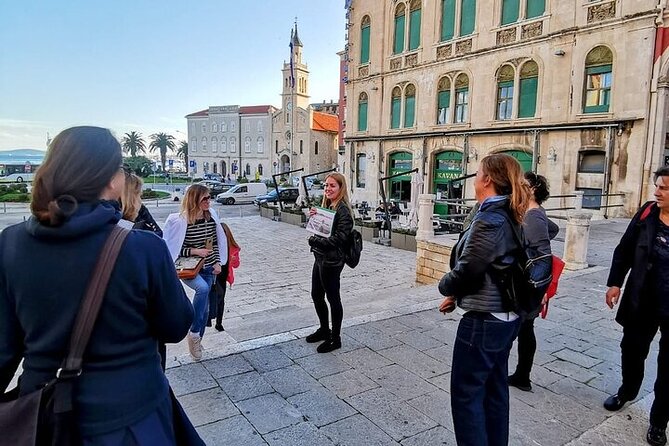
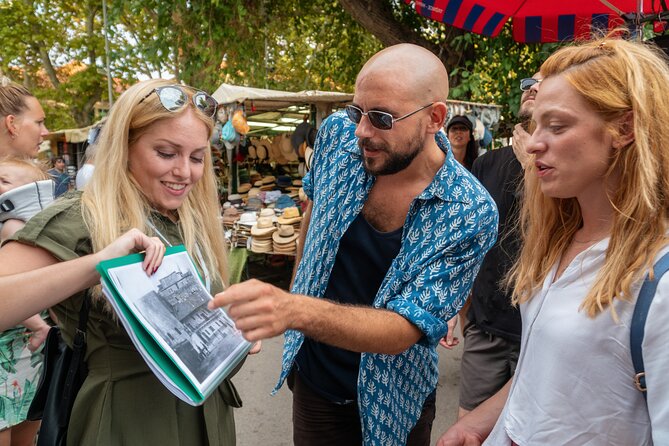
One of the strongest reasons to book is the archive-based photo element. You get old photographs from WWII, kept in the Museum of the City of Split. They aren’t always on permanent display, which helps explain why this walk can feel more specific than standard city storytelling.
What I like about this approach is that it gives you a concrete comparison between then and now. If you’ve ever walked through a place and wondered how it could look so different just a few generations back, photos solve that problem quickly.
The guide also uses images and references that help you picture the scale and perspective of the conflict, including comparisons that can include aerial mapping context. Even if you know Split well, these visual comparisons help you “read” the city differently from street level.
You’re also seeing the past through a local lens. The photos are not generic wartime propaganda. They’re tied to Split’s setting and Split’s memory, which makes them feel more respectful and less like a museum lecture you tune out.
English Guidance and Sensitive Topics: What to Expect
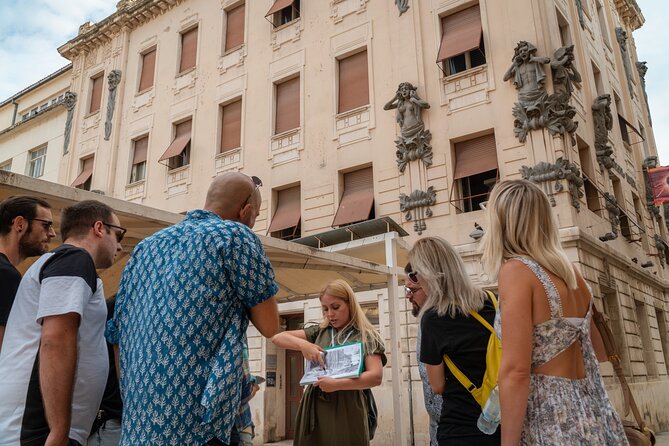
The tour runs in English and is led by a local licensed guide. That language choice matters here because the story includes complex and sensitive events like bombing and the realities of detention and executions.
From the way the guide tells the story, you can expect more than dates. You’ll get context about how different parts of the city related to wartime events, and you’ll hear local historical framing rather than textbook-only summaries.
A number of themes show up strongly: impacts on daily life, the way key places were targeted, and attention to community experiences, including Jewish history. If that topic is on your interest list, you’ll likely find the tour adds useful angles that don’t always make it into casual city conversations.
Also, Ina connects WWII to later events in the 1990s. That doesn’t turn the tour into a second conflict history lesson. It helps you understand how people remember and interpret trauma over time.
Who This Tour Suits Best
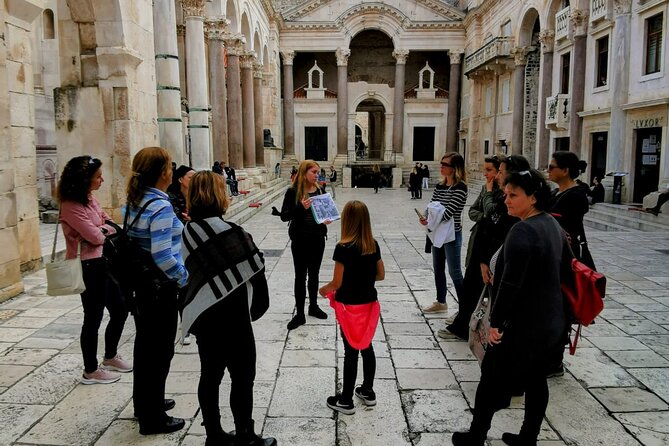
This is a good fit if you:
- like history tied to real streets, not just museums
- want a WWII perspective from a local guide in Split
- enjoy seeing archival photos used in a meaningful way
- travel with teens or family members who can handle serious topics and questions
If you’re the kind of traveler who only wants light, scenic sightseeing, this might feel heavy. The pace is also not all walking, so if you want constant movement, you may find the pauses a bit slow.
On the flip side, if you’re a history buff, or you like understanding how cities get shaped by fear and resilience, this route makes the city’s layers feel readable.
The maximum group size of 15 also makes it easier to manage attention in a narrative tour format. You’ll feel more like you’re listening to a guide than being stuck in a noisy crowd.
Should You Book This WWII Storytelling Tour?
Yes, if you want WWII history that stays connected to what you can see in Split. The combination of a local licensed guide, WWII archival photos from the Museum of the City of Split archive, and a route that links waterfront, market life, and Diocletian’s Palace creates a strong sense of place.
I’d book it sooner rather than later if it fits your schedule, since it’s commonly booked in advance. And because it ends near Prokurative square, it sets you up well for a late meal or an evening walk right after.
Skip it if you dislike stopping for long explanations, or if you prefer history told only through buildings and collections. This tour is story-first. The streets and squares are the stage.
If you’re excited to learn how WWII affected the specific places you’re standing in, this one is worth your time and money.
FAQ
How long is the WWII storytelling tour in Split?
It lasts about 2 hours.
Is the tour offered in English?
Yes, the tour is offered in English.
How many travelers are in the group?
The tour has a maximum of 15 travelers.
Where do I meet the guide, and where does the tour end?
You meet at Obala Hrvatskog narodnog preporoda 27, 21000 Split. The tour ends at Trg Republike, near Prokurative square.
Is pickup available?
Yes, pickup is available from Trajektna luka Split, Obala kneza Domagoja.
What’s included in the experience?
You get a local licensed guide and old WWII photographs from the Museum of the City of Split archive, used with permission.
Can I cancel for free?
Yes, you can cancel for free up to 24 hours before the experience starts for a full refund.
Recently added around Split
- Private VIP Brac and Hvar Day Trip from Split
★ 5.0 · 1 review - Private Transfer From or To the Split Airport
★ 5.0 · 1 review - Brač Half Day Beach Party Transfer to Olife Beach Club
★ 5.0 · 1 review - Private Transfer from Split to Zagreb, Hotel-to-hotel, English-speaking driver
★ 5.0 · 1 review - Airport transfers
★ 5.0 · 1 review - Private ”Game of Thrones” Walking Tour in Split (entrance tickets included)
★ 5.0 · 1 review
Tours, compared.


Blue cave, Mamma Mia and Hvar, 5 islands speedboat tour
Read our review →
Blue Cave, Mamma Mia, Hvar and 5 Island Tour
Read our review →
Blue Cave and Hvar Tour – 5 Islands Tour from Split and Trogir
Read our review →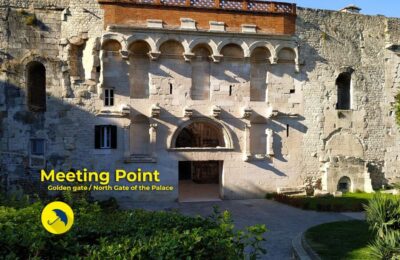
Krka Waterfalls Tour, Boat Cruise & Swimming
Read our review →