

Reviewed · DIOCLETIAN'S PALACE TOURS
Wonderful Split – Diocletian’s Palace Private Walking Tour
Split’s palace is right in the street. This private walking tour turns Diocletian’s world into something you can actually understand, with a licensed guide who can customize the story to your interests and keep the pace comfortable. Two big wins for me are the flexible private format and the way the route gives you multiple angles of Palazzo di Diocleziano without feeling like a checklist. One thing to plan around: the major ticketed areas listed as not included, like St. Domnius Cathedral, Jupiter’s Temple, and the Substructures, won’t be covered.
This is a great fit if you like history but also want the practical version, the one that helps you walk smarter around Split for the rest of your trip. Expect about 1 hour 30 minutes to 2 hours, with lots of exterior exploring, free entry points along the way, and time for questions. In the reviews, the guide name that comes up most is Lea, with praise for being engaging and not rushing, sometimes even staying extra to share recommendations, and one guest even mentioned the tour being handled thoughtfully with a mobility issue.
In This Review
- Key points you should know before you go
- Why this Diocletian’s Palace walk works in Split
- Meeting point and the 1 hour 30 minutes to 2 hours rhythm
- Stop 1: Palazzo di Diocleziano, seeing the palace like a local
- Stop 2: The Golden Gate, your main entrance to meaning
- Stop 3: Riva Harbor, Split’s living room
- Stop 4: The Peristyle, the square where power shows up
- Stop 5: Narodni Trg, where styles and eras overlap
- The mechanical clock with 24 digits, a detail with a story
- Stop 6: Vestibulum, built to impress
- What’s included, and what you should consider adding
- Price and value: what you get for about $60
- How to get the most out of your private time
- Should you book Wonderful Split: Diocletian’s Palace Private Walking Tour?
- FAQ
- How long is the Wonderful Split walking tour of Diocletian’s Palace?
- Is this tour private?
- What sights are included during the walking route?
- What is not included in the tour admissions?
- What language options are available?
- Where does the tour start and end?
Key points you should know before you go
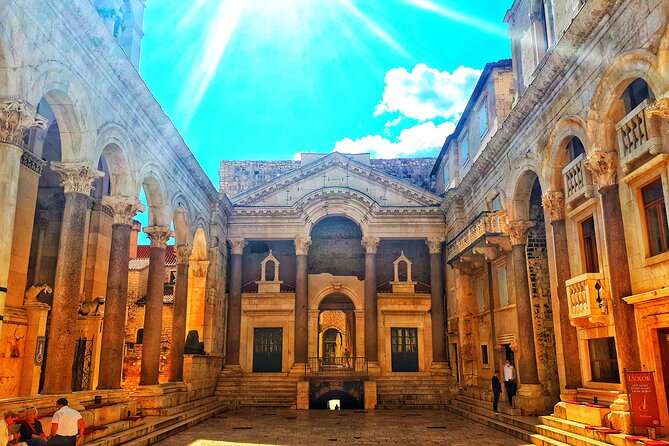
- Private and flexible by design: only your group, with a guide who can adjust the focus to what you care about.
- Palace views from several angles: you enter and leave the palace areas multiple times so you see the complex from different viewpoints.
- Street level stops with no ticket hassle: Golden Gate, Riva Promenade, Peristyle surroundings, and other key points are part of the plan with free entry for the listed areas.
- Split’s layers in a short walk: Golden Gate, Peristyle, and Narodni Trg help you connect Roman foundations to later influences.
- Details that escape casual wandering: the mechanical clock with 24 digits is the kind of thing you might miss without local context.
- Lea has a strong track record: reviews highlight her friendly, engaging style and extra effort to add context beyond the basic route, including the local Jewish community.
Why this Diocletian’s Palace walk works in Split
Split can be deceptively easy to navigate. The old core is compact, and the waterfront is right there. But the problem is you can stand in front of the same walls and miss why they matter. This tour is built to fix that fast.
You get a guide who can explain what you’re looking at in plain language, then point out how the city grew around the palace. That combo is what makes the difference. Without a guide, Diocletian’s Palace can feel like impressive stone with no map of the meaning. With a guide, it clicks into place.
I also like the “private” part because Split is a place where your priorities can shift on the fly. Maybe you want more photo stops, or maybe you want the modern city angle. Since it’s just your group, your guide can steer. That matters most when you’re traveling with kids, a friend who gets tired easily, or anyone who prefers slower walking with more time to ask questions.
Meeting point and the 1 hour 30 minutes to 2 hours rhythm
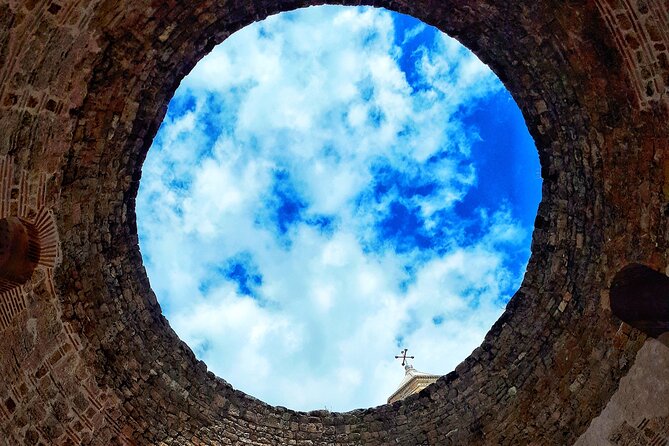
The meeting point is Obala Hrvatskog narodnog preporoda 23, 21000, Split. The tour ends back there, so you’re not stuck figuring out your next move.
The timing is ideal because it hits the sweet spot of orientation. You’re not committing to a long half day, but you’re also not doing a quick drive-by. You’ll have enough time to see the main palace entrances and squares, then connect them to the city’s everyday flow along the Riva waterfront.
One practical note: this is near public transportation, which makes it easier to plan around if you’re staying slightly outside the center. And service animals are allowed, which is always good to know when choosing a tour.
Plenty more to do around Split
Stop 1: Palazzo di Diocleziano, seeing the palace like a local
Palazzo di Diocleziano is the heart of the experience. This isn’t just one entrance and one exit. The plan includes entering and leaving several times, which is important.
Those repeated entrances are how you make the palace feel three-dimensional. From one angle, you see the walls and scale. From another, you understand the relationship between openings, courtyards, and the surrounding city streets. It turns a maze into something readable.
Another advantage is that the palace areas listed here are free for the tour stops. That keeps your time focused on walking and understanding, instead of budgeting and waiting around for ticket logistics at every turn.
If you’re picturing what you’ll do on the ground, expect lots of standing still, looking up, and then moving a few steps to line up your view. It’s the kind of walking that feels slow, but it’s not wasteful. You’re trading frantic sightseeing for “I get it now” moments.
Stop 2: The Golden Gate, your main entrance to meaning
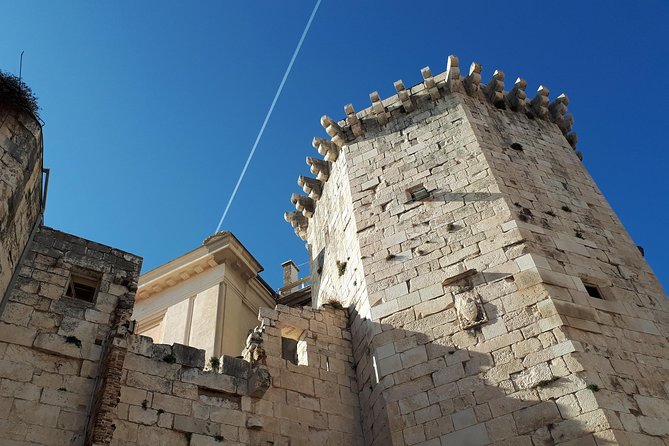
The Golden Gate is the main entrance to Diocletian’s palace, and it’s where your brain needs an anchor. It’s easy to treat it like a photo backdrop. A good guide makes it a reference point.
Here’s what makes this stop valuable for first-time visitors: it frames how entrances and movement worked in the Roman world, then lets you compare that with how people use these spaces today. You’ll likely catch the contrast between monumental design and the way people now flow through the area without thinking about the original purpose.
This stop also keeps the tour structured. After you get your orientation at the palace core, you can spread out mentally. That makes the next steps, like Riva and the squares, feel less random.
Stop 3: Riva Harbor, Split’s living room
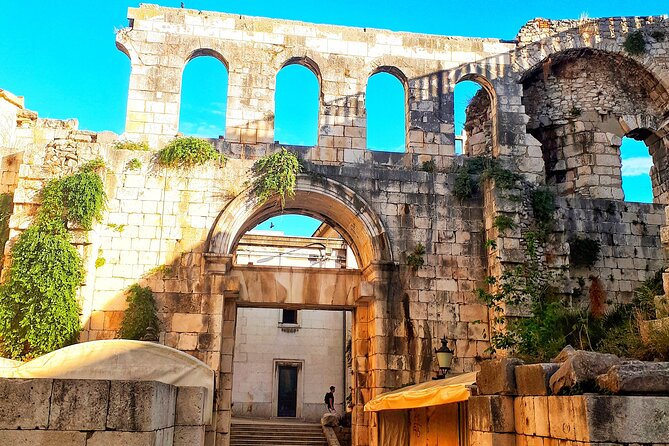
Riva is Split’s waterfront promenade, often treated like a casual stroll spot. But on this tour, it becomes more than a pretty walk.
Your guide uses Riva as a way to connect the palace setting to the city’s day-to-day rhythm. You’re learning how the old Roman foundation sits next to a modern seafront culture. That link helps you understand why the area is so central, not just historically important.
This is also a nice change in pace. After palace stone and architectural angles, Riva gives you open sightlines and a chance to reset. Even the time estimate here is short, but it’s long enough to orient your sense of direction in the center.
Stop 4: The Peristyle, the square where power shows up
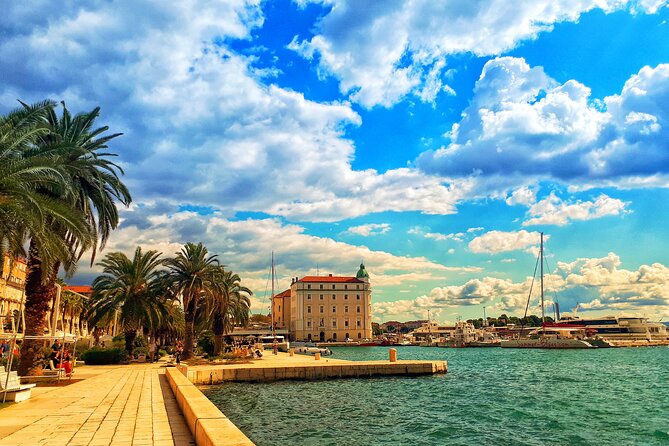
The Peristyle of Diocletian’s Palace is one of the most iconic spaces in Split. The plan calls out more than 3,500 years of history here, and that kind of number matters only if you know what to look for. That’s where the guide helps.
The Peristyle is a square space connected to the palace. It’s dramatic because it’s designed for presence, not secrecy. Think about a building made to impress, then built into a city that kept changing.
On a walking tour like this, the Peristyle is also a “structure check.” You start recognizing how sections connect, where you are relative to palace walls, and why certain views are framed the way they are. Without that, you might walk around it and still feel lost.
Two days in Split? Here's how to fill the second.
- Split: Krka Waterfalls Trip with Boat Cruise and Swimming★ 4.8 · 10,519 reviews
- From Split: Krka Waterfalls, Food & Wine Tasting Tour★ 5.0 · 9,326 reviews
- Blue cave, Mamma Mia and Hvar, 5 islands speedboat tour★ 5.0 · 7,150 reviews
- From Split: Krka Waterfalls, Food & Wine Tasting Tour★ 4.9 · 6,598 reviews
Stop 5: Narodni Trg, where styles and eras overlap
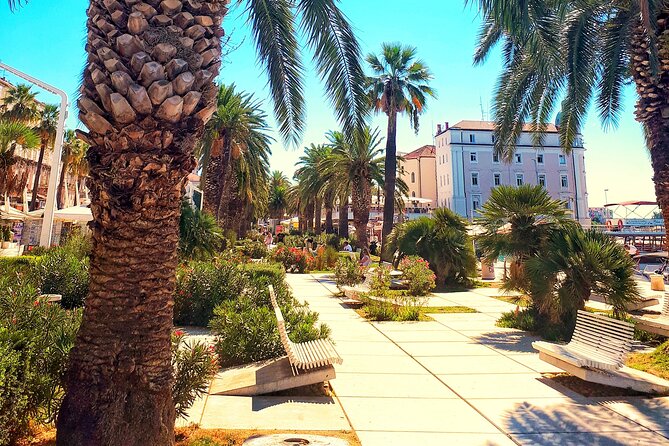
Narodni Trg is where you start seeing Split as a layered city rather than a single Roman highlight. The description here points to all the different influences, styles, and history layers in one square. That’s exactly what this stop is good for.
You’ll use it like a visual timeline. Instead of trying to memorize dates, you’ll notice how architecture and space reflect different periods of use. That turns the palace tour into something more useful for real travel. You stop seeing the city as separate attractions, and you start seeing how each square and street contributes to the next chapter.
This is also a good moment for questions. If you’re wondering how Split transitioned from Roman foundations to later eras, a guide can tie the story together quickly in a place where you can look around and verify what you’re hearing.
The mechanical clock with 24 digits, a detail with a story
There’s a special stop in the public square for a famous mechanical clock with 24 digits. This is the kind of thing you might walk right past, because it looks like a simple feature until someone explains why it matters or how it works.
This is one of those “small” stops that makes a tour feel alive. It breaks the pattern of just seeing buildings, and it gives you something to focus on at eye level. It’s also a nice break from the heavier architectural landmarks.
Practical tip: keep your phone ready for photos, but also take a moment to look without filming. A good guide will point out the specifics so you don’t miss the point of the clock.
Stop 6: Vestibulum, built to impress
The Vestibulum of Diocletian’s Palace is described as the entrance to the retired Roman emperors’ residential area, created to impress visitors. That purpose is what you’re looking for here.
Vestibulum spaces in major Roman complexes often function like a transition, a staged moment between public movement and private power. If your guide is strong, you’ll feel how that design language supports the overall palace story.
Even if you’re not a “details person,” this stop is worth it because it helps you understand how the palace used space psychologically. You’re not just walking through; you’re experiencing how the palace controlled attention.
What’s included, and what you should consider adding
This tour includes a custom-made programme and tour organization, plus a professional licensed guide.
For admissions, the stops listed along the route are free for the areas included. That’s a big part of the value. You get a lot of major reference points without spending time and money on separate entry fees for each one.
However, these specific areas are explicitly not included: entry or admission to the Cathedral of St. Domnius and Jupiter’s Temple, and to the Substructures. If those are high on your list, you may want to book another plan or set aside time to visit them separately. This tour still helps, because it gives you context before you go in.
That balance is smart. You can use this walking tour as your orientation and story-building block, then decide later what you want to go inside.
Price and value: what you get for about $60
At $60.01 per person, you’re paying for private time with a licensed guide plus a structured route that hits the essential Diocletian’s Palace highlights. For Split, that pricing can be good value when you consider two things.
First, you’re not just getting a “see these sights” script. You’re getting a guide who can tailor the tour. That can matter a lot if you’re curious about more than one era, or if you want a mix of ancient and modern Split context.
Second, the tour includes many stop points where you avoid ticketing complexity. When a tour includes enough free exterior areas, it reduces the chance you spend half your trip lining up and paying while you’re tired and hungry.
The main price consideration is simple: you should decide if you want private flexibility. If yes, this is positioned as a strong deal. If you’d rather self-guide and you’re comfortable reading about Roman architecture on your own, you might not need a private guide. But if you want the city to make sense quickly, paying for context usually pays off.
How to get the most out of your private time
Because this is private, you should actually use that superpower. Don’t be shy about preferences.
If you care most about architecture, ask where to look and what to ignore. If you care about everyday city life, ask how locals relate to these spaces now. If you’re taking photos, ask for the best viewpoints and the order that avoids awkward backtracking.
Also, keep a note of mobility and comfort before you start. One review mentions a guest with a broken foot having difficulty walking, and the guide handled the situation in a way that still allowed the tour to be meaningful. That tells you it’s worth communicating needs early so your guide can manage the pace.
And if you have any interest beyond Roman history, this is where a great guide can add extra value. A review praised Lea for going the extra mile to show the synagogue and share interesting facts about the local Jewish community. You might not know if that will happen on your dates, but if it matters to you, make it part of your interest list.
Should you book Wonderful Split: Diocletian’s Palace Private Walking Tour?
Book it if you want Split to click fast. This is ideal as an early trip, when you still need orientation and context. It’s also a great choice when you prefer a private pace, want a licensed guide to explain what you’re seeing, and value a route that focuses on major landmarks without pulling you into a ticket maze.
Skip it or plan a supplement if your top priorities are the specific interiors that are not included, like St. Domnius Cathedral, Jupiter’s Temple, or the Substructures. You can still use this tour for groundwork, but you’ll want extra time for those entrances if they’re must-sees.
FAQ
How long is the Wonderful Split walking tour of Diocletian’s Palace?
It lasts about 1 hour 30 minutes to 2 hours.
Is this tour private?
Yes. It is a private tour, so only your group participates.
What sights are included during the walking route?
The tour covers Palazzo di Diocleziano, the Golden Gate, Riva Harbor, the Peristyle of Diocletian’s Palace, Narodni Trg, the mechanical clock with 24 digits, and the Vestibulum of Diocletian’s Palace.
What is not included in the tour admissions?
Entry or admission to St. Domnius Cathedral, Jupiter’s Temple, and the Substructures are not included.
What language options are available?
The tour is offered in English and Spanish.
Where does the tour start and end?
It starts at Obala Hrvatskog narodnog preporoda 23, 21000, Split, Croatia, and ends back at the same meeting point.
Recently added around Split
- Private VIP Brac and Hvar Day Trip from Split
★ 5.0 · 1 review - Private Transfer From or To the Split Airport
★ 5.0 · 1 review - Brač Half Day Beach Party Transfer to Olife Beach Club
★ 5.0 · 1 review - Private Transfer from Split to Zagreb, Hotel-to-hotel, English-speaking driver
★ 5.0 · 1 review - Airport transfers
★ 5.0 · 1 review - Private ”Game of Thrones” Walking Tour in Split (entrance tickets included)
★ 5.0 · 1 review
Diocletian's Palace Tours, compared.
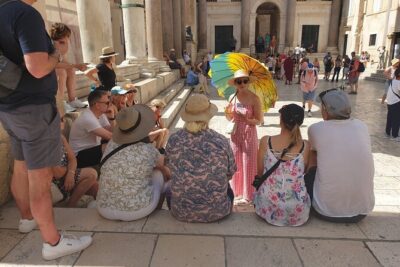
Walking Tour of Split and Diocletian’s Palace
Read our review →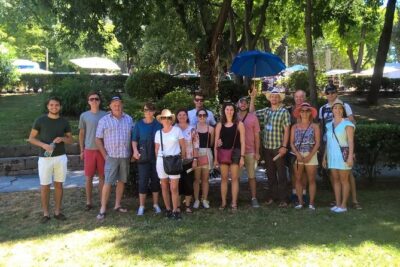
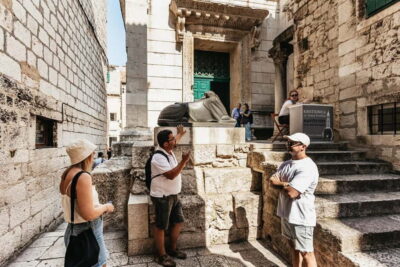
Diocletian Palace & Old Town Guided Walking Tour
Read our review →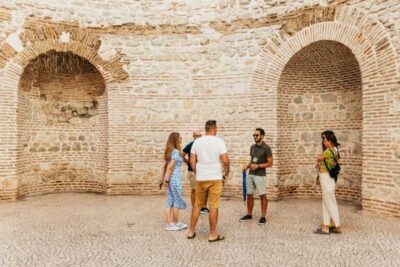

Game of Thrones Tour with Diocletian’s Palace Cellar
Read our review →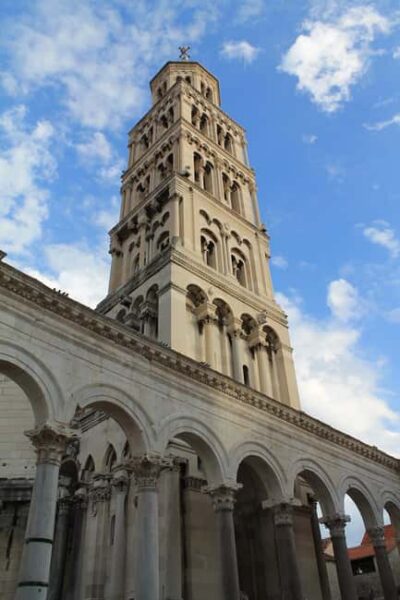
Diocletian’s Palace and Old Town SMALL GROUP Walking Tour
Read our review →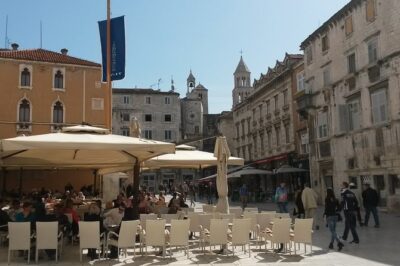
PRIVATE Walking Tour of Diocletian’s Palace & Old Town
Read our review →Browse the lists this tour appears in