Reviewed · TICKETS
YOUR BEST PRIVATE TOUR – amazing SPLIT, with tickets included
Roman walls meet real street life.
I love the private pacing that lets you ask questions and move at a comfortable speed, and I also like that substructures tickets are included, so you do not have to worry about an extra line or add-on cost. One thing to consider, it is a walk-heavy old town route, so good shoes help more than you might expect.
You start on the Riva, Split’s seaside promenade, then step into Diocletian’s world in a way that feels like a guided map rather than a list of landmarks. The experience is built around a licensed English-speaking guide and a flexible route that can bend to your preferences, which is a real advantage when you want photos, slower stops, or more time in one area. In the reviews, guides like Boran and Gytha are singled out for clear explanations and extra time, and even Gytha’s dog Malena gets a nod.
In This Review
- Key highlights worth your attention
- Riva Harbor start, and how you get your bearings fast in Split
- From Diocletian’s Palace entrances to the Peristyle and Golden Gate
- Diocletian’s palace substructures: 1700-year basements, Brac stone, and Salona’s shadow
- Chocolate, Grgur Ninski, and the Split Synagogue on one tight walk
- Private tour value, tickets, and the practical stuff that matters
- Should you book this private Split tour?
- FAQ
- How long is the private Split tour?
- Is this tour private?
- Where does the tour start, and is pickup available?
- If I am not staying in Old Town, where do I meet the guide?
- What tickets or entrance fees are included?
- Are there any extra costs besides the tour price?
- Is the tour in English?
- What should I know about the Nadalina chocolate stop and kids?
- Can I cancel for a full refund?
Key highlights worth your attention
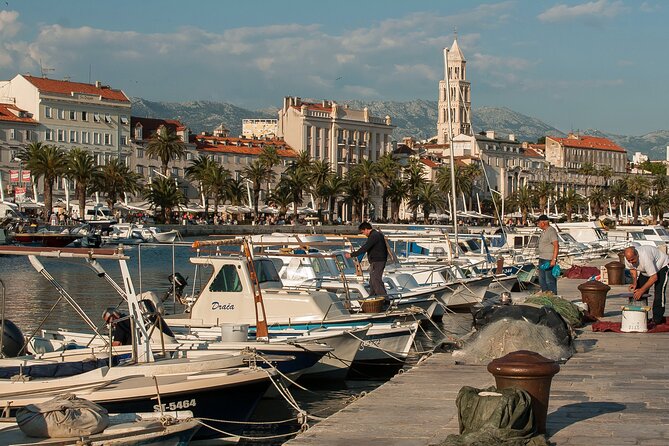
- Private tour means your itinerary can flex, so you are not stuck with a rushed group rhythm.
- Substructures entrance fees are included, which matters because this is the one ticketed stop on the Roman side.
- Riva first, palace second, so you get bearings before the maze of gates, courtyards, and streets.
- Stop-to-stop context is the point, from Diocletian’s abdication to how Salona’s fall reshaped Split.
- Chocolate at Nadalina is included, with a clear heads up that Sundays mean a skip.
- Synagogue visit adds depth, including the detail that it is among the oldest operating synagogues in Europe.
Riva Harbor start, and how you get your bearings fast in Split
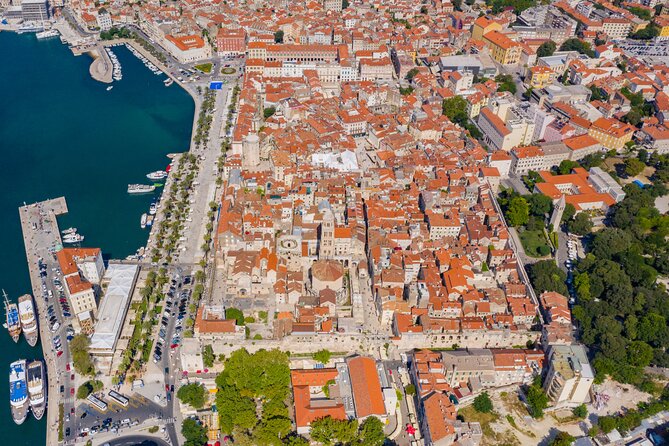
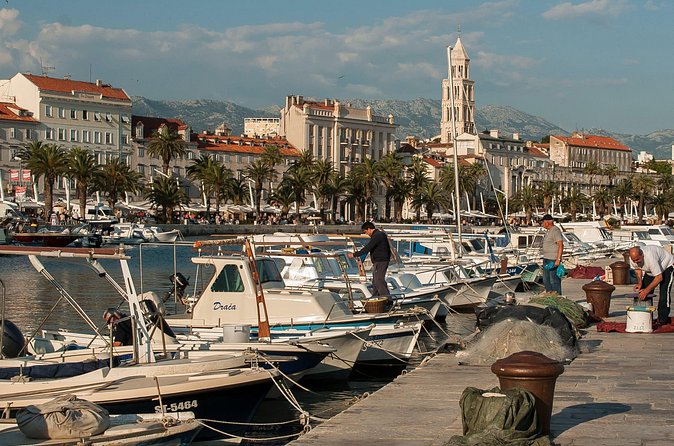
The tour begins at Luka Split on the Riva, Split’s coastal promenade. This matters because it gives you a simple starting line for everything that follows. Before you bounce between gates and squares, you learn how Split’s “city of today” grew directly out of the Roman palace complex.
From there, you move toward Diocletian’s palace through the main approach points your guide explains in plain language. You get a quick introduction to Croatia and Split, then you are oriented to the big idea behind the day: Diocletian’s palace was built for one emperor, then turned into the medieval city as centuries passed and the region changed hands. That one framing makes the whole walk click. Instead of staring at walls, you start noticing the why behind the layout.
Practical note: this is a walking route in the old town. Your guide can pick you up only if you are staying in Old Town Split, otherwise you meet at the old town meeting spot near the Riva. If you are arriving by cruise, pickup is at the port dock exit gate. Either way, it is set up so you are not wandering around trying to find a starting point.
From Diocletian’s Palace entrances to the Peristyle and Golden Gate
Once you are in, the tour shifts into “walk the palace like it is a map” mode. First comes the Diocletian’s Palace main enclosure, entered through the Southern gate. You spend about 90+ minutes exploring the palace’s key parts, and your guide connects the dots between Roman engineering and medieval reuse.
Here is what makes these palace stops useful, not just scenic:
- You hear what Diocletian’s retirement home was for, then what happened when the palace became the medieval city of Split.
- You learn how the palace’s clever design shaped daily movement, so later streets feel less random.
- You get the central gathering point, the Peristyle, explained as a square surrounded by mixed architectural layers from ancient to medieval, and even later periods.
Then the walk continues toward the Golden Gate, the main entrance to the palace. Your guide explains the gate concept and how the Roman streets (Cardo and Decumanus) relate to the larger geography, including the road direction toward Salona. That Salona link is a recurring theme in the day and helps you understand why Split developed the way it did, not just when.
Next is a short hop to the Vestibulum, a circular building tied to Diocletian’s private chambers. This is also one of the places where a musical moment can happen, since Dalmatian klape singing may occur there. You should treat this as a maybe, not a guarantee, but it is exactly the kind of small, local detail that turns a Roman site into something you can feel.
Finally, you reach the Eastern (Silver) Gate, which is also connected to the start of the main decumanus street. Short stop, clear takeaway: gates here are not just entrances, they are part of how the palace organized movement and power.
Plenty more to do around Split
Diocletian’s palace substructures: 1700-year basements, Brac stone, and Salona’s shadow
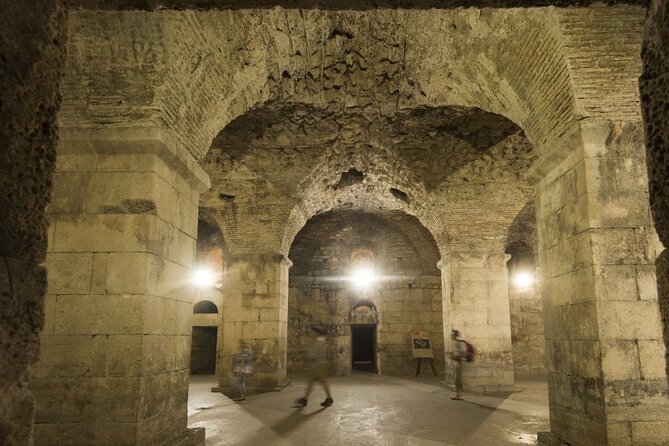
If you want one “wow” moment, this is it. The tour includes a visit to the Diocletian’s Palace Substructures, entered through the Bronze gate. You spend about 30 minutes here, focused on basements that are described as incredibly preserved and about 1700 years old.
This stop is valuable because it answers a question most visitors do not even think to ask. What was life like below the grand courtyards? Your guide explains Diocletian’s story in stages, including how he became emperor, how he ruled, and how his abdication and retirement changed the palace’s role over time.
You also get architecture details that feel practical, like why this palace was built the way it was. The story includes the use of precious stone from the island of Brac, plus the bigger regional history: the nearby Roman capital town of Salona mattered a lot for Split’s later development. Then, as invaders from the north disrupted Salona, people effectively “helped” convert the palace into the medieval town of Split. Hearing that chain of events makes the walls feel less like a monument and more like an evolving machine that people kept adapting.
One more thing: these substructures are the only clearly ticketed portion on the Roman side, and the tour includes the entrance fees for them. That is a good value move for a short, private tour because it reduces decision fatigue. You show up, you go in, you get the full context without extra hassle.
Chocolate, Grgur Ninski, and the Split Synagogue on one tight walk
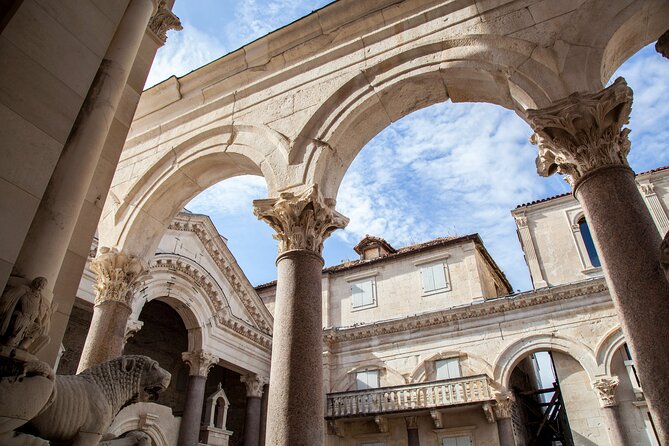
After the palace, you shift from emperor to everyday Split. You pass the Nadalina cokolada stop for sweet treats with Mediterranean fruit or herbal flavors. The chocolate part is included, but there is a realistic limitation: it is closed on Sundays, so the visit gets skipped that day. If you are traveling on a Sunday, just plan to enjoy the rest of the walk with a slightly different flow.
Next comes one of Split’s most photographed sculptures: the Grgur Ninski statue, the large figure of the 10th-century Croatian archbishop by Ivan Mestrovic. Even if you only give it a minute, it helps you balance the Roman and medieval themes with a distinctly Croatian cultural marker.
Then the tour moves to the Split Synagogue, part of the 16th-century medieval Jewish ghetto area. The guide covers what you need to know on-site, and there is also a neat detail if you are interested in context: it is described as the third oldest operating synagogue in Europe. This stop adds a layer that many palace-only walks skip, and it makes Split feel like a living city rather than a single story.
From here, the route continues through the medieval core via major squares:
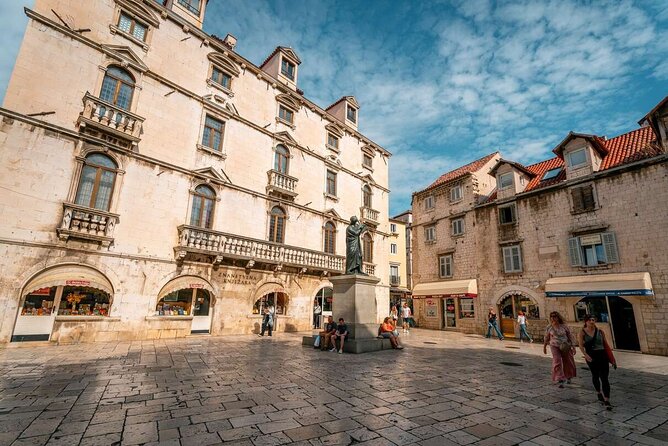
- Narodni Trg, the main square of medieval Split, where you see the City Hall and surrounding palaces
- Fruit’s Square (Trg Brace Radic), with its market-history setting and the statue of Marko Marulic, often called the Father of Croatian literature
- Prokurative, an open space ringed by neo-Renaissance buildings, known for outdoor cultural life and performances
These squares do not feel like random stops when your guide keeps tying them to how Split functions today, in between the big Roman landmarks.
Private tour value, tickets, and the practical stuff that matters
Let’s talk value, because the price is not low on the surface: $149.51 per person for a 1 hour 50 minutes to 2 hours 10 minutes walk. The justification is the private format, the licensed English guide, and the fact that a ticketed attraction on the Roman side is covered. This is the kind of experience where private can be worth it, because the guide’s explanations change how you perceive what you see.
In a group tour, you lose time to logistics and pace. In a private tour, you can slow down for a photo, ask why a gate matters, or spend a bit longer at the Peristyle if that is your favorite part. The route is also described as flexible, so your guide adjusts the “suggested sights” to match your preferences.
A quick reality check on duration: because it is short, you will cover a lot of ground. That is great if you are on a tight schedule or doing Split as a port stop. It can be less ideal if you want long independent time inside museums. This tour is structured like a focused walk through the key anchors, not an all-day slow wander.
For planning, keep these practical notes in mind:
- You end back at the meeting point, so it is easy to continue on your own after the tour.
- Pickup is limited to Old Town hotels, or the cruise port exit gate for cruise arrivals.
- This is an English-speaking tour, and it is set for most travelers.
- Children must be accompanied, and children under 11 tour free of charge.
If you care about smooth execution, I like that the experience includes entry fees for the palace substructures and uses a mobile ticket. Fewer moving parts means less time worrying and more time listening.
Should you book this private Split tour?
I recommend it if you want Split in a short window with explanations that make the Roman ruins and medieval streets feel connected. You get private pacing, you get the substructures ticket included, and you get a guide approach that people specifically praise for clear information and extra time, including names like Boran and Gytha.
Book it if:
- You are first-time in Split and want the “big picture” without a long tour day.
- You like learning what you are looking at, especially the palace layout and how Salona’s story connects to Split.
- You want a walk that balances Roman, Croatian, and Jewish landmarks.
Consider a different option if:
- You hate walking, or you want plenty of free time for lingering and independent exploration.
- You are traveling on a Sunday and you are specifically set on the Nadalina chocolate stop, since it is skipped then.
Two days in Split? Here's how to fill the second.
- Split: Krka Waterfalls Trip with Boat Cruise and Swimming★ 4.8 · 10,519 reviews
- From Split: Krka Waterfalls, Food & Wine Tasting Tour★ 5.0 · 9,326 reviews
- Blue cave, Mamma Mia and Hvar, 5 islands speedboat tour★ 5.0 · 7,150 reviews
- From Split: Krka Waterfalls, Food & Wine Tasting Tour★ 4.9 · 6,598 reviews
FAQ
How long is the private Split tour?
It runs about 1 hour 50 minutes to 2 hours 10 minutes.
Is this tour private?
Yes. It is a private tour, so only your group participates.
Where does the tour start, and is pickup available?
The meeting point is at Luka Split, Obala kneza Domagoja 7, 21000 Split. Pickup is offered only if you are staying in Old Town Split, and if you are arriving by cruise ship, pickup is at the port at the cruise ship dock exit gate.
If I am not staying in Old Town, where do I meet the guide?
You meet in the Old Town at the Model of the historical core of the city of Split, Obala Hrvatskog narodnog preporoda 23, by the bronze model at the Riva.
What tickets or entrance fees are included?
Entrance fees are included for the Diocletian’s Palace substructures. Other stops in the route are described as ticket free, except where specified.
Are there any extra costs besides the tour price?
Gratuities are not included, and other entrance fees apart from the ones for the Diocletian’s palace substructures are not included.
Is the tour in English?
Yes. The tour is offered in English.
What should I know about the Nadalina chocolate stop and kids?
Nadalina cokolada is included, but it is closed on Sundays, so the visit is skipped then. Children must be accompanied by an adult, and children under 11 tour free of charge.
Can I cancel for a full refund?
Yes. Free cancellation is available if you cancel up to 24 hours in advance of the experience start time.
Recently added around Split
- Private VIP Brac and Hvar Day Trip from Split
★ 5.0 · 1 review - Private Transfer From or To the Split Airport
★ 5.0 · 1 review - Brač Half Day Beach Party Transfer to Olife Beach Club
★ 5.0 · 1 review - Private Transfer from Split to Zagreb, Hotel-to-hotel, English-speaking driver
★ 5.0 · 1 review - Airport transfers
★ 5.0 · 1 review - Private ”Game of Thrones” Walking Tour in Split (entrance tickets included)
★ 5.0 · 1 review
Tickets, compared.
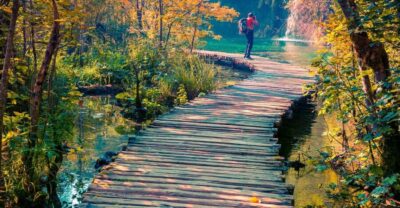
Plitvice Lakes Guided Tour with Entry Tickets
Read our review →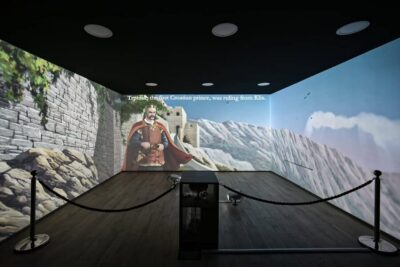
Klis Fortress GOT and Olive Museum Entry Tickets
Read our review →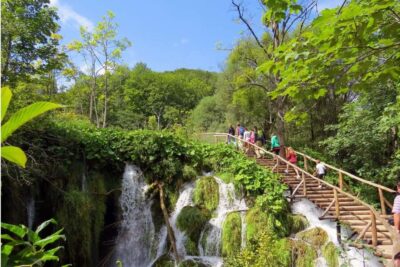
Plitvice Lakes Guided Day Tour with Entry Tickets
Read our review →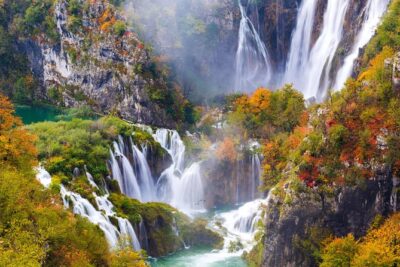
Plitvice Lakes Guided tour with Entrance ticket included
Read our review →
Plitvice Lakes Tour from Split with Entrance Ticket included
Read our review →