
Reviewed · WALKING TOURS
Private Split Walking tour with a Photo session
Split looks better with a guide and camera.
This private Split walking tour ties together the city’s big hitters, from the Riva promenade to the Diocletian Palace core, with a professional photo session that helps you capture the story as you go. I like that you can move at a comfortable rhythm with a guide who keeps the day understandable, not rushed, while you stop in the right places for photos.
My other favorite part is the easy-flow structure, it is about 2.5 hours and then you get the rest of the day on your own. The main drawback to plan for is that the Cathedral of Saint Domnius visit has an extra ticket fee (25 Croatian kuna, about 3.5 euros), even though the tour includes the rest of the walking stops.
In This Review
- Key highlights worth your time
- A Private Walking Loop That Makes Split Easy
- Price and What You Get for $300+ (and Why It Can Be Worth It)
- The Riva Meeting Spot, Then a Calm 2.5-Hour Rhythm
- Stop 1: Riva Promenade, Split’s Outdoor Living Room
- Stop 2: Diocletian’s Palace, Roman Power in Stone
- Stop 3: The Vestibule and Its Acoustics
- Stop 4: Cathedral of Saint Domnius, Plus Temple of Jupiter and Crypt of St. Lucy
- Stop 5: Grgur Ninski, Language, Memory, and a Lucky Toe
- Stops 6 and 7: Narodni Trg (Pjaca) and Trg Brace Radic
- Stop 8: Prokurative, Venetian-Style Arches and Square Life
- The Photo Session: How Timing and Stops Help You Get Better Shots
- What to Watch For: Costs, Weather, and Meeting-Day Calm
- Who This Tour Fits Best
- Should You Book This Private Split Walk and Photo Session?
- FAQ
- How long is the private split walking tour with a photo session?
- Where does the tour start, and where does it end?
- Is the tour private?
- What language is the tour offered in?
- Is the photo session included in the price?
- Do I need to pay an admission fee for the Cathedral of Saint Domnius?
- What happens if the weather is poor?
Key highlights worth your time
- Private pace, tailored to your questions and photo needs
- Riva promenade start, Split’s “living room” for events and everyday life
- Diocletian’s Palace stops, Roman architecture with a fortress-Villa feel
- Cathedral of Saint Domnius ticket add-on, includes Temple of Jupiter and the Crypt of St. Lucy
- Pro professional photo session with photographer Ivan Gudić included
- Good weather helps, since this is a walking tour
A Private Walking Loop That Makes Split Easy
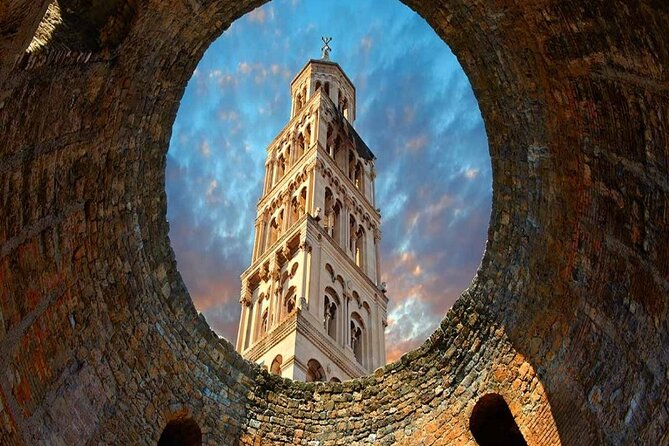
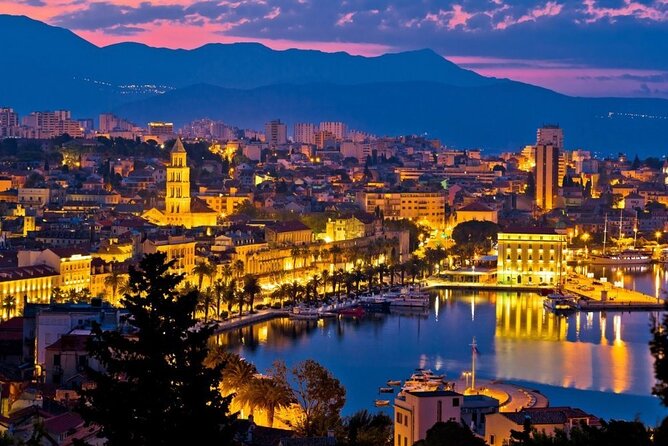
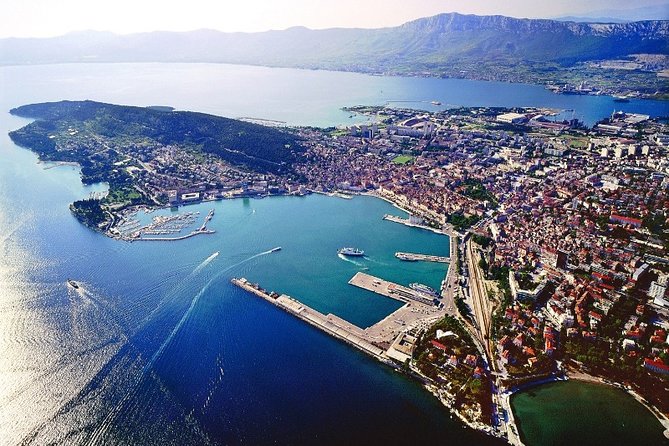
Split can feel like two cities at once. You have the Roman core that presses close, and then the modern waterfront and squares that open up the views. This tour is built for that mix: you get a tight walk through the historical spine, but the feel stays practical because you are not stuck in a long group schedule.
Because it is private, I find it easier to settle into the city. You can ask for pauses, quick directions, or help figuring out what you are seeing. And since the tour ends where it starts, you do not have that awkward “now what?” feeling.
The big value is that the tour is long enough to make real sense of Diocletian’s Palace and the surrounding spaces, but short enough that you can still enjoy the rest of your day at your own pace. If you are visiting Split while doing other stops along the coast, this time structure is a win.
Price and What You Get for $300+ (and Why It Can Be Worth It)
At $300.73 per person, this is not a budget walking tour. The price only makes sense if you value two things: a private guide experience and an included professional lifestyle photographer, Ivan Gudić.
If all you wanted was a highlights walk, you would usually pay less. Here, you are paying for the extra attention: the guide helps you understand what you are looking at, and the photo time is part of the same story. That matters because good photos in Split are not only about scenery. They are about timing, angles, and knowing which moments you should stop for.
Also, this is a great “first day in Split” option. When you return later to the old streets, you will already know how the palace, cathedrals, and squares connect in real space. That turns wandering into something more directed.
Do budget one extra line item for the Cathedral of Saint Domnius ticket. The tour includes access details, but it is not free. Plan for that and the overall value becomes much clearer.
Plenty more to do around Split
The Riva Meeting Spot, Then a Calm 2.5-Hour Rhythm
The tour begins at Obala Hrvatskog narodnog preporoda, 21000, Split. It also ends back at the meeting point. That is simple and convenient, especially if you are figuring out where you want to spend the afternoon afterward.
Hours listed show the tour window runs daily from 9:00 AM to 8:30 PM during the stated operating period. For me, the timing flexibility matters because daylight in Split changes the feel of the Roman stones and mosaics. If you can choose, late morning or early evening often gives you softer light for photos and less harsh glare off the waterfront.
You will be walking for about 2 hours 30 minutes total, with short stop times at each key location. That stop-and-go format is ideal for history sites because you get story context, then you move on while you still have energy to look around.
Stop 1: Riva Promenade, Split’s Outdoor Living Room
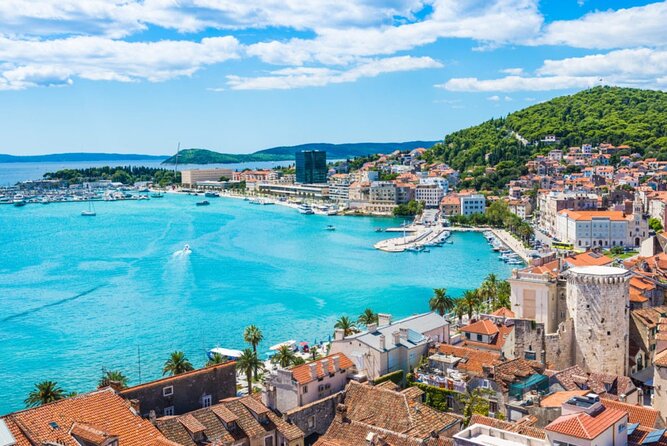
You start at the Riva promenade, Split’s best-known waterfront public space. It is more than a pretty strip of sea view. It is where locals treat the waterfront like a neighborhood hangout, with concerts and events across the year. Even the way the promenade hosts seasonal celebrations makes it feel like the city’s front room.
The guide starts you near a bronze model of Split. That tiny cue helps you orient fast, because Split’s old center can feel dense until you see how the waterfront relates to the palace area.
What I like here is the human scale. You get a quick “this is where life happens” moment before diving into Roman architecture. The cafes and restaurants also give you an easy reset point. If you need water or a quick espresso, this is the least stressful place to do it.
Stop 2: Diocletian’s Palace, Roman Power in Stone

Next comes Diocletian’s Palace, one of the best-preserved Roman sites in the world. The palace is described as a combination of a luxury summer villa and a Roman military camp, divided into four parts with two main streets. That mix is the key to understanding why the layout feels both grand and functional.
It helps to picture the southern side as the emperor’s apartment and ceremonial space, with the north side serving the imperial guard, military functions, servants, and storage. Once you know that, the architecture stops being only walls and arches. It becomes a map of who lived where and why.
The palace is roughly 215 by 180 meters, with towers at the corners and doors on each side. Standing near it, you can feel why it is such a defining feature of Split. It is huge, but the streets inside turn it into a walkable neighborhood rather than a remote monument.
The only practical consideration: you will be walking on stone surfaces in the old area. Comfortable shoes are not optional, especially if you are on a day with lots of sun.
Stop 3: The Vestibule and Its Acoustics

From the outside, the vestibule looks rectangular. Inside, the plan becomes circular, and that contrast creates a memorable sense of scale. The tour points out semicircular niches with statues and a large cupola with colorful mosaic. You also get the cool detail that Marko Marulić mentioned it in a 16th-century manuscript.
Here is the surprise that makes the stop more than a photo break. The vestibule was used in ways that do not match what you might assume today. It was used to enter the residential part, and more recently in history, it was even used for living with poultry and cultivated gardens. That kind of detail is why this stops feel human, not museum-like.
One of the best practical reasons to stop here is the acoustics. The guide sets you up to hear group singing, especially traditional Dalmatian a capella songs. Even if you catch only a short moment, you should understand why it is known for sound.
For your photos, aim to capture both the dome area and the curved wall surfaces. The geometry gives you shape even when the lighting is tricky.
Two days in Split? Here's how to fill the second.
- Split: Krka Waterfalls Trip with Boat Cruise and Swimming★ 4.8 · 10,519 reviews
- From Split: Krka Waterfalls, Food & Wine Tasting Tour★ 5.0 · 9,326 reviews
- Blue cave, Mamma Mia and Hvar, 5 islands speedboat tour★ 5.0 · 7,150 reviews
- From Split: Krka Waterfalls, Food & Wine Tasting Tour★ 4.9 · 6,598 reviews
Stop 4: Cathedral of Saint Domnius, Plus Temple of Jupiter and Crypt of St. Lucy

The Cathedral of Saint Domnius is in Split’s oldest building, the Mausoleum of Emperor Diocletian. That simple fact explains the cathedral’s layered character. Over time, pagan, Christian medieval, and more modern heritage overlap in one place.
The cathedral is a working liturgy space with a millennium-long continuity. If you catch services or the feeling of the place, it will feel less like a set piece and more like a living center of the city.
A specific detail that stands out is that admission includes the Temple of Jupiter and the Crypt of St. Lucy. The tour ticket for this stop is 25 Croatian kuna, about 3.5 euros, and this admission covers those extra spaces too. That is a good reason not to treat this as only a quick cathedral glance.
You will also hear about the famous walnut gates carved by Andrija Buvina from Split. Even if you focus mostly on architecture, that kind of local craft detail makes it feel earned, not generic.
The drawback is simply cost and time. You need to pay the ticket at this stage, so check your budget. And you may need to navigate inside calmly, which can slow your photo pace compared to open-air stops.
Stop 5: Grgur Ninski, Language, Memory, and a Lucky Toe
Outside the Golden Gate, you will see the statue of Grgur (Gregory) of Nin. This is one of those places where a sculpture tells you something political and cultural, not just artistic.
Grgur of Nin was a medieval bishop known for resisting the Catholic Church in Rome and pushing for the national Croatian language in services. Before that, services were held in Latin, so his stance connects directly to everyday language access.
The statue itself was made by Croatian sculptor Ivan Meštrović in 1929 to commemorate one thousand years since Gregory of Nin’s defense of Croatian culture. And yes, there is a well-known local superstition that rubbing his big toe brings you luck. If you are curious, do it quickly and keep moving, since it is an ongoing interaction point.
Photo note: the statue sits at a moment where you can capture both the sculpture and the gate area around it. If you want a clean shot, time it when foot traffic loosens.
Stops 6 and 7: Narodni Trg (Pjaca) and Trg Brace Radic
After the palace core, the tour shifts to squares that help you understand how Split functions day to day. This is where the Roman story meets local life.
At Narodni Trg, also called Pjaca, you get a sense of why the city developed outward from the palace wall. The tour notes it was first mentioned in the 13th century as St. Lawrence’s Square and that it became the central stage of city life. Buildings around the square housed the city authority, with the Old Town Hall now acting as an exhibition center, and noble families lived in the palaces on the outskirts of Pjaca.
This stop is useful for your brain because it shows you the city is not only ruins. It is institutions, markets, and meeting points. The current bars, restaurants, and shops are part of that continuity.
Then you move to Fruit’s Square, Trg Brace Radic. The highlight here is the octagonal Venetian tower, a leftover from a 15th-century fortress. Across from it, you have a notable Milesi palace with a Baroque facade, among the better examples of that style in Dalmatia. A monument to Marko Marulić stands in front, connecting literature and local identity. And again, Ivan Meštrović appears as the sculptor of multiple works in the city, which adds a nice thread to your walk.
These square stops are also a breather. If you have been concentrating hard on stone geometry and dates, this is where you can let your eyes relax and still get strong photos with a more open feel.
Stop 8: Prokurative, Venetian-Style Arches and Square Life
The tour ends at Prokurative, officially Republic Square, west of the Riva. The space is named after arches on neo-Renaissance buildings that line three sides. The guide frames it as a place that helped Split signal Italian tradition in the 19th century, with reliefs above windows and a colonnade echoing Venetian design.
The square is also a performance space. The tour notes it is used for cultural events, with local bars and restaurants making it a popular spot for citizens. That is important because it explains why the square feels like it is meant for lingering, not just passing through.
If you want a final photo set that shows modern Split culture, this is a strong place to do it. You get architectural rhythm, a sense of gathering space, and a view back toward the waterfront atmosphere.
The Photo Session: How Timing and Stops Help You Get Better Shots
This experience includes a live guide plus a private professional lifestyle photographer, Ivan Gudić. That means the photo session is not only point-and-shoot. It is likely planned around the same story beats you are hearing, so you are standing in the right place at the right moment.
I like that the tour timing supports this. You have multiple architectural backdrops, from the Riva start to palace gates and square facades. That gives you variety without the stress of hunting for locations alone.
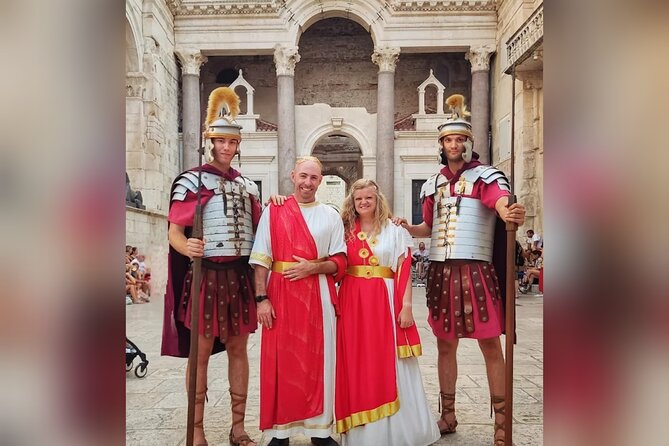
One extra detail that shows how the guide experience can add fun: in at least one case, the guide offered Roman-themed outfit photos at the end. If that happens on your date, it can be a playful way to match the Diocletian theme to your camera roll. Even if you skip it, you still benefit from having a photographer guide your angles.
Practical photo tip for you: wear shoes you can move in. A photographer will likely ask for small position changes. If you are comfortable, you will spend less time thinking and more time looking.
What to Watch For: Costs, Weather, and Meeting-Day Calm
A few things are worth factoring in so you avoid stress.
First, the Cathedral of Saint Domnius ticket is extra. That stop also includes the Temple of Jupiter and the Crypt of St. Lucy. If you do not want surprise expenses, set aside the 25 kuna or about 3.5 euros for that leg.
Second, this is weather-dependent. The experience notes it requires good weather. If rain or poor conditions hit, you should expect rescheduling or a full refund.
Third, double-check communication on the day. There is at least one harsh review about a no-show situation linked to confirmation not being received. It is not the norm based on the high recommendation rate, but it is a reason to keep your contact ready and confirm your meeting details if anything feels off.
On your side, do the simple things: sun protection, a bottle of water, and footwear for uneven stone. Split rewards comfortable walking.
Who This Tour Fits Best
This is a strong choice if you want a guide-led route that makes Split make sense fast, and you also care about photos more than the average sightseeing stop.
I especially like it for:
- First-timers who want Diocletian’s Palace explained clearly and connected to modern city life
- People who want a photo session without planning locations on their own
- Anyone who prefers a private rhythm over long group pacing
It may not fit if you want a self-guided, low-cost stroll only. With the cathedral ticket extra and the overall price higher than standard group tours, you should choose it for the added value of the photographer and private guide time.
If you are flexible, it can also be a great match for a cruise day. The tour is not too long, and once you return to the meeting point, you can continue exploring.
Should You Book This Private Split Walk and Photo Session?
Book it if you want a structured highlights walk with real interpretation, and you value the included professional photography. The route is designed to move you from waterfront orientation (Riva) into the Roman core (Diocletian’s Palace and vestibule), then outward to squares that show how locals actually live in the old city (Pjaca, Trg Brace Radic, Prokurative). That arc is efficient.
Skip or reconsider if you are trying to keep costs down, or if you dislike paying add-on admissions. Also, be honest about the weather factor. If you are traveling in a period with heavy rain, think about how you handle plan changes.
For most people, this is a smart way to experience Split in one concentrated session, then enjoy your free time with confidence, not guesswork.
FAQ
How long is the private split walking tour with a photo session?
It runs about 2 hours 30 minutes.
Where does the tour start, and where does it end?
The tour starts at Obala Hrvatskog narodnog preporoda, 21000, Split, Croatia. It ends back at the same meeting point.
Is the tour private?
Yes. It is a private tour, so only your group participates.
What language is the tour offered in?
The tour is offered in English.
Is the photo session included in the price?
Yes. A private professional lifestyle photographer, Ivan Gudić, is included.
Do I need to pay an admission fee for the Cathedral of Saint Domnius?
Yes. Cathedral admission is 25 Croatian kuna (about 3.5 euros), and it includes the Temple of Jupiter and the Crypt of St. Lucy.
What happens if the weather is poor?
If the tour is canceled due to poor weather, you will be offered a different date or a full refund.
Recently added around Split
- Private VIP Brac and Hvar Day Trip from Split
★ 5.0 · 1 review - Private Transfer From or To the Split Airport
★ 5.0 · 1 review - Private Transfer from Split to Zagreb, Hotel-to-hotel, English-speaking driver
★ 5.0 · 1 review - Brač Half Day Beach Party Transfer to Olife Beach Club
★ 5.0 · 1 review - Airport transfers
★ 5.0 · 1 review - Private ”Game of Thrones” Walking Tour in Split (entrance tickets included)
★ 5.0 · 1 review
Walking Tours, compared.
Walking Tour of Split and Diocletian’s Palace
Read our review →
Krka Waterfalls tour with Trogir Walking tour and Krka panoramic boat cruise
Read our review →
Walking Tour of Split with a ‘Magister’ of History
Read our review →
Split Walking Tour with Professor of History
Read our review →
Diocletian Palace & Old Town Guided Walking Tour
Read our review →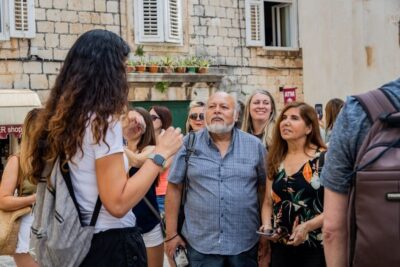
Browse the lists this tour appears in