
Reviewed · HISTORICAL TOURS
Split Walking Tour with Professor of History
History has footsteps here. This professor-style walk through Split strings Roman power, medieval layers, and everyday street life into one clear route, so the stone stops make sense fast. You start at the Brass Gate, then move through the Diocletian Palace spaces that still shape the city today.
I like two things the most. First, the small group (up to 17) keeps it interactive, which matters when you want the story behind what you’re seeing. Second, guides such as Mario and Anita are praised for mixing big-picture context with street-level details, like the toilet-seat serious myths around local landmarks, plus practical tips for food and how to keep your day moving.
One possible drawback: the timing can run closer to 3 hours depending on how long stops and questions take, so wear comfortable shoes and plan for a steady walking pace.
In This Review
- Key Highlights You’ll Care About
- Start at the Brass Gate, Then Let Split Set the Pace
- Riva Promenade: Coffee Life Beside the Palace Story
- The Diocletian Palace Substructures: The Palace’s Hidden Engine Room
- Peristyle Square: Where the Emperor’s Presence Was the Point
- The Vestibule (The Rotonda): Circular Architecture Built for Select Audiences
- Saint Domnius Cathedral: Roman, Mausoleum, Church, Outside Views Only
- Jupiter Temple and Let Me Pass Street: Outside Views With Story Payoff
- Golden Gate: The Emperor’s Main Entrance, Built to Impress
- Gregory of Nin: The Toe You’ll See Shining From Luck
- Marmontova Ulica and Prokurative: Streets and Squares With Political Names
- Fruit Square (Trg Brace Radic): Where Literature and Market Life Meet
- Why the Professor-Led Format Feels Different in Split
- Price and What You Really Get for $24.19
- Who Should Book This Walk, and Who Might Skip It
- Should You Book This Split Walking Tour?
- FAQ
- Where does the tour start?
- How long is the Split walking tour?
- Is the tour offered in English?
- How many people are in a group?
- What about tickets and admissions?
- Are alcoholic drinks included?
- Do I need a mobile ticket?
- Are service animals allowed?
- What if the weather is bad?
Key Highlights You’ll Care About
- Riva Promenade start with the feel of local morning and coffee life
- UNESCO-listed Diocletian substructures where you understand the palace like a fortress
- Imperial spaces in sequence (Peristyle, Rotonda/Vestibule) that make the layout click
- Outside-only views of Saint Domnius and Jupiter Temple, with context for later entry if you want it
- Local legends you can spot: Gregory of Nin toe-rubbing and the narrow Let me pass street
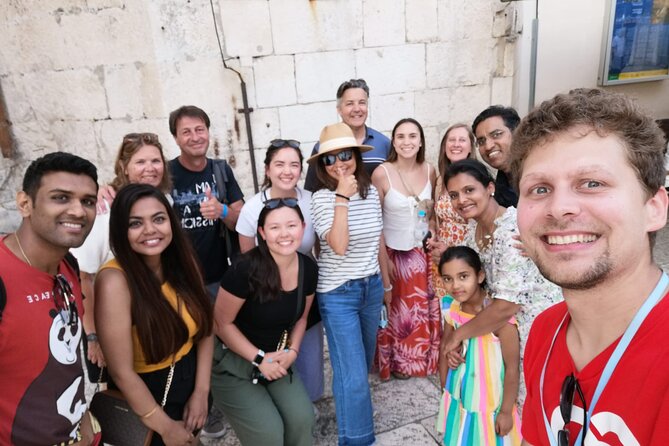
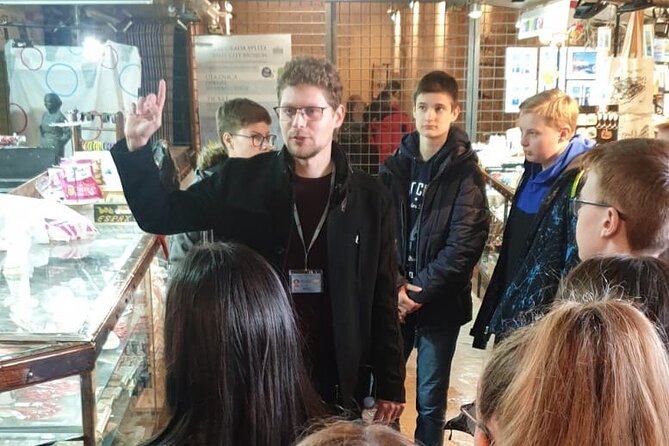
- Professor-led storytelling in English, with a group size capped at 17
Start at the Brass Gate, Then Let Split Set the Pace
You meet at the Brass Gate (Porta Aenea), a smart place to begin because it connects you to both the Roman and the modern city rhythms. From here, the walk doesn’t feel like random sightseeing. It feels like you’re being led into how Split was planned and reused over centuries.
You’ll also like the “back to the start” layout. It makes timing easier. If you want to continue on your own after the tour, you won’t be hunting for where to regroup.
Riva Promenade: Coffee Life Beside the Palace Story
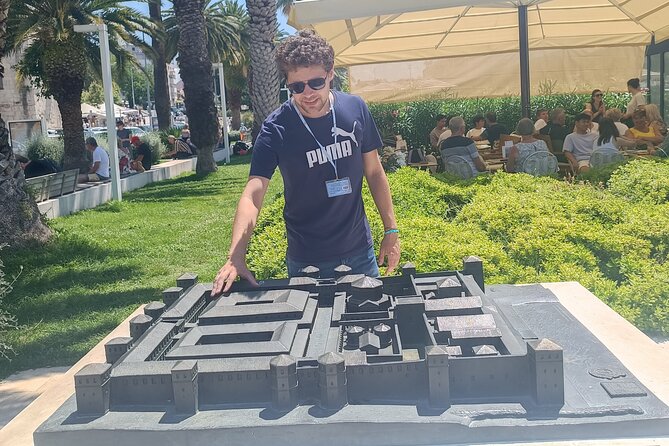
Your first stop is the Riva promenade, right by a model of the Palace. That tiny detail matters. It gives you a visual anchor before you walk into the real stone maze.
Riva is where local life spills into the open. People come to sit, drink coffee, and watch the day happen. As you get your bearings, your guide’s job is to connect that relaxed street energy to the once-imperial layout beneath it.
Practical note: this is an easy warm-up segment. It’s short, flat, and helps you get oriented without tiring you out early.
Two thousand years, one afternoon
The Diocletian Palace Substructures: The Palace’s Hidden Engine Room
Next you go into the substructures of Diocletian’s Palace. Think of this as the palace’s basement world, and yes, it’s one of the best-preserved complexes from classical antiquity. This is the kind of place where your understanding shifts. You stop seeing “ruins” and start seeing infrastructure, power, and design.
These spaces are also a reason Split’s historic center got added to the UNESCO World Heritage List in 1979. When a guide points that out, it changes how you look at the walls. You’re not just passing time. You’re standing inside a structure that survived for a reason.
Expect a free-feel stop here. Admission is listed as free, so you’re not forced into budgeting extra entries just to get the core story.
Peristyle Square: Where the Emperor’s Presence Was the Point
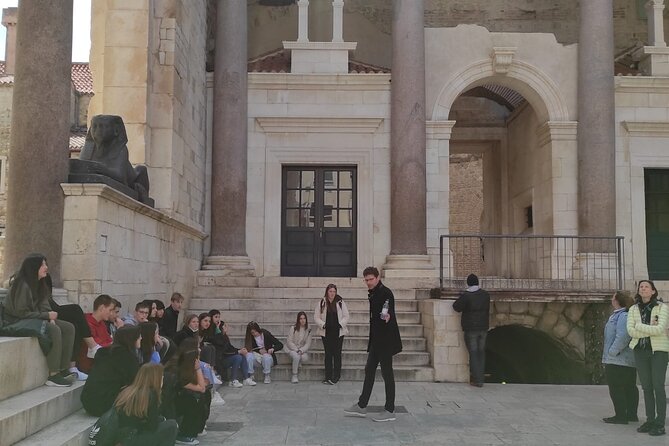
Then you reach the Peristyle, the central square of Diocletian’s Palace. This space is important because it’s not just a courtyard. It’s a designed stage for authority.
Your guide explains how the emperor was presented as the living son of Jupiter, and how people were expected to approach with ritual gestures. Even if none of that feels normal today, you’ll understand why the architecture was built to control movement, sight lines, and attention.
Short stop, big payoff. You’ll walk away seeing the surrounding spaces differently, because you now know what the center was meant to do.
The Vestibule (The Rotonda): Circular Architecture Built for Select Audiences
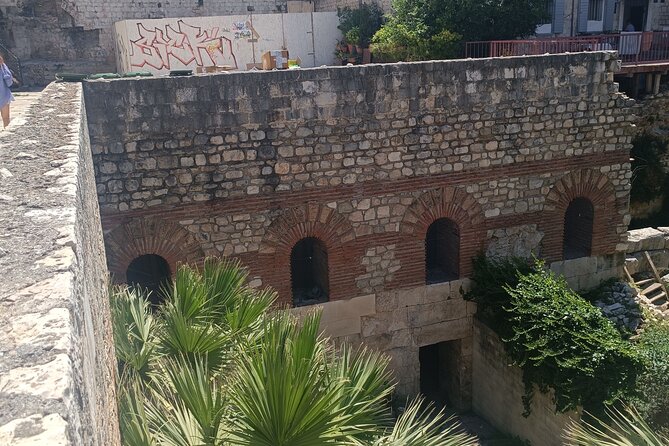
The Vestibule, also called the Rotonda, is next. This circular hall once topped with a dome (no dome is part of your stroll today, but the scale and shape matter) was built as a grand meeting place. The key idea is selection: ambassadors and selected audiences, not random visitors.
Your guide frames it as the “first section” in the imperial corridor from the Peristyle toward the apartments. That sequencing is the secret sauce. When you hear how people moved, you stop getting lost in labels like hall, corridor, gate, square. It becomes a story with direction.
Again, admission is free for this stop, and the explanation is what turns it from a quick look into something memorable.
Saint Domnius Cathedral: Roman, Mausoleum, Church, Outside Views Only
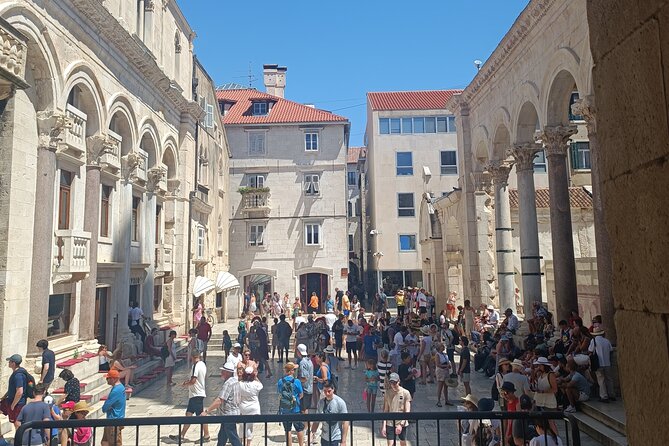
At Saint Domnius (Cathedral of Saint Domnius), you get the best kind of compromise: context without pressure to buy extra tickets right away.
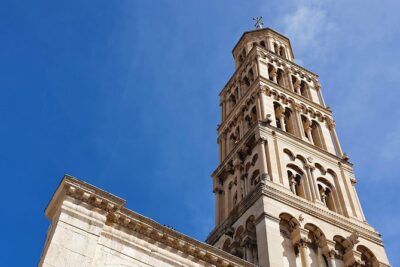
This site is described as a Roman temple, mausoleum, and church, depending on how you view it. That line is more than poetic. It’s a reminder that Split reused structures rather than starting over. Your guide will likely point out how the same location can carry multiple identities at once.
Important limit: for this tour you visit only from outside, and entry is not included. That means you won’t go inside on the group walk. If you want more, your guide can suggest that you visit later on your own after the tour.
Plenty more to do around Split
- Split: Old Town and Diocletian Palace Walking Tour★ 4.9 · 4,727 reviews
- Walking Tour of Split and Diocletian’s Palace★ 5.0 · 2,588 reviews
- Krka Waterfalls tour with Trogir Walking tour and Krka panoramic boat cruise★ 5.0 · 1,659 reviews
- Split & Diocletian’s Palace Walking Tour★ 5.0 · 1,125 reviews
Jupiter Temple and Let Me Pass Street: Outside Views With Story Payoff
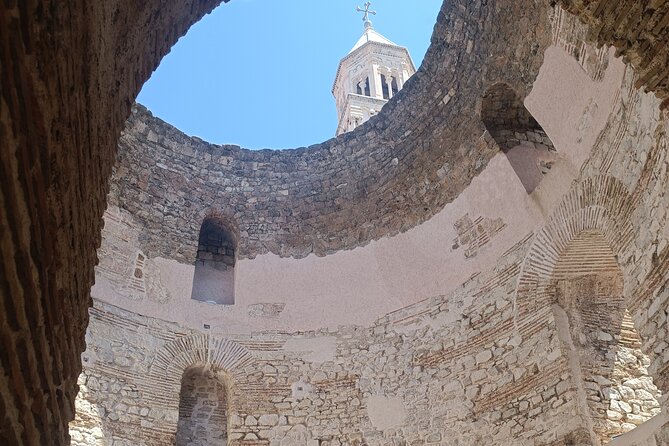
After Saint Domnius, you walk through a small stretch that makes the old city feel real. The route passes the Temple of Jupiter, and then you get the anecdote about the narrowest street people believe is in the world, named Let me pass street.
The Temple of Jupiter is described as converted into a baptistery dedicated to St. John the Baptist. Again, it’s reuse, not replacement. Your guide helps you see why that transformation fits the cultural shift that happened over time.
For the tour, this is outside-only, and the admission is not included. Still, the viewing position plus the explanation is usually enough to give you “I get it” understanding of why the area is so important.
Quick practical thought: this portion includes small streets and tight spaces. If you’re sensitive to crowds, early in the day usually feels easier, and a professor-led route may help you avoid the most congested lanes.
Golden Gate: The Emperor’s Main Entrance, Built to Impress
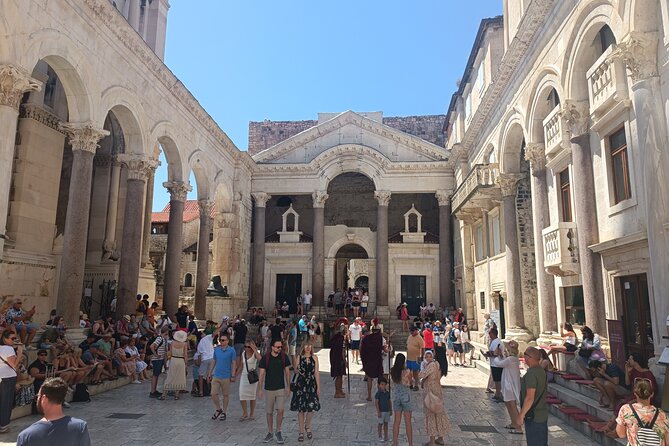
Next comes the Golden Gate, also described as the Northern Gate, one of the four principal Roman gates into the old town. Your guide explains it as part of Diocletian’s Palace system, serving as the main entry through which the emperor entered and why it was elaborately decorated.
One of the most useful details here is the history of damage and change. In the Middle Ages, the gate was sealed off and lost columns and statuary. Later, it was reopened and repaired in modern times and became a tourist-facing landmark.
This is a stop where your perspective changes mid-sentence. A gate is not just a doorway. It’s a statement, and the story of sealing and reopening shows you how the city’s priorities shifted again and again.
Gregory of Nin: The Toe You’ll See Shining From Luck
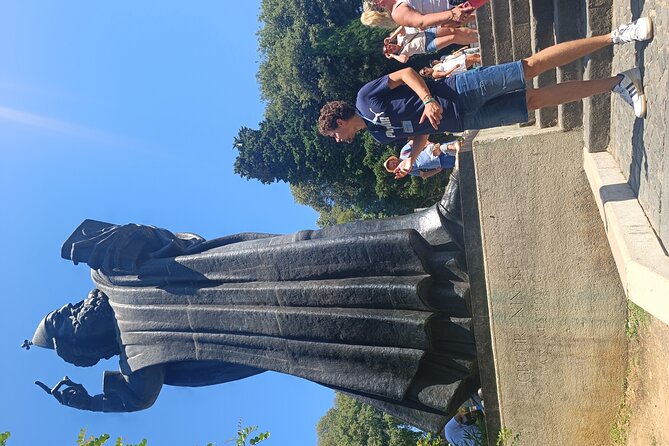
Now for the fun ritual. You’ll see the Grgur Ninski Statue by Ivan Meštrović. It’s a tall figure, and it’s famous because people rub the toe for good luck.
The toe gets worn smooth and shiny because so many hands have done the same gesture over time. It’s a simple tradition, but it’s also a good example of how Split keeps history alive through small behaviors.
If you enjoy local folklore, this is one of the stops where the tour feels light without losing meaning.
Marmontova Ulica and Prokurative: Streets and Squares With Political Names
You then move to Marmontova Ulica, named after Napoleon’s marshal Marmont. Even though he was a conqueror, the citizens named a beautiful street after him as part of the city’s complicated relationship with power and influence.
After that, you reach the Prokurative area, near Republic Square, a set of neo-Renaissance buildings arranged around an open square on three sides. This is where Split’s story stops being only Roman and becomes a layered European city.
You’ll get a better appreciation if your guide points out the shift in style and purpose. The architecture isn’t random decoration. It’s the visual language of a different era choosing different priorities.
Fruit Square (Trg Brace Radic): Where Literature and Market Life Meet
Your final stop is Fruit’s Square, also known as Trg Brace Radic. It’s a small, attractive square where ladies used to sell fruits. That market image is small, but it helps you picture what “daily life” looked like in a place that also held big political structures.
You’ll hear about a key monument tied to Marko Marulić, described as the father of Croatian literature. This is also where you can connect history to food habits, because your guide tends to use the square as a springboard into gastronomy and local culture.
Admission is listed as free, and because it’s the last stop, it’s a great time to ask your remaining questions.
Why the Professor-Led Format Feels Different in Split
This isn’t just “facts read aloud.” The professor-style approach makes you look at the layout like a puzzle.
The best moments happen when your guide explains how things fit together: the imperial corridor sequence, why the Peristyle mattered, and how outside views still communicate the logic of a site even if you do not enter every building. That structure is exactly what helps if you’re visiting for the first time.
You also get the benefit of a small group. With a cap of 17 travelers, you’re less likely to get shoved along like part of a moving photo line. Multiple groups highlighted guides who kept everyone engaged, encouraged questions, and adjusted pacing so the group didn’t get stuck in one spot too long.
If you get someone like Mario, expect history with humor. If you get someone like Anita, expect pride in Croatian culture and careful attention to the group. In both cases, the teaching style is geared toward helping you connect the dots yourself, not just memorize names.
Price and What You Really Get for $24.19
At $24.19 per person, the value comes from two things: clarity and coverage. You’re spending a little over two hours to understand the logic of Split’s oldest core, not only to take pictures.
Most stops list free admission, so you’re not paying separately just to access the story spaces. The two major “not included” items on this route are Saint Domnius and the Temple of Jupiter for entry, because for the tour you view them from outside only. If you later choose to go inside on your own, you’re doing it because you want the extra depth, not because you got forced by a tour package.
Timing is the main variable. The duration is listed as about 2 hours 20 minutes, but there is a real chance your tour stretches toward 3 hours, depending on how much your guide answers and how the group moves. That’s not a deal breaker. It just means you should not schedule a tight second activity right after.
Also note what’s not included: alcoholic beverages. That’s normal for a walking tour, but it’s still worth planning on water.
Who Should Book This Walk, and Who Might Skip It
This is ideal for you if:
- You like history that explains why places were built, not just what they are.
- You want a first-pass orientation through the old core so you can explore on your own afterward.
- You prefer a guided pace with a small group and time for questions.
You might skip this if:
- You only want maximum time inside ticketed sites, since several highlights are outside-only.
- You hate walking for roughly a couple hours, with potential stretch toward three.
For most visitors, it hits a sweet spot. It gives you a strong base to build on when you return later for a closer look.
Should You Book This Split Walking Tour?
Yes, I think you should book it if you want to understand Split quickly and meaningfully. For the money, you get a guided route through the palace spaces that make up the city’s structure, plus a set of local details like the toe-rubbing tradition and the street name Let me pass street that you’ll remember long after the photos fade.
Do book with the expectation that you’ll likely end up with more time on your feet than the shortest listing suggests. Bring comfortable shoes, and keep an open window after the tour in case you want to pay for extra entries at Saint Domnius or the Temple of Jupiter.
If you want history that connects directly to the street outside your window, this is one of the easiest ways to get there.
FAQ
Where does the tour start?
It starts at the Brass Gate (Porta Aenea), Obala Hrvatskog narodnog preporoda 22, 21000 Split, Croatia.
How long is the Split walking tour?
The duration is about 2 hours 20 minutes (approx.).
Is the tour offered in English?
Yes, it’s offered in English.
How many people are in a group?
The tour has a maximum of 17 travelers.
What about tickets and admissions?
All fees and taxes are included. Some sights are listed as free, while Cathedral of Saint Domnius and the Temple of Jupiter are not included for admission since you only visit from outside on the tour.
Are alcoholic drinks included?
No. Alcoholic beverages are not included.
Do I need a mobile ticket?
Yes. The tour uses a mobile ticket.
Are service animals allowed?
Yes. Service animals are allowed.
What if the weather is bad?
The experience requires good weather. If it’s canceled due to poor weather, you’ll be offered a different date or a full refund.
Recently added around Split
- Private VIP Brac and Hvar Day Trip from Split
★ 5.0 · 1 review - Private Transfer From or To the Split Airport
★ 5.0 · 1 review - Brač Half Day Beach Party Transfer to Olife Beach Club
★ 5.0 · 1 review - Private Transfer from Split to Zagreb, Hotel-to-hotel, English-speaking driver
★ 5.0 · 1 review - Airport transfers
★ 5.0 · 1 review - Private ”Game of Thrones” Walking Tour in Split (entrance tickets included)
★ 5.0 · 1 review
Historical Tours, compared.
Walking Tour of Split with a ‘Magister’ of History
Read our review →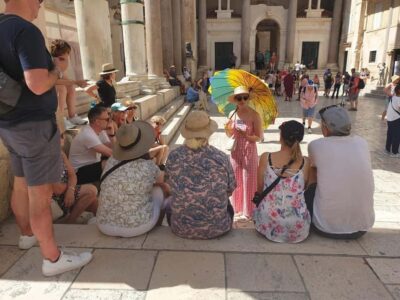
Split History and Gastro Small-Group Tour with Food and Drinks
Read our review →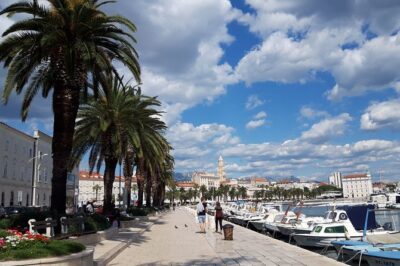
PREMIUM Emperor’s Walking Tour for History Lovers + Museum
Read our review →
Local History and Culture 90-Minute Walking Tour
Read our review →
Private History Split Walking Tour in English
Read our review →
Historical & Gastro Treasures Tour with Green Market
Read our review →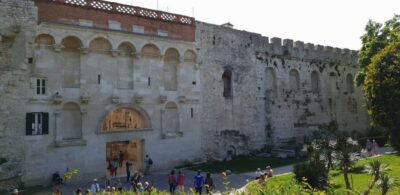
Walking tour of Split with a ‘Magister’ of History
Read our review →Browse the lists this tour appears in