
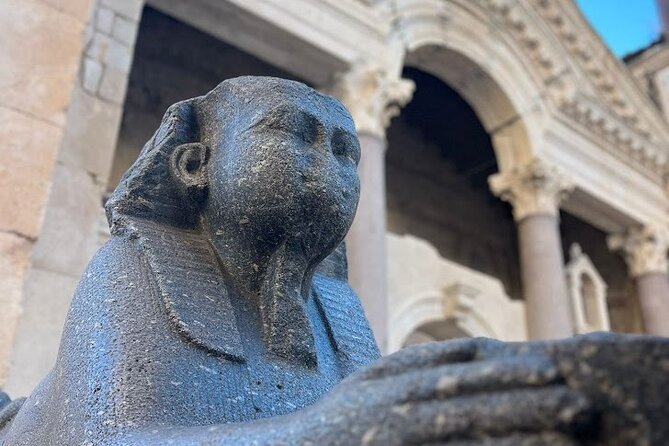
Reviewed · WALKING TOURS
Restoring the Past Split Walking tour
Split’s past is right under your feet.
This Restoring the Past Split Walking tour turns Diocletian’s Palace and the Old Town into a guided story you can follow street by street, with special attention to restoration work and how everyday life fits beside ancient stone. I like that the walk is short enough to stay sharp (about 1 hour 30 minutes to 1 hour 45 minutes), and I also like the guide style, especially when Nađa keeps the facts clear and the mood light with humor and local color.
One thing to plan for: it’s a walking route that includes very tight medieval lanes, including a street that’s only 57 cm wide, so if you dislike narrow spaces or you want lots of room to pass people, keep that in mind. Also, museum and cathedral entry fees are not included, so you may need to decide on any add-on inside.
In This Review
- Key highlights you will actually feel on this walk
- Entering Diocletian’s Palace like you are in the plot
- Green Market start: a smart way to get your bearings fast
- Substructures inside the palace: the part that makes the palace believable
- Peristyle Square: architecture with a timeline built in
- The narrow street trick: why 57 cm matters more than it sounds
- Golden Gate: where entrance, power, and defense lived together
- Old Split laws and legends: the medieval mindset in everyday terms
- Fruit’s Square (Trg Brace Radic) and the literature connection
- Marmontova Ulica to the Riva: where French rule leaves a footprint
- Grgur Ninski statue: the ritual that turns history into a habit
- Price and timing: does $17.90 feel fair for what you get?
- Logistics that make the experience smoother
- Who should book this tour, and who might prefer something else
- Should you book Restoring the Past Split Walking tour?
- FAQ
- How long is the Restoring the Past Split Walking tour?
- Where does the tour start?
- Where does the tour end?
- How much does the tour cost?
- Is the tour ticket mobile?
- What is included in the price?
- Are museum or cathedral entry fees included?
- How many people are in the group?
- Is confirmation provided after booking?
- Is the tour suitable for most people?
- Is it okay to bring a service animal?
Key highlights you will actually feel on this walk

- Restoration-focused storytelling, tied to what you can see in the palace and streets
- Diocletian’s substructures, which change how you picture the palace from the inside
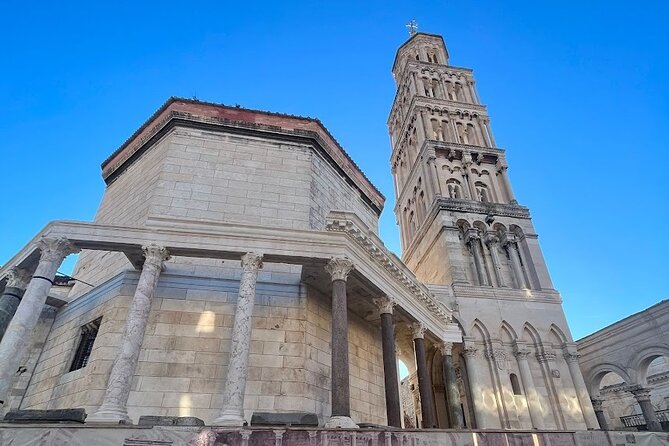
- Peristyle Square transformations, including the shift from an ancient pagan mausoleum to the Catholic cathedral
- Tight Old Town streets, including the famously narrow 57 cm lane
- Culture meets street life, with stops like Fruit’s Square and the route toward the Riva
- A local-tradition moment at Grgur Ninski, where rubbing the bishop’s statue is part of the ritual
Entering Diocletian’s Palace like you are in the plot
If your only plan in Split is to take photos, you’ll still enjoy this tour. But what makes it worth your time is that it gives you a storyline, so every wall and arch starts answering questions. The big focus is Diocletian’s Palace, including the parts most visitors never get to picture in their heads at the right scale.
You do not need a lot of background knowledge to follow along. The guide explains what you are seeing, then connects it to what changed over the centuries, including art, religion, and daily life. That matters in Split, because the palace is not a museum you walk through once. It is a living space, surrounded by neighborhoods and linked to streets you can keep exploring after the tour ends.
Green Market start: a smart way to get your bearings fast
The walk begins at Hrvojeva 1, near Trgovacki Obrt EN, Kape i Sesiri, where the Green Market sits right beside ancient palace walls. Starting here is clever, because it gives you a real-life Split moment before you go fully historic. You get a quick introduction, then you move from the market’s present-day energy to the palace’s older layers.
The practical win is that you start outdoors, in an easy-to-locate spot. The Green Market area also helps you understand the contrast that defines Split. People trade, chat, and buy produce in the same zone that once functioned under a Roman imperial layout.
Plenty more to do around Split
Substructures inside the palace: the part that makes the palace believable
One of the most memorable shifts on this kind of tour is leaving the postcard view behind. Here, you enter through the palace substructures, and the guide’s job becomes translating stone into stories.
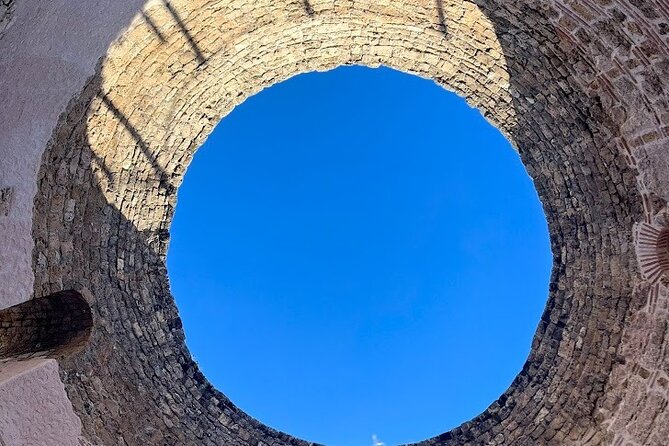
These underground or lower-level spaces make the palace feel less like a monument and more like a functioning system. You learn about the palace’s internal structure and the way it supported power and order. Even if you have seen Diocletian’s Palace from above before, being under or within these elements changes what you notice next.
What I like is that you get context before you reach the central showpiece areas. That makes Peristyle Square hit harder, because you can connect the grand open space to the hidden machinery that supported life around it.
Peristyle Square: architecture with a timeline built in
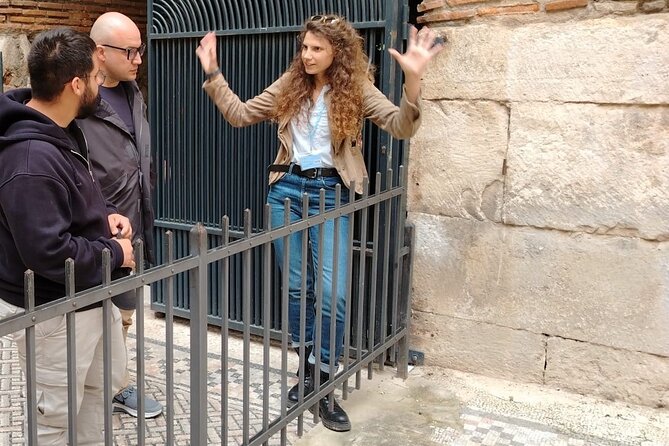
Peristyle Square is where you stand in the core of the palace world. This is the part you picture first when you hear Diocletian’s Palace, but this tour adds the missing layer: how the space changed over time.
You get stories about transformations that happened over about 1,700 years. That long timeline is not just trivia. It explains why Split looks the way it does today, where older religious and political meanings can sit alongside newer uses.
A key moment here is the transition from an ancient pagan mausoleum to the Catholic cathedral. You will hear how that shift changed how the space was understood, celebrated, and used. The guide also shares why this monumental site once stood out enough to be voted among the most captivating ancient monuments. Even if you have seen cathedral photos, the explanation helps you see it as a conversion of purpose, not just a change of building names.
The narrow street trick: why 57 cm matters more than it sounds
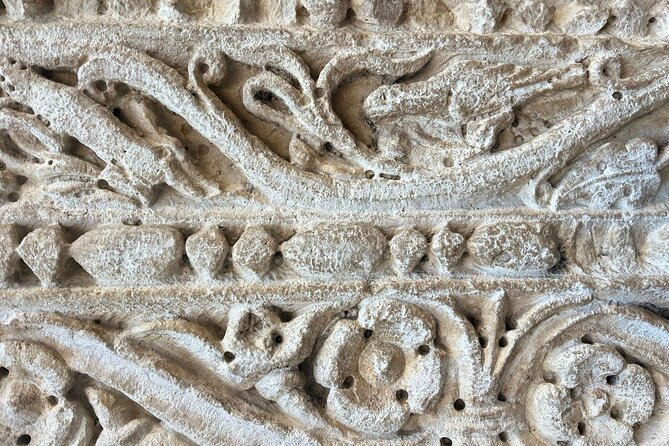
You will then pass through a street that the tour describes as only 57 cm wide. This is one of those details that seems like a fun fact until you walk through it and feel how the town was designed for close quarters.
The practical takeaway is that Old Split was not planned for modern comfort. It was planned for movement within tight boundaries, with people close together, and with the palace complex shaping how streets could exist. If you are visiting during busy hours, you might feel the crush here, because it is narrow by design. If that stresses you out, go in expecting a slow, careful pace through the lane.
Golden Gate: where entrance, power, and defense lived together
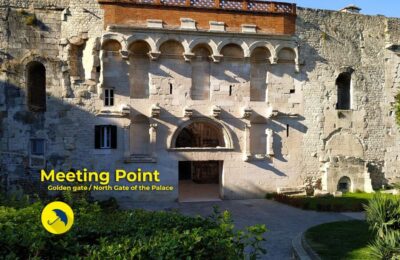
The Golden Gate is the former main entrance of the palace, and the tour uses it to talk about military systems and how power was organized. This stop is valuable because it shifts your thinking from architecture to function.
Instead of seeing arches and walls as decoration, you learn how entrances worked in the palace system. It helps you connect the palace to a larger idea of control, security, and hierarchy, which is a big part of why Roman sites feel different from later medieval towns.
You also get a sense of how the palace controlled movement. That sets you up for what comes next, where the tour moves beyond the palace boundary into Old Split’s medieval layers.
Two days in Split? Here's how to fill the second.
- Split: Krka Waterfalls Trip with Boat Cruise and Swimming★ 4.8 · 10,519 reviews
- From Split: Krka Waterfalls, Food & Wine Tasting Tour★ 5.0 · 9,326 reviews
- Blue cave, Mamma Mia and Hvar, 5 islands speedboat tour★ 5.0 · 7,150 reviews
- From Split: Krka Waterfalls, Food & Wine Tasting Tour★ 4.9 · 6,598 reviews
Old Split laws and legends: the medieval mindset in everyday terms
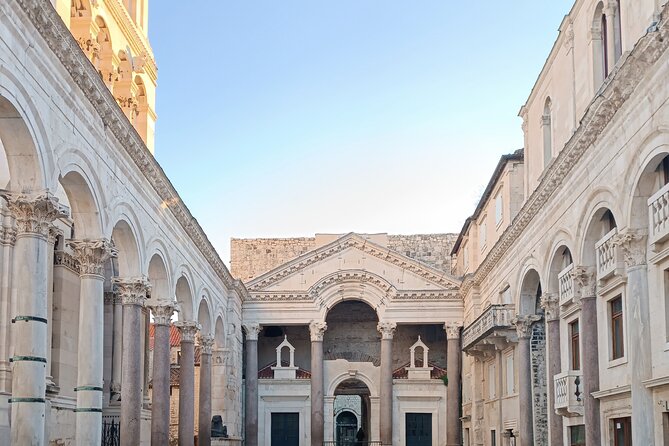
After the palace zone, the walk continues into Old Split, where you get medieval city laws and legends that started as gossip. That combination works because it shows two sides of the same world.
Laws tell you how authority tried to manage the city. Legends tell you how people actually talked about each other, feared things, and spread stories. Together, they explain why Old Town is full of named corners and repeating tales, even when the facts are messy.
This is also a good moment to slow down and look at how streets curve and funnel. The guide’s framing helps you see patterns, not just individual buildings. And when you later explore on your own, you will recognize these relationships faster.
Fruit’s Square (Trg Brace Radic) and the literature connection
Next comes Fruit’s Square, Trg Brace Radic, where the guide brings in the so-called Father of Croatian Literature and his influence. This is the stop where the tour stops being only about Rome and medieval walls and shifts to national identity and cultural memory.
The tour also includes a story about why Venetians once feared the people of Split. That kind of tale can feel dramatic, but it is useful. It points you toward the idea that Split’s story is not one long straight line from ancient times. It is full of competing influences, maritime power, and periods where local identity mattered.
If you like tours that connect history to names you can later look up, this is a good anchor stop. You get a cultural entry point, not just a lecture about stones.
Marmontova Ulica to the Riva: where French rule leaves a footprint
Marmontova Ulica is where you learn why the street bears the name of a French general and how French rule left lasting marks on Split. This is another smart shift because it shows that the city kept changing long after Rome.
This stop gives context for why you see French-era influences in street naming and the urban rhythm of the area. Then you stroll toward the Riva, Split’s famous waterfront promenade. The point is not just to reach a view. It is to connect your walk from palace power to the everyday public space by the sea.
The Riva is also where your senses recalibrate. After tight streets and palace stone, you get open space, sea air, and a chance to notice the city as a living place again.
Grgur Ninski statue: the ritual that turns history into a habit
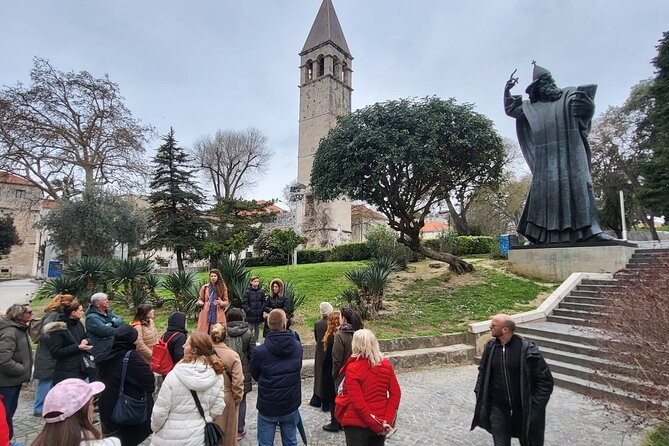
The tour ends with Grgur Ninski statue, and yes, the famous touch ritual is part of it. You’ll learn what a bishop has to do with language and why he is symbolically important here. Then you get the nudge to rub the bishop statue for luck.
This stop is valuable because it is interactive in a way the palace stops are not. You see an object everyone recognizes, and you get the reason it has stayed meaningful. It is a small moment, but it gives you something memorable to carry away.
If you want souvenirs, this is one of the better ones, because it links the city’s past to a living local gesture you can understand and join respectfully.
Price and timing: does $17.90 feel fair for what you get?
At $17.90 per person, this tour is priced like an accessible, short guided walk, not a big-ticket full-day tour. For that price, you get a licensed guide, a route that stays focused on key palace and old town spaces, and commentary that ties restoration and cultural change to what you are physically seeing.
The timing matters too. With about 1 hour 30 minutes to 1 hour 45 minutes, you are unlikely to feel dragged through endless stops. You can still do independent exploring after, which is usually the best way to keep costs low and satisfaction high in Split.
Also, note what is not included: entry fees for museums and the cathedral or bell tower are not included and you do not need them for the tour itself. That helps keep your budget predictable. If you want to go inside later, you can choose what to add rather than being forced into ticketed options.
Logistics that make the experience smoother
This is a small-group walk, with a maximum of 12 travelers. That size usually means you can hear the guide and ask quick questions without the group feeling like a crowd.
You will use a mobile ticket, so have your phone ready. The meeting point is at Hrvojeva 1, and the walk ends at Obala Hrvatskog narodnog preporoda 2 near the waterfront. Since it’s near public transportation, you can more easily connect it with other plans the same day.
Service animals are allowed, and the tour is described as most travelers can participate. Still, because you will walk and you will pass through a very narrow street, consider your comfort level with tight spaces and pedestrian flow.
Who should book this tour, and who might prefer something else
This is a good pick if you want Split in a guided sequence, not just a list of sights. If you like architecture explained in plain language, and if restoration work and changing religious or political meanings interest you, you will enjoy this format.
It is also good for first-timers who want Diocletian’s Palace to make sense quickly. By the end, you will understand where the palace fits, why the central spaces matter, and how the city’s later layers connect back to the palace walls.
You might consider a different option if you want a tour that focuses mainly on museum interiors. This one highlights the story outside and around major points, and it does not require paid entries. Also, if you hate narrow lanes or you need a lot of space to move, be ready for the 57 cm stretch.
Should you book Restoring the Past Split Walking tour?
If you are looking for a value-packed way to understand Split’s layers, I think this is worth it. The guide-centered storytelling, the focus on restoration and transformations, and the short route make it easy to enjoy without exhausting your day.
Book it if you want more than photos and more than a plain sightseeing loop. Pass on it or pair it with other activities if your priority is ticketed museum time or if narrow streets are a deal breaker for you.
FAQ
How long is the Restoring the Past Split Walking tour?
The tour is about 1 hour 30 minutes to 1 hour 45 minutes.
Where does the tour start?
The meeting point is Hrvojeva 1, at Trgovacki Obrt EN, Kape i Sesiri, Split.
Where does the tour end?
The tour ends at Obala Hrvatskog narodnog preporoda 2, Split, near the waterfront.
How much does the tour cost?
The price is listed at $17.90 per person.
Is the tour ticket mobile?
Yes, the tour uses a mobile ticket.
What is included in the price?
You get a licensed tour guide.
Are museum or cathedral entry fees included?
No. Entrance fees to museums and the cathedral or bell tower are not included, and they are not necessary for this tour.
How many people are in the group?
The tour has a maximum of 12 travelers.
Is confirmation provided after booking?
Yes, confirmation is received at the time of booking.
Is the tour suitable for most people?
Most travelers can participate.
Is it okay to bring a service animal?
Service animals are allowed.
Recently added around Split
- Private VIP Brac and Hvar Day Trip from Split
★ 5.0 · 1 review - Private Transfer From or To the Split Airport
★ 5.0 · 1 review - Brač Half Day Beach Party Transfer to Olife Beach Club
★ 5.0 · 1 review - Private Transfer from Split to Zagreb, Hotel-to-hotel, English-speaking driver
★ 5.0 · 1 review - Airport transfers
★ 5.0 · 1 review - Private ”Game of Thrones” Walking Tour in Split (entrance tickets included)
★ 5.0 · 1 review
Walking Tours, compared.
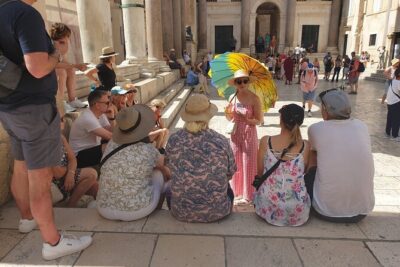
Walking Tour of Split and Diocletian’s Palace
Read our review →
Krka Waterfalls tour with Trogir Walking tour and Krka panoramic boat cruise
Read our review →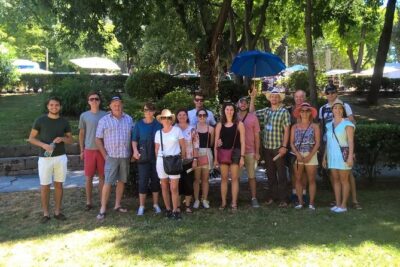
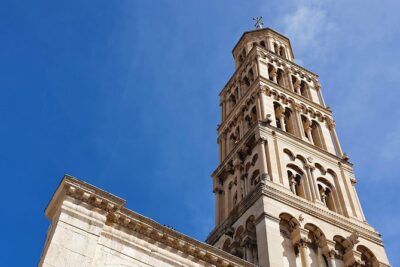
Walking Tour of Split with a ‘Magister’ of History
Read our review →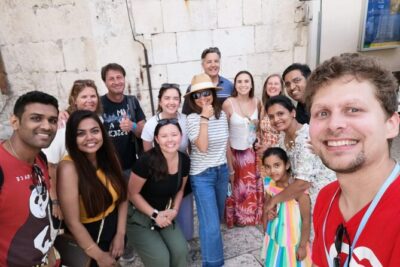
Split Walking Tour with Professor of History
Read our review →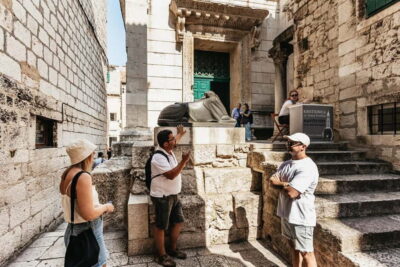
Diocletian Palace & Old Town Guided Walking Tour
Read our review →
Browse the lists this tour appears in