

Reviewed · WALKING TOURS
Split: Guided Walking Tour in English
Split starts making sense fast. In 90 minutes, I like how the tour points you straight at the UNESCO heart of town, Diocletian’s Palace, then connects it to how real people live there today. I also love the way an English-speaking local guide brings in everyday culture and practical tips, like food ideas, so you leave with more than just stone landmarks.
One thing to plan for: entrance fees for churches and museums are not included, so a few stops may cost extra if you want to go inside.
In This Review
- Key points worth your attention
- Why Diocletian’s Palace is the best way to start Split
- Meeting at Obala Hrvatskog narodnog preporoda 21 without wasting time
- The historic streets of Split: what you’ll actually gain
- Diocletian’s Palace, explained with the layout in mind
- Peristyle Court and the imperial spaces you can still picture
- How people still live inside the palace walls
- Churches and museums: how to plan your ticket time wisely
- English guide, local insight, and the payoff of asking questions
- Price and value: is $29 reasonable for 90 minutes?
- Who this tour fits best in your travel style
- Where this tour naturally leads next
- Should you book this Split walking tour?
Key points worth your attention
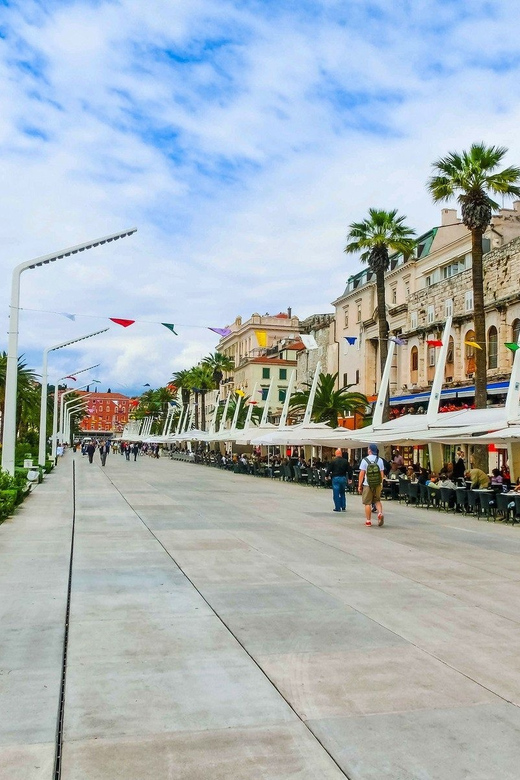
- Diocletian’s Palace in plain English, with the main highlights tied to what you’re seeing on the ground
- Local culture moments, including customs and traditions that make the old streets feel lived-in
- Peristyle Court and key palace spaces, explained as part of the imperial layout
- Small-group potential, since some dates can run with very few people (I’ve heard of sessions with just three guests)
- Guide support for tickets, so you’re not left guessing where to buy what you might want to enter
Why Diocletian’s Palace is the best way to start Split
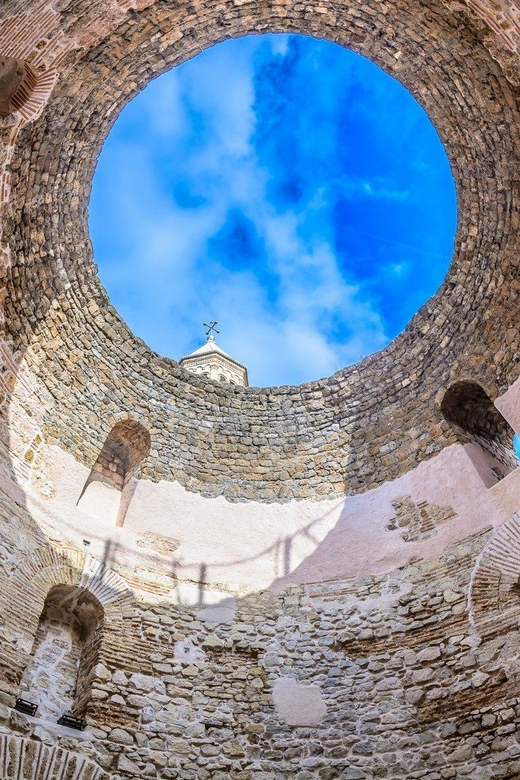
Split can feel like a maze at first. This tour works because it gives you a storyline that fits the layout of the city. You start with the Roman-era core, then watch how later medieval additions grew around it.
The centerpiece is Diocletian’s Palace, a UNESCO World Heritage Site. The tour frames it as something built for power, then explains how it became the skeleton for a city that still has residents inside. That is the difference between a “look at buildings” walk and a “you understand this place now” walk.
And since it is guided in English, you get the big context without needing to download apps or decode guidebooks. You can focus on walking the narrow stone streets, noticing details as they matter instead of as trivia.
Meeting at Obala Hrvatskog narodnog preporoda 21 without wasting time
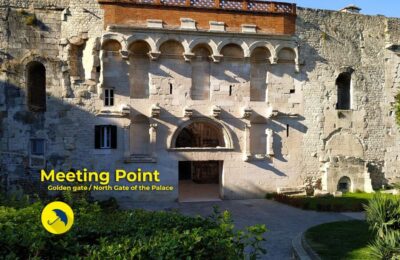
You meet at the Gray Line office on Obala Hrvatskog narodnog preporoda 21. That matters because Split’s old center is easy to wander in the wrong direction when you arrive tired.
The tour itself is a tight 90 minutes, so your best move is to show up a few minutes early, use the wait to get comfortable with the area, and then start walking. Once you’re underway, the route is designed to hit the main monuments without turning it into a long trek.
If you are planning other sights the same day, this timing is also handy. It acts like a fast orientation session, so your self-guided follow-up feels easier.
Plenty more to do around Split
The historic streets of Split: what you’ll actually gain

The walking is the whole point: you stroll around pretty streets in the old city and you get a guide who explains what you’re seeing as you go. The tour is not just a list of dates. It is more about how the city is organized and why certain areas feel the way they do.
You’ll move through a maze of narrow stone lanes where medieval buildings sit close to Roman bones. That contrast is one of Split’s most interesting features. It helps you understand that the city is not frozen in time. It keeps layering new life over older foundations.
This is also where local customs and traditions come into the story. Even when the sights are ancient, the guide keeps the focus on present-day life: what people value, how the neighborhood feels, and what you might want to try nearby.
Diocletian’s Palace, explained with the layout in mind
Diocletian’s Palace is built for one person and then repurposed for many. That shift is the tour’s main idea. You’re not just told that the palace is old, you learn how it shaped the city around it.
The guide connects the palace to the city’s 1,700-year-old history. That number lands harder when you see the spaces in person. You start to grasp scale, walls, and corridors as part of an emperor’s world, not just ruins.
You also learn about later medieval extensions. This part is important because it explains why Split looks the way it does. Without that context, you might assume the older sections are the only story. With it, you can read the city like a timeline you can walk through.
Peristyle Court and the imperial spaces you can still picture
One of the most memorable highlights is the Peristyle area. The tour talks about the monumental court of the Peristyle and how it provided access to the imperial apartments and the mausoleum.
Even if you are not a hardcore Roman history fan, this explanation helps you imagine what a palace is supposed to feel like. Courtyards, entries, and movement patterns make more sense when someone points out the function of each space.
This is also where the palace stops feeling like an exhibit. Because the palace is not just a museum complex. It is a historic framework around which life continued, and you can still sense that practical reuse in the way people move through and around the structures.
How people still live inside the palace walls
The tour makes a point of showing that there are still people living within the walls. That changes your perspective immediately. You are not only looking at ancient architecture, you’re looking at the boundaries of someone’s everyday home.
The guide highlights different palace features, then ties them to how communities formed around the palace core. You get a sense of growth, adaptation, and continuity. It is a simple idea, but it is easy to miss without guidance.
I especially like this part because it avoids the usual “ruins only” vibe. The story becomes more human, and the streets feel less like a set and more like a place that has always been occupied.
Two days in Split? Here's how to fill the second.
- Split: Krka Waterfalls Trip with Boat Cruise and Swimming★ 4.8 · 10,519 reviews
- From Split: Krka Waterfalls, Food & Wine Tasting Tour★ 5.0 · 9,326 reviews
- Blue cave, Mamma Mia and Hvar, 5 islands speedboat tour★ 5.0 · 7,150 reviews
- From Split: Krka Waterfalls, Food & Wine Tasting Tour★ 4.9 · 6,598 reviews
Churches and museums: how to plan your ticket time wisely
Entrance fees are not included in the tour price. The guide will assist with details on where to purchase tickets, and after the tour you can visit landmarks at your own pace.
So here is how I’d plan it. If you know you want to go inside a church or museum, decide before the tour ends, not after. Once you’ve heard the key context, you can pick what matches your interests and spend money where it actually improves your understanding.
If you are short on time, you can also treat the tour as a ticket-free crash course. You’ll still come away with the main landmarks explained, which makes any later self-guided stop far more satisfying.
English guide, local insight, and the payoff of asking questions
The quality of the guide is a huge part of why this tour earns top marks. Multiple guides have come through with strong local knowledge and great English, and the vibe is active, not lecture-only.
Petra is one example from past sessions, and the feedback points to her friendliness and clear explanations of the region. Gabrijela is another name that stands out, with praise for engaging storytelling and strong English.
What I like most about guided walks like this is the chance to ask questions in real time. If you’re curious about why something looks the way it does, or what a certain neighborhood detail means, a good guide turns that curiosity into context instead of leaving you to guess.
Price and value: is $29 reasonable for 90 minutes?
At $29 per person for a 1.5-hour English walking tour, this is a solid value if you care about understanding the “why,” not just the “what.” You’re paying for:
- An English-speaking guide
- A structured walk focused on Split’s top landmark story
- All taxes and VAT
- A route that covers the main monuments in a short window
Entrance fees are the only clear extra cost. Since the guide helps you with ticket guidance, you’re not stuck figuring it out on your own. In practice, that usually means you can decide later whether you want to spend on interior visits.
If you are the type who enjoys asking, “Okay, but how did the city work?” this tour is the kind of spend that saves you time for the rest of your trip.
Who this tour fits best in your travel style
This is a good match if you:
- Want a fast orientation to Split’s old center
- Like history explained through places, not through names and dates only
- Prefer guided structure for your first day, then freedom after
- Want local culture context, including customs and traditions, not just architecture
It may not be ideal if you need a fully accessible route. The tour is not wheelchair accessible, and it also isn’t suitable for anyone who needs that kind of mobility support.
Also note a couple of practical rules: pets are not allowed, and unaccompanied minors are not allowed. Children must be accompanied by an adult.
Where this tour naturally leads next
Because it hits Diocletian’s Palace and explains the city’s growth, it makes your later stops feel connected. You’ll understand what to look for when you wander on your own, especially around the palace-centered layout.
If you plan to add church or museum visits, do it after you have the guide’s context. You’ll move through those places with better expectations, and you’ll spend more attention on what matters to you.
For food and casual local-life ideas, the cultural side of the walk helps too. Even if you only use it for one meal recommendation, that can turn a history tour into an actual memory that lasts.
Should you book this Split walking tour?
If you want one guided activity that gives you a clear understanding of Split in a short time, I think this is worth booking. The palace focus is specific, the pacing is short, and the guide-led cultural context helps you feel grounded in the city rather than passing through it.
Book it if you:
- Are visiting for a day or two and want quick clarity
- Prefer an English-speaking guide to connect the Roman and medieval layers
- Care about how locals experience the space today
Skip it if you mainly want a museum-style visit with paid entries included, or if you need wheelchair access.
Bottom line: for $29, you’re buying a guided route that teaches you how Split’s biggest landmark shaped the city, and you get the local storytelling to make it stick.
Recently added around Split
- Private VIP Brac and Hvar Day Trip from Split
★ 5.0 · 1 review - Private Transfer From or To the Split Airport
★ 5.0 · 1 review - Brač Half Day Beach Party Transfer to Olife Beach Club
★ 5.0 · 1 review - Private Transfer from Split to Zagreb, Hotel-to-hotel, English-speaking driver
★ 5.0 · 1 review - Airport transfers
★ 5.0 · 1 review - Private ”Game of Thrones” Walking Tour in Split (entrance tickets included)
★ 5.0 · 1 review
Walking Tours, compared.
Walking Tour of Split and Diocletian’s Palace
Read our review →
Krka Waterfalls tour with Trogir Walking tour and Krka panoramic boat cruise
Read our review →

Walking Tour of Split with a ‘Magister’ of History
Read our review →
Split Walking Tour with Professor of History
Read our review →
Diocletian Palace & Old Town Guided Walking Tour
Read our review →
Browse the lists this tour appears in