
Reviewed · WALKING TOURS
Split: Walking Tour of Split with Art Historian
Split’s palace walls hide stories everywhere. On this 2-hour walk with art historian Josipa of Aspalathos Guided Tours, you cover 1700 years of history and get the kind of explanations that make stones feel useful again. I especially love the off-route detours to spots most people miss, like Egyptian sphinxes in plain sight, but there are several unavoidable steps and some uneven ground, so it is not for everyone.
What makes it work is the balance: major sights are handled quickly and well, then Josipa slows down for the art and architecture clues, plus honest advice for what to do next in Split. It is also not a checklist tour that forces you into paid attractions. Instead, you get the stories and clear suggestions for visiting the big-ticket sites on your own later.
In This Review
- Key things to know before you go
- Josipa and the art-history lens that actually helps
- Strossmayer Park start, Gregory of Nin, and orienting yourself fast
- Golden Gate, bronze and silver gates, and the palace’s maze-like logic
- Egyptian sphinxes and other details you would miss on your own
- Peristyle to the Vestibul area, learning how the palace felt day to day
- Jupiter’s Temple and Street Let Me Pass, with stories that give meaning
- Diocletian’s Cellars and the shift toward Riva life
- Model of the historical core, Fruit Square, and People’s Square
- What the tour does not do, and why that can be a good thing
- Price and time: why $27 for 2 hours feels fair
- Terrain and who should book this versus skip it
- Should you book this Split walking tour with Josipa?
- FAQ
- How long is the Split Walking Tour with Josipa?
- What does the tour cost?
- Where do we meet?
- What language is the tour in?
- Does the tour enter paid sites like the Substructures, Cathedral, or the Temple of Jupiter?
- Will the tour run in rain?
- Is the tour suitable for wheelchair users or people with mobility impairments?
- Can I cancel and get a full refund?
Key things to know before you go
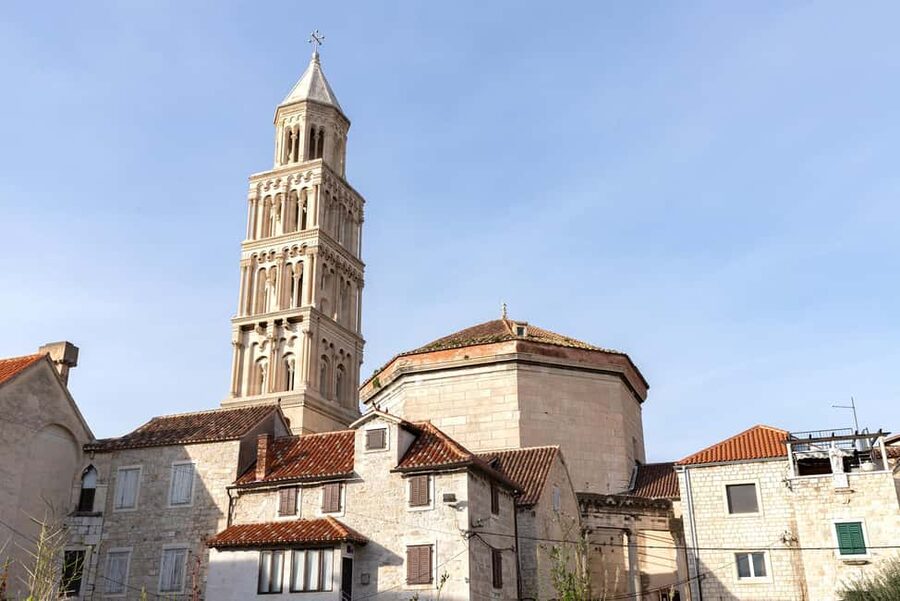
- Josipa leads the walk: licensed local guide and art historian, focused on architecture and how the palace functioned
- Small group feel: the pace stays relaxed, so questions do not get pushed to the end
- You spot overlooked details: Egyptian sphinxes are part of the route, plus hidden architectural elements
- You get city-smart recommendations: end-of-tour tips for where to eat, what to see next, and even a viewpoint suggestion
- No paid-site entry: you pass major attractions and get guidance for how to visit them later yourself
Josipa and the art-history lens that actually helps

This is the kind of tour where the guide’s job is not just to point and read. Josipa, the owner of Aspalathos Guided Tours, approaches Split like an art historian would, using details in doors, gates, and palace spaces to explain how the city grew and changed.
I like that the pace is built for understanding, not for speed. You get time to connect what you see in front of you to the larger story of Roman-era planning and the later layers that followed.
One more thing I appreciate: Josipa keeps a close eye on the group. In hot, sunny weather, she tries to steer the explanations away from the most punishing spots, so you are not stuck melting while someone talks.
Strossmayer Park start, Gregory of Nin, and orienting yourself fast
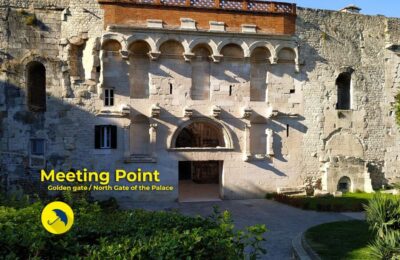
The tour begins around Strossmayerova Fountain in Strossmayer Park, just above the Golden Gates. If you arrive a little early, you get a quick sense of geography right away. You are set up to look down toward the old city walls instead of wandering in circles.
The walk starts with Bishop Gregory of Nin statue, a strong visual anchor for understanding Split’s identity. From there, you move toward the Golden Gate, one of the key entries into Diocletian’s Palace complex, and you start learning how the palace connects to the streets you will actually walk later.
Expect short stops with stories that give you context in plain language. The point is to help you build a mental map, so when you see another gate or a courtyard later, you know what you are looking at.
Plenty more to do around Split
Golden Gate, bronze and silver gates, and the palace’s maze-like logic
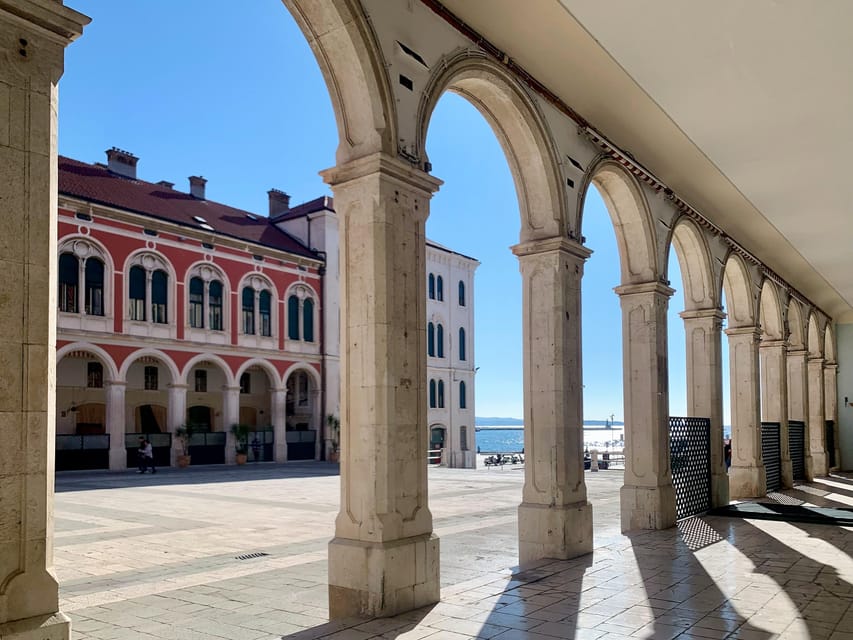
Once you step into the palace area, the tour becomes all about gates and thresholds. You pass through the Golden Gate and later see the Bronze Gate and the Silver Gate, each treated as more than just a photo stop.
Josipa’s style here is practical: you learn what the palace spaces were originally meant to do, and why the layout matters. That helps you understand why Split still feels like a city built around enclosed rooms and corridors, not like a museum set.
A standout moment is how you keep seeing the same theme in different forms. Gates mark movement, Peristyle marks openness, and side spaces mark private or ceremonial life. After a while, you stop thinking of Diocletian’s Palace as a single monument and start seeing it as a functioning layout.
Egyptian sphinxes and other details you would miss on your own
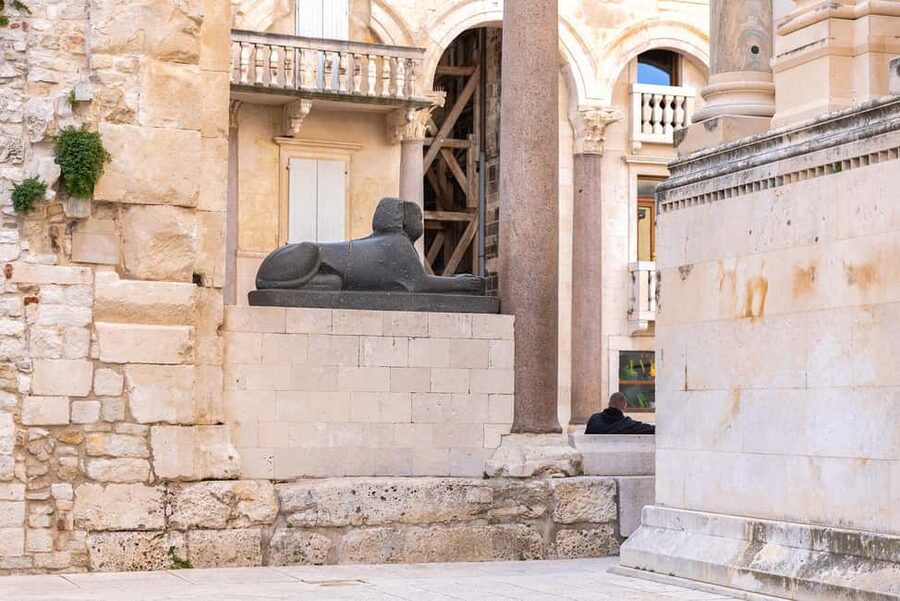
The tour has a talent for leading you to eye-level surprises. Egyptian sphinxes are the best example: you encounter them hidden in plain sight, not behind a fence with a big sign.
This is where the art-history lens pays off. Instead of only telling you what things are called, Josipa points out why certain elements were placed where they were, and what that suggests about taste, power, and connections in the ancient world.
If you like architecture, this part is addictive. You start noticing carvings, alignments, and design choices, and the city stops feeling like background scenery.
Peristyle to the Vestibul area, learning how the palace felt day to day
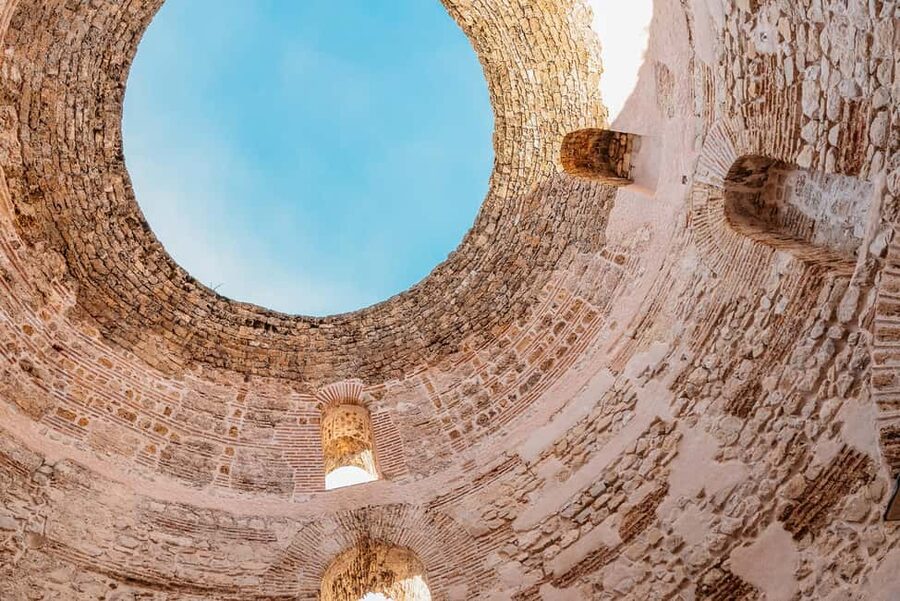
The Peristyle is one of the palace moments that makes everyone quiet for a second. You see it in a guided way, not just as a big open court, and you hear the palace story tied to how spaces worked.
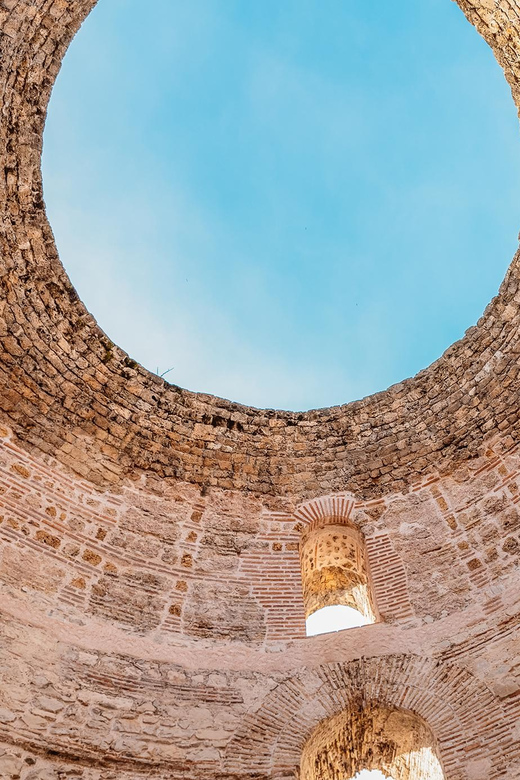
From there, the route continues through other key palace areas, including the Vestibul (with a photo stop) and Triklinij. What I like is that these stops are framed as parts of a system. You are not just collecting landmarks, you are learning how rooms relate to one another and how people would move and gather.
You also get an art-historian’s attention to authentic architectural details. That means you are more likely to spot what is original versus what is later adaptation, because Josipa explains the kinds of features to watch for.
And yes, you get practical context too. One review mentioned Josipa answering lots of questions, including comparisons to Roman city building ideas across other European places, so the palace connects to what you may already know.
Jupiter’s Temple and Street Let Me Pass, with stories that give meaning
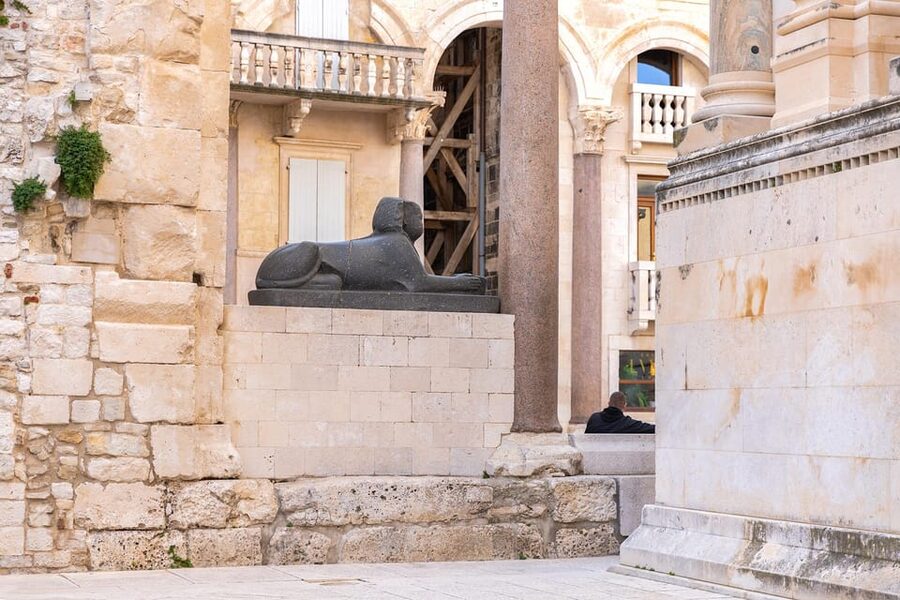
The route includes Jupiter’s Temple area and also Street Let Me Pass. These sound like odd labels until you hear the reasoning behind them in context.
Josipa uses these stops to explain how older structures shaped the street grid and how later life continued to use palace bones. The result is that you feel a little more understanding of why Split looks the way it does, with narrow passages and dramatic thresholds that funnel you through history.
Street names and temple areas can feel random if you only read a plaque. Here, they become markers in a bigger story: where movement guided people, where authority was displayed, and how the city absorbed ancient design into daily life.
If you like smaller, human-scale storytelling, this is a strong stretch of the tour. You get lesser-known facts and stories, including details that are usually shared in academic circles, then translated into something you can actually remember.
Two days in Split? Here's how to fill the second.
- Split: Krka Waterfalls Trip with Boat Cruise and Swimming★ 4.8 · 10,519 reviews
- From Split: Krka Waterfalls, Food & Wine Tasting Tour★ 5.0 · 9,326 reviews
- Blue cave, Mamma Mia and Hvar, 5 islands speedboat tour★ 5.0 · 7,150 reviews
- From Split: Krka Waterfalls, Food & Wine Tasting Tour★ 4.9 · 6,598 reviews
Diocletian’s Cellars and the shift toward Riva life

After the palace core, the tour moves into Diocletian’s Cellars. Even though the tour does not enter paid attractions, the guide still helps you understand what you are looking at from the outside or through accessible areas.
This matters because the tour is designed for you to keep exploring afterward. Josipa helps you connect what you saw in the palace layout to the places where other functions took place, so the city’s “hidden infrastructure” becomes part of your imagination, not just a gap in your knowledge.
Then it transitions to the Riva waterfront. This is where you shift from architecture thinking to city-life thinking. You are walking from the old palace rooms and corridors toward the promenade where Split’s energy is easy to feel.
It is a nice rhythm change. You go from stone and symbolism to sea air and everyday motion, then back to civic spaces.
Model of the historical core, Fruit Square, and People’s Square
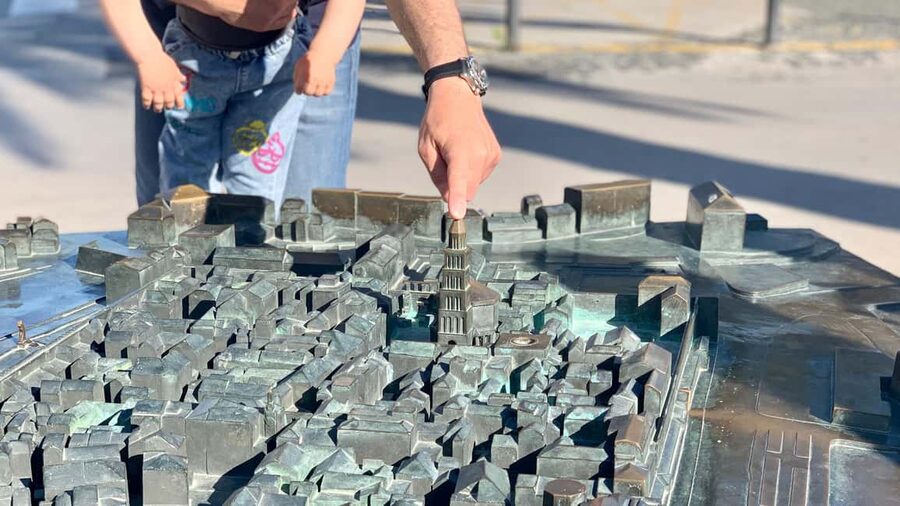
You also see a model of the historical core of the city of Split. For me, this kind of stop is not just educational, it is anchoring. After walking around gates and courts, the model helps your brain stop treating everything as disconnected and start seeing the city as one system.
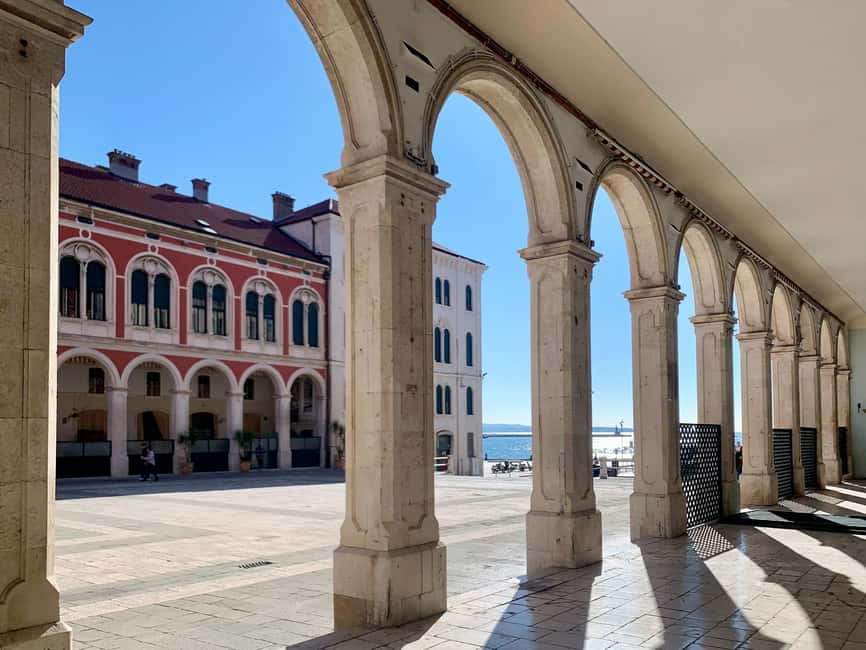
From there, you head through Fruit Square and People’s Square. These are less about mystery and more about how Split’s public life sits on top of the old plan. Josipa’s local perspective helps you understand what to prioritize next once the tour ends.
One of the best-value parts of this walking experience is the ending advice. The guide does not just wrap up with good luck. She gives suggestions for spots to visit, plus a viewpoint tip that can make your time in Split feel bigger than a short stop in the old center.
What the tour does not do, and why that can be a good thing
A lot of walking tours promise the world but still rush you into paid sites. This one keeps it simple: it does not enter paid attractions like the Substructures, the Cathedral, or the Temple of Jupiter.
You still pass them and hear important stories about them. You also get instructions and suggestions for how to visit them on your own later. I like this approach because paid-site tickets can blow out your budget if you are also trying to fit in dinner, boat trips, and a day outside the center.
If you prefer control, this is ideal. You can choose what to enter based on your energy level and how much time you have that day.
The trade-off is obvious: you are not inside those sites with a guide leading you through every room. If you want guided interior access every time, you might look for a different format. But if you enjoy learning the big picture first, then choosing your own pace later, this works well.
Price and time: why $27 for 2 hours feels fair
At $27 per person for about 2 hours, the math is mostly about how much value you get per minute. Here, you are paying for a licensed local guide who brings art-historian context, not just standard sightseeing narration.
Also, the tour is structured so you are walking the city’s most meaningful clusters efficiently. Starting at Strossmayer Park, then moving through Diocletian’s Palace, then down toward Riva is a smart use of time. Even if you do not enter paid sites, you still get the names, the why-behind-the-structure story, and the “go see this next” direction.
Small-group pacing adds value too. When the group is very small, questions can turn into mini lessons, and you get personalized restaurant and sightseeing suggestions that fit your interests.
If you only have one afternoon in Split, this is a solid way to get oriented without turning your day into a ticket line marathon.
Terrain and who should book this versus skip it
This walking tour runs rain or shine. It also includes several unavoidable steps, so your best match is someone who can handle short climbs, uneven sidewalks, and the normal grind of an old-city route.
It is not suitable for wheelchair users, people with mobility impairments, or hearing-impaired people. If you are unsure, double-check your walking comfort before booking.
If you love art, architecture, and the “how did they build it and why” side of travel, you will likely get a lot out of this. It is also a great pre-dinner activity because 2 hours is enough to reset your understanding of the city without eating your whole day.
Should you book this Split walking tour with Josipa?
I think you should book if you want Split explained with clear art-history reasoning, not just a recitation of facts. Starting at Strossmayer Park, passing major palace gates, and spotting Egyptian sphinxes makes it feel fresh even if you are familiar with the basics of Diocletian’s Palace.
Skip it if you need guaranteed access inside paid attractions, or if mobility issues make steps and uneven ground a problem. Also, if you dislike walking, the “no tourist gimmicks, just the real thing” style means you will still be out on the street for the full 2 hours.
If your goal is to leave Split with better bearings, smarter priorities, and a list of places to return to with new eyes, this is a very good use of your time.
FAQ
How long is the Split Walking Tour with Josipa?
The tour lasts 2 hours.
What does the tour cost?
It is $27 per person.
Where do we meet?
Meet around Strossmayerova Fountain in Strossmayer Park (Djardin), near the statue of Bishop Gregory and above the Golden Gates. You can search for Strossmayer Park or Strossmayerova Fountain on your map. Josipa will be holding a yellow and blue sign for Aspalathos Guided Tours.
What language is the tour in?
The tour is guided in English.
Does the tour enter paid sites like the Substructures, Cathedral, or the Temple of Jupiter?
No. The tour does not enter paid sites. It passes by them and Josipa includes stories and suggestions for how to visit later on your own.
Will the tour run in rain?
Yes, it runs rain or shine.
Is the tour suitable for wheelchair users or people with mobility impairments?
No. It is not suitable for people with mobility impairments or wheelchair users. It is also not suitable for hearing-impaired people.
Can I cancel and get a full refund?
Yes. You can cancel up to 24 hours in advance for a full refund.
Recently added around Split
- Private VIP Brac and Hvar Day Trip from Split
★ 5.0 · 1 review - Private Transfer From or To the Split Airport
★ 5.0 · 1 review - Private Transfer from Split to Zagreb, Hotel-to-hotel, English-speaking driver
★ 5.0 · 1 review - Brač Half Day Beach Party Transfer to Olife Beach Club
★ 5.0 · 1 review - Airport transfers
★ 5.0 · 1 review - Private ”Game of Thrones” Walking Tour in Split (entrance tickets included)
★ 5.0 · 1 review
Walking Tours, compared.
Walking Tour of Split and Diocletian’s Palace
Read our review →
Krka Waterfalls tour with Trogir Walking tour and Krka panoramic boat cruise
Read our review →

Walking Tour of Split with a ‘Magister’ of History
Read our review →
Split Walking Tour with Professor of History
Read our review →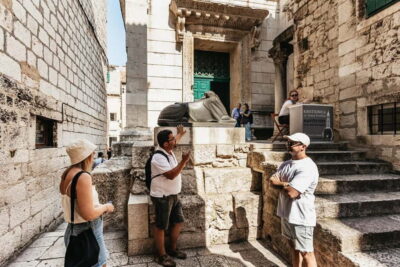
Diocletian Palace & Old Town Guided Walking Tour
Read our review →
Browse the lists this tour appears in