
Reviewed · WALKING TOURS
Walk through Split with an archeologist
Split’s palace is easier with a guide.
This small-group walk is a smart way to see Diocletian’s Palace without getting turned around, and I like that the route moves you between key architectural spaces that explain how the city grew around the Roman emperor’s home. The second thing I really appreciate is personal attention from the guide, with time for questions in a group capped at 10. One drawback to plan for: some palace areas you’ll pass through are not included in the price, so you may need to buy admission for a couple of stops.
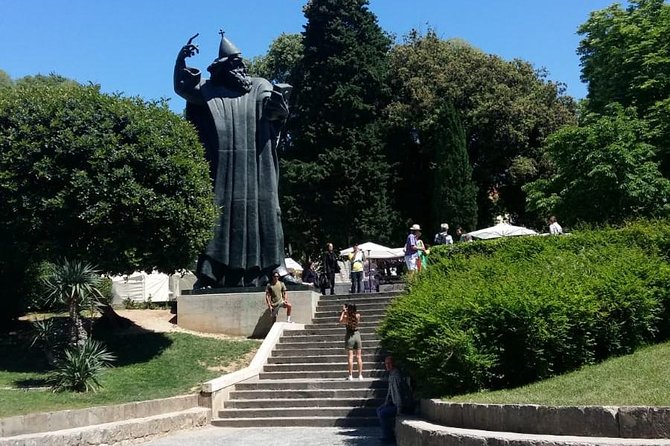
You meet at the Gregory of Nin statue and finish back where you started, so you can tack this onto your day without guessing transit. It’s also built for history and culture lovers who want real context, not just photo stops. If you hate structured walking tours, this one might feel too guided, since the stops are timed and the pacing is designed to fit everything into about 2 hours.
In This Review
- Key highlights
- Why a Diocletian’s Palace walk helps you read Split fast
- Meeting at Gregory of Nin and the 2-hour structure that keeps you on track
- Stop 1: The Peristyle of Diocletian’s Palace
- Stop 2: The Vestibulum to the Emperors Quarters
- Stop 3: Roman palace substructures, and why the free stop matters
- Stop 4: Narodni Trg, medieval square life after Roman stones
- Antonjeta Vulić Bilobrk, and what a detail-heavy guide style gives you
- Price and value: what $23.67 really buys
- Pacing, tickets, and what to wear so 2 hours feels easy
- Who this tour suits best, and who might not
- Should you book Walk through Split with an archaeologist?
Key highlights
- Max 10 people for a calmer pace and better Q and A
- Diocletian’s Palace must-sees explained, including the Peristyle and the Vestibulum
- Roman substructures get special attention, and that stop is free
- Narodni Trg adds a medieval square break after the Roman layers
- English-language experience with a clear, stop-by-stop flow
Why a Diocletian’s Palace walk helps you read Split fast
Split can feel like a maze at first glance. Diocletian’s Palace is the reason, because so much of the modern city sits on top of, around, and inside older Roman walls and rooms. A walking tour like this gives you a storyline you can follow, so you start noticing the “why” behind what you’re seeing instead of only the “what.”
I also like how this tour focuses on the spaces that help you connect details. You move from open ceremonial areas to more controlled palace zones, then down to the substructures under the palace, and finally out to Narodni Trg. That sequence matters, because you’re not just sightseeing, you’re building a mental map of how the palace functioned and how Split lives with that legacy today.
Meeting at Gregory of Nin and the 2-hour structure that keeps you on track
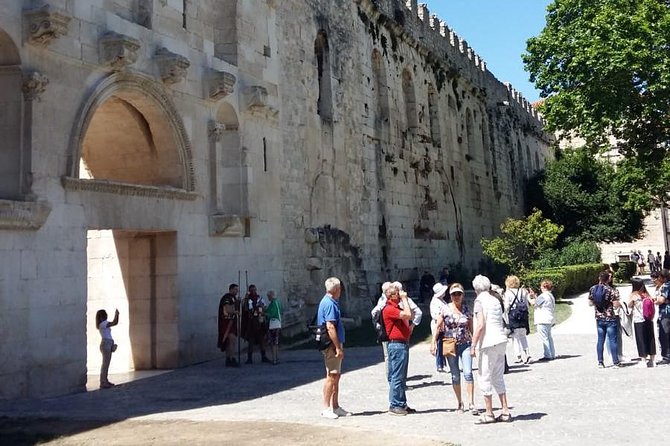
The tour starts at the Gregory of Nin Statue (Ul. kralja Tomislava 12, 21000 Split) and ends back at the same point. That simple loop is practical if you are trying to fit history into an already packed day, since you do not have to plan a second walk across town to finish.
Expect it to last about 2 hours, with short stops that keep things moving. Each of the four main points is designed for about 10 minutes on site, which means you get guided orientation and key visuals without losing half the morning to one room. The tradeoff is that you will not have hours to linger, so if you want a slow museum vibe, plan to do extra independent time later.
You’ll also have a mobile ticket and English-language guide. That makes logistics easier, especially if you arrive with other plans and do not want to hunt for paperwork.
Plenty more to do around Split
Stop 1: The Peristyle of Diocletian’s Palace
The first stop is the Peristyle of Diocletian’s Palace, a standout space because it’s one of the palace areas people picture when they think of imperial grandeur. This is the part that helps you understand the palace as more than ruins, it functioned as a designed, public-facing architectural setting.
What I’d watch for here is how the layout encourages movement and sightlines. The Peristyle is the kind of place where your guide’s explanation helps you notice relationships between spaces, not just the stone itself. Even with a short visit, you typically leave with a clearer sense of where you are in the palace complex and what role this area likely played.
One practical consideration: admission is not included for this stop. So even though the tour will position you well, you may still need to pay entry if you want to go deeper than what’s visible from the walk-through area.
Stop 2: The Vestibulum to the Emperors Quarters
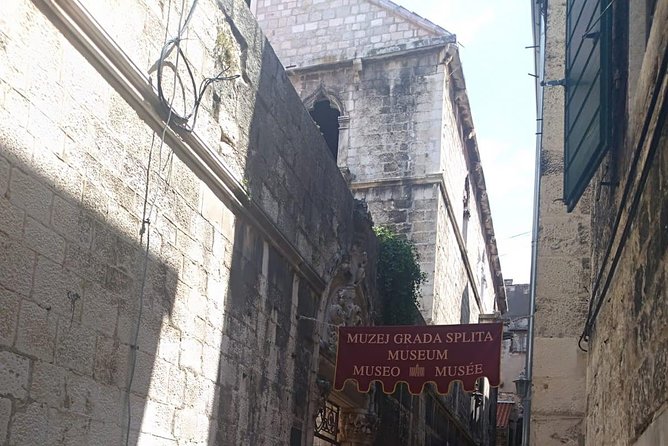
Next is the Vestibulum of Diocletian’s Palace, described as an entry point to the emperors quarters in the palace. This kind of stop is valuable because it connects the “grand” impression of the Peristyle to the more controlled zones of daily authority and residence.
A timed visit here works if you use it like a guided orientation, not a full museum session. I’d focus on how the transition between spaces feels different, even when you’re only there briefly. That contrast is the point. It helps you understand that palace life was structured, with movement from ceremonial to more private or administrative areas.
Like the first stop, admission is not included here. So again, expect there may be a separate ticket decision depending on exactly what you’re able to access during the guided portion.
Stop 3: Roman palace substructures, and why the free stop matters
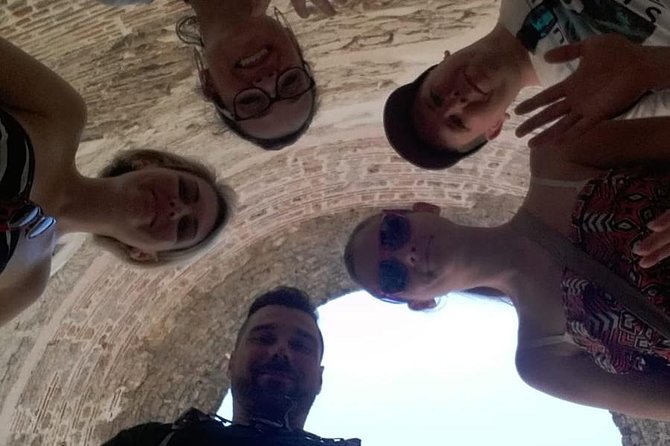
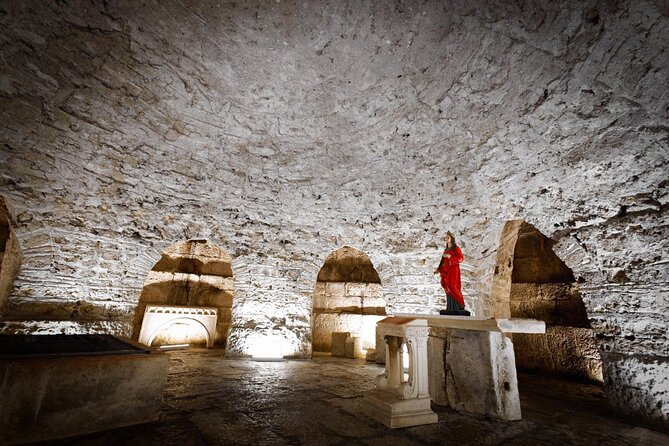
Then you shift to the Diocletian Palace substructures, described as among the best-preserved Roman substructures connected to the city of Split. This is the kind of location that makes a “walking tour” feel like real archaeology, because you’re looking at the older layers that supported the palace and shaped the space above.
What I like about including the substructures is that it changes the perspective. Instead of only standing in the dramatic upper spaces, you start thinking about support systems, engineering, and how the palace was built to last. It also helps you understand why Split’s urban life ended up where it did, because the underground and lower structures influenced what could be maintained and reused later.
Good news for planning: admission for this stop is listed as free. That single detail makes the tour feel like better value, because part of the experience does not depend on you buying additional entries.
Stop 4: Narodni Trg, medieval square life after Roman stones
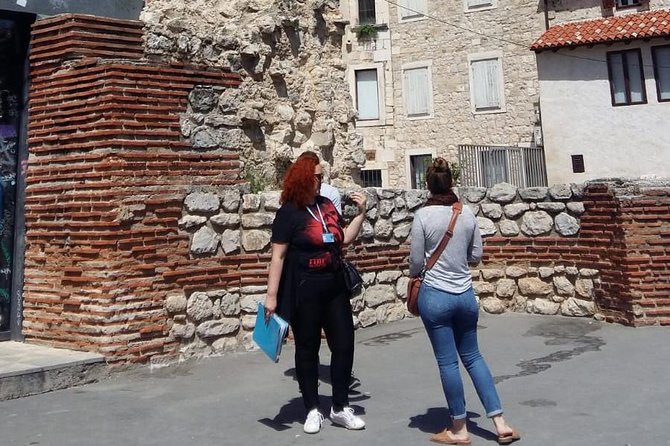
The final stop is Narodni Trg, a medieval square that acts like a reset button after the palace architecture. This is not just a nice change of scenery. It’s where you can see how older layers of the city continue as living public space, with street life happening where people once moved through different eras.
I’d use this last stop to stitch the story together. After hearing palace context, it’s satisfying to look at a square and imagine how later generations adapted the area, kept walking routes, and repurposed spaces over time. Even if you only have a short visit, a square stop helps you remember the tour as something more than interior sights.
Admission is free for Narodni Trg, so you can relax into the location without thinking about extra costs.
Two days in Split? Here's how to fill the second.
- Split: Krka Waterfalls Trip with Boat Cruise and Swimming★ 4.8 · 10,519 reviews
- From Split: Krka Waterfalls, Food & Wine Tasting Tour★ 5.0 · 9,326 reviews
- Blue cave, Mamma Mia and Hvar, 5 islands speedboat tour★ 5.0 · 7,150 reviews
- From Split: Krka Waterfalls, Food & Wine Tasting Tour★ 4.9 · 6,598 reviews
Antonjeta Vulić Bilobrk, and what a detail-heavy guide style gives you

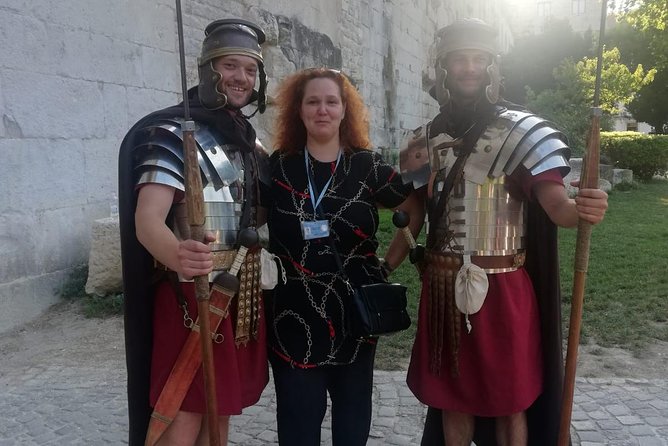
The tour is provided by Antonjeta Vulić Bilobrk. In the praise for the experience, the consistent theme is how she guides through the palace and shares many specific details, with a friendly, clear delivery. That matters in Split because the palace is physically complex. Without someone translating what you’re looking at, it’s easy to feel like you’re just walking through stone.
I also like that the group size is capped at 10. Smaller groups tend to make it easier to ask the small, practical questions that pop up while you’re standing in place, like what something used to be, or why a layout looks the way it does. If you enjoy history but do not want a lecture-only format, this structure tends to fit well.
One more note from the experience feedback: taking this sort of tour outside the busier season can make the walking pace feel more relaxed and give you more breathing room to stop and really look. If your schedule allows it, that can turn a good tour into a more comfortable one.
Price and value: what $23.67 really buys
The price is $23.67 per person for about 2 hours, in English, with a mobile ticket and a maximum group size of 10. That’s a fair price for a guided orientation through a difficult-to-navigate site, especially when the guide is spending real time helping you connect the palace spaces to the broader story of Split.
To judge value, pay attention to the admission split across stops. Two stops list admission ticket not included, while the substructures and Narodni Trg are free. So you should budget a little extra if you plan to access areas that require separate payment during those first two palace stops. If you’re only going to view what’s available during the guided timing, you might spend less, but if you want full access, plan on adding tickets.
Overall, I think the value is strongest if you want to leave with understanding, not just photos. A guide who explains the purpose of each space is the main ingredient you’re paying for here.
Pacing, tickets, and what to wear so 2 hours feels easy
The tour is built around short visits, about 10 minutes per key point. That pacing is helpful if you want a quick education without turning your day into a long indoor slog. It can feel brisk if you prefer slow browsing. The good news is that you can always follow up on your favorite stop later on your own.
For planning, here’s what you should keep in mind based on the listed admission notes:
- Peristyle: admission ticket not included
- Vestibulum to emperors quarters: admission ticket not included
- Substructures: free entry for the stop
- Narodni Trg: free
You’ll be walking through old stone areas, so comfortable shoes matter. Also, because it’s near public transportation and starts right at a major landmark, it’s easy to slot into a day plan without long detours.
Who this tour suits best, and who might not
This is a strong fit for history and culture travelers who want to understand Split’s Roman foundation, then see how that foundation connects to everyday city life. If you like the idea of archaeology explained in plain language, and you appreciate a small group setting, you’ll probably enjoy the format.
It’s also a good choice for most people, since participation is described as suitable for most travelers. Service animals are allowed, and the meeting point is near public transportation, which helps if you are balancing other plans around town.
If you have mobility limits that make walking tours difficult, this is something to consider carefully, because the experience is based on walking between specific sites and timed stops. The tour data does not list special accommodations, so your comfort with cobblestones and uneven old-city areas is the deciding factor.
Should you book Walk through Split with an archaeologist?
Book it if you want a clear, structured way to understand Diocletian’s Palace without getting lost. I like that you get four focused stops, including the Roman substructures and the medieval Narodni Trg, so you come away with a sense of how Split layers over time.
Skip it or treat it as a partial tour if you hate timed sightseeing or if you prefer to explore completely on your own, at your own speed. Also factor in that admission is not included for the Peristyle and the Vestibulum, so check what access you want before you arrive.
If you’re staying in Split for a short time, this is one of the smartest uses of a couple of hours, because it turns the palace from confusing stone into a readable story, led by Antonjeta Vulić Bilobrk in English with a small group atmosphere.
Recently added around Split
- Private VIP Brac and Hvar Day Trip from Split
★ 5.0 · 1 review - Private Transfer From or To the Split Airport
★ 5.0 · 1 review - Brač Half Day Beach Party Transfer to Olife Beach Club
★ 5.0 · 1 review - Private Transfer from Split to Zagreb, Hotel-to-hotel, English-speaking driver
★ 5.0 · 1 review - Airport transfers
★ 5.0 · 1 review - Private ”Game of Thrones” Walking Tour in Split (entrance tickets included)
★ 5.0 · 1 review
Walking Tours, compared.
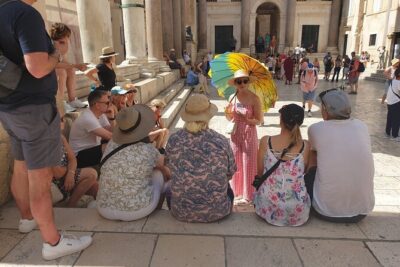
Walking Tour of Split and Diocletian’s Palace
Read our review →
Krka Waterfalls tour with Trogir Walking tour and Krka panoramic boat cruise
Read our review →

Walking Tour of Split with a ‘Magister’ of History
Read our review →
Split Walking Tour with Professor of History
Read our review →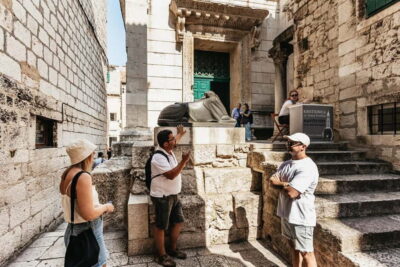
Diocletian Palace & Old Town Guided Walking Tour
Read our review →
Browse the lists this tour appears in