
Reviewed · TROGIR TRIPS
Split: Ancient Salona & Medieval Trogir Historical Tour
Two cities, one Roman-to-medieval story. In four hours from Split, you get guided time at the Salona ruins and then step into UNESCO Trogir, using a See, Hear and Feel approach that keeps the past physical and real. I love how the guide turns stones, sarcophagi, and cemetery spaces into something you can picture as daily life, not just dates.
I also like that it is a small private group experience with skip-the-line tickets, plus a guided look at Trogir’s top sights before you choose how to spend your time. If you are hoping for a long, slow day of museums and churches, the four-hour format may feel tight, especially with outdoor walking in rain or shine.
The tour keeps a steady rhythm, using short van hops so you are not stuck in transit all afternoon. It runs no matter the weather, so plan for comfy shoes, sun protection, and a light layer if conditions turn.
In This Review
- Key takeaways before you go
- Where Salona starts, and why it feels bigger than you expect
- The See, Hear and Feel way, applied to ruins you can picture
- Salona’s timeline, from Illyrians to Roman power to Christian change
- From amphitheatre to cemeteries, what the guide is really doing
- The short van ride, and why pacing matters for 4 hours
- Trogir UNESCO center: cathedral, narrow lanes, and a square that never really left
- Guided tour plus free time: choose your own tempo in Trogir
- The guide effect: what a teacherly approach does for your understanding
- What you will see in Salona, specifically, beyond the amphitheatre
- Trogir highlights you can plan around during your free time
- Price and value: $406 per group up to 4, and what you get for that money
- Practical logistics in Split: pickup, weather, and how to dress
- Who should book this tour, and who might want a different plan
- Should you book? My honest take on Ancient Salona and Trogir
- FAQ
- How long is the Ancient Salona and Medieval Trogir tour?
- Where does pickup happen?
- What stops are included?
- Is the tour guided?
- Does the price include tickets for Salona?
- Do we skip the ticket line?
- What is Trogir time like?
- Is the tour outdoors and weather-dependent?
Key takeaways before you go
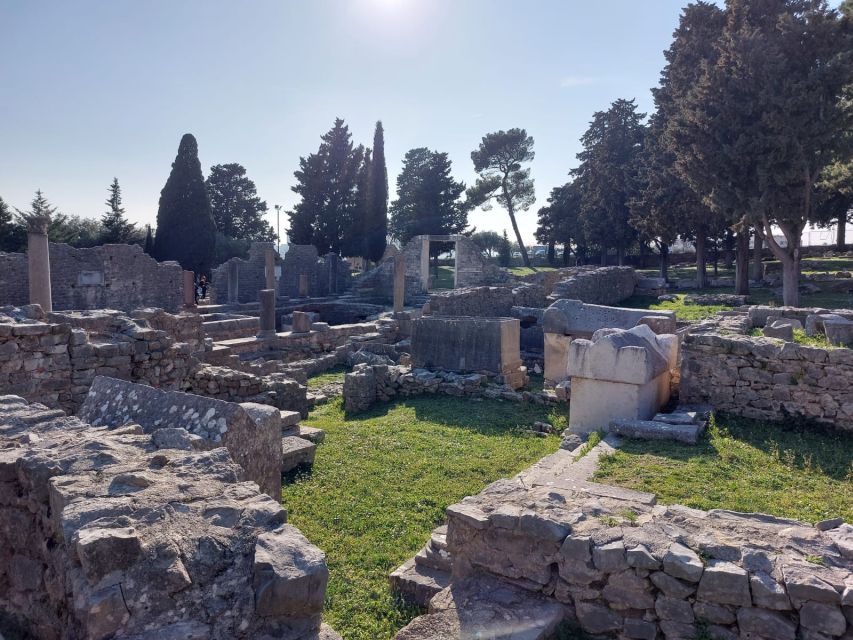
- Salona’s ruins tell a full life cycle: pagan cemetery spaces, Roman basilicas, an old Christian complex, baths, and an amphitheatre setting
- You get both guided moments and breathing room with Trogir’s guided time and then a chance to wander on your own
- A licensed local guide does the heavy lifting with stories that connect Illyrian roots, Roman power, and later Christian life
- The Trogir cathedral stops are specific including the St. Lawrence Cathedral area and its famous sculpture focus (Radovan portal)
- Short van transfers keep the pacing comfortable so you spend more time looking and less time commuting
Where Salona starts, and why it feels bigger than you expect
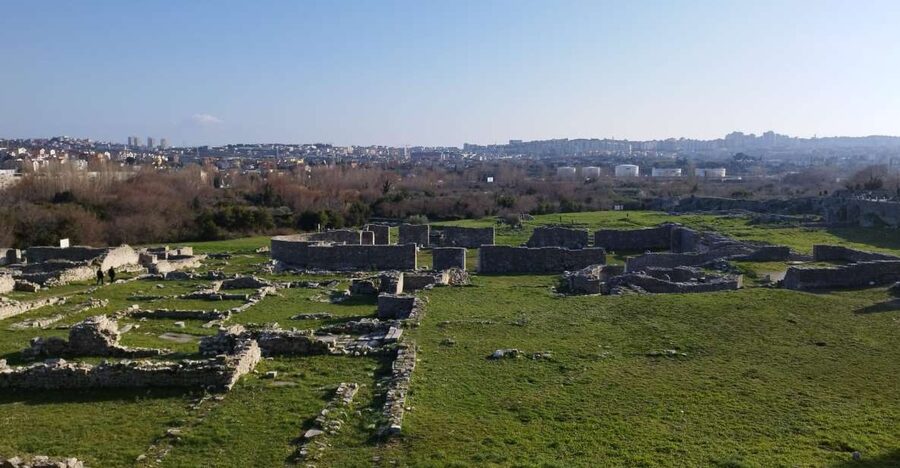
The tour begins in Split with pickup in the city area, then a short van ride to Salona. In about 90 minutes, you focus on the amphitheatre area first, which helps you get your bearings fast. It is one of those places where scale hits you immediately, even when you are walking among fragments rather than intact buildings.
What I like here is the way the guide frames the ruins. You are not just seeing an amphitheatre, you are learning what kinds of gatherings and public moments would have happened in spaces like this. That context matters, because Roman sites can feel like scattered architecture until someone explains how the city worked as a whole.
You also learn that Salona is not only Roman. The area’s roots go back to pre-Roman times, when Illyrian tribes ruled here, and the Roman conquest changed the city’s direction. That timeline lens makes your visit feel like a story with cause and effect, not a random walk through old walls.
The See, Hear and Feel way, applied to ruins you can picture
This tour is designed around a simple goal: make history usable. You see the remains, hear the guide’s spoken context, and feel what it means to walk through a place tied to both life and death. In practice, it means the guide keeps pointing out what you might otherwise miss.
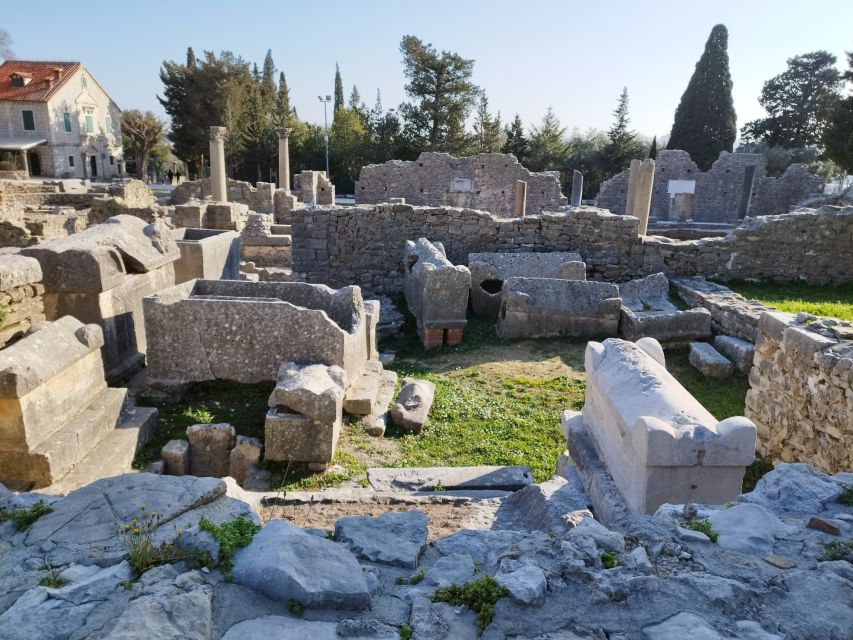
For example, you are guided through a mix of areas and themes tied to religion and daily routines. The route includes spots connected to a pagan cemetery, Roman basilicas, and an old Christian complex. You also pass by baths and other key features that help explain how Roman urban life functioned.
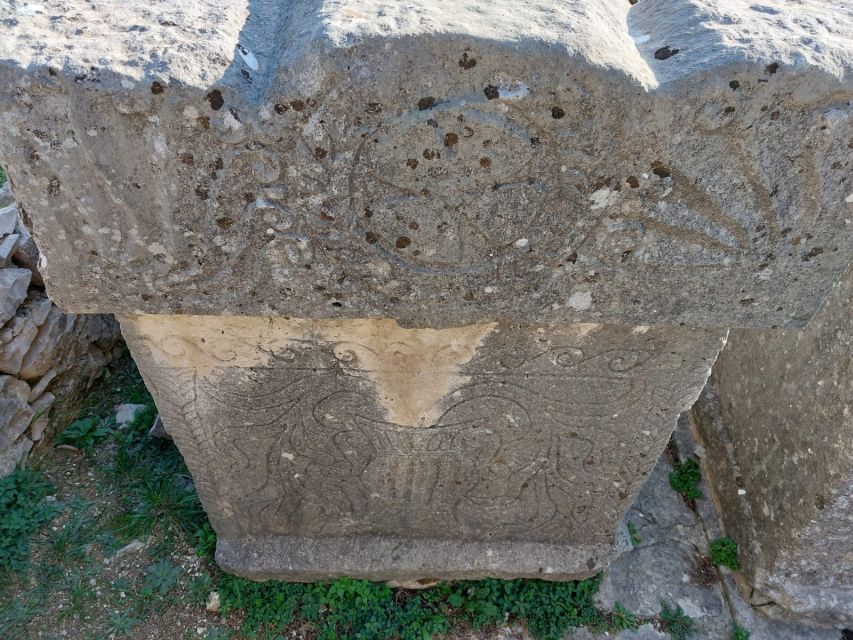
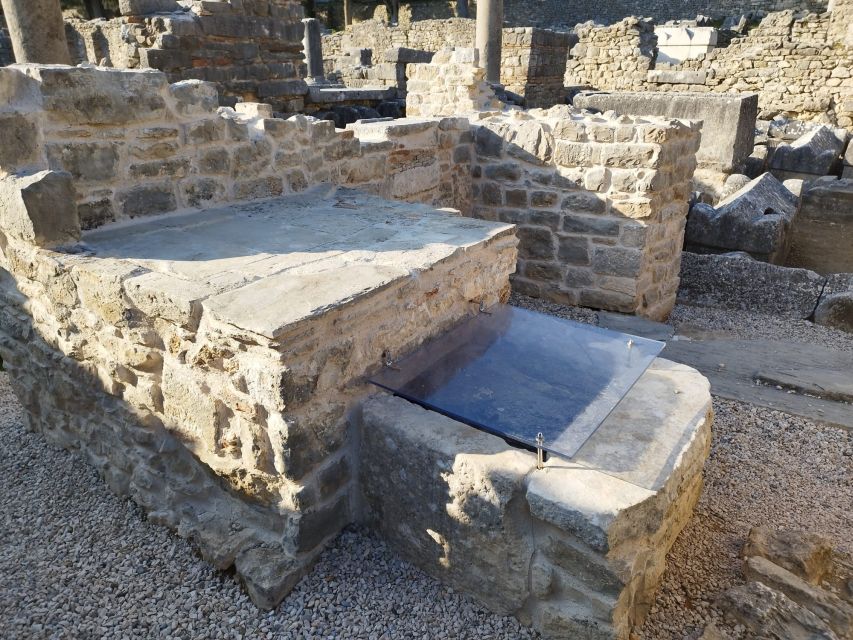
I especially appreciate the emphasis on sarcophagi and burial-related elements. When you stand near burial remains and the guide explains their role, it stops feeling like a sad footnote and starts feeling like part of how people built community. That is the See, Hear and Feel part in action, because it changes your mindset while you are walking.
A whole old town on an islet
Salona’s timeline, from Illyrians to Roman power to Christian change
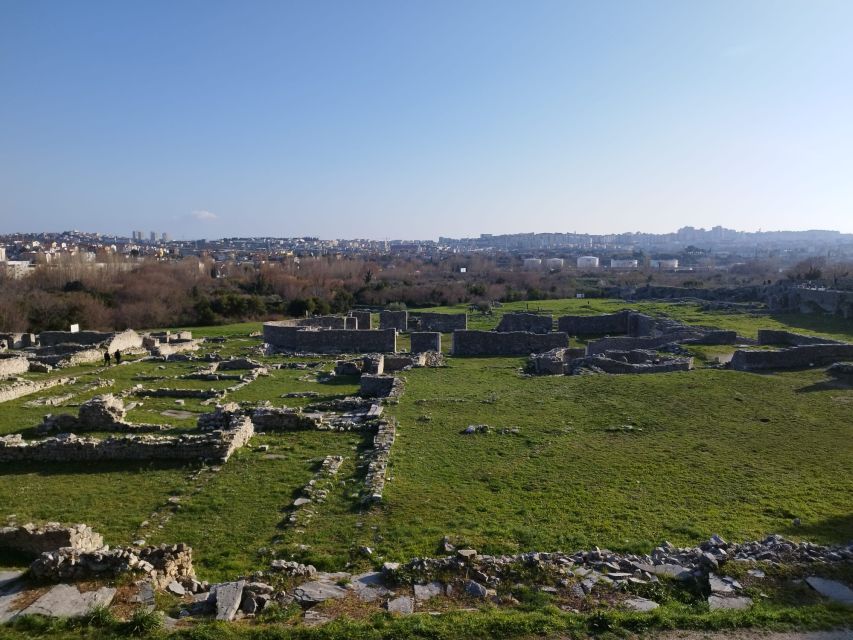
Salona’s story is basically transformation over time, and the tour’s flow reflects that. You start with the idea that the settlement area goes back even before Roman rule, during the Illyrian period. Then the Roman conquest brings a major shift, and Salona becomes one of the Roman centers of power in this part of the empire.
The guide’s job is to connect that shift to what you see. Roman Salona did not just grow bigger, it developed urban structure and public architecture that shaped how people lived, worshipped, and gathered. That is why you move through different types of spaces, from grand public venues like an amphitheatre to religious sites and baths.
A helpful detail is the tour’s focus on the overlap between pagan and Christian eras. You do not just get one religious viewpoint. You encounter remains associated with a pagan cemetery, and also areas tied to early Christian life, like the old Christian complex. It makes the city feel like it was used and reused as beliefs changed over generations.
From amphitheatre to cemeteries, what the guide is really doing
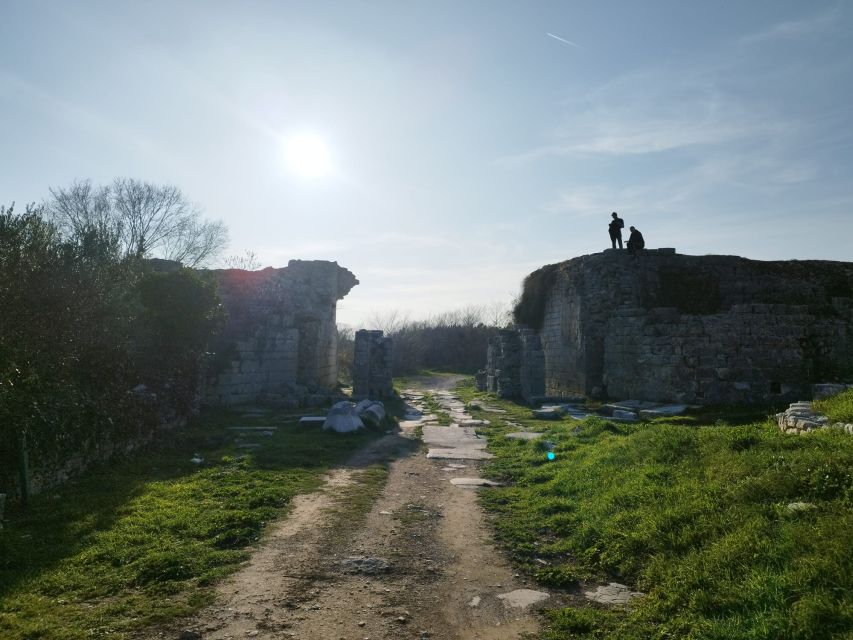
At Salona, it is easy to think you are visiting a single monument. But the experience aims to show the city as an ecosystem. The guide weaves connections between how people met in public spaces and how they handled private, human moments like burial.
The tour includes the amphitheatre area and also references additional key ruin categories you will get to see. Those include Roman basilicas, baths, and burial-related remains such as sarcophagi. Even when you are not standing inside every structure, the guide’s storytelling helps you build a mental map of the city.
This is where the small-group format helps. A licensed local guide can point things out at the pace your group needs. If you want to ask questions, it is usually easier than in large bus groups. And if you just want to take it in, you still get guided interpretation instead of a silent self-guided circuit.
The short van ride, and why pacing matters for 4 hours
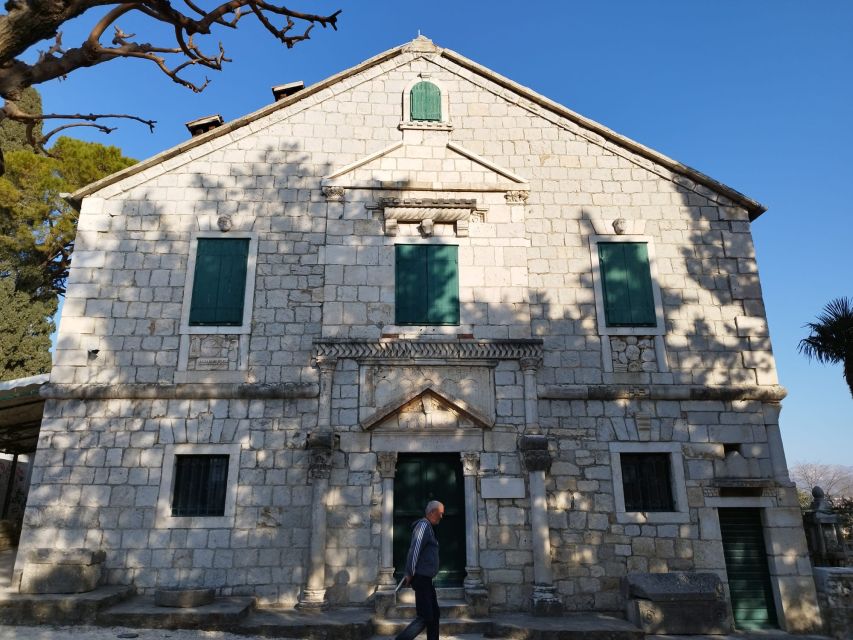
The tour uses quick transfers, first a brief van ride from Split to Salona, then another short hop onward. You will spend about 15 minutes in the van between stops, and then a longer return ride back to Split later. The point is practical: in a half-day tour, time is the real currency.
This pacing matters because Salona and Trogir both require attention. Salona is visual and archaeological, while Trogir is architectural and street-level. If you spend too much time commuting, the visit risks becoming rushed and tiring.
Instead, the route is structured so you arrive, focus, and then move on with a clear sense of what you are looking at. That keeps the experience from turning into a checklist and helps you remember the highlights in context.
Trogir UNESCO center: cathedral, narrow lanes, and a square that never really left
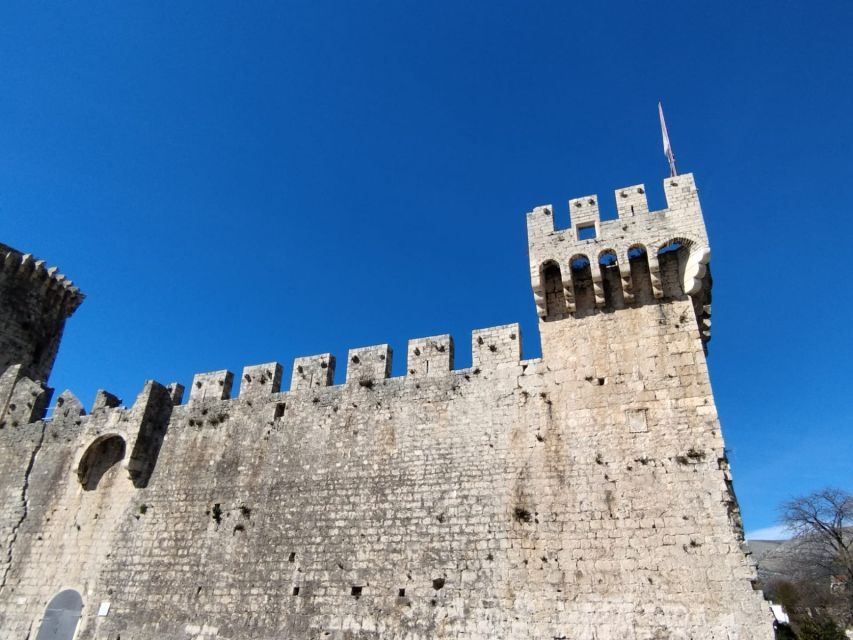
After Salona, you reach Trogir, a UNESCO World Heritage site and one of the most charming medieval towns on the Adriatic. Even if you only have a short window, Trogir’s layout makes the streets feel walkable and human-scaled. The tour gives you a guided pass through major sights plus time to wander.
A key highlight is the cathedral of St. Lawrence. You will also hear about the famous Radovan portal, a sculptural focal point associated with the cathedral. Even if you do not know what to look for at first, the guide’s pointing can help you notice details that would otherwise slide by.
You will also spend time around the town’s central square and other historic elements like city lodge and noble palaces. One of the best things in Trogir is how the town feels alive in the middle of all that age. The square has been in continuing use for more than 2,000 years, and you can see why people keep coming back for a slow look.
Two thousand years, one afternoon
- Walking Tour of Split with a ‘Magister’ of History★ 5.0 · 1,122 reviews
- Split Walking Tour with Professor of History★ 5.0 · 926 reviews
- Split: History and Heritage Walking Tour★ 4.9 · 650 reviews
- Split History and Gastro Small-Group Tour with Food and Drinks★ 5.0 · 375 reviews
Guided tour plus free time: choose your own tempo in Trogir
The Trogir portion is built with flexibility. You get a guided experience first, then you also get free time. This is smart because medieval towns reward choice. If you want photos, a quiet corner, or a longer look at a doorway, you can slow down without feeling like you are holding up a bus schedule.
In my mind, this is the best way to use a place like Trogir. Guided time helps you understand what matters, while free time lets you enjoy what you personally notice. One moment you might want architecture, and the next you might want views down a narrow lane.
You also get a chance to make the stop fit your energy level. The guide can help you with direction, and then you can take over. If you want, you can stay focused on cathedral details. If you prefer street wandering, the town is built for that.
The guide effect: what a teacherly approach does for your understanding
A standout detail from the experience is how the guide teaches. In one example, the guide Boris, a history teacher, was praised for making small details feel important and for explaining what archaeologists found at the site. That kind of guide can change how you experience ruins, because it turns objects into clues.
In practice, it means you get more than a broad overview. You hear stories tied to specific places and materials, like sarcophagi, and you learn how the guide reads the site. That matters for Salona, where the meaning is not always obvious on first glance.
Boris was also noted for walking people through the St. Lawrence Cathedral area and showing the Radovan portal. That is exactly what you want from a guide in a UNESCO town, because the best details often sit in plain view waiting for someone to point out why they matter.
Even if your guide is not Boris, the tour is built around that same spirit: local and licensed, with a focus on making history relatable. When that happens, the ruins feel like a conversation instead of a lecture.
What you will see in Salona, specifically, beyond the amphitheatre
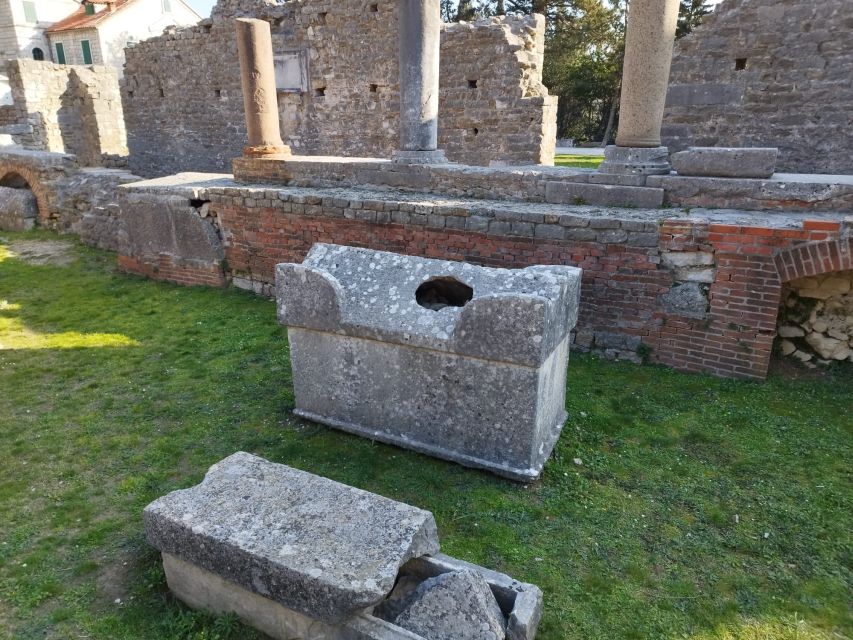
Salona is where you really get the archaeology feel. The tour’s content points you toward a series of sites and themes, not just one standout monument. You are set up to see:
- A pagan cemetery area, tied to pre-Christian life
- Roman basilicas, showing how Roman religion and public space overlapped
- An old Christian complex, showing later religious changes
- Baths, which help explain daily routines and Roman urban living
- The amphitheatre setting, where public moments would have gathered people
This mix is valuable because it gives you range in a short visit. You are not only looking at entertainment structures. You are also learning how worship, community life, and burial traditions were spatially arranged across the city.
And because the guide connects these spaces to the story of Roman rule and later Christian change, the tour is more coherent than many half-day archaeology plans.
Trogir highlights you can plan around during your free time
Once the guided portion ends, Trogir becomes a choose-your-own-walk city. The town’s narrow streets can feel like a maze at first, but that also means you find charming corners faster than you expect. The key is to stay anchored to the central sights the guide helped you locate.
Here are a few ways to spend your free time using what you learned. If you loved cathedral details during the guided part, keep drifting back toward St. Lawrence Cathedral area and surrounding historic structures. If you enjoy street-level atmosphere, wander outward from the square, looking for noble palaces and the city lodge buildings the guide described.
Also, because Trogir is UNESCO protected, you can expect the historic core to hold its character as you walk. That is where the free time pays off, because you are not racing between far-flung sites.
Price and value: $406 per group up to 4, and what you get for that money
The price is $406 per group up to 4 people for a 4-hour experience. That sounds like a “private tour price,” but the value comes from what is included and how the time is structured.
You are getting a local licensed tour guide, pickup and drop-off in Split city area, and tickets for the Roman city ruins visit. You also get a bottle of water, and there is skip-the-ticket-line support. For families or small groups, that inclusion is what keeps the experience from feeling like an overpriced taxi with a lecture.
The biggest value piece is the concentration of two major sites in a single half-day: ancient Salona and medieval Trogir. You are not spending hours figuring out logistics or piecing together separate guides for each place. Instead, you get a guided through-line that helps both destinations make sense together.
If you are traveling solo, the price still may be reasonable if you strongly prefer a guided explanation and hate wasting time at ticket lines. If you prefer to self-guide everything, you might find a lower-cost option that you control. But for people who want “guided meaning plus a little freedom,” the group pricing is often the sweet spot.
Practical logistics in Split: pickup, weather, and how to dress
This tour runs rain or shine, so your clothing matters. Since you will be moving through outdoor ruins and walking streets, wear comfortable shoes you trust. Bring a light layer if the weather changes, and if it looks like rain, consider a compact rain shell.
Pickup is in the Split city area, at an arranged pickup point that you receive details for before pickup. The van ride is short between stops, which is good because you still get energy for the walking portions.
The tour is offered in English and Croatian with a live guide. And since it is private group format, your experience should stay more flexible than large-group schedules.
Who should book this tour, and who might want a different plan
This is a great fit for you if you want a concentrated taste of Dalmatian history in one afternoon. It suits people who like archaeology but also want the payoff of a beautiful UNESCO medieval town walk afterward. If you enjoy guides who explain details and connect places to daily life, this style works well.
It is also a good choice for small groups who want convenience. Pickup, tickets, and skip-the-line help you spend your time looking rather than organizing.
I would think twice if you need long time in churches, museums, or shops. The tour is only four hours, and Trogir’s free time is limited compared with what you could do if you stayed longer on your own.
Should you book? My honest take on Ancient Salona and Trogir
I would book this tour if your priority is guided interpretation of two UNESCO-level destinations without turning the day into a logistics project. Salona is most satisfying when someone helps you connect amphitheatre scale, burial spaces, and shifting religious eras into one coherent story. Trogir becomes even better when you get a guided orientation first, then choose how to wander.
If you love history that feels human, not just academic, this “See, Hear and Feel” approach is exactly the right format. And if you are traveling with up to four people, the pricing can feel fair because so much is handled for you.
If you tell me your travel dates and whether you are more into ruins or medieval architecture, I can help you decide if this timing makes sense compared with spending a full day in Trogir alone.
FAQ
How long is the Ancient Salona and Medieval Trogir tour?
The tour duration is 4 hours.
Where does pickup happen?
Pickup is included in the Split city area at an arranged pickup point. You should receive the pickup information before pickup.
What stops are included?
You visit Salona, including the amphitheatre area, and then you go to Trogir for a guided tour plus free time.
Is the tour guided?
Yes. You’ll have a local licensed live tour guide. The guide language is English and Croatian.
Does the price include tickets for Salona?
Yes. Tickets for the Roman city ruins visit are included.
Do we skip the ticket line?
Yes, skip-the-ticket-line access is included.
What is Trogir time like?
You get a guided tour of Trogir and then about 1.5 hours of free time for sightseeing.
Is the tour outdoors and weather-dependent?
It takes place rain or shine. You should plan for outdoor walking.
Recently added around Split
- Private VIP Brac and Hvar Day Trip from Split
★ 5.0 · 1 review - Private Transfer From or To the Split Airport
★ 5.0 · 1 review - Brač Half Day Beach Party Transfer to Olife Beach Club
★ 5.0 · 1 review - Private Transfer from Split to Zagreb, Hotel-to-hotel, English-speaking driver
★ 5.0 · 1 review - Airport transfers
★ 5.0 · 1 review - Private ”Game of Thrones” Walking Tour in Split (entrance tickets included)
★ 5.0 · 1 review
Trogir Trips, compared.
Blue Cave, Mamma Mia, Hvar and 5 Island Tour
Read our review →
Blue Cave and Hvar Tour – 5 Islands Tour from Split and Trogir
Read our review →
Krka Waterfalls Day Tour with Boat Ride from Split and Trogir
Read our review →
Krka Waterfalls tour with Trogir Walking tour and Krka panoramic boat cruise
Read our review →
Krka National Park Tour with tour Guide & Wine tasting from Split & Trogir
Read our review →
Hvar, Brač & Pakleni islands cruise with lunch & drinks from Split & Trogir
Read our review →
Mostar and Herzegovina Tour with Kravica Waterfall from Split & Trogir
Read our review →Browse the lists this tour appears in