
Reviewed · FOOD TOURS
Split History and Gastro Small-Group Tour with Food and Drinks
Split’s food tour is a fast way to learn the city. You start in the shadow of Diocletian’s Palace, then follow the walking trail into markets, squares, and family-run spots for wine and Croatian classics. What I love most is the tight mix of history on foot and real tastings that feel like locals actually eat them, not a show menu.
My other big plus is the variety across savory bites and sweets, plus a guide who keeps things moving without rushing you. You get prosciutto, cheeses, market bread, seafood dishes, and then gelato or traditional cake, with wines included. The only drawback to weigh is that it is a food-forward outing, and if you are chasing a long, deep history lecture, you may want to pair it with a dedicated palace-focused tour later.
In This Review
- Key highlights you should notice before you go
- A 3-hour Split food walk that actually teaches you where to go
- Finding the orange spoon at the palace area
- Green Market stop: where Split’s ingredients earn their reputation
- Narodni trg square: the medieval layer above the Roman shell
- Marmontova Ulica, the fish market street, and the gelato reset
- Trumbićeva obala promenade: the wine and the relaxed pace
- What you eat and drink, dish by dish
- Starters and savory bites
- Main dishes with wine pairings
- Dessert and the gelato question
- Drinks you should expect
- Vegetarian, vegan, and gluten-free options that actually help
- The guide makes the tour feel like a conversation
- Price and value: what $139.13 buys you in real terms
- Timing: morning vs afternoon options and how the menu shifts
- Who this Split tour is best for
- Should you book this Split History and Gastro food tour?
- FAQ
- How long is the Split History and Gastro small-group tour?
- How much does the tour cost?
- What is included in the food and drinks?
- Is wine and liqueur included?
- Are there vegetarian, vegan, or gluten-free options?
- Do I need to worry about the drinking age?
- Where do I meet the guide?
- Is pickup from my hotel included?
- What is the cancellation window?
Key highlights you should notice before you go
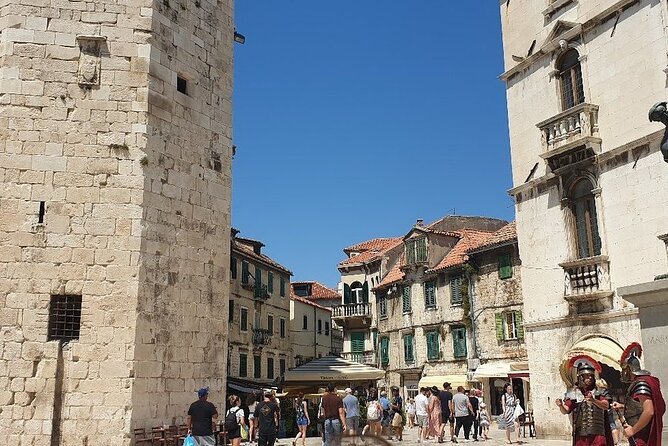
- Diocletian’s Palace area start: you get your bearings fast in Split’s historic core.
- Green Market tastings: prosciutto, cheese, and local bread right where the ingredients come from.
- Wine, liqueur, and multiple plates: you are not just sampling one snack.
- A real small-group feel: limited to 12 travelers, so conversation stays easy.
- Gelato and sweets as the payoff: the tour ends with something sweet near the waterfront.
- Seasonal food choices: what you eat can shift with spring, summer, or fall availability.
A 3-hour Split food walk that actually teaches you where to go
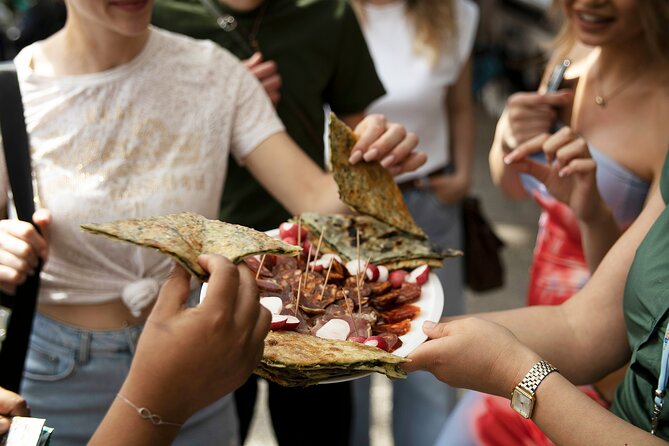
This tour is short enough to fit your first day in Split, but it still gives you a real sense of the city. The route ties together three things that matter here: where food gets made, where people gather, and how old walls shape daily life. You walk through classic old-town streets, but you do it with stops planned around taste, so you remember the places.
At $139.13 per person, it is not a budget meal. The value comes from the number of tastings and the fact that drinks are included, which matters more than you think when Croatia prices add up. You also get a guide with context, not just a list of dishes.
Finding the orange spoon at the palace area
You will meet outside Diocletian’s Palace at Hrvojeva 1, 21000 Split, and the easy cue is a person holding an orange spoon. That sounds like a small detail, but it is useful on a first trip. Split’s old streets can be maze-like, and this keeps your start calm.
This experience is offered in English, and you get a mobile ticket. It is also close to public transportation, which helps if you are arriving from a ferry or bus. Plan for a moderate walk, since this is a strolling food tour rather than a ride-and-park event.
If you are traveling in a group, the max size is 12. That usually means the guide can keep track of everyone and still stop at the right spot for each pour and each plate.
Taste Dalmatia one stop at a time
Green Market stop: where Split’s ingredients earn their reputation
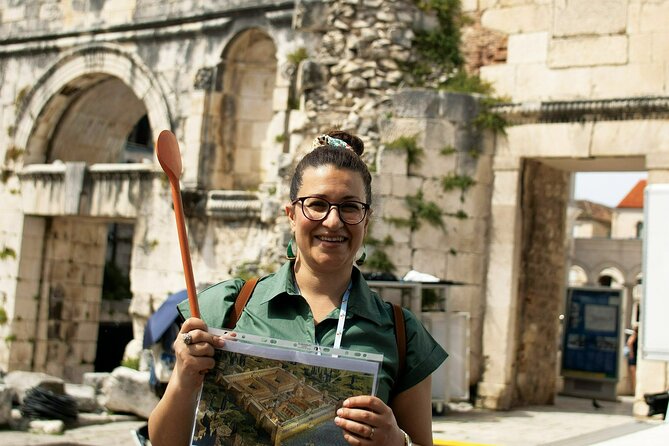
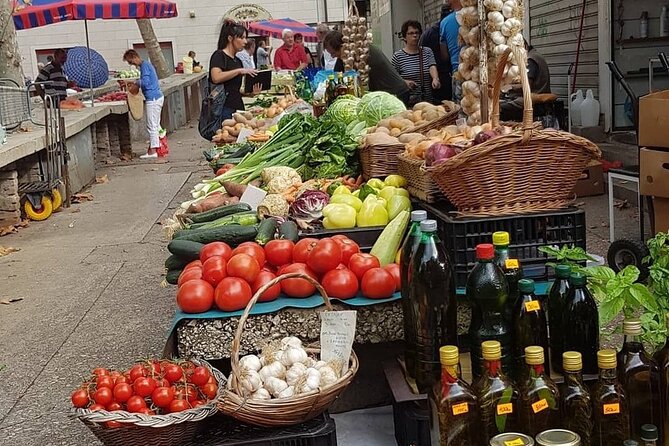
Your first real food moment is the Green Market. This is where the city’s daily rhythm shows up, and it sets up everything you eat later. Around this stop, you sample prosciutto, cheese, and traditional bread, plus soparnik pie.
Soparnik is a big part of the local story here. It is not complicated to understand, but it is hard to find outside the region because it is tied to seasonal cooking and local ingredient habits. You also learn more about seasonal produce, which is the key to why Split food tastes different across the year.
One practical note that affects timing: the market is included in the morning option. In the afternoon option, the market itself is not included because it is closed, so the market foods you would normally taste are instead offered in local taverns. If you care about the feel of standing inside the market, pick the morning departure.
Narodni trg square: the medieval layer above the Roman shell
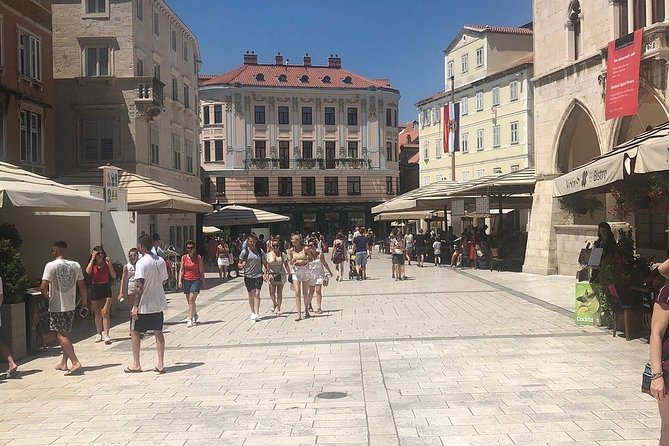
After the market, you step into Narodni trg, one of Split’s bigger medieval squares. The time here is short, about 10 minutes, but it matters because squares like this are where people used to pause, trade, and plan their day. When your guide points out the different architectural eras, you start to see Split as a stacked city rather than a single postcard.
This stop is not about food. It is about context, and that context makes the later tavern visits more meaningful. When you can place a building type in your head, you stop feeling like you are just walking through streets and start feeling like you are moving through a timeline.
Marmontova Ulica, the fish market street, and the gelato reset
Next comes Marmontova Ulica, a French-style shopping street with the biggest fish market in town. This is where you get a stronger sense that Split’s food culture is practical. Fish markets are not decorative here. They are part of how people eat day after day.
You also get a gelato break during this segment. It is a smart move because the tour front-loads salty tastes, then gives you something cool and sweet to reset your palate before more pasta and wine.
For the afternoon option, this is also where you find hearty seafood comfort in the form of octopus stew with gnocchi and sweet liqueur. If you are on the morning tour, you still get seafood flavors, but the specific octopus stew and liqueur pairing is called out for the afternoon route. Either way, you should expect seafood themes to be common.
Trumbićeva obala promenade: the wine and the relaxed pace
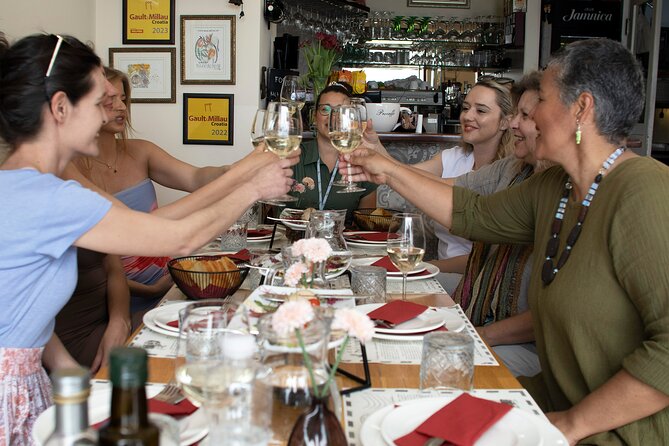
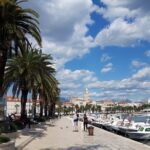
The final stretch moves to Trumbićeva obala, a lovely promenade where the tour shifts from tasting to hanging out. You get social time in local taverns and coffee shops, which is when a group of 3 to 12 people tends to loosen up and talk about where they are going next in Croatia.
This is also where your last food and wine stop happens. It is a good design choice. Your earlier stops build your appetite and your understanding of Split ingredients, then the promenade ending rewards you with a slower rhythm and a view of how people live around the waterfront.
Because you end near the Riva Promenade area, you also leave the tour right where many people want to stroll afterward. That makes it easier to turn the evening into something more relaxed, rather than feeling like you are done with the city as soon as the tour ends.
Second helpings of Dalmatian cooking
- Split: Blue Lagoon and 3 Island Cruise with Food and Drinks★ 4.8 · 1,969 reviews
- Split: Blue Lagoon, Nečujam & Maslinica with Food & Drinks★ 4.5 · 698 reviews
- Full-Day Catamaran Cruise to Hvar & Pakleni Islands with Food and free Drinks★ 5.0 · 670 reviews
- Split: Small Group Food Tour with Private Option★ 4.8 · 116 reviews
What you eat and drink, dish by dish
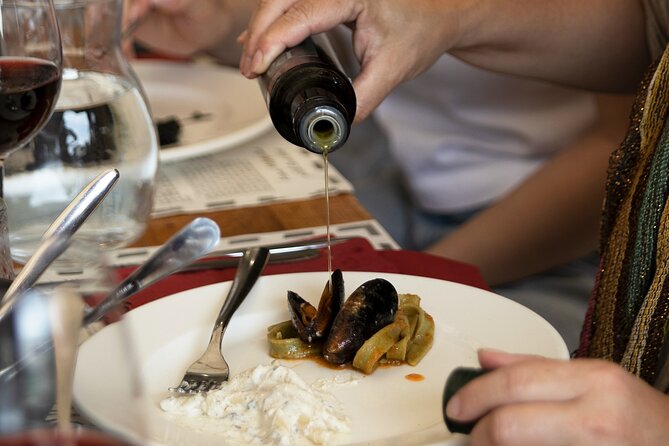
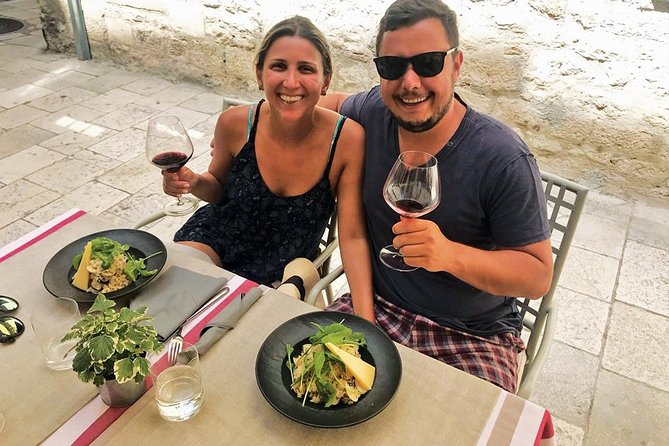
The tour is built around multiple plated tastings, not just one restaurant stop. The menu can vary by season, since Croatian food depends heavily on what is fresh that time of year. You should also plan for seafood to show up often, and if you are not a fan of fish, you will want to tell the guide your preferences in advance so options stay comfortable.
Here is a clear picture of what is typically included, based on the sample menu and described tastings:
Starters and savory bites
You may start with cured meat and cheese, paired with local rose wine. Other starters can include tuna pate with salted and pickled anchovies, with white wine. If you are going on the afternoon option, you may also get octopus stew with gnocchi and a traditional liqueur.
Main dishes with wine pairings
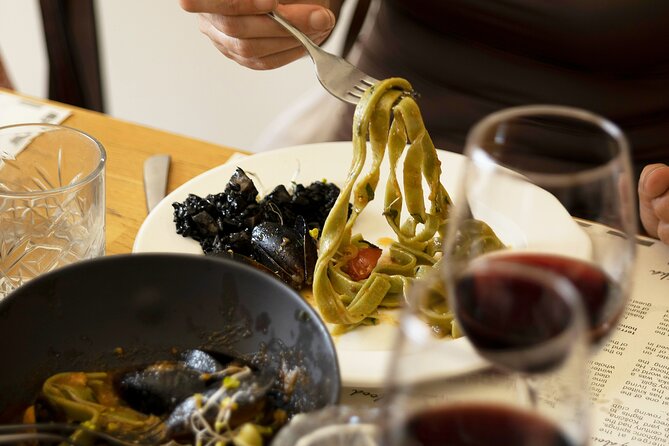
On the seafood side, you could taste black risotto, pasta with mussels and shrimps, and noodles with truffles. Red wine is included with the main course portion. Even if truffles are not a daily Split ingredient, the dish matters because it shows how local seafood meets broader Mediterranean and Italian influences.
Dessert and the gelato question
Dessert is traditional cake or gelato depending on spring, summer, or fall season. Either way, the ending sweet works well after wine and savory plates. If you are trying to decide between morning and afternoon, keep in mind that both end with sweets, but the exact sweets can shift with season and the specific route timing.
Drinks you should expect
Wine is included, and so is liqueur (notably in the afternoon version). The minimum drinking age is 18, so if you are traveling as a mixed-age group, plan accordingly.
Vegetarian, vegan, and gluten-free options that actually help
This is one of the more practical sides of the tour. Vegetarian, vegan, and gluten-free options are available. If you have allergies or dietary restrictions, you should let the company know in advance, since the ingredients can vary by season.
Also, if seafood is not your thing, do not assume you will automatically get a full swap without asking. The tour does include dietary options, but the guide will still need to shape your tastings around what is available that day.
The guide makes the tour feel like a conversation
Most of the best parts of this experience come down to the guide. People consistently praise guides for balancing food with Split stories, and you may see names like Kristina, Honey, Doris, Ana, Dubravka, Elsa, Ela, Hani, or Anna associated with past departures. That matters because each guide brings their own energy, and the group tends to open up when the guide keeps the pace friendly.
A strong guide also matters for logistics in a crowd. Split has narrow streets and busy spots, so keeping everyone together is not just nice, it is essential to getting to the next tasting on time.
Even when the history moments are short, the best guides tie them back to daily life, like why markets matter, why certain dishes show up together, and why particular squares and streets became social hubs.
Price and value: what $139.13 buys you in real terms
Let’s be honest. Paying $139.13 for a walking tour is only a good deal if the food and drink are doing the heavy lifting. Here, they are.
You get:
- multiple tastings across several stops
- multiple wine servings included in the price
- gelato or traditional cake at the end
- a local guide for about 3 hours
If you were to order similar dishes and drinks at restaurants across several places, the cost can rise fast. The real value is that you are bundling the walk, the context, and the drinks into one event, and the stops are placed to reduce the usual time waste of hunting for somewhere that is good and open.
That said, if your priority is a longer, more detailed palace tour, this is not the only answer. Think of it as your food map plus a history quick-start.
Timing: morning vs afternoon options and how the menu shifts
The tour is roughly 3 hours. The order of stops stays similar, but there are key differences.
If you book the afternoon option:
- the Green Market stop is not included since the market is closed
- you still get the market flavors, served in local taverns
- octopus stew with gnocchi and sweet liqueur is included
If you book the morning option:
- you get the Green Market tasting in full at the market itself
- the afternoon-only octopus stew pairing will not be part of your tour segment
So your decision comes down to what you care about most. If you want the market setting and the vibe of ingredient shopping, choose morning. If you are especially curious about the octopus stew and liqueur pairing, choose afternoon.
Who this Split tour is best for
I see this working best if you:
- are in Split for a short time and want to get oriented fast
- like tasting menus more than formal sit-down meals
- want both food and context, without committing to a long museum day
- enjoy wine and want it included rather than added later
You may also like it if you are traveling solo or as a couple, since the small group helps you mix with others without feeling stuck in a big tour herd.
If you dislike seafood, you should be upfront before you go. This tour leans seafood-heavy in its included dishes, even though diet options exist.
Should you book this Split History and Gastro food tour?
I think it is a strong buy if you want a practical first night in Split or a quick midday tour that leads into more strolling. The included tastings, the included wine, and the small-group feel add up. You also get a set of starting points that help you plan the rest of your trip, especially if you want to eat well without guessing.
Book it if:
- you want Diocletian’s Palace area orientation plus food
- you like trying several Croatian dishes in one afternoon
- you appreciate guides who connect places, food, and local habits
Skip or pair differently if:
- you want a deep, long history focus of the palace itself
- you are not comfortable with seafood, unless you can share restrictions clearly ahead of time
FAQ
How long is the Split History and Gastro small-group tour?
It runs about 3 hours.
How much does the tour cost?
The price is $139.13 per person.
What is included in the food and drinks?
You get multiple tastings, including prosciutto, cheese, traditional bread, and either prosciutto pate or soparnik pie. You also get a seafood plate, seafood pasta options, black risotto, and wine. Dessert is traditional sweets or gelato, depending on the season.
Is wine and liqueur included?
Yes. Wines are included, and sweet liqueur is included on the afternoon tour.
Are there vegetarian, vegan, or gluten-free options?
Yes. Vegetarian, vegan, and gluten-free options are available. If you have restrictions or food allergies, let the provider know in advance.
Do I need to worry about the drinking age?
The minimum drinking age is 18.
Where do I meet the guide?
The start point is Hrvojeva 1, 21000 Split. The meeting location ends near Marmontova ul. 2, 21000 Split.
Is pickup from my hotel included?
No hotel pickup and drop-off is included.
What is the cancellation window?
You can cancel for a full refund up to 24 hours in advance of the experience start time.
More Food & Drink in Split


Two Thousand Years of History
Recently added around Split
- Private VIP Brac and Hvar Day Trip from Split
★ 5.0 · 1 review - Private Transfer From or To the Split Airport
★ 5.0 · 1 review - Brač Half Day Beach Party Transfer to Olife Beach Club
★ 5.0 · 1 review - Private Transfer from Split to Zagreb, Hotel-to-hotel, English-speaking driver
★ 5.0 · 1 review - Airport transfers
★ 5.0 · 1 review - Private ”Game of Thrones” Walking Tour in Split (entrance tickets included)
★ 5.0 · 1 review
Food Tours, compared.

Split Food Tour: Discover Split One Bite At A Time
Read our review →
All-inclusive Gastro Blue Cave Tour from Split
Read our review →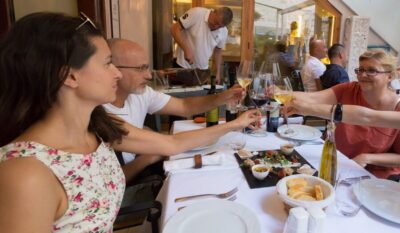
Historical & Gastro Treasures Tour with Green Market
Read our review →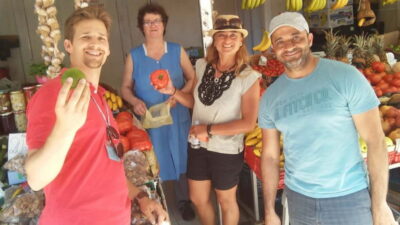
4-Hour Dalmatian Food and Wine flavors Experience in Split Patio
Read our review →
Culinary Experience – Cooking Class & Walking Tour Split
Read our review →Browse the lists this tour appears in