
Reviewed · HISTORICAL TOURS
SPLIT-PREMIUM Emperor’s Walking Tour for History Lovers + Museum
Split has one walk that makes Diocletian’s Palace click. This 2-hour guided route connects Roman leftovers, medieval streets, and local stories in a way that actually makes the city understandable.
I love how the tour keeps its focus on the places that shaped everyday life, starting inside Diocletian’s Palace and continuing through Old Split squares like Narodni Trg. I also like the small-group feel: the tour runs with a maximum of 15 people, so you get time for questions instead of just listening while you march.
One thing to plan for: a couple of entries are listed as not included, including Diocletian Palace substructures and the optional Museum of Diocletian’s Cellars (€10 per person). If you want to go inside everything, expect a small add-on.
In This Review
- Key Highlights Worth Building Your Day Around
- Meeting the City at Riva’s Waterfront Main Stage
- Diocletian’s Palace: More Than a Famous Ruin
- Where you’ll feel the palace’s scale
- The Peristyle and Emperor’s Square: The Heartbeat Stop
- Old Split Streets, Saint Domnius, and Civic Landmarks
- Narodni Trg and the life of a piazza
- Roman Stories in Plain Sight: Jupiter Temple and the City Clock
- Grgur Ninski and the Croatian Identity Stops
- The Palace Substructures and Diocletian’s Cellars Add-On
- Group Size, Adult-Only Format, and Why It Feels Personal
- Timing, Weather, and What to Wear for August Heat
- Value Check: Is $30 Worth It in Split?
- Who This Tour Fits Best (and Who Might Want Something Else)
- Should You Book the Split Emperor’s Walking Tour?
- FAQ
- How long is the Split Emperor’s Walking Tour?
- What language is the tour offered in?
- Is this tour suitable for children?
- How many people are in the group?
- Where does the tour start and end?
- What museum or interior ticket costs extra?
- Are major sights inside Diocletian’s Palace included?
- Does the tour include a visit inside the Temple of Jupiter?
- What happens if the weather is bad?
Key Highlights Worth Building Your Day Around
- UNESCO time-travel, built for walking through Diocletian’s Palace and adjacent Old Split streets
- Emperor’s Square energy at the Peristyle, framed as the real heart of town, not just ruins
- Iconic photo stops without the big-tour crush, thanks to a max group size of 15
- Roman to medieval in one straight line, with Jupiter’s Temple and Saint Domnius along the way
- Extra ticket options if you want more interior access beyond the standard tour stops
- Guides with personality, including humor and helpful pacing for different needs
Meeting the City at Riva’s Waterfront Main Stage
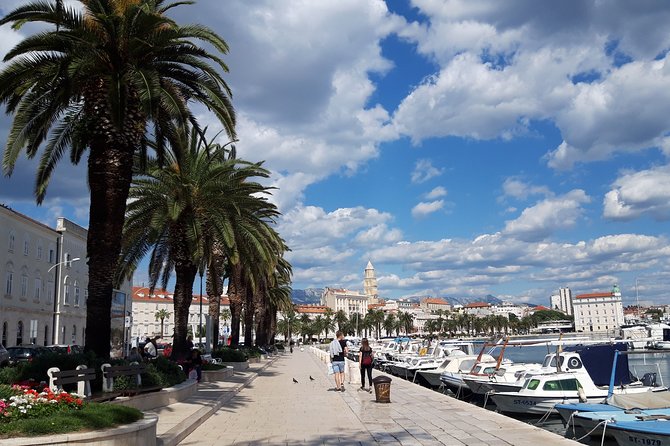
Your tour starts at Obala Hrvatskog narodnog preporoda 22, with the walking loop beginning and ending at the Main Stage on the Riva promenade. This is a smart way to start because you’re already at the water, with Split’s harbor vibe right in front of you, before the guide pulls you back in time.
From there, the walk moves into the Old Town rhythm. Expect lots of short stops, quick orientation moments, and the kind of street-level history that doesn’t float above your head. This tour is designed for “look up and notice” tourism, not museum-on-a-pedestal sightseeing.
Also, keep in mind this is an adults-only group tour (private tours are available for all ages). If you’re traveling with kids, you’ll want the private option.
Diocletian’s Palace: More Than a Famous Ruin
The main attraction here is Diocletian’s Palace, a UNESCO World Heritage Site built around 305 AD. The tour of the palace is positioned early, and that matters. If you get your bearings inside the complex first, the rest of Split reads more clearly like a map you can walk.
At the opening stop, you’ll tour the palace itself (listed as 25 minutes, and admission is free for this portion). The guide’s job is to connect what you can see now with how the place once functioned, as an emperor’s retirement world that later got folded into daily life.
You’ll also hit the Golden Gate, the main and most beautiful entrance into Diocletian’s Palace. This is a “stop and really look” moment. The guide can frame why this gate feels grand compared to the surrounding stone, and how entrances like this signaled power and control.
Then comes the Vestibulum of Diocletian’s Palace, described as the main entrance to the private residence of the emperor. Even if you just glimpse it from the route, you’ll start to understand how access worked, meaning what was for rulers, what was for service, and what was for public movement.
Curious about Split's Roman bones?
Where you’ll feel the palace’s scale
The palace can feel overwhelming if you walk in cold. Here, it’s paced as a sequence of “systems.” You see gates, squares, and passage points, then you learn what those meant. That’s the difference between wandering and getting oriented.
The Peristyle and Emperor’s Square: The Heartbeat Stop
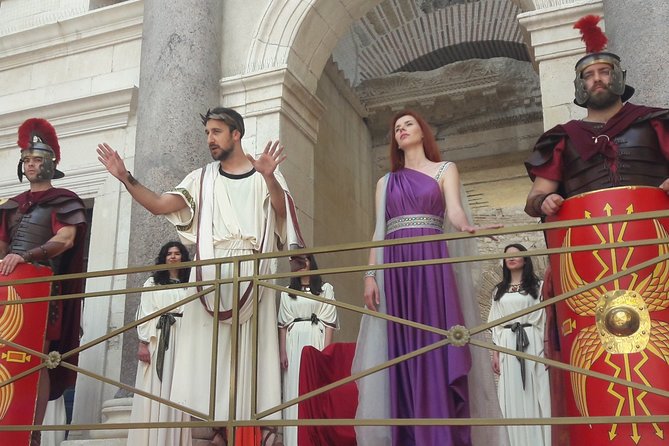
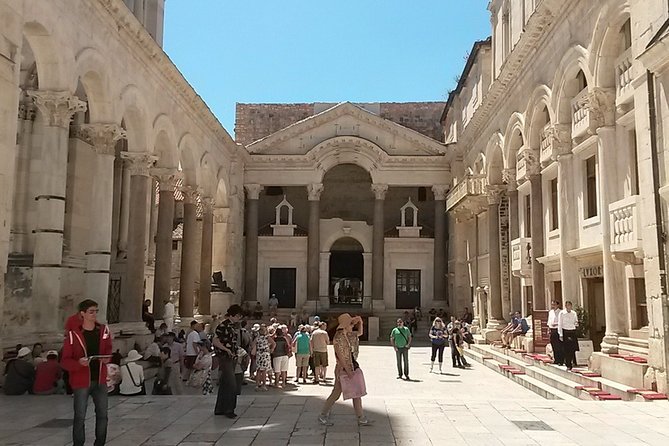
One of the standout moments is the Peristyle, also described as Emperor’s Square, the heart and soul of Split town. This is one of those places where the architecture becomes a stage for everyday life.
The tour treats it as a hub, not a checkpoint. You’ll get a quick, focused stop (listed at 5 minutes), but it’s one of the best “aha” areas because you can look across open space and imagine how people moved, met, and watched life unfold here.
If you’re the type who likes “why is this square here?” questions, this part pays off fast. I like that it’s short enough to keep your energy up, but meaningful enough to give you context you can use later when you explore on your own.
Old Split Streets, Saint Domnius, and Civic Landmarks

After the palace orientation, the tour shifts into Medieval Old Split, again listed at 25 minutes with admission free. This segment is where the guide helps you connect the Roman shell to medieval street life.
You’ll also see the Cathedral of Saint Domnius from the outside. It’s quick (5 minutes), and the itinerary specifies that admission isn’t included. Even from outside, this stop works because it anchors the city’s long continuity. You’re not just viewing ancient stones, you’re looking at how later eras built identity on top of older structures.
Narodni Trg and the life of a piazza
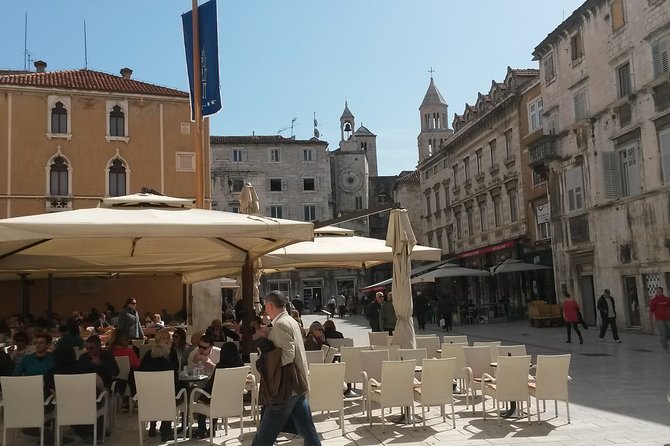
Next, you’ll visit Narodni Trg, the biggest and liveliest piazza in Old Town. It’s listed as a short 5-minute stop, but it’s the kind of place where a guide’s explanation makes you notice details you would otherwise skim. The value here is understanding how a city’s public space tells you who was meant to use it.
Fruit’s Square (Trg Brace Radic) is another key stop. You’ll visit the former Green Market area, including the famous statue of Marul, described as the father of Croatian literature. This is cultural history in street form, not a distant lecture.
Two thousand years, one afternoon
- Walking Tour of Split with a ‘Magister’ of History★ 5.0 · 1,122 reviews
- Split Walking Tour with Professor of History★ 5.0 · 926 reviews
- Split: History and Heritage Walking Tour★ 4.9 · 650 reviews
- Split History and Gastro Small-Group Tour with Food and Drinks★ 5.0 · 375 reviews
Roman Stories in Plain Sight: Jupiter Temple and the City Clock
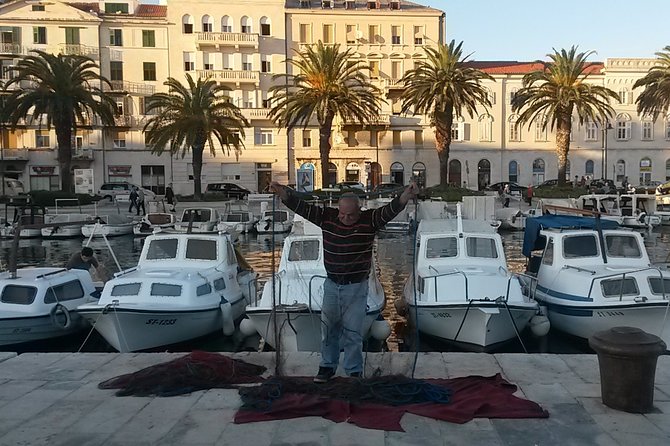
Split doesn’t separate eras. The route keeps toggling between Roman and later layers, and it’s one of the reasons the tour feels efficient.
You’ll see the Temple of Jupiter from outside (5 minutes). The itinerary also mentions an optional visit inside, with admission not included. If you love Roman religious sites, this is your chance to go further, but only if you’re comfortable adding that extra entry.
Then you’ll stop at the City Clock, described as 500 years old and a 24-hour clock. This is a small stop that can land big. Clocks like this are practical artifacts of how people organized the day. When a guide explains the why, you start reading the city like a working machine, not a photo backdrop.
Grgur Ninski and the Croatian Identity Stops
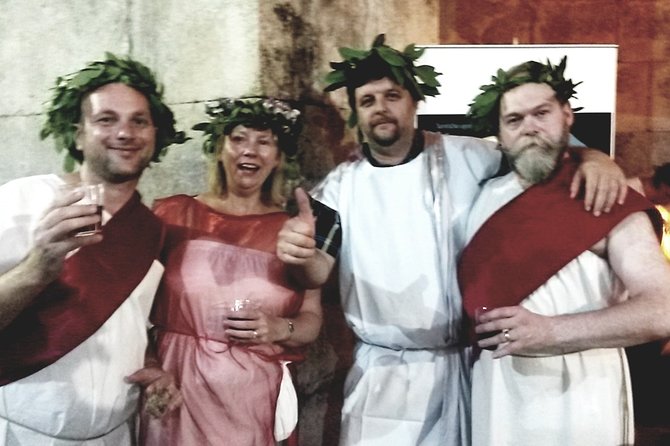
One of the most memorable “culture meets history” stops is the Grgur Ninski Statue. You’ll learn about one of the most important historical persons in Croatia. This is a quick 5-minute segment, but it’s not fluff. It gives you a human anchor amid the stones, and it helps you understand why Split proudly points to specific figures and stories.
The same idea shows up again at Fruit’s Square with Marul. These identity stops make the walk feel less like a Roman theme park and more like the living backdrop of Croatian literature and leadership.
The Palace Substructures and Diocletian’s Cellars Add-On

The itinerary includes Diocletian Palace Substructures, described as the best preserved part of the palace, with a listed time of 20 minutes. Admission for this portion is not included.
There is also a separate museum add-on: the Museum of Diocletian’s Cellars costs €10 per person and is not included. If you’re the type who likes to keep going after the surface, this is where you can spend extra time seeing how the palace works below ground.
Here’s my practical advice: if you already know you want more interior access, budget the extra €10 up front. If you’re on the fence, decide based on your comfort level with extra stairs and indoor time. The standard walking route keeps things moving, but these substructure and cellar elements shift you into “slower, deeper, more enclosed.”
Group Size, Adult-Only Format, and Why It Feels Personal
This tour caps at 15 travelers and runs with a minimum of 4 guests. That size change is not a small detail. It affects the whole experience. In a smaller group, guides can slow down for real questions, and you’re less likely to feel lost while everyone streams ahead.
The reviews you can learn from this tour’s reputation point to guides like Joško and Daniela who keep people engaged with humor, and who help people get photos and navigate pacing. I like tours where the guide can read the room, and this one is set up for that kind of interaction.
Also note the format: group tour is adults only and not recommended for guests under 18. If your group includes kids, the private tour is the right fit.
Timing, Weather, and What to Wear for August Heat
This is a walking tour that runs about 2 hours. It’s not described as a full day crawl, but it does cover a lot of ground through Old Town.
Weather matters. The experience is stated to require good weather, which makes sense for an outdoor route with multiple short transitions. In warmer months, you’ll want to plan like locals do: water bottle, sun protection, and shoes that handle uneven stone.
One more practical angle from how the guides operate: if someone in your group has mobility limits, the guide has shown flexibility by adjusting pacing and letting the walk run longer. That’s not guaranteed for every situation, but it tells you the tour can be handled with human care instead of strict marching.
Value Check: Is $30 Worth It in Split?
At $30 per person, this tour is priced like a “best intro to Split history” option rather than a premium-only splurge. The value comes from what’s bundled: a licensed resident guide, a custom itinerary, and key UNESCO and Old Town stops handled in one efficient route.
Most of the listed stops are free in terms of admission for that specific segment. The extra costs are targeted, not constant: Diocletian’s substructures, optional Temple of Jupiter interior, and the Museum of Diocletian’s Cellars (€10). That means you can keep spending controlled.
If you’re someone who wants a guide to give you the story behind the stones, this is one of the best setups for your money. You get orientation inside Diocletian’s Palace, then you get the civic and identity landmarks that explain why the city feels like it does today.
Who This Tour Fits Best (and Who Might Want Something Else)
This is ideal for history lovers who enjoy architecture, street-level stories, and short stops that add up. It’s also great if you’re arriving in Split for the first time and want a map you can reuse.
You’ll probably enjoy it most if you like:
- Understanding Roman foundations in plain language
- Seeing Croatian cultural references in the same walk as architecture
- Asking questions and getting answers on the spot
If you want a tour focused on popular TV scenes rather than historical context, know that this is built as a real history walk. You may spot locations tied to pop culture, but the main focus stays on the past.
Should You Book the Split Emperor’s Walking Tour?
Book it if you want the fastest path to understanding Split’s most important layers, Diocletian’s Palace first, then the medieval and civic stops that show how the city grew around it. The small group size, the English guidance, and the repeated emphasis on humor and clear explanations make it a strong match for independent travelers who still want structure.
Skip it or choose a different format if you hate walking on historic streets or you only want fully ticketed museum time. Here, you’ll get plenty of exterior viewing, and interior access is selective and partly paid extra.
If you do book, my best tip is simple: decide in advance if you’ll add the €10 Museum of Diocletian’s Cellars. That one choice can turn your tour from a smart overview into a more complete “Roman palace, above and below” experience.
FAQ
How long is the Split Emperor’s Walking Tour?
It runs for about 2 hours.
What language is the tour offered in?
The group tour is offered in English.
Is this tour suitable for children?
The group tour is adults only and not recommended for guests under age 18. A private tour option is available for all ages.
How many people are in the group?
The tour is a small-group format with a maximum of 15 travelers.
Where does the tour start and end?
It starts at Obala Hrvatskog narodnog preporoda 22, 21000, Split, Croatia, and ends back at the meeting point.
What museum or interior ticket costs extra?
Admission fee to the Museum of Diocletian’s Cellars is not included and costs €10.00 per person. Some other listed interior portions are also marked as not included.
Are major sights inside Diocletian’s Palace included?
The tour includes a tour of Diocletian’s Palace, and you will also see areas like the Peristyle and key palace entrances. Some palace substructure access is marked as not included, so there may be extra entry costs for that part.
Does the tour include a visit inside the Temple of Jupiter?
The Temple of Jupiter is visited from outside, and an optional visit inside is mentioned. Admission for the inside visit is not included.
What happens if the weather is bad?
The experience requires good weather. If it’s canceled due to poor weather, you’ll be offered a different date or a full refund.
More Walking Tours in Split




Recently added around Split
- Private VIP Brac and Hvar Day Trip from Split
★ 5.0 · 1 review - Private Transfer From or To the Split Airport
★ 5.0 · 1 review - Brač Half Day Beach Party Transfer to Olife Beach Club
★ 5.0 · 1 review - Private Transfer from Split to Zagreb, Hotel-to-hotel, English-speaking driver
★ 5.0 · 1 review - Airport transfers
★ 5.0 · 1 review - Private ”Game of Thrones” Walking Tour in Split (entrance tickets included)
★ 5.0 · 1 review
Historical Tours, compared.

Walking Tour of Split with a ‘Magister’ of History
Read our review →
Split Walking Tour with Professor of History
Read our review →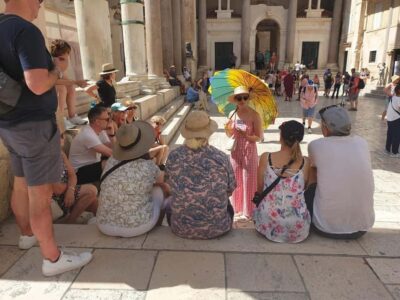

Split History and Gastro Small-Group Tour with Food and Drinks
Read our review →
Local History and Culture 90-Minute Walking Tour
Read our review →
Private History Split Walking Tour in English
Read our review →
Historical & Gastro Treasures Tour with Green Market
Read our review →
Walking tour of Split with a ‘Magister’ of History
Read our review →Browse the lists this tour appears in