
Reviewed · HISTORICAL TOURS
Private History and Trivia Walking Tour by a Local Guide
Split’s palace secrets in 105 minutes. This private history and trivia walking tour is a fast, foot-powered way to see the core of old Split with a local guide telling you what you’re actually looking at, from Diocletian’s walls to the city’s changing religious use. I love that it takes you into Diocletian’s Palace substructures on foot, in places bigger tour buses simply can’t reach as well.
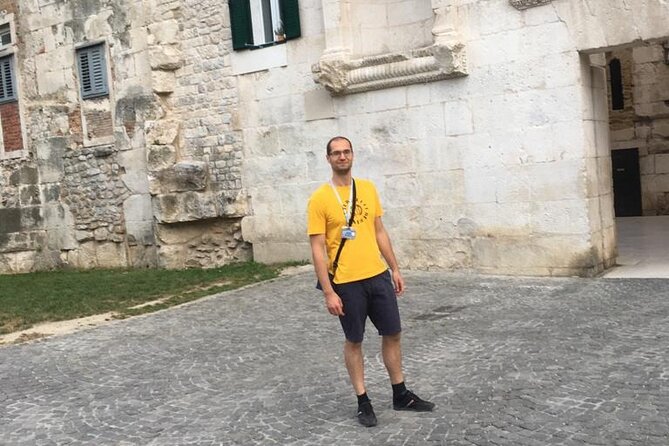
What I like even more is the human touch. Your guide, often Ivan (he’s known for being fun, friendly, and quick to answer questions with detail), keeps the stories light but still sharp, and that makes the history stick. The format is also built for real life travel, 1 hour 45 minutes of walking that helps you spot what you want to return to later.
The main drawback is the pace. With so many stops, each one is brief, so if you want to linger at every corner, you may feel rushed. Still, if you’re here for a day or you just want to get your bearings fast, this tour does that job well.
In This Review
- Key things I found most useful
- A Small Private Tour That Fits a Packed Split Morning
- From Riva Harbor Into the Southern Walls of Diocletian’s Palace
- Bronze Gate Substructures, Where the Palace Was Built to Function
- Peristyle Square, the Palace’s Central Stage
- Cathedral of Saint Domnius: Mausoleum to Church
- Temple of Jupiter Recast as a Baptistery
- Fruit’s Square and the Tightest Street Moments
- Narodni trg: Split’s Main Square and the Noble Palaces
- Zeljezna Vrata and the Iron Gate Story
- Papalic Palace and the City Museum of Split
- Golden Gate and Grgur Ninski: Roman Craft Meets Croatian Identity
- Bell Tower of St. Arnir and Early Christian Remnants
- Marmontova Ulica Finish: Theater Views and a Church Landmark
- Price and Value: Why $53.95 Can Make Sense
- Who This Tour Suits Best in Split
- Should You Book This Private History and Trivia Tour?
- FAQ
- How long is the Private History and Trivia Walking Tour in Split?
- Where does the tour start, and does it end nearby?
- What is included in the tour price?
- Is the entrance fee included for the sites on the itinerary?
- What size is the group?
- What is the cancellation policy?
Key things I found most useful
- Small, private group feel: It’s private, with a maximum of 15 people, so you get personal explanations instead of a lecture vibe.
- Walking access beyond big-bus routes: You’ll move through tight streets and palace entrances that don’t fit the usual sightseeing bus rhythm.
- Diocletian’s palace, explained in order: You see the harbor, palace gates, peristyle square, and key religious conversions as one story.
- Religious reuse, from mausoleum to cathedral: You’ll connect Diocletian’s original complex to later Christian adaptations you can still see.
- Local trivia that helps you explore after: The tour ends with viewpoints and city context, which makes your next hours around Split easier.
A Small Private Tour That Fits a Packed Split Morning
This is a private walking tour designed for time-tight days. The total duration is about 1 hour 45 minutes, and the schedule runs Monday through Friday within a set daytime window, which makes it a good plan if you like using mornings for heavy sightseeing.
Because it’s private and capped at 15, you don’t get stuck behind people who aren’t listening. You also get a guide who can respond to your questions as you walk, which matters in a city where the walls, gates, and reused buildings can look confusing if nobody tells you what to notice.
If you’re traveling solo, as a couple, or with kids, this format can work well. Families have been able to do it, and the guide’s style has shown up as kid-friendly in real situations, which usually comes down to pacing and plain explanations.
From Riva Harbor Into the Southern Walls of Diocletian’s Palace
You meet at Obala Hrvatskog narodnog preporoda 22, right by the harbor promenade. The opening stop is a payoff right away: you look at the southern wall of Diocletian’s Palace, the Split harbor, and the promenades along both sides.
I like this start because it helps your brain map the geography before you step inside. Once you know where the palace mass sits relative to the water, the rest of the walk makes more sense.
Also, you don’t spend time hunting for where to begin. The meeting point is straightforward and sits in the busy waterfront area, so you can match it to your plans for the rest of the day.
Two thousand years, one afternoon
Bronze Gate Substructures, Where the Palace Was Built to Function
Next comes the part that often makes this tour worth it: entering the Diocletian Palace substructures through the southern entrance known as the Bronze Gate. The guide walks you through what these spaces did through different periods, and that gives you a sense of the palace as a living machine, not just a postcard.
The big value here is context. Many people see stone corridors and think it’s only decorative, but once you understand how these areas were used and repurposed over time, the details feel less random.
The tour descriptions show that the entrance and stops are managed efficiently. Each segment is short, but that matters if you’re trying to keep your day moving without losing the core highlights.
Peristyle Square, the Palace’s Central Stage
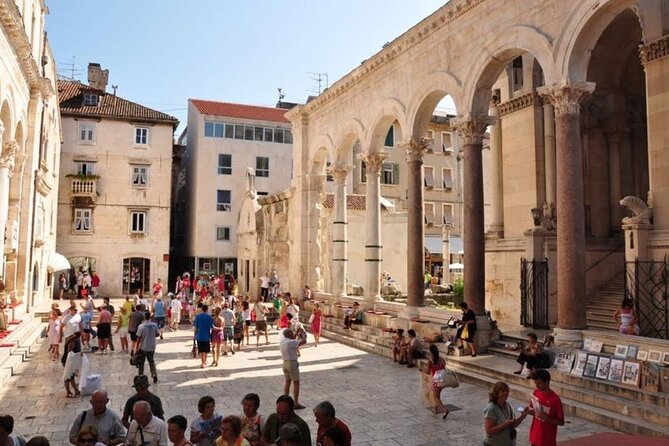
From there you head to the Peristyle, the central ancient square inside the palace. This is where the tour shifts from walking “around” the palace to standing in its heart, and that change in viewpoint makes the stories land better.
I like that the guide uses the square as a historical and cultural anchor. You’re not just learning dates, you’re learning why the layout mattered, and why people later continued to build and live around it.
If you’re the type who wants to take photos but also understand what you’re photographing, this stop is a good balance. You get time to look up at the surrounding structures, not only forward at the next bend in the street.
Cathedral of Saint Domnius: Mausoleum to Church
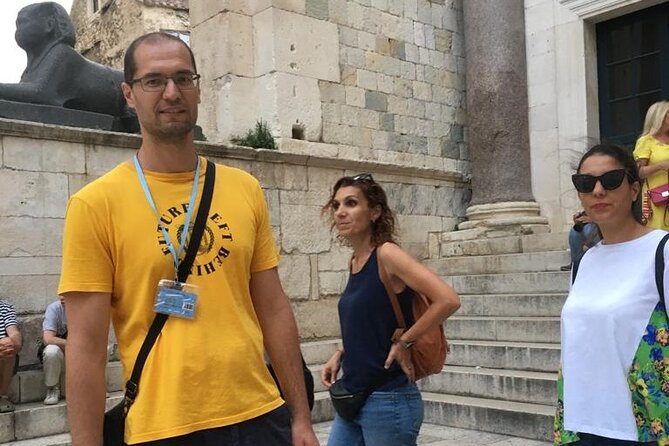
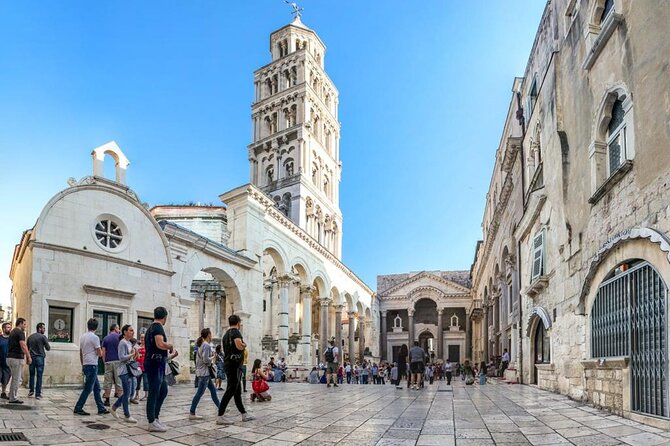
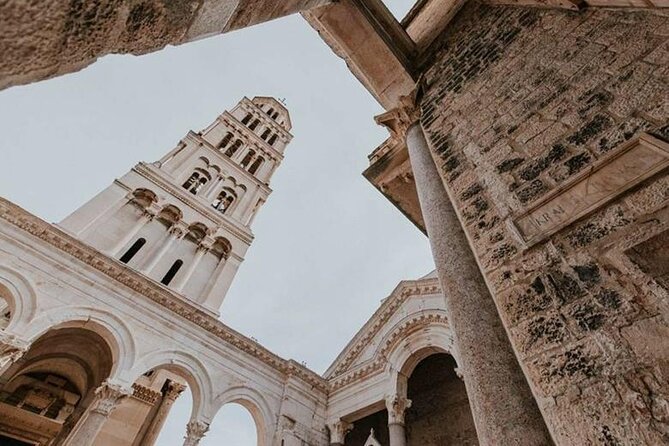
The tour then steps into the orbit of the Cathedral of Saint Domnius. The guide focuses on the original role of Diocletian’s mausoleum and how it became a cathedral, plus construction style clues you can spot when you’re standing nearby.
This is one of those Split moments where the city tells its story by reusing its own bones. If you notice how the palace building and the church building relate to each other, you’ll start reading the city more confidently later, even without a guide.
Time is tight here, so come ready with simple questions. If you wonder what changed during the conversion or what specific features signal different eras, you’ll likely get good answers while you’re there.
Temple of Jupiter Recast as a Baptistery
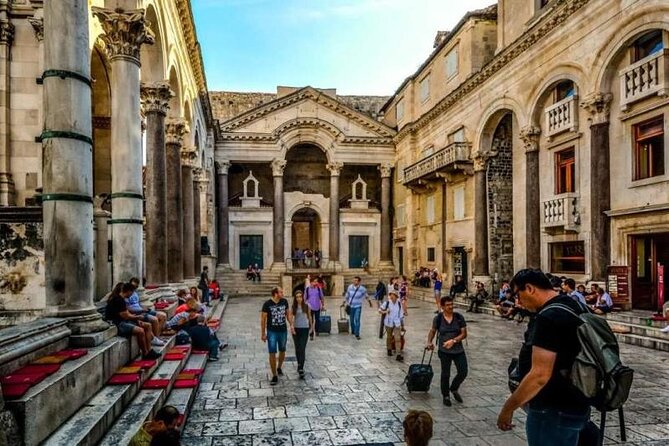
Right after the cathedral stop, you visit the Temple of Jupiter. The key theme is Christian spread within the palace walls, and how this temple was turned into a baptistery.
One practical way to enjoy this stop is to look for transformation cues rather than trying to memorize every detail. The guide helps you connect the dots so you don’t treat each building like a separate attraction.
In a short tour, this is the kind of stop that gives you the biggest payoff per minute, because it explains why the architecture you see today is not the same as what it once was.
Plenty more to do around Split
- Split: Old Town and Diocletian Palace Walking Tour★ 4.9 · 4,727 reviews
- Walking Tour of Split and Diocletian’s Palace★ 5.0 · 2,588 reviews
- Krka Waterfalls tour with Trogir Walking tour and Krka panoramic boat cruise★ 5.0 · 1,659 reviews
- Split & Diocletian’s Palace Walking Tour★ 5.0 · 1,125 reviews
Fruit’s Square and the Tightest Street Moments
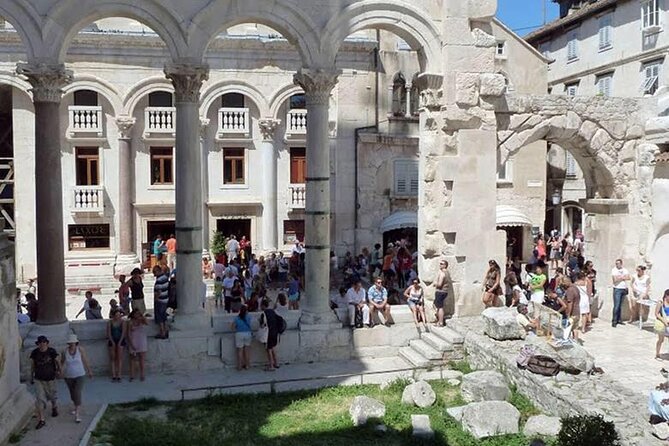
The walk then moves into the narrower streets toward Fruit’s Square, also called Trg Brace Radic. You also pass through the famed Pusti me Proć, a street that’s known for being one of the narrowest in Split.
I love moments like this because they feel real, not staged. You’re squeezing through the scale of the old town, and your body understands what maps can’t show.
At Fruit’s Square, the guide adds layers about Split’s development, including the gaps that existed at different points in time. You also see the statue of Marko Marulić, a father figure in Croatian literature, which adds a cultural anchor beyond the Roman story.
Narodni trg: Split’s Main Square and the Noble Palaces
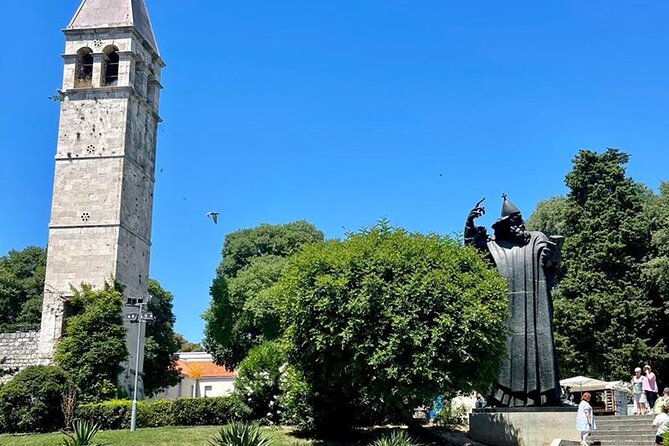
Next up is Narodni trg, Split’s main square. This is where the walking tour becomes a city lesson in public space, because squares explain power, commerce, and where people chose to gather.
The guide talks through the historical development of the square and how it became the central point as the town expanded. That’s useful because it helps you read the square as more than a place to pause.
You also pass a set of notable buildings along the edges of the square, including a recently renovated palace, old city hall, and palaces tied to noble families. Even if you don’t go inside anything, you’ll understand why these structures sit where they do and what they signaled in their time.
If you’re planning to return later for a longer lunch, this stop helps you choose your bearings. You’ll know which direction the square opens to and which streets radiate out from it.
Zeljezna Vrata and the Iron Gate Story
As you head eastward, the tour reaches Zeljezna Vrata, the western gate of Diocletian’s Palace, known as the iron gate. The guide explains its history and the kinds of activities that happened there.
Gates are often overlooked by people rushing through old cities. I like this stop because it reminds you that walls had daily life behind them. A gate is about movement, control, and the flow of people, not just defense.
As part of this stretch you also see palaces from wealthy families, including examples from the 17th century and earlier. These glimpses keep the walk from feeling purely Roman. Split is layered, and you’re seeing multiple layers as you move.
Papalic Palace and the City Museum of Split
Then you reach the City Museum of Split, located in the Papalic Palace. You get a quick, focused look at the building’s significance and a nod to a dramatic scene connected to the Game of Thrones setting in front of the palace.
Important note: this stop is short. The museum is more than a photo spot, but the tour’s goal is orientation and highlights, so you’re likely only getting a taste of what the museum can offer.
Still, it’s a smart stop for most travelers because it points you to a place you can revisit if you want deeper context later. If you’re choosing between a museum visit and another activity, you’ll at least know where the museum is and why it matters.
Golden Gate and Grgur Ninski: Roman Craft Meets Croatian Identity
The next highlight is the Golden Gate, described as the northern entrance and the most decorated entrance to Diocletian’s palace. This is one of those spots where the architecture is doing the storytelling, and the guide connects the design to Roman building skill.
Right after, you see the Grgur Ninski Statue, opposite the northern gate. This statue is by Croatian sculptor Ivan Meštrović, and the guide explains why Bishop Grgur of Nin matters.
I like this pairing because it shifts the tour from Roman engineering to Croatian cultural identity without losing the thread. It’s still about reuse, memory, and what a city chooses to honor in public spaces.
Bell Tower of St. Arnir and Early Christian Remnants
Near the Grgur Ninski statue is the Bell Tower of Saint Arnir, along with the chapel of Saint Arnir and remnants of an early Christian church. The guide shares key words about the site, keeping it relevant to what you’ve seen so far.
This is a great stop if you enjoy details, but you’ll also be fine if you don’t. The guide’s role here is to help you see how earlier Christian worship layers onto older Roman structures.
Because it’s brief, I’d use this stop to scan and ask one or two focused questions, like what changed first and what cues you should notice when you’re back outside.
Marmontova Ulica Finish: Theater Views and a Church Landmark
The tour ends on Marmontova Ulica, walking up to the viewpoint above the Croatian National Theater and near the Monastery and Church of Our Lady of Health. This final stretch gives you a larger view of how Split sits and how the old core connects to the more modern city.
It also keeps the walk from being only inward. After palace stones and narrow streets, it’s refreshing to step into a perspective where you can see what the city looks like from a little higher up.
The guide also covers historical aspects tied to this area, including a short-lived period, so you leave with a sense that Split keeps changing even when the big stones stay put.
Price and Value: Why $53.95 Can Make Sense
At $53.95 per person, this tour can be excellent value if you care about historical context and want a guide’s explanations instead of just reading plaques.
Here’s what you’re paying for, in practical terms. You’re getting a private local guide, a route that hits major Diocletian-era landmarks and major town squares, and a walking pace designed for highlights within about 1 hour 45 minutes.
Admission for the stops listed is free as described in the itinerary items, which is helpful when you’re budgeting. Also, the tour includes a mobile ticket, which is a small but real travel convenience.
The guide languages included are English, French, German, Spanish, and Italian. That matters if you want to ask questions in your own language, or if your group has mixed preferences.
If you’re the kind of traveler who likes to return later to sites with sharper focus, this is a smart use of money. A short orientation tour often saves time because you’ll know which areas you actually want to spend your limited hours on.
Who This Tour Suits Best in Split
This tour is ideal if you:
- Have limited time and want the Diocletian Palace story in a clear walking sequence
- Like local insights and question-friendly guiding
- Want a practical plan you can build on later, especially if you plan to keep exploring on your own
It’s also a decent choice for families, based on how Ivan has handled kids during past tours. For older teens, it works well too because the city’s layer-cake of religion, politics, and architecture is easy to connect once someone explains what you’re looking at.
If you hate walking, or if you want to spend long minutes inside museums and churches without time pressure, you might find the short stop lengths limiting. This tour is built for overview and interpretation, not for slow sightseeing.
Should You Book This Private History and Trivia Tour?
If you want Split’s highlights with explanations that help you understand what you’re seeing, book it. The guide approach, including the way Ivan answers questions and keeps the tone friendly and humorous, is a strong match for travelers who learn best by asking as they go.
I’d especially recommend it if you’re seeing Split for the first time or you’re only staying briefly. You’ll leave with the palace layout in your head, a sense of the city’s main squares, and a short list of places you’ll want to return to with more time.
If you’re already a palace-history expert and you want deep, museum-level study, this may feel too fast. But for most people, it’s a solid, efficient way to understand Split’s layered identity in less than two hours.
FAQ
How long is the Private History and Trivia Walking Tour in Split?
It lasts about 1 hour 45 minutes.
Where does the tour start, and does it end nearby?
The tour starts at Obala Hrvatskog narodnog preporoda 22, 21000 Split, Croatia. It ends back at the same meeting point.
What is included in the tour price?
The tour includes a local licensed guide speaking English, French, German, Spanish, and Italian, and the tour uses a mobile ticket.
Is the entrance fee included for the sites on the itinerary?
The listed admission items for the stops show as free.
What size is the group?
It is private, with a maximum of 15 persons, and only your group participates.
What is the cancellation policy?
Free cancellation is available. You can cancel up to 24 hours in advance for a full refund. If you cancel less than 24 hours before the start time, the amount paid is not refunded.
Recently added around Split
- Private VIP Brac and Hvar Day Trip from Split
★ 5.0 · 1 review - Private Transfer From or To the Split Airport
★ 5.0 · 1 review - Brač Half Day Beach Party Transfer to Olife Beach Club
★ 5.0 · 1 review - Private Transfer from Split to Zagreb, Hotel-to-hotel, English-speaking driver
★ 5.0 · 1 review - Airport transfers
★ 5.0 · 1 review - Private ”Game of Thrones” Walking Tour in Split (entrance tickets included)
★ 5.0 · 1 review
Historical Tours, compared.

Walking Tour of Split with a ‘Magister’ of History
Read our review →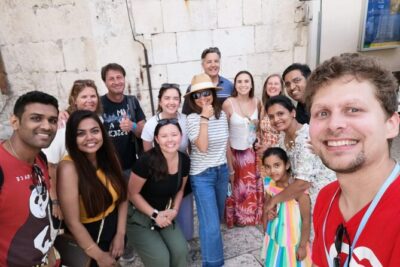
Split Walking Tour with Professor of History
Read our review →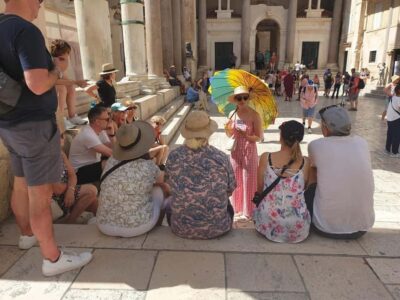
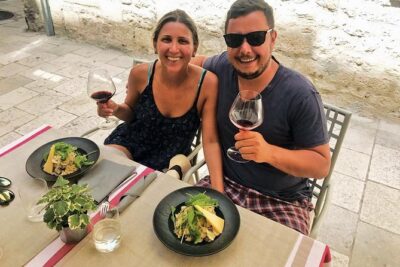
Split History and Gastro Small-Group Tour with Food and Drinks
Read our review →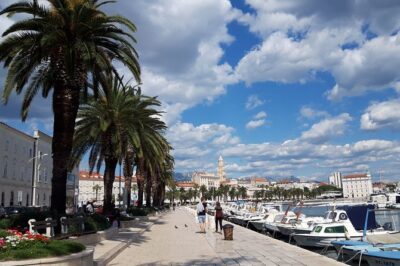
PREMIUM Emperor’s Walking Tour for History Lovers + Museum
Read our review →
Local History and Culture 90-Minute Walking Tour
Read our review →
Private History Split Walking Tour in English
Read our review →
Historical & Gastro Treasures Tour with Green Market
Read our review →Browse the lists this tour appears in