
Reviewed · HISTORICAL TOURS
Private History tour – small group
Split tells its story in stone. On this Private History walk, I like how you get the main sights of Split Old Town in a tight route, plus clear explanations from Ivan Fistanić, who has a Master’s Degree in History. The big plus for me is the pacing, short stops you can actually absorb without feeling rushed. One thing to consider: it is about 1.5 to 2 hours and you stay outside at key buildings, so if you want lots of indoor time, you’ll need to plan something else.
This is also built for real sightseeing, not just postcard stops. You start at a central meeting point on Ul. kralja Tomislava 15, and you’ll use a mobile ticket with a group that stays small (up to 10), which makes it easier to ask questions. I’d say the tour is strongest when you are curious about how Roman power became later Christian and medieval life.
The only real drawback is planning your schedule around your entrance needs. Some stops are marked as free, but St. Domnius Cathedral and the Temple of Jupiter do not include admission, so double-check your expectations before you go. Also, the tour depends on good weather.
In This Review
- Key things to know before you go
- A history route that makes Diocletian’s Palace make sense
- Golden Gate to Peristyle: reading Roman Split like a map
- St. Domnius Cathedral area: Roman survival and Christian continuity
- Temple of Jupiter, the vestibule, and why reuse matters
- From Riva Harbor to Fruit’s Square and Pjaca: city life outside the palace walls
- Grgur Ninski and the toe-rub moment you will understand
- Price and value: $238.28 per group, what you really get
- Who should book this Private History tour of Split
- FAQ
- How long is the Private History tour in Split?
- What is the group size and is it private?
- Where do we meet for the tour?
- Is there a mobile ticket?
- Are admission tickets included for all stops?
- Is the Cathedral of Saint Domnius visited inside?
- What happens if weather is poor?
- Should you book this tour?
Key things to know before you go
- Small group size (up to 10) keeps the route interactive and question-friendly
- Master’s-level history storytelling from guide Ivan Fistanić makes the details click
- Mostly outside viewing, with key stops explained on-site rather than long indoor visits
- Diocletian’s Palace focus with Roman gates, imperial spaces, and later Christian reuse
- Central start at Ul. kralja Tomislava 15, so you can meet up easily
- Some admissions not included, especially for St. Domnius Cathedral and Temple of Jupiter
A history route that makes Diocletian’s Palace make sense
Split can feel like a maze until someone connects the dots for you. That is exactly what this tour is good at. You move through Diocletian’s Palace and the streets right outside it, and the guide helps you see the place as one system, not a list of random monuments. The route is short enough to stay lively, but dense enough that by the end you understand what you are looking at.
What I like most is the guide approach. Ivan Fistanić has a Master’s Degree in History, and you can feel the structure in how he explains the sites, from Roman planning to later religious reuse. That matters because Split’s buildings were repurposed again and again, and without context, you can miss why certain entrances face certain streets or why squares feel like they grew around power.
You’ll also appreciate the group size. With a small group (up to 10), you are not stuck passively following a crowd. You can ask questions as you walk. If you like learning how cities evolve, this style of tour keeps you engaged.
Golden Gate to Peristyle: reading Roman Split like a map
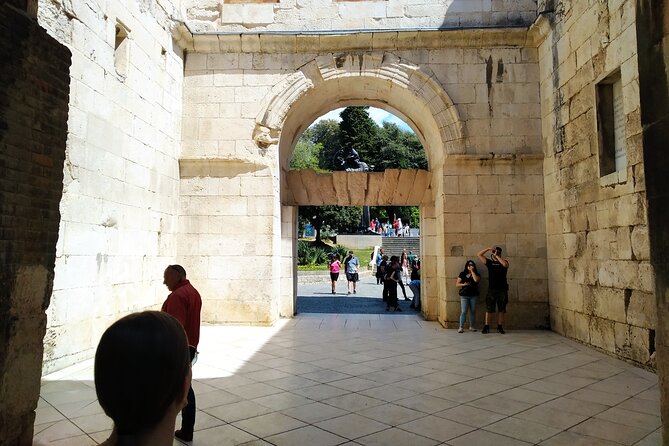
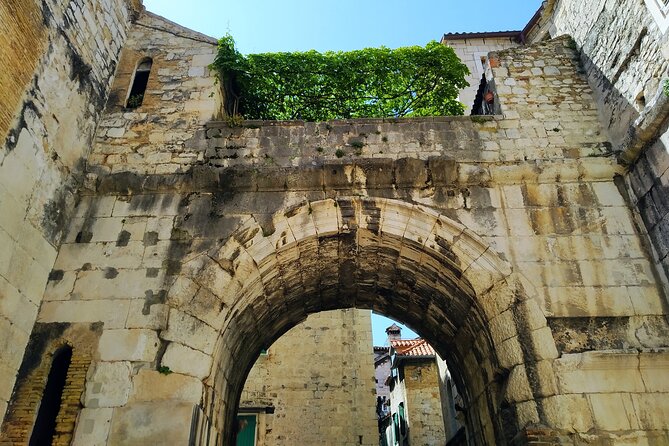
The tour starts at the Golden Gate, the main entrance to Diocletian’s Palace. This is one of the four major Roman gates, and it is set on the road heading north toward Salona, the capital of the Roman province of Dalmatia and Diocletian’s birthplace. Even if you only know the basics, this first stop gives you direction: it shows you how the palace was meant to connect to the wider Roman world.
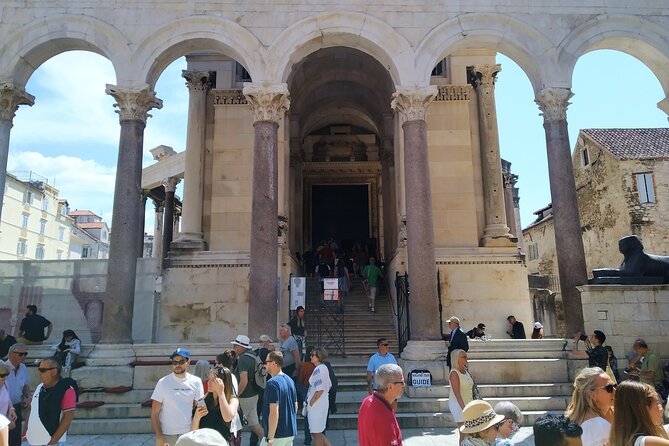
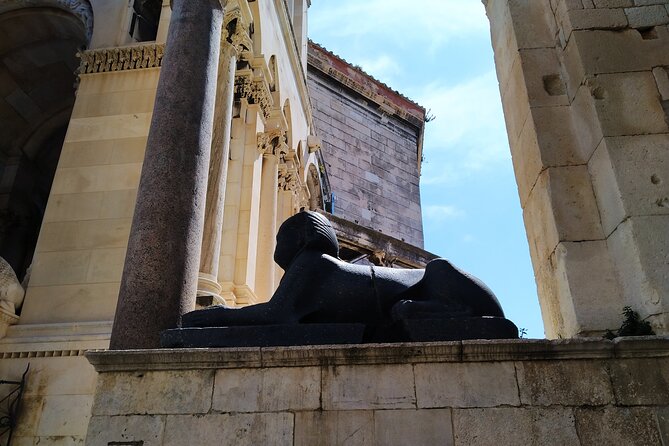
From there, you transition toward the center of the palace story at the Peristyle. The best part here is that you see the spatial logic of the palace. The Peristyle is the open central imperial square, framed by monumental arcades and oriented toward the imperial loggia. In plain terms, it is where power was displayed, where the palace felt like a public stage.
You also get the later shift in emphasis. The guide talks about how buildings and daily life changed as Christianity expanded, which helps you understand why later religious and civic life took root in Roman shells. The Peristyle stop is brief, but it is the kind of stop that makes photos more meaningful because you now know what you are looking at and why the space was built that way.
Two thousand years, one afternoon
St. Domnius Cathedral area: Roman survival and Christian continuity
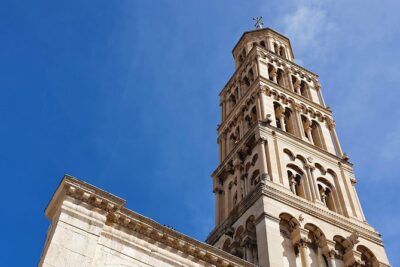
Standing in the Peristyle area, you cannot miss the Cathedral of Saint Domnius. This stop is set up for quick clarity rather than long sightseeing. You do not go inside, but you get an on-the-spot explanation of the significant parts and the stories behind them.
The value here is learning what to notice. Roman structures that survive into modern city life are rare, and St. Domnius is described as one of the best preserved Roman structures in Split that is still used today. By staying outside, the tour keeps momentum, and you get a clean overview of how Roman architecture was not just admired but kept functioning.
Practical tip for you: if you are the kind of traveler who likes to read buildings like clues, this is a strong moment to slow down mentally. Look at the building’s massing and the way it anchors the square. Even without entering, the guide’s framing helps you connect St. Domnius to the larger story of the palace complex.
Temple of Jupiter, the vestibule, and why reuse matters
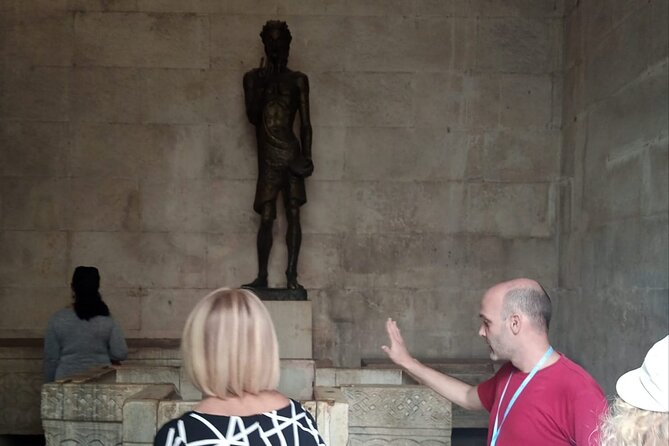
Next comes the Temple of Jupiter, one of the best-preserved late Roman temples. The location itself is part of the message. It was placed to signal the divine connection between Emperor Diocletian and Jupiter, with Jupiter as the sky and thunder figure and a king of the gods. You also hear how this same structure was later converted into a baptistery dedicated to St. John the Baptist.
This reuse is not just a fun fact. It is one of the keys to Split’s identity. You see how political power and later religious authority both used the same Roman prestige. The guide helps you connect the spiritual story to the physical architecture, so you understand what changes and what stayed.
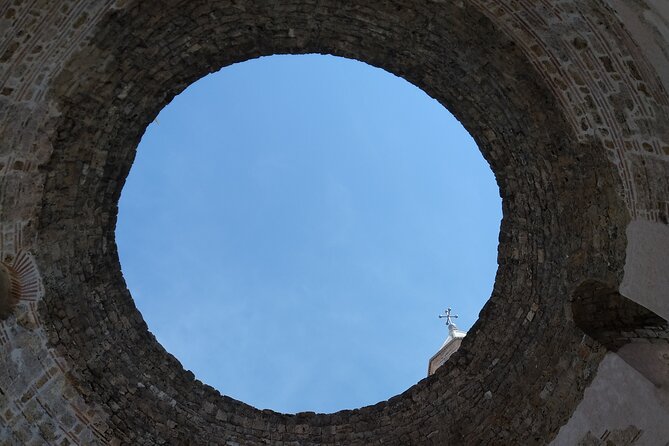
Then the tour moves to the Vestibulum of Diocletian’s Palace, the pre-entrance to the private chambers. This stop is brief, but it is a useful reset. It helps you picture the palace hierarchy, from public-looking imperial spaces to more controlled private areas. The tour also points you toward the Triclinium, the dining space area, so you get a sense of how living and hosting likely worked within the palace walls.
One practical consideration: the Temple of Jupiter admission is not included, so if you want to enter, plan for that in advance. If you are happy with outside context and explanation, you can still get a lot from this stop.
From Riva Harbor to Fruit’s Square and Pjaca: city life outside the palace walls
After the palace core, the tour shifts to the city’s rhythm with Riva Harbor. This is the central promenade and a meeting point for locals and visitors. The guide explains how Riva was built over centuries and why it became so important for everyday life. You also get a clean view of the southern wall of Diocletian’s Palace from here, which is a nice way to “see the palace from the outside” after learning it from within.
This is a smart pacing choice. It stops the tour from feeling like an architectural museum. You get to connect Roman engineering to modern street life, where the same geography still guides how people move and gather.
Then you head to Fruit’s Square (Trg Brace Radic), just outside the emperor’s palace. This square is picturesque for a reason: it holds remains of a 15th century Venetian fort, which adds another layer to Split’s timeline. The guide points out the main monument in the middle and helps you read how the fort and surrounding sights relate to the older palace zone.
Finally, there is Pjaca, the city’s main square since medieval times, in front of the old Town Hall and just outside the western wall of the palace. You see 14th-century civic architecture and hear why this square matters historically. Even if you only spend a short time here, it can change how you understand Split, because it shows how the palace gave rise to a living civic core.
Grgur Ninski and the toe-rub moment you will understand
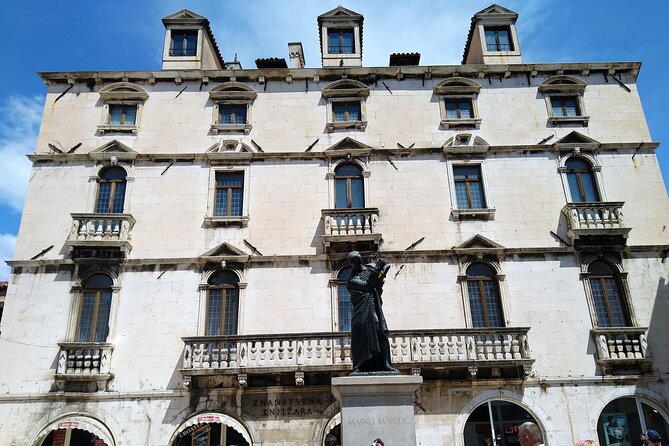
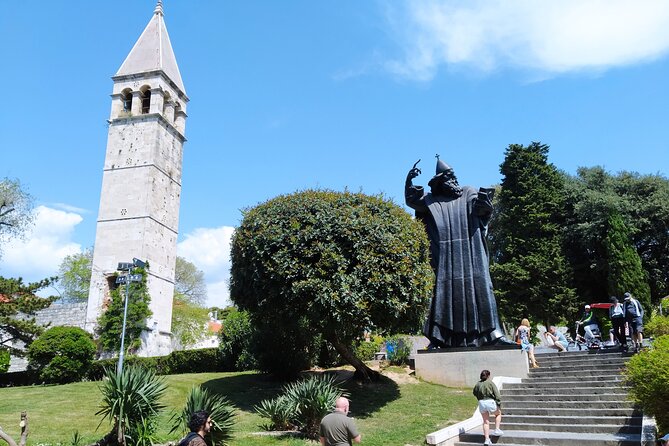
The tour ends with Grgur Ninski Statue, a dominant landmark in Split. This stop is designed to land the story of identity. You hear who Gregory of Nin was, and you get facts about the monument dedicated to him, including the sculptor, Ivan Meštrović.
There is also the classic toe-rubbing tradition for good luck. You will hear about it directly here, and knowing the person and monument context makes the gesture feel less like a gimmick. It becomes a symbolic way locals and visitors connect to the city’s cultural memory.
This final stop also gives you a quick mental checklist. After the Roman gate, imperial square, cathedral, Jupiter temple, and public squares, Gregory of Nin helps you feel the transition from Roman authority to later religious and cultural identity in Split.
Plenty more to do around Split
- SPLIT-PRIVATE Walking Tour of Diocletian’s Palace & Old Town★ 5.0 · 467 reviews
- Private Krka Waterfalls tour with 30min Boat Cruse★ 4.0 · 458 reviews
- Split by Private Electric Rickshaw – Palace & Hidden Gems★ 5.0 · 412 reviews
- Private Blue cave, Mamma Mia and Hvar, 5 islands tour from Split★ 5.0 · 387 reviews
Price and value: $238.28 per group, what you really get
The cost is listed as $238.28 per group, up to 10 people. That price structure often works in your favor compared to per-person tours, especially if you have a small group of friends or family who want a private-style experience.
Here is the value logic I’d use when deciding:
- If you are traveling solo or as a couple, you might want to compare against per-person tours, since your cost per person rises if the group is small.
- If you are traveling with 4 to 6 people, the price becomes easier to justify because you are effectively buying a focused guided route, not paying for a large bus tour experience.
- You get mobile ticket entry, a central meeting point, and a guide with advanced history training, which is exactly what you want when the sites are complex and reused over centuries.
In plain terms, this is for travelers who want clarity fast, without spending half the day on logistics. You get a lot of major markers of Split in about 1.5 to 2 hours, with explanations that help you recognize what matters.
Who should book this Private History tour of Split
I think this works best for you if:
- You want a guided walking route that connects Roman and later eras without getting lost
- You like asking questions and having someone tailor explanations in real time
- You want to see Diocletian’s Palace highlights plus the surrounding squares and promenade
I would pass or pair it with other plans if:
- You need long indoor visits and multiple ticketed entries
- You are only in Split for a short time and need a strictly hands-on, interior-heavy itinerary
Weather matters too. The experience requires good weather, so have a backup mindset if clouds or rain show up.
FAQ
How long is the Private History tour in Split?
The tour runs about 1 hour 30 minutes to 2 hours.
What is the group size and is it private?
It is a private tour, and only your group participates. The group can be up to 10 people.
Where do we meet for the tour?
The meeting point is Ul. kralja Tomislava 15, 21000, Split, Croatia.
Is there a mobile ticket?
Yes, the tour includes a mobile ticket.
Are admission tickets included for all stops?
Some stops are listed as free, while admission tickets are not included for the Cathedral of Saint Domnius and the Temple of Jupiter.
Is the Cathedral of Saint Domnius visited inside?
No, the tour does not enter inside. You will learn about it from outside.
What happens if weather is poor?
This experience requires good weather. If it is canceled due to poor weather, you will be offered a different date or a full refund.
Should you book this tour?
Book it if you want your first look at Split Old Town to feel organized and meaningful. The route hits the palace gate, the Peristyle centerpiece, the cathedral area, the Jupiter temple and its later Christian reuse, plus the public squares and Riva Harbor. Most travelers struggle to connect all those layers on their own, but a structured guide like Ivan Fistanić makes it click fast.
Recently added around Split
- Private VIP Brac and Hvar Day Trip from Split
★ 5.0 · 1 review - Private Transfer From or To the Split Airport
★ 5.0 · 1 review - Brač Half Day Beach Party Transfer to Olife Beach Club
★ 5.0 · 1 review - Private Transfer from Split to Zagreb, Hotel-to-hotel, English-speaking driver
★ 5.0 · 1 review - Airport transfers
★ 5.0 · 1 review - Private ”Game of Thrones” Walking Tour in Split (entrance tickets included)
★ 5.0 · 1 review
Historical Tours, compared.
Walking Tour of Split with a ‘Magister’ of History
Read our review →
Split Walking Tour with Professor of History
Read our review →
Split History and Gastro Small-Group Tour with Food and Drinks
Read our review →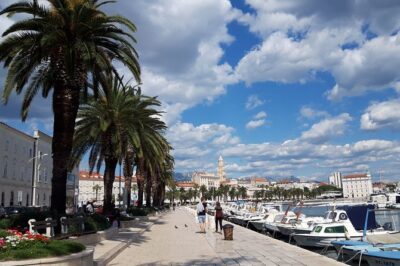
PREMIUM Emperor’s Walking Tour for History Lovers + Museum
Read our review →
Local History and Culture 90-Minute Walking Tour
Read our review →
Private History Split Walking Tour in English
Read our review →
Historical & Gastro Treasures Tour with Green Market
Read our review →Browse the lists this tour appears in