
Reviewed · HISTORICAL TOURS
Split Archaeological Cultural and Historical Guided Walking Tour
Split hits you fast, in stone and salt air. This guided stroll threads together the big sights of Diocletian’s Palace with the living waterfront Riva Harbor, and you get the kind of street-level storytelling that makes the UNESCO maze feel logical. My two favorite parts were the Peristyle moments inside the palace and the chance to hear how the vestibule’s acoustics shape the sound of Dalmatian klapa singing. One drawback to plan around: the tour runs on foot and depends on good weather, so rain can change the day.
I also liked how focused it is, yet not rushed-chaotic. It’s about 1 hour 30 minutes, capped at a maximum of 15 people, with a mobile ticket you can show as you go. Your starting point is the Golden Gate, then you finish near People’s Square, right where restaurants and the promenade pick up.
If you want a quick way to understand why Split works as a city, not just a set of ruins, this tour is a smart choice. You’ll walk through the palace’s key spaces, then step out to the places locals use every day, so the “then and now” connection lands quickly.
In This Review
- Key highlights worth looking for
- Entering Diocletian’s world from the Golden Gate
- Peristyle and Vestibulum: where Split’s palace still breathes
- The Temple of Jupiter, turned into a baptistery
- Diocletian’s basements corridor: architecture you feel with your feet
- Riva Harbor: the city’s living room
- Fruit Square and Pjaca: names, meaning, and shortcuts through the old center
- Why this tour feels like good value at $23.87
- Who this walk suits best (and when it might not)
- Booking decision: should you take it?
- FAQ
- How long is the Split Archaeological Cultural and Historical Guided Walking Tour?
- What does the tour cost?
- Where does the tour start and end?
- Is admission included for the stops inside Diocletian’s Palace?
- Do I need to print a ticket?
- What group size should I expect?
- Is good weather required?
- What is the cancellation policy?
- Are snacks included?
Key highlights worth looking for
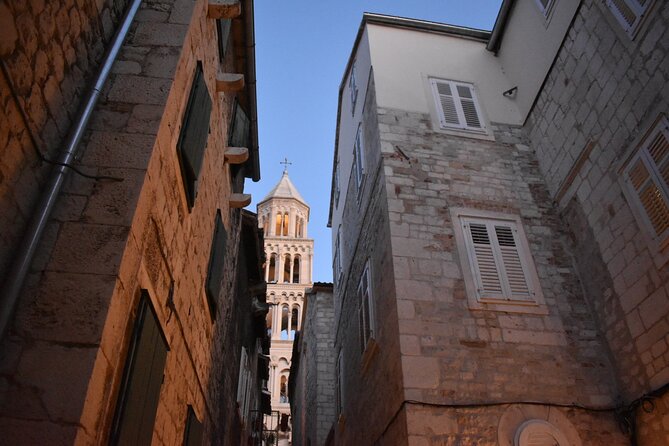
- Diocletian’s Palace orientation: Peristyle and Vestibulum landmarks that help you picture how the whole palace fit together
- Vestibule acoustics and klapa: a rare-feeling moment where sound becomes part of the architecture
- Temple of Jupiter stop: a pause that connects Roman sacred space to later use as a baptistery
- Palace basements corridor: architecture and scale you only really notice when you walk the route
- Riva Harbor as the city’s living room: waterfront views, coffee pace, and everyday energy
- Fruit Square and Pjaca: quick stops that add names, meaning, and context to the historic center
Entering Diocletian’s world from the Golden Gate
Split has a nickname that actually fits: it’s often called the flower of the Mediterranean. The reason is simple. You get a compact old center, intense history, and a harbor you can reach on foot without wrestling with transfers or long commutes. This tour leans into that advantage by guiding you from the palace edge into the heart of it, then finishing at the waterfront and main squares.
You meet at the Golden Gate on Dioklecijanova 7, in the old quarter. That matters because it starts you at a natural boundary between modern streets and the palace complex. If you like getting your bearings fast, this is the right kind of route. The end point is near the Iron Gates of Diocletian’s Palace, close to People’s Square, with the promenade (Riva) and the palace again nearby.
The guide for this experience is Sandra Hrabar, and the overall impression is that she brings serious effort to the job. Based on what I’ve learned from her approach in tours like this, you can expect stories tied to what you’re standing in front of, not a list of dates dumped over your head. The route is short, so she’s likely to keep things crisp, but the goal is understanding, not speed-running.
Peristyle and Vestibulum: where Split’s palace still breathes
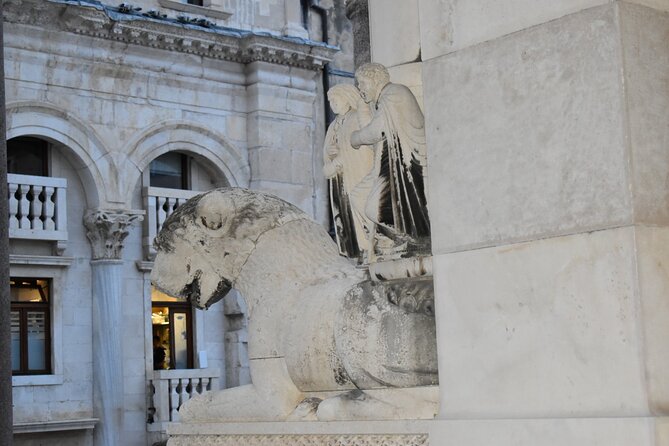
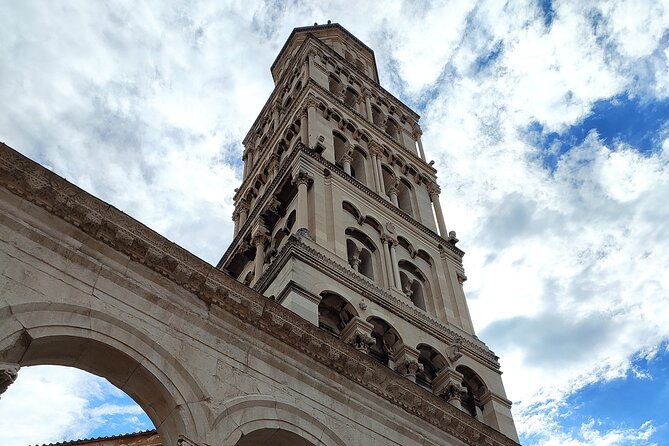
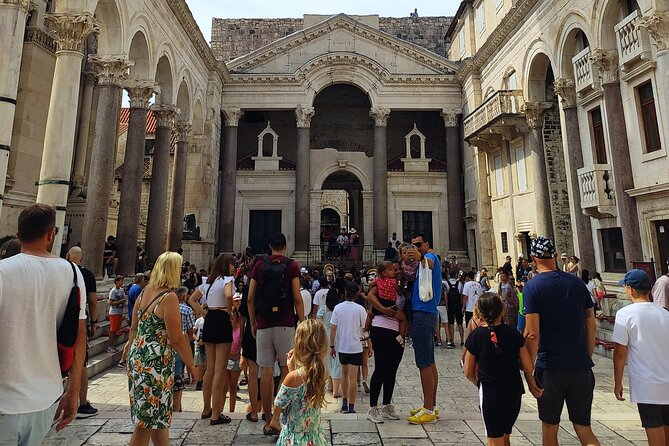
The first big stop is the Peristyle of Diocletian’s Palace, in Pjaca. This is the central square of the Roman palace. Today, you’re looking at a space where the cathedral and vestibule sit, so it’s both a landmark and a living, everyday focal point.
I love this stop because it does a practical job for you. When you see the Peristyle early, you can mentally map the palace instead of feeling like you’re wandering inside a stone labyrinth. You also understand why Split feels different from other Roman remnants. It’s not fenced off as an exhibit. Parts of it function as a town center.
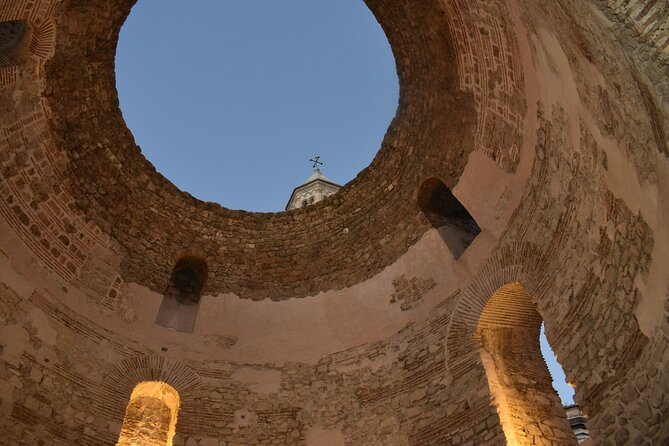
Next comes the Vestibulum of Diocletian’s Palace. This is where things get more than visual. The vestibule is known for its acoustics, and it’s set up so you can listen to Dalmatian a cappella singing, klapa. Even if you’ve heard klapa before, hearing it in the right architectural space changes the experience. The sound reflects and shapes itself, so you’re not just passively watching stone, you’re experiencing it.
A practical note: the vestibule stop is quick, around 10 minutes. So come ready to pause, look up, and let the sound do the talking. If you drift with your phone at arm’s length the whole time, you’ll miss the point of the acoustics moment.
Two thousand years, one afternoon
The Temple of Jupiter, turned into a baptistery
As you move through the palace, you pause at the Temple of Jupiter. This stop is short, about 5 minutes, but it’s the kind of moment that makes the whole palace story click. You’re looking at a site that started as a Roman temple, then later converted into a baptistery.
Why this matters: Split’s palace isn’t frozen in time. It shows how later communities reused monumental spaces instead of abandoning them. You get a clear example of how one building can serve different meanings across centuries. That’s the kind of transformation that makes a UNESCO site feel real, not ceremonial.
This is also a photo-friendly area, but the best value here is the explanation. If you’re the kind of traveler who wants to know what you’re seeing without needing to research afterward, this is one of the stops that rewards your attention.
Diocletian’s basements corridor: architecture you feel with your feet
You can’t really walk through Diocletian’s Palace without getting into the basements area, and the tour includes the main corridor of the palace basements. This part is all about scale and structure. From ground level, you see what looks impressive. From inside the palace’s lower spaces, you start understanding how the complex was engineered.
I like basement-corridor stops because they slow you down in a good way. You stop thinking only about the big squares and start noticing the rhythm of stonework, the sense of enclosed space, and the way corridors connect functions. It also helps you connect the palace’s role as a powerful Roman project with its later life inside a modern city.
The time spent here is limited, so don’t expect a long, detailed exploration. Think of it as a guided highlight that helps you orient yourself. If you come back later on your own, you’ll know where to look because you’ll have the mental map from this moment.
Riva Harbor: the city’s living room
After the palace interior and its key stops, you land at Riva Harbor. If you only know Split from photos, Riva can feel like a scene background. On foot, it’s more than that. The waterfront is described as the soul of the city, the place locals use as a meeting spot and hangout.
This is about daily life, not just monuments. The tour gives you around 15 minutes here, and that’s enough time to reset your eyes after the tight palace spaces. You can stroll the waterfront and get the rhythm of the city: coffee stops, people watching, and that easy Mediterranean pace where the harbor does the work for your atmosphere.
I also think this stop helps you understand the logic of Split. The palace sits above, but the harbor is where life flows. When you see both, the city stops feeling like a contradiction of old and new. It’s one system.
Fruit Square and Pjaca: names, meaning, and shortcuts through the old center
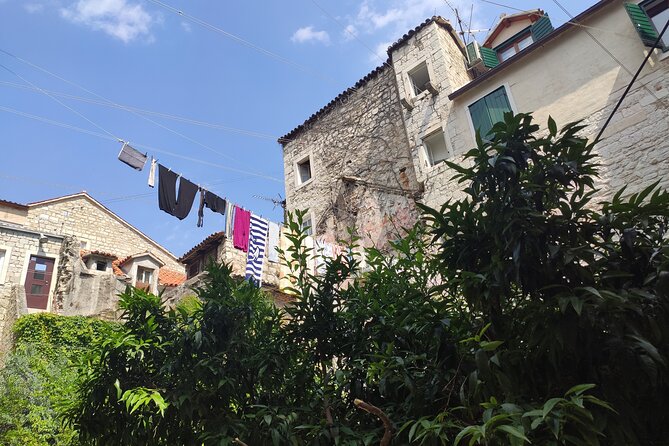
Two quick square stops round out the historic center: Fruit’s Square (Trg Brace Radic) and then Pjaca.
Fruit’s Square gets its name from its historical function as a place where fruits were once sold. That’s the kind of small detail that makes a city feel earned. You’re not just seeing a plaza, you’re seeing evidence of daily trade. It’s also an easy way to remember the area without memorizing street numbers.
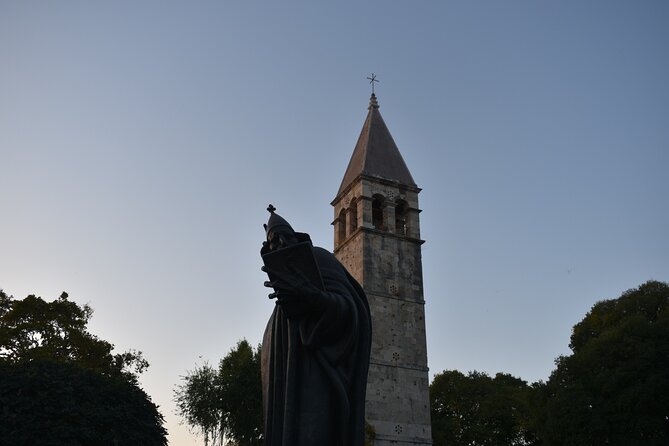
In the middle of the square is a statue of Marko Marulić, one of the most renowned Croatian writers. I like this addition because it adds national context to the Roman-and-Venetian layers. Split isn’t only a crossroads for empires. It also produces thinkers and writers, and that human layer is part of what you’re actually walking through.
Next is Pjaca, the main square in the historic part of the city near Diocletian’s Palace. This is the lively hub you’ll keep running into as you wander on your own afterward. You’ll find cafes, restaurants, and traditional shopping. The tour keeps the stop around 15 minutes, which is ideal. Enough time to absorb, not enough time to turn it into a shopping task.
Plenty more to do around Split
- Split: Old Town and Diocletian Palace Walking Tour★ 4.9 · 4,727 reviews
- Walking Tour of Split and Diocletian’s Palace★ 5.0 · 2,588 reviews
- Krka Waterfalls tour with Trogir Walking tour and Krka panoramic boat cruise★ 5.0 · 1,659 reviews
- Split & Diocletian’s Palace Walking Tour★ 5.0 · 1,125 reviews
Why this tour feels like good value at $23.87
Let’s talk money in a real way. At $23.87 per person, this is positioned as an affordable way to get a guided walkthrough of major palace spaces plus waterfront and squares. The stops you hit are not minor. You get Peristyle, Vestibulum, Temple of Jupiter, the basements corridor, Riva Harbor, Fruit’s Square with Marko Marulić, and Pjaca.
Also, admissions at the stops are free as part of the experience. That’s important for value. Some guided tours “include” entry in name only, then quietly charge you later. Here, the admission ticket is listed as free at the key stops, so you’re not left scrambling with cash right when you want to enjoy the moment.
Two other value signals: the group size is capped at 15, and you get a mobile ticket. Small groups mean you’re more likely to hear your guide and keep up without getting lost in a crowd. A mobile ticket means less friction at the start.
Time-wise, 1 hour 30 minutes is a sweet spot for first-timers. Long tours can turn into endurance tests. Too short and you miss the connection. This length gives you a coherent loop without draining your day.
Who this walk suits best (and when it might not)
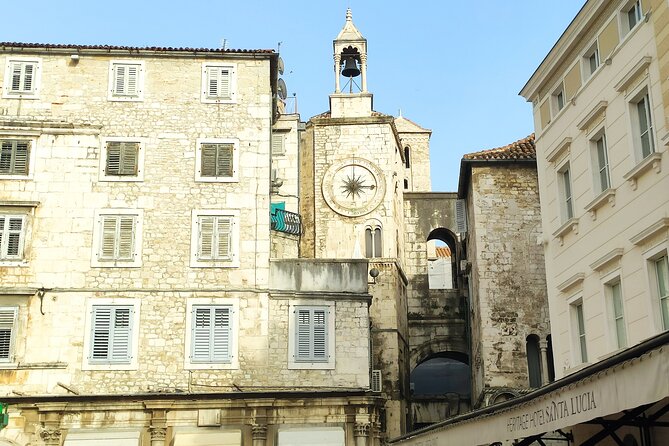
This tour fits best if you want orientation and storytelling more than deep research. You get a guided picture of how Diocletian’s Palace ties into daily Split life, with emphasis on specific spaces and what you can do and notice there. It’s also great if you’re traveling solo or as a couple, because the pace and group size keep it social but not exhausting.
It’s especially good for travelers who like concrete details. You won’t just hear that the palace matters. You’ll stand at Peristyle, hear why the Vestibulum is special for sound, pause for the Temple of Jupiter conversion to a baptistery, and walk the basements corridor to understand the palace’s internal logic.
The main reason you might reconsider is weather. The experience requires good weather, and it’s a walking tour, so rain or poor conditions can disrupt plans. Also, because the tour is 90 minutes, there’s a limit to how long you can linger at any one stop. If you plan to spend a lot of time in the palace on your own afterward, that’s actually a good thing, because this tour sets your priorities.
Booking decision: should you take it?
Yes, I think you should book this Split Archaeological Cultural and Historical Guided Walking Tour if you want a smart first pass through Diocletian’s Palace and the waterfront without spending your whole day in logistics. The small group size and the mix of palace stops plus Riva and squares make it efficient. And with Sandra Hrabar guiding, you’re set up for a high-quality experience, including clear, thoughtful explanations and genuine effort on the ground.
If you’re the type who needs long hours and unhurried wandering, you might feel it’s quick. If that’s you, treat this tour as the warm-up, then come back later for longer self-guided time in the palace spaces you liked most.
FAQ
How long is the Split Archaeological Cultural and Historical Guided Walking Tour?
The tour lasts about 1 hour 30 minutes.
What does the tour cost?
The price is $23.87 per person, with GST included.
Where does the tour start and end?
It starts at Golden Gate, Dioklecijanova 7, 21000, Split. It ends near the People’s Square area, close to the Iron Gates of Diocletian’s Palace, along with proximity to the palace and the Riva promenade.
Is admission included for the stops inside Diocletian’s Palace?
Admission ticket is listed as free for the listed stops.
Do I need to print a ticket?
No. The tour uses a mobile ticket.
What group size should I expect?
The tour has a maximum of 15 travelers.
Is good weather required?
Yes. The experience requires good weather. If it is canceled due to poor weather, you will be offered a different date or a full refund.
What is the cancellation policy?
You can cancel for free up to 24 hours in advance for a full refund.
Are snacks included?
No. Snacks are not included.
Recently added around Split
- Private VIP Brac and Hvar Day Trip from Split
★ 5.0 · 1 review - Private Transfer From or To the Split Airport
★ 5.0 · 1 review - Brač Half Day Beach Party Transfer to Olife Beach Club
★ 5.0 · 1 review - Private Transfer from Split to Zagreb, Hotel-to-hotel, English-speaking driver
★ 5.0 · 1 review - Airport transfers
★ 5.0 · 1 review - Private ”Game of Thrones” Walking Tour in Split (entrance tickets included)
★ 5.0 · 1 review
Historical Tours, compared.

Walking Tour of Split with a ‘Magister’ of History
Read our review →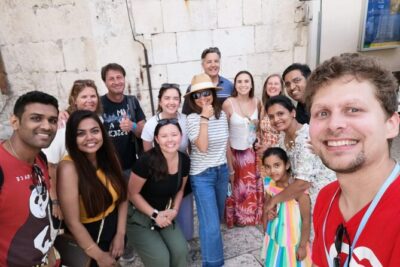
Split Walking Tour with Professor of History
Read our review →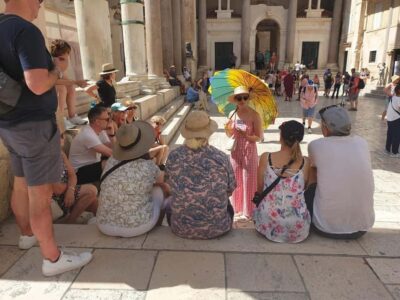
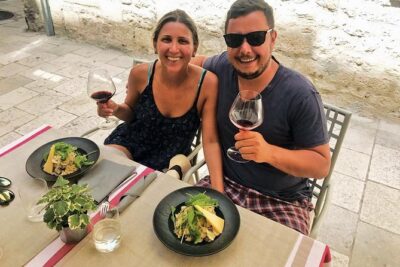
Split History and Gastro Small-Group Tour with Food and Drinks
Read our review →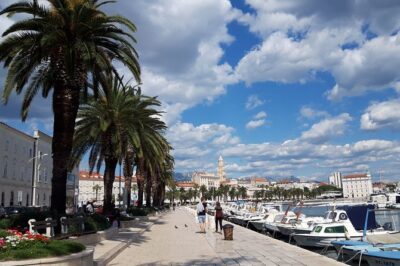
PREMIUM Emperor’s Walking Tour for History Lovers + Museum
Read our review →
Local History and Culture 90-Minute Walking Tour
Read our review →
Private History Split Walking Tour in English
Read our review →
Historical & Gastro Treasures Tour with Green Market
Read our review →Browse the lists this tour appears in