
Reviewed · HISTORICAL TOURS
Split History Walking Tour – Rome away from Rome (small group)
Split’s history hits fast, especially up close. This Split History Walking Tour is a tight 1.5-hour route through Diocletian’s Palace and the old town core, with clear storytelling and stops that explain how Roman power still shapes daily life. I really like the small-group feel and the way the guide connects buildings to how people lived, from palace waterfront to dining rooms. The only real drawback is the pace, since you cover a lot of terrain in a short time, so plan comfy shoes.
My second big plus is the guide factor. Anita, a local in Split, is the kind of guide who makes the English explanations easy to follow, and she keeps the timing smooth so you are not stuck listening for too long in one spot. I also appreciate the way the tour mixes major set pieces with “you almost miss this” moments, like the structure Robert Adam highlighted after his 18th-century visit.
Still, if you want lots of slow wandering or long interior visits, you might feel a bit rushed. One interior stop is available for an extra fee, so if you are set on going inside everything, budget a little extra time and money.
In This Review
- Key highlights you’ll care about
- A Small-Group Walk Through Split, Not Quite Rome
- Meeting Point, Timing, and Why 1.5 Hours Works
- Riva Harbor to Palace Cellars, Where the Waterfront Becomes “Home”
- Peristyle and the Roman Grid, Cardo and Decumanus Explained
- The “Almost Missed It” Roman Structure, With an Optional Extra Fee
- Vestibulum of Diocletian’s Palace, Acoustics and Klapa Culture
- Triklinij, an Emperor’s Dining Room Mindset
- Mausoleum to Cathedral, Plus the Golden Gate and Oldest Chapel
- Gregory of Nin and the Two Squares That Keep Changing
- What You Pay for, and Why the Licensed Guide Makes It Worth It
- Who This Tour Fits Best in Split
- Should You Book This Split History Walking Tour?
- FAQ
- How long is the Split History Walking Tour?
- What is the price per person?
- Is the tour offered in English?
- What group size should I expect?
- Where does the tour start and end?
- Are there any extra fees for interiors?
Key highlights you’ll care about
- Small group size (max 10) means you can actually hear your guide and ask questions.
- UNESCO-grade site focus on Diocletian’s Palace, including cellars, Peristyle, and the palace gates.
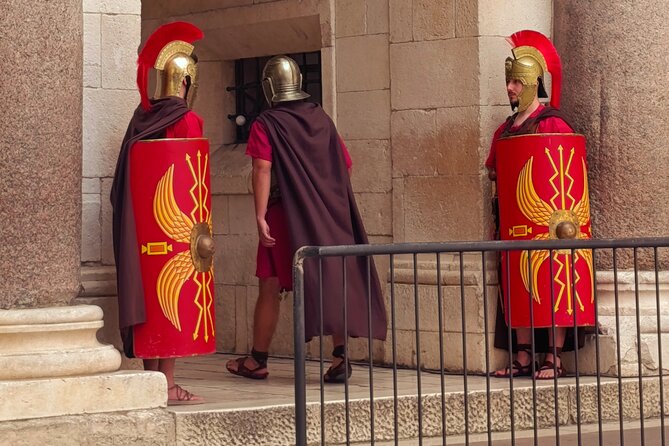
- Real storytelling, not just stone, tying Roman layout and court life to what you see today.
- Klapa singing connection at the Vestibulum, linking architecture to living Dalmatian culture.
- Photo-friendly moments like the Gregory of Nin statue and its famous golden toe ritual.
- Good value for the time at about $24.03 per person for a 1.5-hour walk.
A Small-Group Walk Through Split, Not Quite Rome
Split can feel like a “Rome in miniature” moment, and this walk leans into that idea by focusing on the bones of Diocletian’s Palace. You are not trying to do every museum in town. Instead, you get a guided route that explains how late antiquity buildings became streets, squares, churches, and everyday landmarks.
I like that the tour is designed to be compact. In roughly 1 hour 30 minutes, you hit the palace core and then step into the old town around it. That is a smart move if your days in Split are busy and you want the big context fast.
You also get a local, licensed guide who lives in Split. That matters, because you will hear not only what the structures are, but how locals understand them now.
Meeting Point, Timing, and Why 1.5 Hours Works
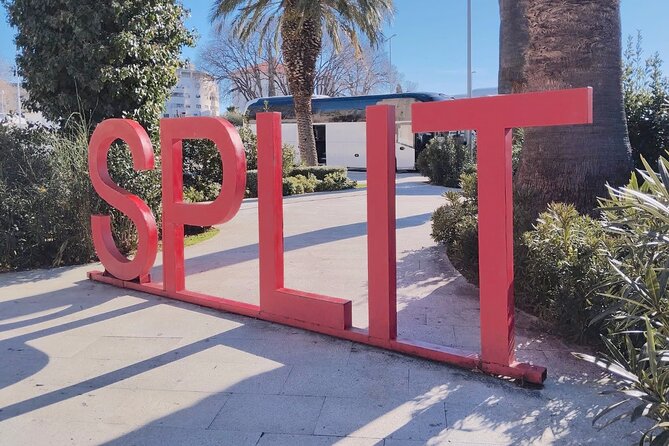
The tour starts at the Split sign in Grad, Split, and finishes at Trg Braće Radić, near Gelateria Voćni trg, so it does not trap you in a loop. It is a practical route choice for sightseeing, because you end in the old town area where you can keep walking on your own.
Timing is built around short stops. Expect short segments at each highlight, usually around 10 to 15 minutes. That can feel perfect if you like moving and getting context without sitting too long. It can feel demanding if you need a slow pace or frequent breaks.
The upside is the group size. With a maximum of 10 travelers, the guide can keep the flow tight and adjust if people are lagging or asking questions.
Two thousand years, one afternoon
Riva Harbor to Palace Cellars, Where the Waterfront Becomes “Home”
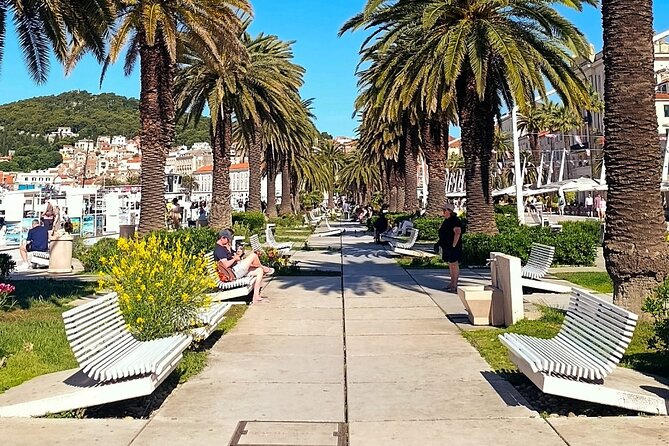
You start at the Riva Harbor promenade area and learn how the waterfront changed roles over time. The key idea is simple: what begins as palace waterfront in Roman times becomes the everyday living space locals use as a promenade. That sets up the whole tour, because it trains you to see buildings as systems of daily life, not just monuments.
Then you move into the palace substructures, known as the palace cellars. Even if you only explore the central part, the vaulted spaces give you the “how did they build this” feeling right away. This complex is considered the best preserved vaulted complex of the late antiquity in the whole world, and you can understand why once you are standing inside and looking up.
Practical tip: cellars and older stone areas can feel cooler than the street. If you are visiting in hot weather, you may find it a relief, and if you are visiting in shoulder season, you might still want a light layer.
Peristyle and the Roman Grid, Cardo and Decumanus Explained
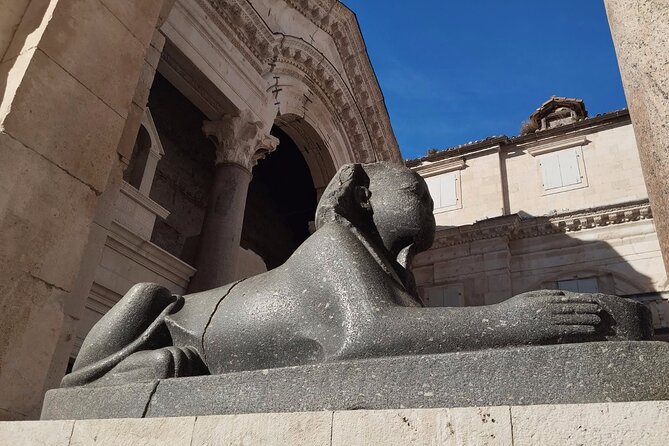
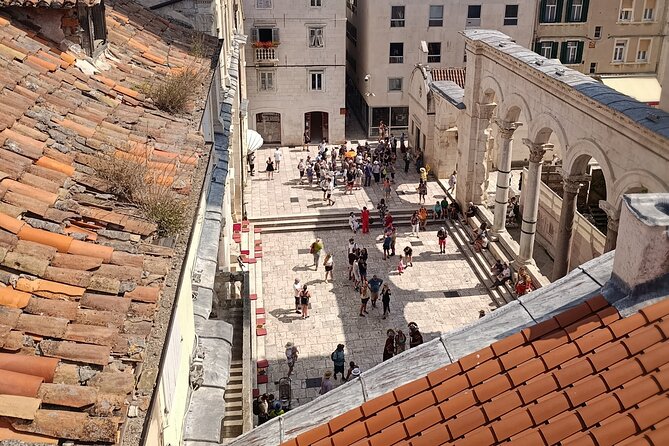
The Peristyle is the centerpiece square you see inside Diocletian’s Palace. You step into a space surrounded by columns, and the guide’s job is to help you picture how imperial worship and public rituals would have worked there.
This is also where the tour helps you read the palace like a map. You will hear about Cardo and Decumanus, the two main streets, and how they transformed through centuries with different architectural styles. Once you know that, the old-town streets stop feeling random. You start seeing routes, transitions, and layers.
This stop is worth the attention because it is where the tour’s “Rome away from Rome” theme becomes real. It is not just an object lesson. You can stand in the square and feel how the layout would have guided movement and attention.
The “Almost Missed It” Roman Structure, With an Optional Extra Fee
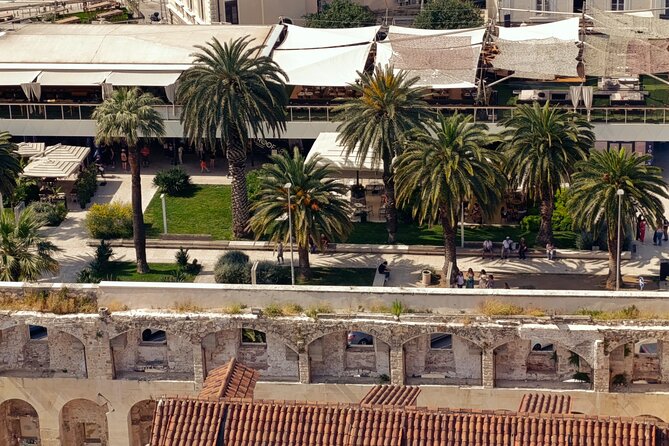
A few steps from the Peristyle, you will find a smaller antiquity tucked between houses. The effect is often immediate: you turn a corner and suddenly you are looking at something so cleanly placed and so intentionally designed that it feels out of scale with the surrounding modern streets.
You also get the connection to Robert Adam. He visited Split in the 18th century and placed this structure on his list of the most beautiful monuments in Europe. That detail gives you a helpful lens, because it is proof that people have been paying attention to these Roman leftovers for centuries, not just today.
There is an optional interior visit available for an additional fee. If you care about seeing the inside, you can plan around that. If you do not want extra cost, the exterior views still make sense and fit the tour’s overall pace.
Vestibulum of Diocletian’s Palace, Acoustics and Klapa Culture
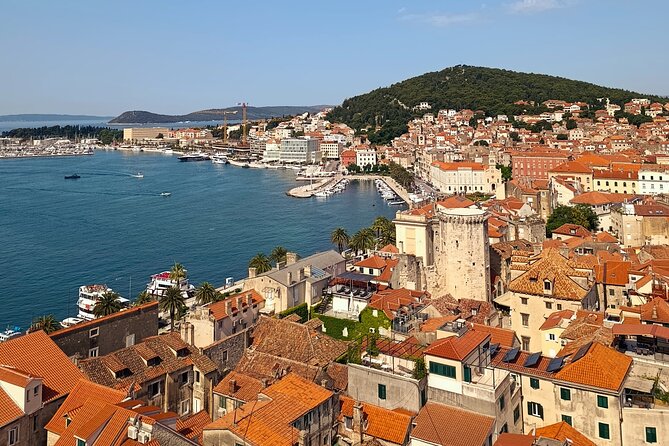
The Vestibulum is a circular building with open ceiling, and it is one of those stops where architecture does something practical. You are not just looking at a shape, you are hearing how it works. The guide explains the acoustics and how this space functioned as a lobby between directions, whether entering from the Peristyle side or the Cryptoporticus direction.
Then the culture connection lands. Because of the acoustics, this space is frequently used by klapa, Dalmatian a capella singing groups. Klapa singing is protected as a UNESCO world heritage style of cultural expression, so this stop is not only about Rome. It is about a living tradition that still uses old stone.
If you time your tour right, this is the kind of stop that can make a guide’s explanation click. Even without a performance, the acoustics story helps you understand why locals value the space beyond its age.
Plenty more to do around Split
- Split: Old Town and Diocletian Palace Walking Tour★ 4.9 · 4,727 reviews
- Walking Tour of Split and Diocletian’s Palace★ 5.0 · 2,588 reviews
- Krka Waterfalls tour with Trogir Walking tour and Krka panoramic boat cruise★ 5.0 · 1,659 reviews
- Split & Diocletian’s Palace Walking Tour★ 5.0 · 1,125 reviews
Triklinij, an Emperor’s Dining Room Mindset
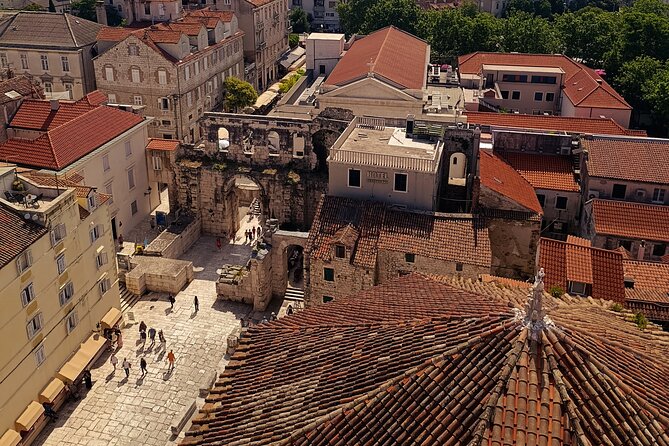
Next you step into what is left of the Triklinij, the dining room space. The guide walks you through how roman-style dining worked and what people ate, so you can move from “this is a room” to “this is a ritual.”
You also get the practical angle on movement and timing. You will hear an explanation about how often people visited the vomitorium, which helps make a famous phrase feel less abstract. It is not just wordplay. It links the building layout to social habits and the flow of large gatherings.
This is a good stop for food lovers and culture nerds. Even if you are not a classicist, the guide’s approach makes the space feel human.
Mausoleum to Cathedral, Plus the Golden Gate and Oldest Chapel
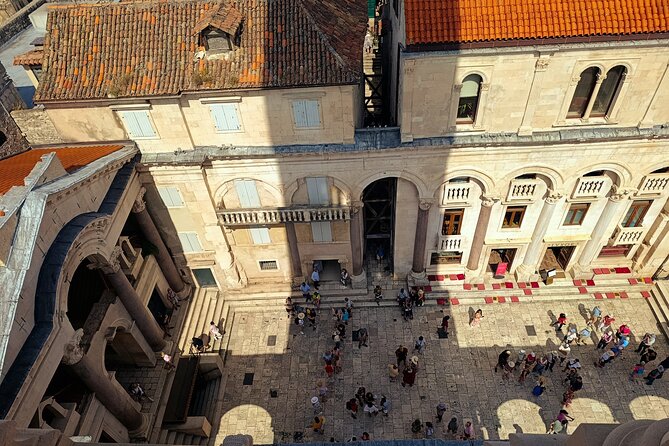
The tour then shifts from residential power to religious transformation. You learn how Diocletian’s Mausoleum became an impressive cathedral, and you also hear about its bell tower as one of the elegant landmarks on the Dalmatian coast. This is one of the most important “layers” in the whole route, because it shows how a political structure was repurposed for spiritual life.
Then you reach the Golden Gate. You step into a perspective that reminds you this was not only a palace, it was also a military camp. The guide helps you see why entering was not easy and how the monumental gates and fortification elements fit that goal.
You also get two extra details here. First, you will see the best preserved wall of the palace. Second, you will discover where the oldest chapel in Split is hidden. Even if you do not go inside, that kind of pinpointing helps you notice details you would otherwise miss.
Gregory of Nin and the Two Squares That Keep Changing
After the palace structures, you land in the old town energy at a human scale. The Gregory of Nin statue is next, and yes, it is great for photos. But the real value is the story and the details behind it.
You learn that the sculptor is Ivan Meštrović, widely regarded as one of the best sculptors in the world. Then comes the local ritual: there is a legend that your wish will come true if you touch his golden toe. If you are trying to take a clean photo, you might need to time it. If you are willing to lean into the tradition, it is a fun moment that makes the guide’s talk memorable.
The tour finishes with town squares that show how Split’s identity kept shifting. Narodni Trg, today the main square of the old town, changed its name several times through history, and the guide explains what those layers reflect.
Then you move to Fruit’s Square (Trg Brace Radic), where you see a striking baroque style example. You also get the Venetian protection angle, how Split was guarded against attacks from the Ottoman empire, and the role of Marko Marulić, often called the father of Croatian literature. That last part is a nice reminder that Split is not only Roman. It also became a crossroads in later centuries.
What You Pay for, and Why the Licensed Guide Makes It Worth It
At about $24.03 per person, this is positioned for one key goal: to help you understand what you are looking at without spending all day. For a 1 hour 30 minutes walk, that is strong value, especially because the tour is led by a professional, licensed local guide.
The other quiet value is that many of the stops include admission tickets for free. That means you are not facing a constant cost creep while trying to learn. There is an exception where you can pay extra for an interior visit to one specific antiquity, but the tour still works without that add-on.
Also, the tour includes a mobile ticket, so you are not stuck handling paper in an old town. It sounds small, but it matters when you are walking and navigating narrow streets.
Who This Tour Fits Best in Split
This is a good fit if you want the biggest ideas of Diocletian’s Palace without turning it into a half-day project. It is also a smart choice if you like guided interpretation: you get context at every stop, so you can connect Roman street lines, ceremonial spaces, and later religious conversions.
It is especially suited for:
- First-timers who want orientation fast
- People who enjoy walking but prefer a structured route
- Anyone interested in UNESCO sites and the way Roman architecture lives on
It might be less ideal if you want long interior exploration or if you are sensitive to higher walking intensity for the duration.
Should You Book This Split History Walking Tour?
If you are in Split for a short time, I think it is an easy yes. This tour gives you a focused route through Diocletian’s Palace and the surrounding old town squares, with a guide who can explain both the big architecture and the small details that make the place feel real.
Book it if you want value, clear English guidance, and a route that makes the stones understandable. Skip it only if you are planning to spend hours inside multiple interiors, because this format is built for fast context and short stops, not a slow deep study.
FAQ
How long is the Split History Walking Tour?
It lasts about 1 hour 30 minutes.
What is the price per person?
The price is $24.03 per person.
Is the tour offered in English?
Yes, it is offered in English.
What group size should I expect?
The tour has a maximum of 10 travelers.
Where does the tour start and end?
It starts at the Split sign in Grad, Split, Croatia, and ends at Gelateria Voćni trg, Trg Braće Radić, 21000 Split, Croatia.
Are there any extra fees for interiors?
Many stops have free admission tickets, but one interior visit is available for an additional fee. Service animals are allowed and most travelers can participate.
Recently added around Split
- Private VIP Brac and Hvar Day Trip from Split
★ 5.0 · 1 review - Private Transfer From or To the Split Airport
★ 5.0 · 1 review - Brač Half Day Beach Party Transfer to Olife Beach Club
★ 5.0 · 1 review - Private Transfer from Split to Zagreb, Hotel-to-hotel, English-speaking driver
★ 5.0 · 1 review - Airport transfers
★ 5.0 · 1 review - Private ”Game of Thrones” Walking Tour in Split (entrance tickets included)
★ 5.0 · 1 review
Historical Tours, compared.

Walking Tour of Split with a ‘Magister’ of History
Read our review →
Split Walking Tour with Professor of History
Read our review →
Split History and Gastro Small-Group Tour with Food and Drinks
Read our review →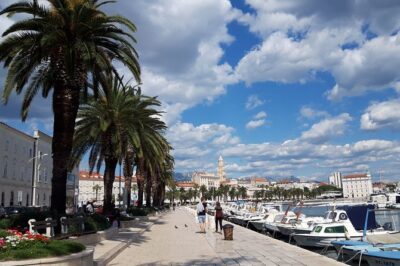
PREMIUM Emperor’s Walking Tour for History Lovers + Museum
Read our review →
Local History and Culture 90-Minute Walking Tour
Read our review →
Private History Split Walking Tour in English
Read our review →
Historical & Gastro Treasures Tour with Green Market
Read our review →Browse the lists this tour appears in