
Reviewed · HISTORICAL TOURS
Split Old Town History Walking Tour
Split’s Old Town history feels close enough to touch. This 90-minute walk focuses on Diocletian’s Palace layers, from Roman stonework to later Christian and civic life, with sea air from the start. You’ll also get practical local advice on where to eat and drink as you go.
Two things I like a lot: the route covers major sights without making you buy extra entries, and you’re with a professional licensed local guide who explains what you’re actually seeing, not just dates on a wall. One thing to consider, though: the tour is short, so if you want more time inside the palace complex, you may want follow-up visits after.
You’ll start and finish at the same waterfront spot, and there are two departure times to fit your day. If weather turns poor, the operator may cancel and offer another date or a full refund, even though the tour notes it operates in all weather with appropriate dress.
In This Review
- Key highlights worth showing up early for
- A 90-minute orientation to Split’s Roman core
- Riva promenade start: easy meeting, instant context
- Entering Diocletian’s Palace: cellars first, then the heart
- St. Domnius to the vestibulum: listening to architecture
- Roman temple turned baptistery: Temple of Jupiter
- Triklinij banquet rooms: power at the dinner table
- Golden Gate and Gregory of Nin: a tradition with a story
- Narodni trg (Pjaca) and Trg Brace Radic: old squares you can use
- Price and value: what you pay for, and what you don’t
- Who this tour fits best in your itinerary
- Weather, shoes, and small practical tips
- Should you book the Split Old Town History Walking Tour?
- FAQ
- How long is the Split Old Town History Walking Tour?
- How much does the tour cost?
- What language is the tour offered in?
- Where do I meet the guide?
- How big is the group?
- Are admission tickets included for the stops?
- Is food and drinks included?
- Can children join, and are pets allowed?
- What is the cancellation policy if I need to cancel or weather is poor?
Key highlights worth showing up early for
- Riva promenade kickoff with sea views, city layout, and a quick orientation
- Diocletian’s Palace underworld at the cellars, where Roman power becomes physical
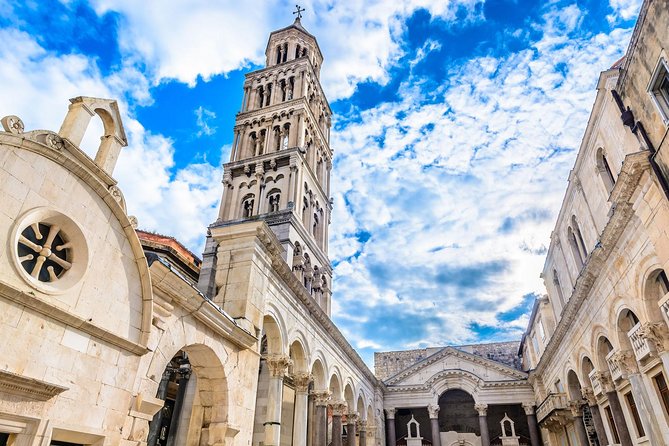
- St. Domnius at the palace heart, with Roman columns and the cathedral’s mausoleum connection
- Vestibulum acoustics, where traditional klapa singers may perform if you’re lucky
- Golden Gate plus Gregory of Nin’s lucky toe, a local tradition you won’t want to miss
A 90-minute orientation to Split’s Roman core
This is the kind of tour that helps you stop wandering and start understanding. In about 1 hour 30 minutes, you move from the waterfront into the world of Diocletian’s Palace and back out into Split’s everyday old-town rhythm. It’s a smart way to get your bearings fast, especially if you’re planning to see a lot on your own later.
The pace is designed for walking comfort and real sight time, with quick stops that still give context. You also get two departure times, which matters in Split where the middle of the day can feel long and hot in summer.
Riva promenade start: easy meeting, instant context
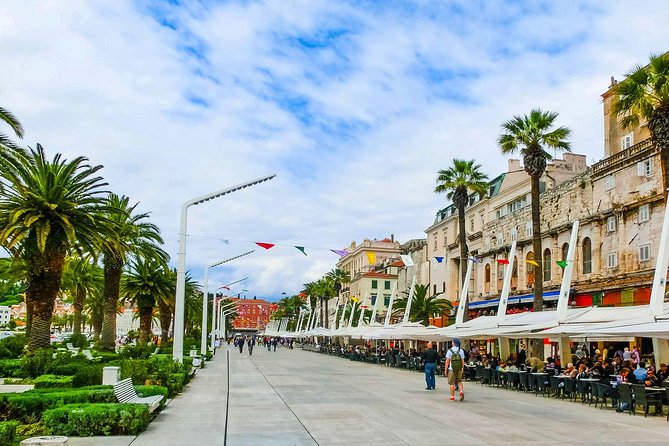
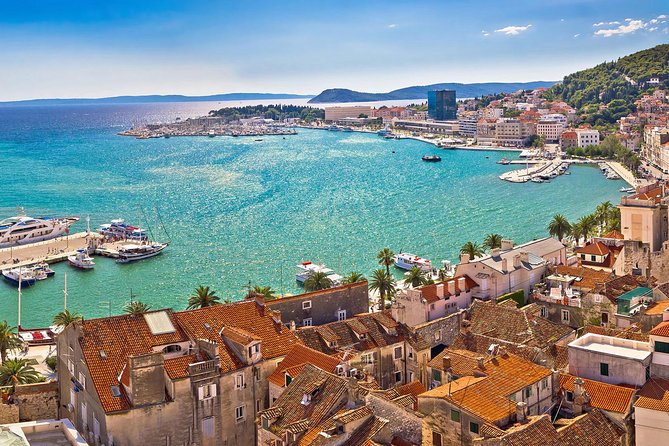
You meet on Obala Hrvatskog narodnog preporoda at the waterfront, called the Riva. This is a good start point because it’s public-facing and easy to find, and you immediately get the city’s layout plus how Split grew around the sea. You’ll also have a lively, open-air prelude before you step into the palace streets.
I like that the tour doesn’t begin with a lecture. It begins with something you can see: the waterfront, the urban form, and the way locals move through the center. That helps the history land later, when you’re suddenly standing in Roman spaces.
If you’re the type who appreciates small details, watch for how the guide points out “where you are” while you’re walking. That turns the walk from a checklist into a story you can track in your head.
Two thousand years, one afternoon
Entering Diocletian’s Palace: cellars first, then the heart
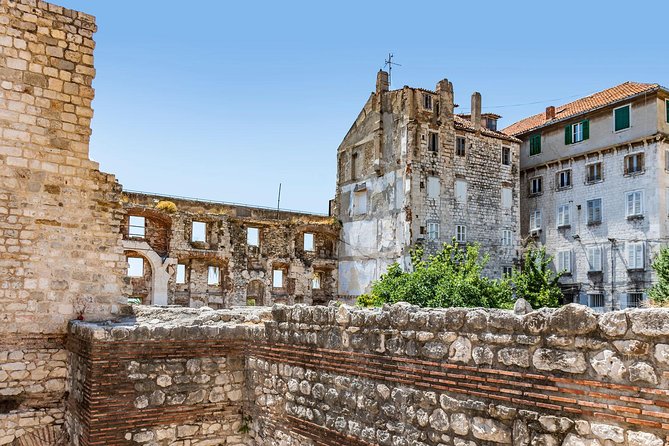
The biggest portion of this experience happens inside Diocletian’s Palace complex. And it starts in a clever way: you go into the Peristyle of Diocletian’s Palace cellars. These are the well-preserved substructures under the emperor’s residence, and your guide connects them to how the palace functioned above.
What makes this stop valuable is the shift in perspective. From the street, Diocletian’s Palace looks like a fortress of old stone. Down in the cellars, it feels like infrastructure. You start to understand that this was not just a residence, it was a working system supporting life and status.
After the cellars, you step into the palace’s core for the Cathedral of Saint Domnius. This is the moment where Roman columns and later sacred space meet. The cathedral is tied to the emperor’s mausoleum, so the guide can show how power and belief changed hands while the stone stayed.
St. Domnius to the vestibulum: listening to architecture
From the cathedral area, you’ll move to the Vestibulum of Diocletian’s Palace. This stop is brief, but memorable for one reason: the circular open dome has impressive acoustics. If you’re lucky, you might hear traditional klapa singers, which adds a real sensory layer to the architecture.
Even if no music happens, the space still helps you understand how Romans designed for presence. When you can hear echoes where you stand, it makes the building feel less like a museum and more like a place that was meant for people, voices, and gatherings.
In a short tour, moments like this are gold. They give you one “wow” memory that isn’t only visual.
Roman temple turned baptistery: Temple of Jupiter
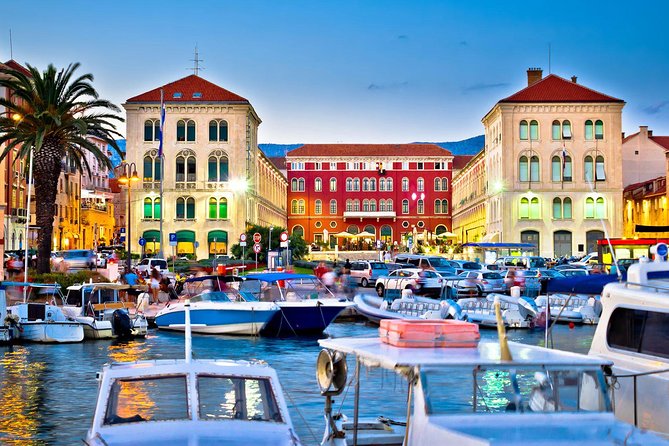
Next comes the Temple of Jupiter, presented in a Roman form that later became a baptistery. The tour highlights ancient sculptures and a preserved sarcophagus, so you’re not just hearing about history. You’re seeing objects with continuity, and a guide can explain how repurposing happens when communities change.
A tip: look for the details that the guide names. In places like this, the most important part is rarely the biggest wall. It’s often a small element, a carved surface, or the way something is preserved.
This stop also helps you connect dots. Split’s old town isn’t only “Roman.” It’s Roman materials plus centuries of new meaning stacked on top.
Triklinij banquet rooms: power at the dinner table
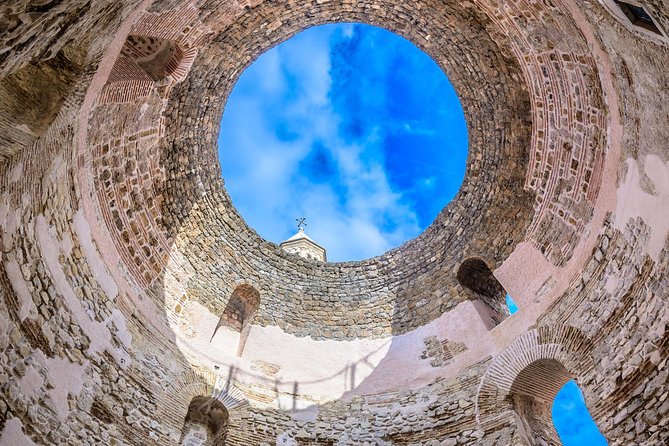
At Triklinij, you’ll see the area where Diocletian hosted lavish banquets. The guide’s focus here is Roman dining culture and imperial luxury. The setting is small compared to the palace exterior, but it tells a big story about status.
I find this stop especially useful because it makes history human. Food, hosting, and ceremony are universal, so when the guide frames the space for how banquets worked, you can picture the energy of the room.
If you’re the kind of traveler who likes “how people lived,” this is one of the best stops on the walk. It takes the big concept of empire and turns it into a scene.
Plenty more to do around Split
- Split: Old Town and Diocletian Palace Walking Tour★ 4.9 · 4,727 reviews
- Walking Tour of Split and Diocletian’s Palace★ 5.0 · 2,588 reviews
- Krka Waterfalls tour with Trogir Walking tour and Krka panoramic boat cruise★ 5.0 · 1,659 reviews
- Split & Diocletian’s Palace Walking Tour★ 5.0 · 1,125 reviews
Golden Gate and Gregory of Nin: a tradition with a story
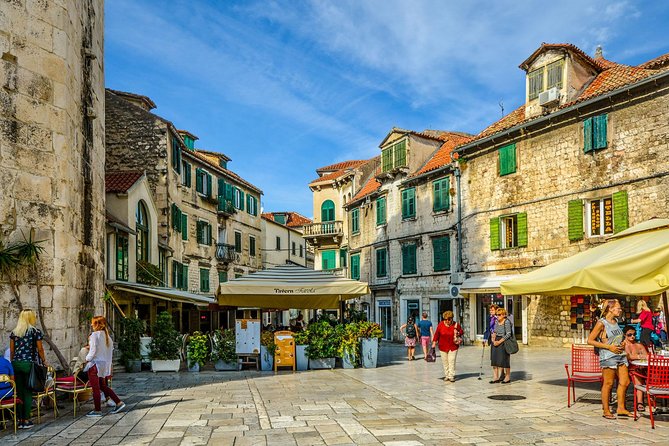
When you leave the inner palace area, you’ll pass through the Golden Gate. Your guide connects it with the four palace gates, and then you get an outside moment that locals keep alive: the statue of Gregory of Nin.
Then comes the famous local ritual, you rub his toe for good luck. It’s quick, but it’s a classic old-town behavior in Split, and it’s fun in a low-pressure way. If you’ve ever wondered why certain monuments become touch points, this gives you an easy answer.
A practical note: this is also a good spot to take a breather. You’ll have been walking through several major stone areas, so your legs will thank you for the short pause.
Narodni trg (Pjaca) and Trg Brace Radic: old squares you can use
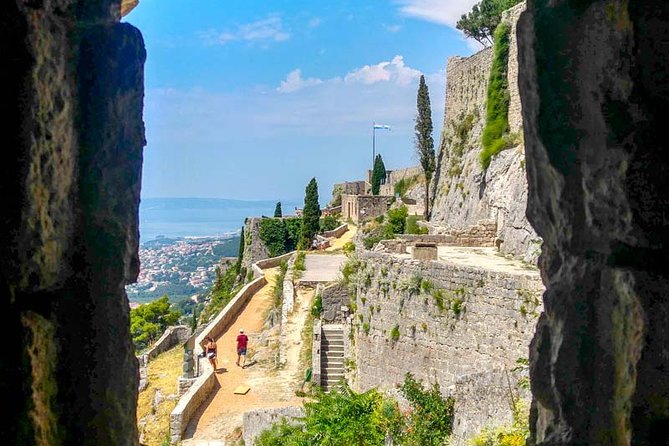
The walk then shifts from “monument mode” to “everyday Split.” You’ll visit Narodni trg, also known as Pjaca, where Venetian-era style buildings frame the square. There’s an old city clock here, and you’ll notice the cafés that keep the area lively with daily life.
After that, you’ll head to Fruit’s Square, Trg Brace Radic, a lively stop named after the fruit markets that were once held there. The setting is baroque palaces around an active square, which means you get both architecture and the feeling of how people actually move through the center today.
I like ending the history with spaces you can immediately return to on your own. Once you’ve seen the palace, these squares help you understand how Split’s past feeds into its present, including where people choose to sit, snack, and meet.
Price and value: what you pay for, and what you don’t
The price is $30.23 per person for about 1 hour 30 minutes. That sounds simple, but the value comes from three things:
First, you’re paying for a licensed local guide who ties sites together so the stop-to-stop experience feels connected. Second, multiple big-name locations are listed with admission tickets free for this tour, so you’re not stacking extra costs each time you enter a space. Third, the guide gives real local advice on where to eat, drink, and explore, which can save time and help you avoid spending your limited hours on the wrong places.
What’s not included is food and drinks. That’s normal for walking tours, but it matters for planning. You’ll likely want to stop for a coffee or snack before or after, so bring water if you know you get thirsty while walking.
Also, the tour caps at 20 travelers, which tends to make it easier to hear the guide and ask questions without the group turning into a noisy wave.
Who this tour fits best in your itinerary
This tour is a strong fit if you want:
- A focused intro to Split’s Old Town in a short block of time
- Easy structure for first-time visitors who want Diocletian’s Palace context without getting lost
- A guided history walk in English that still leaves you time to roam afterward
It’s also a good option on a day when you want to see the “main story” but keep your schedule light. People who prefer long, slow museum-style visits might feel you’re moving quickly. If that’s your style, use this as your foundation, then come back on your own for longer stops.
Based on how guides lead these walks, you might meet different English-speaking guides, including names like Anita, Iva, Toni, Rocco, Katarina, or Petra. I’d expect a similar emphasis across them: clear storytelling, lots of explanation, and answers to questions.
Weather, shoes, and small practical tips
This tour is designed to run in different conditions, but the operator notes it needs good weather and may cancel due to poor conditions. Either way, wear comfortable shoes since you’ll be walking through uneven historic areas and stone corridors.
Dress appropriately for the day, especially in warmer months. Even if the tour is mostly under palace structures, the start and end near the waterfront and the open areas between stops can expose you to sun and wind.
Finally, bring a relaxed mindset. At several stops, the guide uses architecture and objects as the lesson plan. If you stop paying attention because you think you already “get it,” you’ll miss the good parts, like how cellars explain the building above.
Should you book the Split Old Town History Walking Tour?
I think you should book this tour if you’re optimizing for value, context, and time. For $30.23 you get a licensed local guide, free admission at major sites on the route, and a practical way to understand Split’s Roman foundation and later layers.
You may want to skip it if you’re already deep into Roman history and crave long interior time, or if you hate guided pacing. Also, if you’re traveling with a tight schedule that cannot flex at all, note the operator may cancel due to poor weather.
If you want an efficient first pass through Split’s most important core, this is a smart bet. Then you can spend the rest of your trip picking the squares, streets, and viewpoints that genuinely hooked you on the walk.
FAQ
How long is the Split Old Town History Walking Tour?
It runs for about 1 hour 30 minutes.
How much does the tour cost?
The price is $30.23 per person.
What language is the tour offered in?
The tour is offered in English.
Where do I meet the guide?
The meeting point is Obala Hrvatskog narodnog preporoda 21, 21000, Split, Croatia. The tour ends back at the meeting point.
How big is the group?
The tour has a maximum of 20 travelers.
Are admission tickets included for the stops?
Yes. The listed stops on this tour show admission tickets as free.
Is food and drinks included?
No. Food and drinks are not included.
Can children join, and are pets allowed?
Children must be accompanied by an adult. Pets are not allowed on the tour.
What is the cancellation policy if I need to cancel or weather is poor?
Free cancellation is available up to 24 hours in advance for a full refund. If the experience is canceled due to poor weather, you will be offered a different date or a full refund.
Recently added around Split
- Private VIP Brac and Hvar Day Trip from Split
★ 5.0 · 1 review - Private Transfer From or To the Split Airport
★ 5.0 · 1 review - Brač Half Day Beach Party Transfer to Olife Beach Club
★ 5.0 · 1 review - Private Transfer from Split to Zagreb, Hotel-to-hotel, English-speaking driver
★ 5.0 · 1 review - Airport transfers
★ 5.0 · 1 review - Private ”Game of Thrones” Walking Tour in Split (entrance tickets included)
★ 5.0 · 1 review
Historical Tours, compared.

Walking Tour of Split with a ‘Magister’ of History
Read our review →
Split Walking Tour with Professor of History
Read our review →
Split History and Gastro Small-Group Tour with Food and Drinks
Read our review →
PREMIUM Emperor’s Walking Tour for History Lovers + Museum
Read our review →
Local History and Culture 90-Minute Walking Tour
Read our review →
Private History Split Walking Tour in English
Read our review →
Historical & Gastro Treasures Tour with Green Market
Read our review →Browse the lists this tour appears in