
Reviewed · HISTORICAL TOURS
Split: Walking tour of Split with a ‘Magister’ of History
A palace city in miniature, brought into focus fast. What I like most is the Diocletian’s Palace walk-through, where you see how Roman planning turned into a real neighborhood, not a museum. The second big win is Toni’s 3D reconstructions, which help you picture what key spaces looked like in Roman times instead of guessing. One consideration: it is a 110-minute, rain-or-shine walking tour focused on outdoor architecture, and you do not enter paid museums.
Toni, a Split native with a Master’s in history and a former teaching background, keeps the pace moving and the explanations clear. He starts at the Bronze Gate by the Riva, then guides you through cellars, courtyards, and gates, working from Roman foundations toward medieval and Venetian layers, and finally the modern city feel. If you prefer lots of indoor time or fully ticketed sites, this may not be your best match.
In This Review
- Key things that make this Split history walk work
- Entering Diocletian’s Palace through the Bronze Gate on the Riva
- Toni’s “Master of History” style: questions, context, and 3D reconstructions
- The palace beneath the palace: cellars and Roman engineering
- Peristyle to Triklinij: where Roman power becomes everyday streets
- Cathedral of Saint Domnius and Jupiter’s Temple: the city keeps reusing the past
- Silver and Golden Gates: Venetian and medieval layers at street level
- Pacing, comfort, and what to bring for 110 minutes
- Price and value: why $33 can make sense for this kind of tour
- Who should book this Split history walk, and who should skip it
- Should you book Toni’s Split walking tour?
- FAQ
- How long is the Split walking tour with a history guide?
- Where do I meet the guide?
- Is the tour in English?
- What is included in the price?
- Do you enter paid museums or ticketed attractions?
- Is it a rain-or-shine tour?
Key things that make this Split history walk work
- Toni’s teacher approach keeps you asking questions, not just listening.
- 3D reconstructions in the open air make the palace architecture feel understandable, not abstract.
- Roman to medieval to Venetian to modern, all in one loop centered on Diocletian’s Palace.
- A local Split life perspective, since Toni was born and has lived in Split his whole life.
- Crowd and shade awareness, with smart routing when possible during busy hours.
- Outdoor walking focus, so you trade museums for street-level architectural storytelling.
Entering Diocletian’s Palace through the Bronze Gate on the Riva
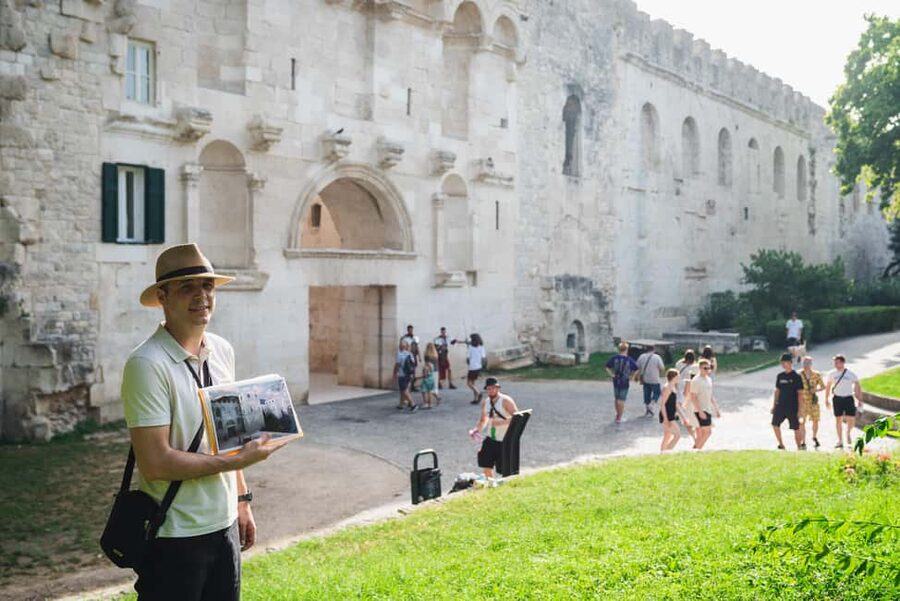
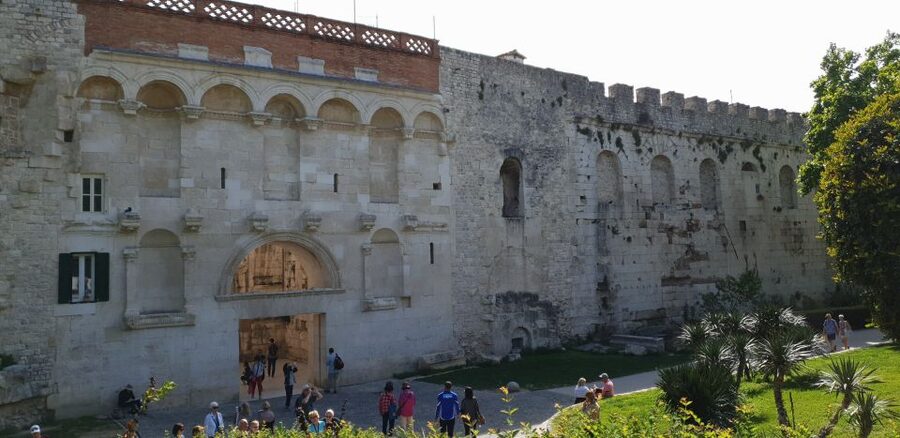
I love tours that start where the city actually breathes, and this one begins near the water. You meet at Obala Hrvatskog narodnog preporoda 22, at the Bronze Gate (also called the Brass Gate) of Diocletian’s Palace. If you first get your bearings on the Riva Promenade, the gate is close by, and you will find it by aiming for the southern seaside entrance.
This first minute matters. Standing at the gate, you can feel why this site became the anchor point of Split’s old town. The palace was planned like a self-contained world, and Split grew around it until daily life was living inside Roman walls. Toni uses this location as a launch pad, so you do not start by hearing a lecture. You start by looking at stone, angles, and thresholds, then you get the story of what that meant.
The tour also has a practical rhythm right from the start. You get a short introduction, then you move into the palace area. That keeps the walking tour from feeling like a long line of stops with no payoff.
Toni’s “Master of History” style: questions, context, and 3D reconstructions
Toni is not just presenting facts. He is teaching you how to read the place you are standing in. He has a Master’s degree in history and a background as an ex teacher, and it shows in the flow. He builds explanations step by step, then prompts questions so you can steer parts of the conversation.
That question-friendly style is a big deal in old cities like Split, where you will see multiple eras layered on top of each other. Without guidance, you can easily end up with a pile of names and no sense of how they connect. With Toni, you get context that sticks because you are invited to ask, not just absorb.
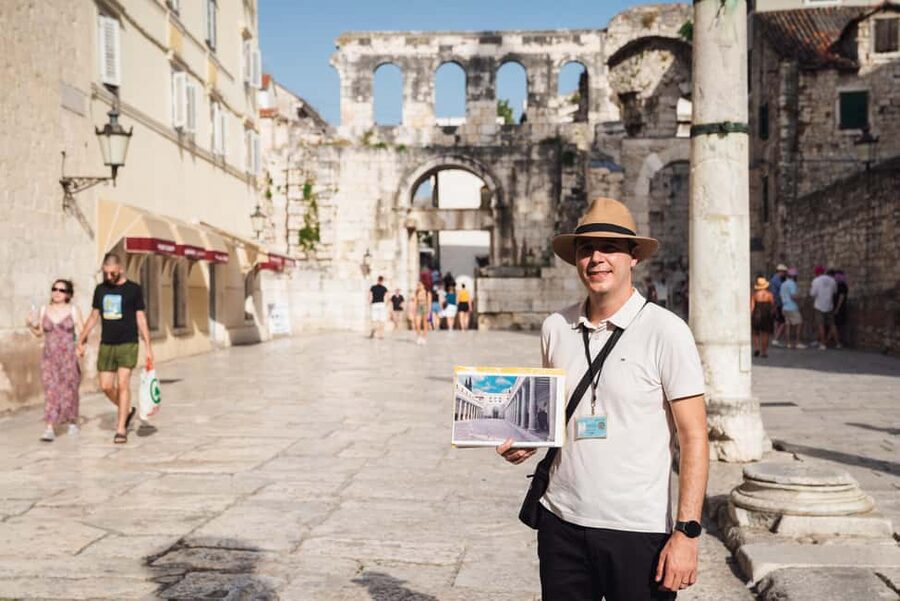
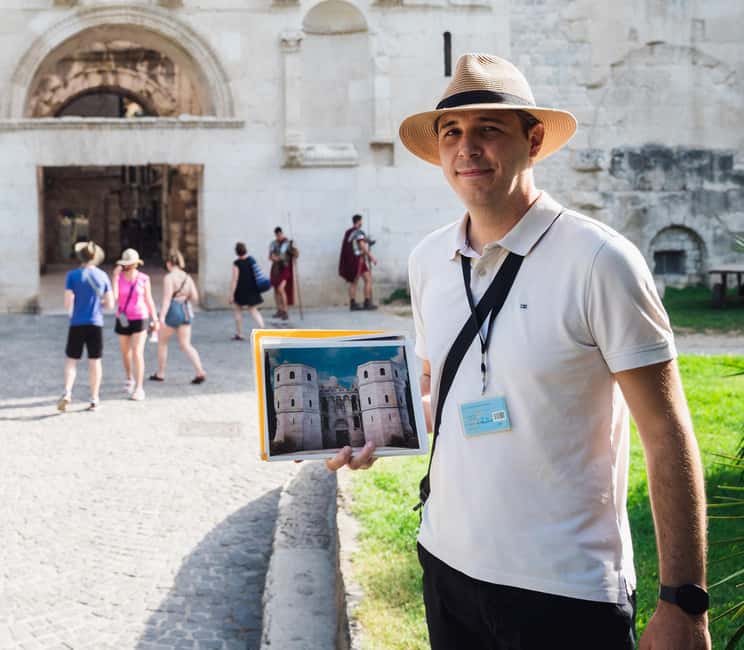
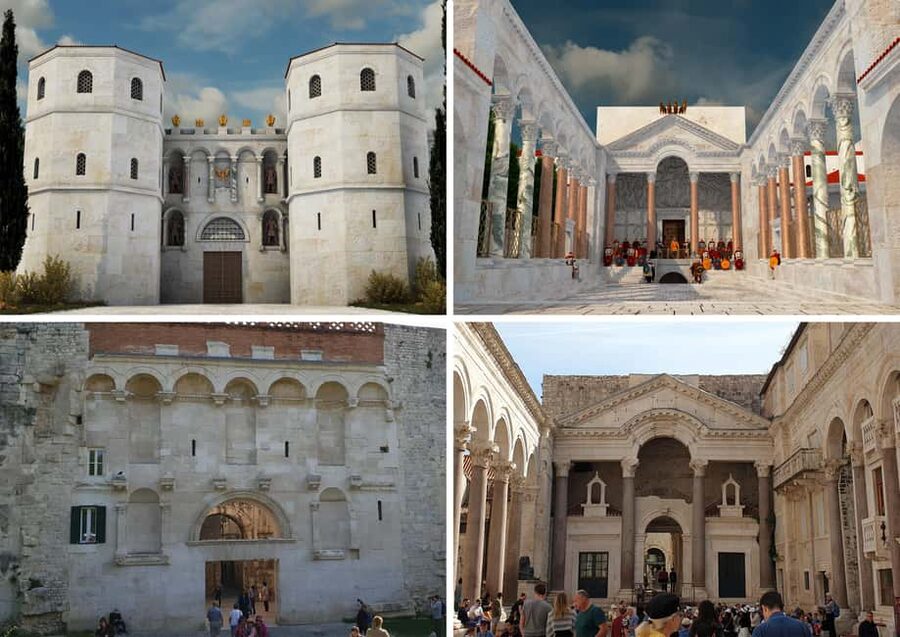
Then there is the 3D side of the tour. The experience includes 3D reconstructions of the palace’s most iconic structures, and Toni uses them while you are on site. A few people also highlighted printed visuals he brings along, showing how the palace may have looked during Roman times. That matters because Diocletian’s Palace is famous, but it can also feel like ruins on first glance. The renderings help you connect what you see now to what it might have looked like back when it was functioning space.
One small but important bonus: he is a local, born and living in Split his whole life. When Toni explains how the palace shaped modern streets and buildings, you feel like you are getting interpretation from someone who has watched the city change, not someone reading a script.
Two thousand years, one afternoon
The palace beneath the palace: cellars and Roman engineering
After you enter the palace area, you get a look at the Diocletian’s Cellars. You pass by them as part of the flow, and the point here is not to treat them like a separate attraction. The point is to understand that the palace worked as a system.
Cellars and service spaces are where Roman design becomes obvious. Even if you do not know the details yet, you can start noticing proportions, entrances, and how movement would have worked. Toni uses the moment to connect underground space with the visible architecture above it, so the palace stops being just a set of impressive surfaces.
This is also where you start getting a sense of why the old core still feels like a living neighborhood. Roman infrastructure did not vanish overnight. It was repurposed, built over, and gradually reshaped by later residents. When you understand that, the medieval and Venetian layers make more sense, even if you only see them in fragments.
Peristyle to Triklinij: where Roman power becomes everyday streets

The tour centers on the heart of the palace, and the highlight is the walk through spaces around the Peristyle. This is a phenomenally preserved Roman-made square, and seeing it in person helps you understand why Diocletian’s Palace is not just an archaeological site. It is an architectural skeleton that Split has been using ever since.
Near the Peristyle, you can see major palace elements, including the Mausoleum of Diocletian, the Temple of Jupiter, and the Vestibule. Toni uses these stops to explain the palace layout in a way that feels logical. You learn why the square matters, how the spaces relate, and what kind of life the palace was built to support.
From there, the route moves through interior-adjacent palace areas, including the Vestibul and the Triklinij. These names may sound technical at first, but Toni makes them understandable by connecting function to form. He shows you where gatherings would have happened, where transitions occur, and how decoration and structure communicate status.
What I especially like about this section is the balance of structure and story. You are not just hearing dramatic history. You are learning how buildings guide people. Once you notice that, you start “reading” Split yourself as you continue exploring on your own.
A practical thought: you are outside for almost all of this portion. So if you are sensitive to sun or sudden rain, plan to use the time for shade breaks when you can. Multiple reviews mentioned Toni’s care to keep the group in shade and away from crowds when possible, so the pacing is meant to protect comfort, not rush you.
Cathedral of Saint Domnius and Jupiter’s Temple: the city keeps reusing the past
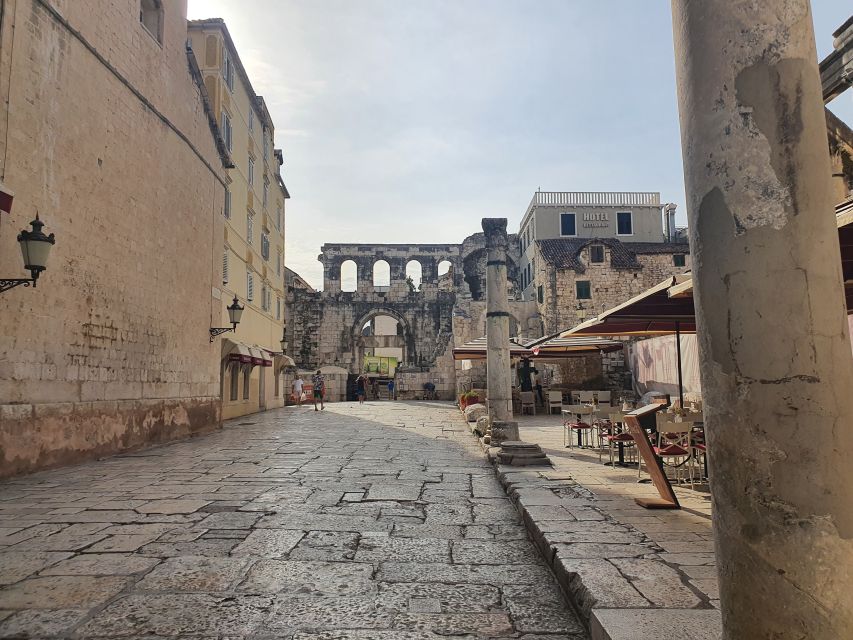
You pass by the Cathedral of Saint Domnius and Jupiter’s Temple during the palace loop. Even though these moments are not long “deep museum” stops, they are important for the big theme of the tour: Split is a layering city.
Saint Domnius reminds you that later eras did not treat the Roman palace as a dead artifact. They treated it as available space and available symbolism. Jupiter’s Temple, on the other hand, helps you connect Roman religious power to the palace’s original purpose.
If you tend to get overwhelmed by timelines, this part is your antidote. You see how a Roman layout can survive while meaning changes. That is the kind of historical transformation you cannot get from a single photo or a quick read online.
Silver and Golden Gates: Venetian and medieval layers at street level
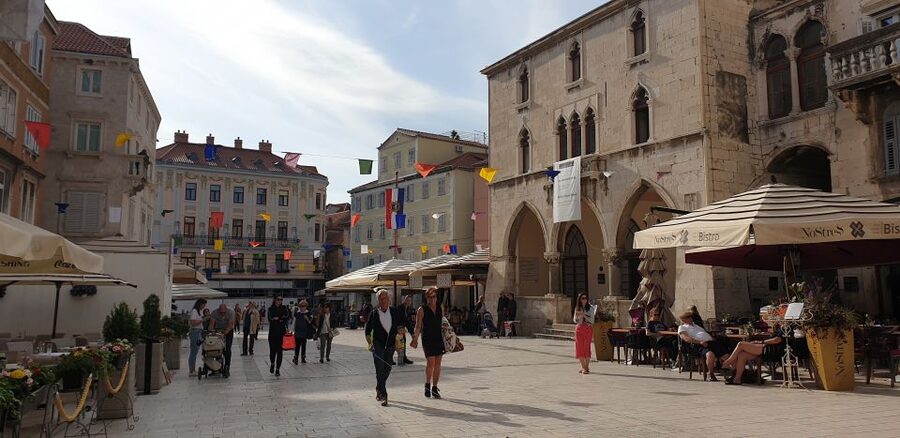
The tour moves from the palace core out toward other gates, including the Silver Gate and then the Golden Gate, where you finish.
These gates are not just dramatic entryways. They represent the edges of the palace world and the transition back to urban life. Walking through or around gates helps you feel how movement in Split shifts as you move between “inside the palace” and “the city beyond.”
On the way, you also get a sense of the medieval and Venetian heritage that grew around and through the palace footprint. You might not stop at every related structure for a long time, but you will see enough cues to understand what changed and why.
One more thing: the statue of Bishop Gregory of Nin is visible along the North Wall of the palace, which Toni points out as part of the experience. It gives you a visual punctuation mark, so the tour does not feel only Roman. It feels like Split telling its own story across centuries.
Plenty more to do around Split
- Split: Old Town and Diocletian Palace Walking Tour★ 4.9 · 4,727 reviews
- Walking Tour of Split and Diocletian’s Palace★ 5.0 · 2,588 reviews
- Krka Waterfalls tour with Trogir Walking tour and Krka panoramic boat cruise★ 5.0 · 1,659 reviews
- Split & Diocletian’s Palace Walking Tour★ 5.0 · 1,125 reviews
Pacing, comfort, and what to bring for 110 minutes
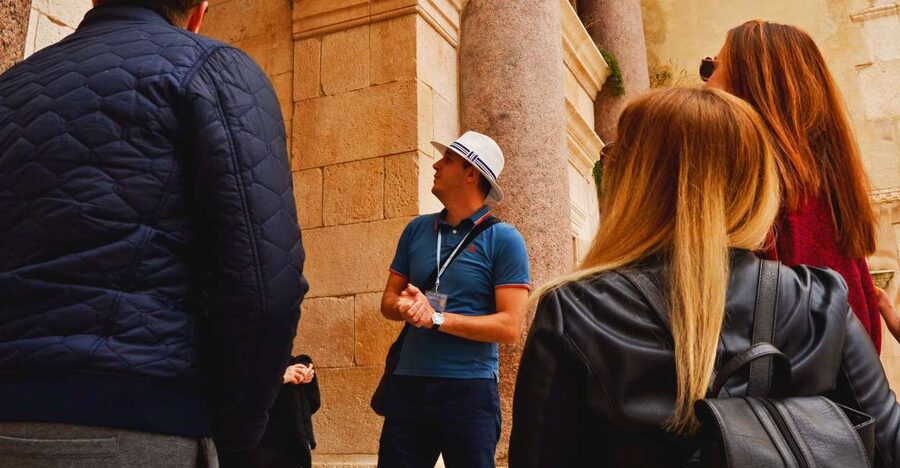
This is a walking tour that lasts about 110 minutes. That time is long enough to build a real sense of place, but short enough that you can still do other plans the same day.
Here is what you should expect in terms of comfort and logistics, based on what the tour description and group feedback emphasize:
- Rain or shine: you will go out in bad weather. Bring a light rain layer if clouds are likely.
- Bring drinks: especially in warmer months, because it is outdoor time in an old-stone area.
- Not for wheelchair users: the tour is not designed for that, likely because of old-town terrain and the amount of walking.
- Age guidance: it is not suitable for people over 95, so think about your own comfort with extended walking.
Pace is a strong point. Reviews repeatedly mentioned Toni managing the tour in a way that keeps you heard and comfortable, including seeking quieter areas and shade when possible. So if you are the type who needs breaks to keep attention, this format is built for it.
If you have a choice of time slots, consider picking an earlier one. One review specifically noted that crowds grew as the tour progressed, and choosing the first time slot helped avoid the worst of it.
Price and value: why $33 can make sense for this kind of tour
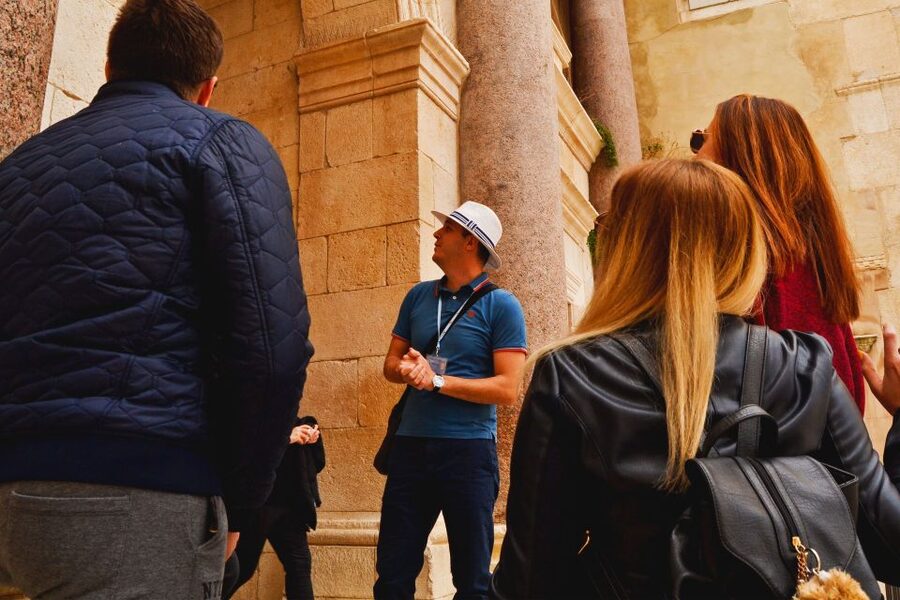
The tour price is listed as $33 per person for 110 minutes. Some people found it more expensive than other options, so the value question is fair.
Here is how I would judge the value for you:
- It includes the guide plus 3D reconstructions used during the walk. That is not common on basic walking tours that rely only on verbal explanations.
- You get a structured timeline that moves from Roman foundations through medieval and Venetian layers toward modern Split, instead of staying stuck in one era.
- Toni’s teaching background and question-friendly style can make the information feel clearer, which reduces the “pay, then forget” risk that happens when you get a generic script.
So if you want architecture that makes sense, and you like understanding how one era becomes the next, the price can feel fair. If you already know Diocletian’s Palace well and you mostly want background-free photos, then a cheaper walk might satisfy you. But if this is your first serious history tour in Split, this one is priced like an active lesson, not a casual stroll.
Who should book this Split history walk, and who should skip it
Book it if you fit these profiles:
- You want a history-focused walk centered on Diocletian’s Palace, not a general sightseeing loop.
- You like learning in a Q and A format, where your questions shape the route and explanations.
- You want help visualizing the palace as it might have looked, which is exactly where the 3D reconstructions do their best work.
- You appreciate local context, since Toni is a lifelong Split resident with deep familiarity.
Skip it if:
- You have limited tolerance for walking and standing outdoors.
- You want lots of indoor museum time or ticketed site visits, because the tour does not include entering paid sites or museums.
- You need wheelchair-friendly access, since it is not suitable for wheelchair users.
Should you book Toni’s Split walking tour?
If you want Split to click, I think this tour is an easy yes. The heart of it is Diocletian’s Palace, and Toni helps you understand it as a living structure that later centuries built onto. The 3D reconstructions plus his teaching-style explanations turn confusing ruins into readable space.
My main caution is practical: this is outdoor walking for about 110 minutes, and it runs in rain. Pack accordingly, and choose the earliest time slot if you can, so you are not fighting the crowd level as the tour ends.
If you are arriving in Split and want one strong history anchor before you explore on your own, this is a solid pick.
FAQ
How long is the Split walking tour with a history guide?
It lasts about 110 minutes.
Where do I meet the guide?
You meet at the Bronze Gate (Brass Gate) of Diocletian’s Palace, near Obala Hrvatskog narodnog preporoda 22.
Is the tour in English?
Yes, it is an English live tour.
What is included in the price?
The guide is included, along with 3D reconstructions of sites.
Do you enter paid museums or ticketed attractions?
No. The tour does not include entering paid sites or museums. Diocletian’s Palace does not require admission.
Is it a rain-or-shine tour?
Yes, it runs rain or shine. Bring drinks, and come prepared for outdoor walking.
Recently added around Split
- Private VIP Brac and Hvar Day Trip from Split
★ 5.0 · 1 review - Private Transfer From or To the Split Airport
★ 5.0 · 1 review - Private Transfer from Split to Zagreb, Hotel-to-hotel, English-speaking driver
★ 5.0 · 1 review - Brač Half Day Beach Party Transfer to Olife Beach Club
★ 5.0 · 1 review - Airport transfers
★ 5.0 · 1 review - Private ”Game of Thrones” Walking Tour in Split (entrance tickets included)
★ 5.0 · 1 review
Historical Tours, compared.

Walking Tour of Split with a ‘Magister’ of History
Read our review →
Split Walking Tour with Professor of History
Read our review →
Split History and Gastro Small-Group Tour with Food and Drinks
Read our review →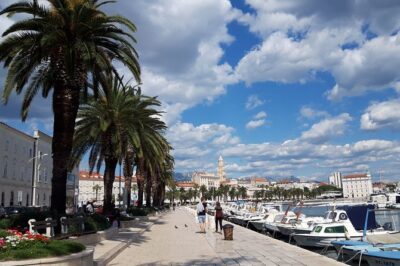
PREMIUM Emperor’s Walking Tour for History Lovers + Museum
Read our review →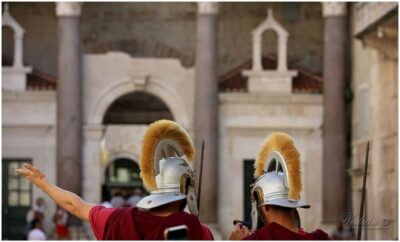
Local History and Culture 90-Minute Walking Tour
Read our review →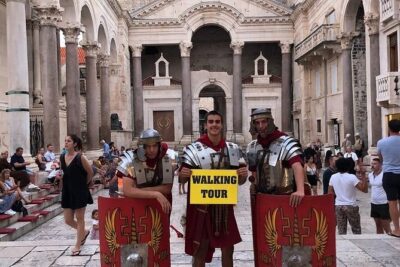
Private History Split Walking Tour in English
Read our review →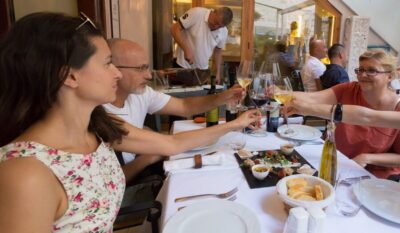
Historical & Gastro Treasures Tour with Green Market
Read our review →Browse the lists this tour appears in