
Reviewed · HISTORICAL TOURS
Split Walking Tour: History, Legends & Tales
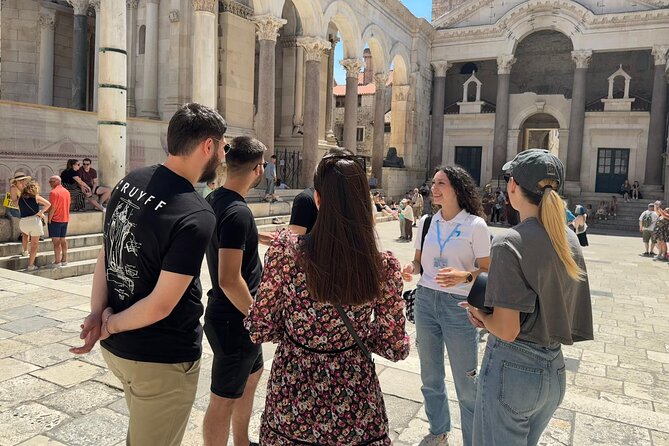
Diocletian’s Palace works better at walking pace. This 1.5-hour Split tour strings together the big names and the great stories, from the Riva promenade to the Palace’s living spaces, with stops that are mostly free to see. You also get the kind of guide narration that turns stone walls and doorways into something you can picture, not just memorize, with legends woven into the route.
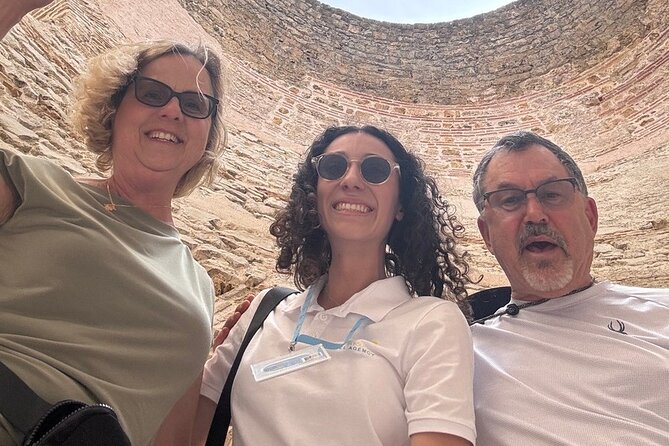
What I really like is how small the group is, max 12, so you can actually ask questions without getting pushed along. In several write-ups, the guide named Lucija stands out for an informal, conversational style, plus practical pointers like what to eat (pasticada came up) and where to grab gelato. You’re not just hearing facts, you’re getting a mini plan for your next hours in town.
One thing to consider: this is a walking overview, not a museum deep-dive. The tour does not include entry to museums or paid sites, so if you’re expecting ticketed interior exhibits, you’ll need to add those on your own.
In This Review
- Key highlights worth planning for
- Price and format: value in 90 minutes
- Riva Harbor: the smart kickoff for first-time Split navigation
- Diocletian Palace Substructures: the underground layer you’ll remember
- Vestibulum and the palace’s social rooms: where power met daily life
- Peristyle: the 3,500-year-old sphinx moment
- Golden Gate and Gregory of Nin: grandeur plus a funny legend
- Narodni trg (People’s Square): when Split spilled outside the walls
- Fruit’s Square (Trg Brace Radic): Venetian defense meets Dalmatian baroque
- How to make the most of a story-focused, no-museum walking tour
- Who should book, and who might prefer something else
- Should you book Split Walking Tour: History, Legends & Tales?
- FAQ
- How long is the Split Walking Tour: History, Legends & Tales?
- How much does the tour cost per person?
- What language is the tour offered in?
- Where is the meeting point, and does the tour return there?
- What is included in the price?
- Are any admission tickets included?
- What is the maximum group size?
- Is it suitable for most travelers, and are service animals allowed?
- Does the tour require good weather?
- Is free cancellation available?
Key highlights worth planning for
- Max 12 travelers keeps the pace relaxed and question-friendly
- Free-to-see sights since there are no included admissions
- Diocletian Palace substructures takes you under the palace foundation
- Peristyle with a preserved sphinx connects Roman and Egyptian-linked history
- Golden Gate and Gregory of Nin toe-rubbing legend gives you a fun stop with a real photo moment
- People’s Square and Fruit’s Square show how Split grew beyond the palace walls
Price and format: value in 90 minutes
At $30.17 per person for about 1 hour 30 minutes, this tour is priced like an intro, not a long-haul epic. The value comes from two things you can feel right away: a licensed guide doing the heavy lifting on storytelling, and a route that hits major palace landmarks and a couple key squares without requiring paid entry. If your day in Split is tight, this gives you structure so you don’t wander the Old Town aimlessly.
You also get a mobile ticket, which is handy when you’re moving fast between stops. The tour runs in English and is capped at a maximum of 12 people, which helps a lot in a place where the streets can get narrow and traffic can get chaotic. It starts and ends at the same meeting point on the Riva waterfront, so you don’t have to figure out how to get back to your starting area.
The main trade-off is that the tour avoids paid sites and museum entries. That is great for budget and time, but it means the experience stays outside and at key architectural points. If you want to spend a long time inside a ticketed museum, you might pair this with one extra timed ticket after.
Riva Harbor: the smart kickoff for first-time Split navigation
The tour begins at Obala Hrvatskog narodnog preporoda 22, right along the Riva. Starting here matters. The Riva is the spine of Split, so you quickly get your bearings before the route turns into the palace maze. You’ll see a model of Split and get a clear intro to Diocletian, his Palace, and what Split became afterward.
This first segment is only about 15 minutes, but it sets the tone. You’re not just learning dates and names, you’re learning how the space is organized. When you understand where the palace sits relative to the waterfront, the later stops make more sense. It also helps you spot what is “original” palace structure versus later growth.
Practical note: Riva areas can catch sun, and the first orientation is outside. If you’re going in summer, plan to bring water and keep an eye on shade as you move into the palace area.
Two thousand years, one afternoon
Diocletian Palace Substructures: the underground layer you’ll remember
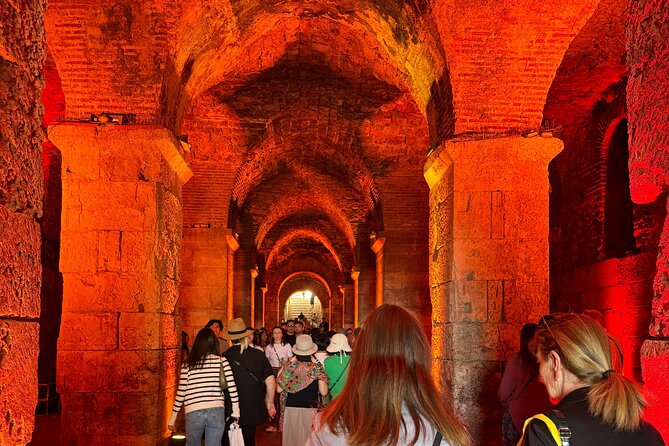
Next up is the Substructures of Diocletian’s Palace, about 10 minutes. This is the stop that often grabs people because it feels like the palace has a second life below the streets. The idea is simple and cool: you walk through underground corridors and rooms that once worked as the foundation for Diocletian’s palace complex.
Even without museum-style exhibits, this kind of space gives you a strong “how did they build this?” feeling. The Romans were serious about engineering, and the substructures make that tangible. It’s not just a story told at street level, you’re stepping into the physical under-layer that helped the palace function.
What you might like here is the contrast. Above, Split feels like a living coastal city. Below, you get the sense of weight, purpose, and planning. The only consideration is that underground areas can feel cooler or darker depending on conditions, so bring your attention, not sunglasses, if lighting is tricky.
Vestibulum and the palace’s social rooms: where power met daily life
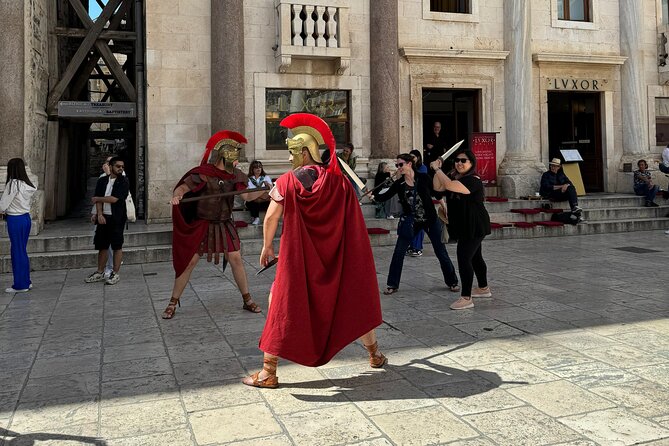
From the substructures you head toward the Vestibulum, the grand entrance hall area of Diocletian’s Palace. This portion takes about 10 minutes and includes the southern parts where Diocletian’s Apartments once stood, plus references to spaces like the Triclinium (dining hall) and gardens.
This is a “big picture” stop. You’re not going to be roaming endlessly through rooms here, but you get the logic of the palace layout. The Vestibulum helps you understand how a palace like this would welcome people, organize movement, and support both authority and private life.
If you like architecture that tells a story, you’ll probably enjoy how the guide connects what you see with what these spaces likely did. If you’re traveling with kids, this kind of stop can also work because it is short, visual, and story-driven. In one set of notes, the guide Lucija was described as patient and responsive to young kids, which suggests she tends to keep things engaging rather than lecture-like.
Peristyle: the 3,500-year-old sphinx moment
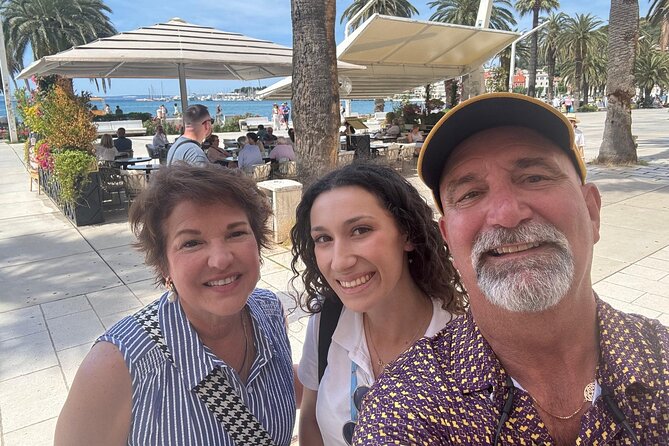
Then comes the Peristyle, about 20 minutes, and this is a major reason to book the tour in the first place. The Peristyle is described as one of the closest touches between modern visitors and ancient heritage. What makes it extra memorable is the 3500 old, perfectly preserved sphinx that’s tied to Split’s history.
The guide also frames it as more than just Roman. Because the sphinx is associated with Egyptian heritage, the Peristyle becomes a real-world example of how cultures intersected in material pieces, not just in theory. You get a chance to pause, look, and connect the dots between architecture and the objects that survived.
In practical terms, this stop is where you’ll want to slow down your phone photos and actually look around. The Peristyle is open enough to get the setting, but it still feels “inside” the palace, so it can make the previous stops click. If you’re short on time in Split, I’d still prioritize this segment.
Golden Gate and Gregory of Nin: grandeur plus a funny legend
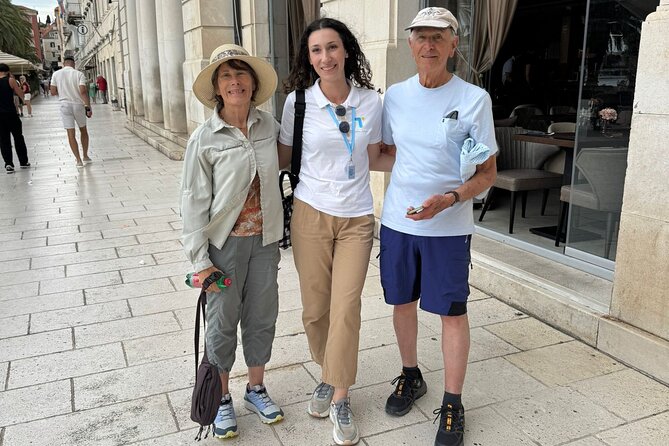
After the Peristyle, you’ll move to the Golden Gate (about 15 minutes). This entranceway once welcomed visitors into Diocletian’s Palace with grandeur, and you can feel that intention just by standing where people were meant to arrive. The route also includes the statue of Gregory of Nin.
Here’s where the tour becomes playful. There’s a legend that rubbing Gregory’s big toe brings good luck and grants wishes. It’s an easy thing to do while you’re there, and it also makes the stop memorable because it’s not only stone and labels. It gives you a ritual moment, and you’ll probably see other people doing it, which helps you spot where you are in the story.
If you want a smooth flow, just keep your schedule realistic. This part is slightly more popular for photos, so it helps if you’re ready to be flexible with timing inside the busiest outdoor spots.
Plenty more to do around Split
- Split: Old Town and Diocletian Palace Walking Tour★ 4.9 · 4,727 reviews
- Walking Tour of Split and Diocletian’s Palace★ 5.0 · 2,588 reviews
- Krka Waterfalls tour with Trogir Walking tour and Krka panoramic boat cruise★ 5.0 · 1,659 reviews
- Split & Diocletian’s Palace Walking Tour★ 5.0 · 1,125 reviews
Narodni trg (People’s Square): when Split spilled outside the walls
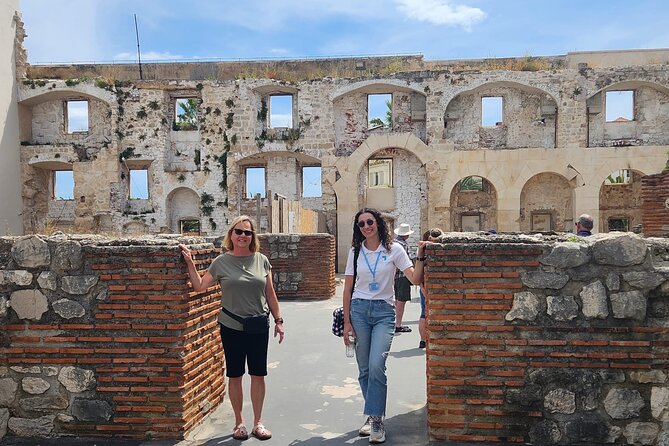
Next is Narodni trg, also known as People’s Square, or Pjaca. This is a short stop at about 10 minutes, just outside the palace walls. The key idea here is how Split expanded once the palace space became too small.
You’ll learn that Pjaca was first developed beyond the palace walls in the 14th century, and it was home to a former 15th-century city hall. Even with those historical anchors, the square works today because it functions like a meeting place, the kind of open civic space that cities use for centuries.
This is a great pause in the tour because the pacing changes. You’re out in an open square area, which is useful after walking more enclosed palace passages. If you want to continue your day afterward, this is also a smart spot for a coffee or simply a nighttime stroll later. It sits at the rhythm of the city, not behind it.
Fruit’s Square (Trg Brace Radic): Venetian defense meets Dalmatian baroque
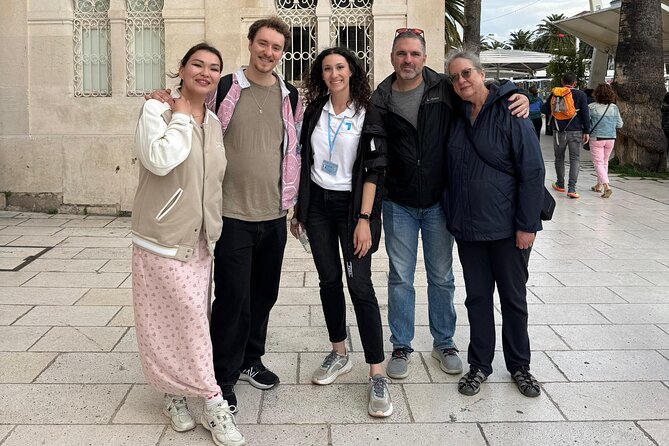
The final square stop is Fruit’s Square, or Trg Brace Radic, about 10 minutes. Even though the square is not huge, it carries serious architectural weight. One of the biggest landmarks is the octagonal Venetian tower, a leftover from a fortress built in the 15th century for the defense of a small town.
Across from the tower sits the Milesi Palace, from the 17th century, with a striking Baroque facade. It’s presented as one of the best examples of that style in all of Dalmatia, and it’s a good reminder that Split’s story does not stop with the Romans. Different powers left visible marks, and you can read them in stone here.
This is also where you can let the tour “lead you into lunch or dinner,” even though the tour itself does not promise a specific meal. In practical terms, Fruit’s Square is surrounded by everyday city life, so once you’ve done the historical walk, it’s natural to turn those stories into choices on where to eat next.
How to make the most of a story-focused, no-museum walking tour
This is a guide-led walking experience, not an attractions checklist. That’s why your mindset matters. If you treat it like a museum, you’ll feel shortchanged. If you treat it like a way to learn how the city works, it’s a great use of time.
Here are a few tips that match how this tour plays out:
- Wear solid walking shoes. You’re moving through palace areas and squares, and you’ll want good footing.
- Keep your questions ready. The small group size helps, so ask things like why certain structures were placed where they were.
- Take photos slowly at Peristyle and Gregory of Nin. Those are the stops where you’ll get the best “I understand what I’m looking at” moments.
- Use the guide’s food instincts. In multiple notes about the guide Lucija, there were recommendations for local eating, including pasticada and gelato suggestions. Even if you don’t follow every recommendation, asking for one “what should I try” answer can save you time later.
Also, the experience depends on conditions. It requires good weather. If you’re visiting in shoulder season, have a backup plan for rain, and consider going early or late in the day when the light is better and the temperature is kinder.
Who should book, and who might prefer something else
I’d book this tour if you:
- want a first-day orientation to Split’s Old Town
- like architecture tied to stories, not just names on a sign
- are on a schedule, including cruise-day timing, and want a solid overview without expensive add-ons
- travel in small groups or as a family and want a guide who can keep things moving without being robotic
It may not be the best fit if you:
- specifically want museum time or ticketed interior collections
- prefer long, quiet visits where you can linger for an hour at one site
- need a completely sheltered experience in poor weather
The nice part is that the tour ends back at the Riva meeting point. That makes it easy to continue your day with minimal friction, whether you’re heading toward the harbor for dinner or walking along the waterfront afterward.
Should you book Split Walking Tour: History, Legends & Tales?
If you want a smart, budget-friendly introduction to Split’s palace core, I think this is a great booking. The price feels fair for what you get, a licensed guide plus a route that connects major landmarks with legends you’ll actually remember, including Gregory of Nin’s toe-rubbing luck moment. And because the group is capped at 12, it’s the kind of walk where you can feel guided instead of herded.
If your priority is ticketed museum time, you’ll need to add that separately. But as a way to understand the city quickly and spend the rest of your day exploring with confidence, this one earns its place.
FAQ
How long is the Split Walking Tour: History, Legends & Tales?
It runs for about 1 hour 30 minutes.
How much does the tour cost per person?
The price is $30.17 per person.
What language is the tour offered in?
The tour is offered in English.
Where is the meeting point, and does the tour return there?
The meeting point is Obala Hrvatskog narodnog preporoda 22, 21000, Split, Croatia, and the tour ends back at the same location.
What is included in the price?
A licensed tour guide is included.
Are any admission tickets included?
No admission tickets are included, and the tour does not enter any museums or paid sites.
What is the maximum group size?
The tour has a maximum of 12 travelers.
Is it suitable for most travelers, and are service animals allowed?
Most travelers can participate, and service animals are allowed.
Does the tour require good weather?
Yes. The experience requires good weather, and if it is canceled due to poor weather you will be offered a different date or a full refund.
Is free cancellation available?
Yes. You can cancel up to 24 hours in advance for a full refund.
Recently added around Split
- Private VIP Brac and Hvar Day Trip from Split
★ 5.0 · 1 review - Private Transfer From or To the Split Airport
★ 5.0 · 1 review - Brač Half Day Beach Party Transfer to Olife Beach Club
★ 5.0 · 1 review - Private Transfer from Split to Zagreb, Hotel-to-hotel, English-speaking driver
★ 5.0 · 1 review - Airport transfers
★ 5.0 · 1 review - Private ”Game of Thrones” Walking Tour in Split (entrance tickets included)
★ 5.0 · 1 review
Historical Tours, compared.

Walking Tour of Split with a ‘Magister’ of History
Read our review →
Split Walking Tour with Professor of History
Read our review →
Split History and Gastro Small-Group Tour with Food and Drinks
Read our review →
PREMIUM Emperor’s Walking Tour for History Lovers + Museum
Read our review →
Local History and Culture 90-Minute Walking Tour
Read our review →
Private History Split Walking Tour in English
Read our review →
Historical & Gastro Treasures Tour with Green Market
Read our review →Browse the lists this tour appears in